Showing posts with label otters. Show all posts

Saturday, 16 May 2026

Otters in 2026

When this blog started it was mainly to document the local water voles (more on them in a later post), but within 12 months it became obvious that the return of otters to the Ock would be become a major source of interest, firstly with finding of spraints:

https://viewsoftheock.blogspot.com/2010/02/in-search-of-otters.html

And observing the remains of one of their favourite foods - signal crayfish: 

https://viewsoftheock.blogspot.com/2010/08/crayfish-murders-another-victim.html

But the thought of actually seeing one, let alone getting photographs seemed impossible, but 2011 proved be a year of extraordinary encounters:

https://viewsoftheock.blogspot.com/2011/05/otters.html

https://viewsoftheock.blogspot.com/2011/12/review-of-year-2011.html

Yet 14 years later, the otters are still residing in the Ock and still eating crayfish:


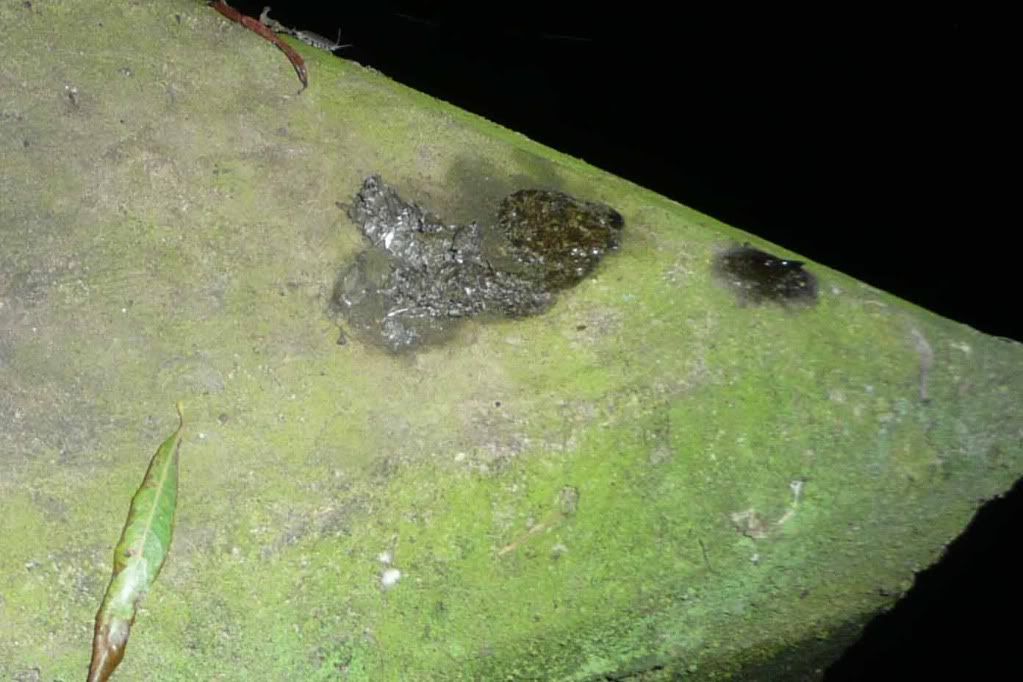
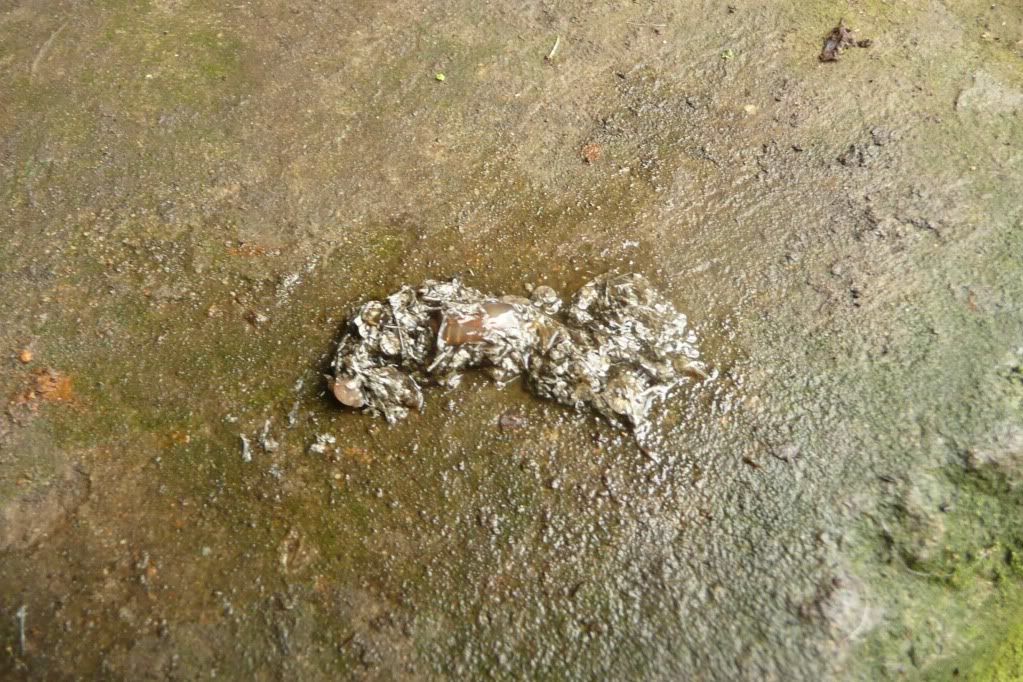
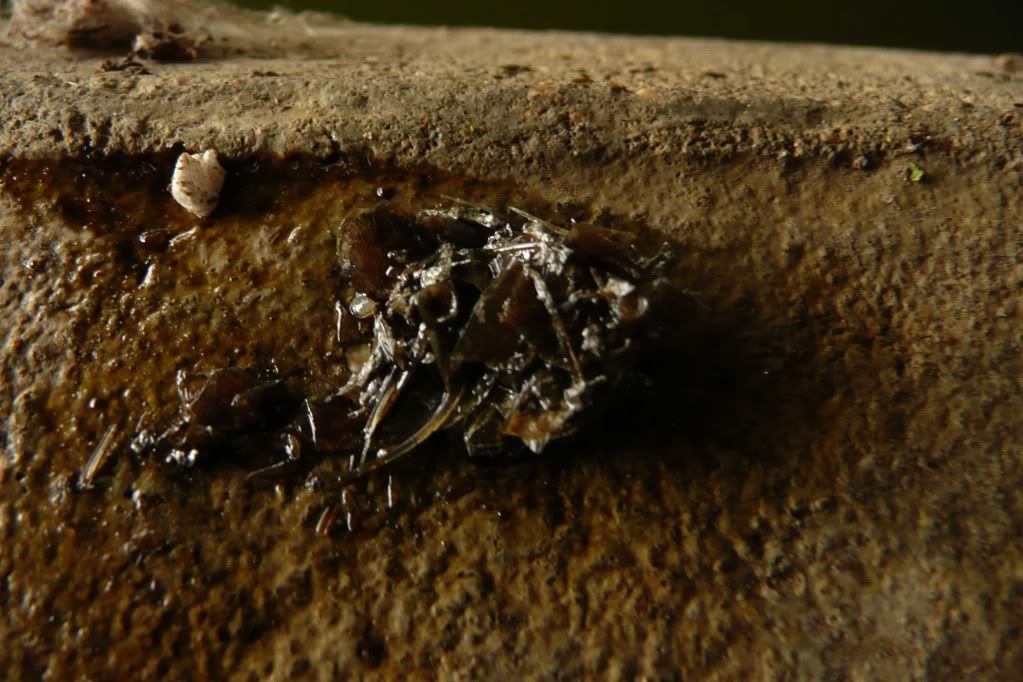
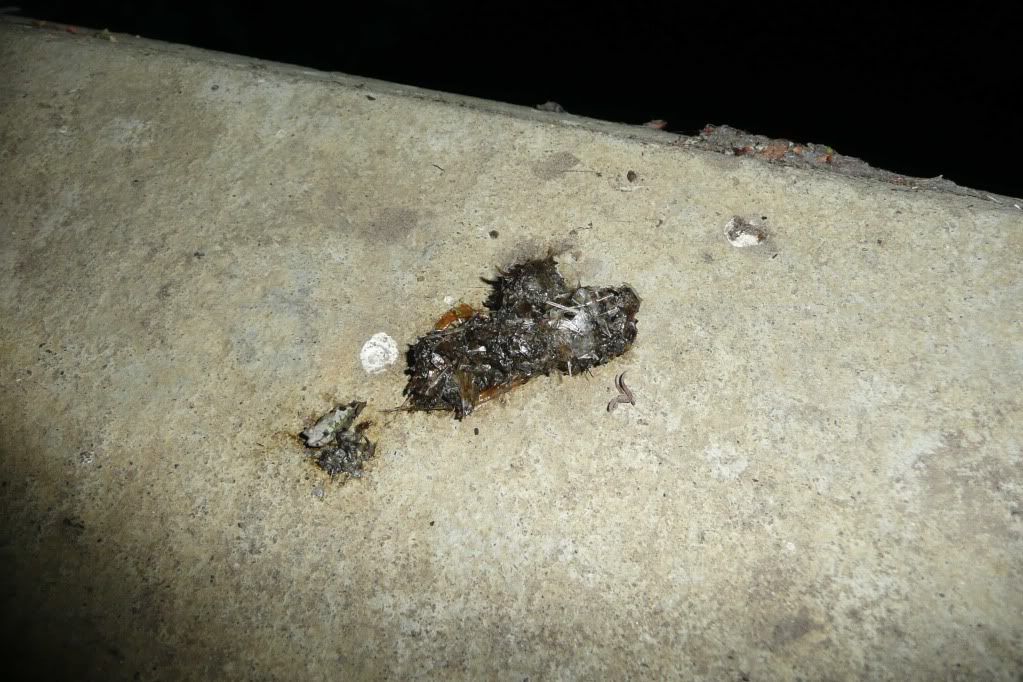
As otters live for at about 3 years, this could be signs of the great great great grandchild glimpsed all those years ago.

Friday, 27 May 2016

Otters 2016

There have been many highlights in the 7 years of writing this blog, but no doubt one of them has been seeing and recording the activities of otters on the Ock.
First seen in May 2011 were at a female otter and her two cubs:
.
.
There then followed nine other sightings, including this one in June 2011 - in broad daylight. 


.
Whilst the Eurasian otter can live up to 20 years in captivity, in the wild, they are lucky to make it to 4 years old, with sexual maturity occurring at 18 months for females.

Hence, the otter in the photographs above have almost certainly died, maybe this otter, seen in 2013 is one of the cubs having reached maturity or maybe even it's a grand-cub.
.

This was the last sighting for three years, yet it's apparent that otters were still resident in the Ock as their droppings (known as spraints) could occasionally be found, the most recent in March 2016:

.
And then, whilst looking for water voles in April this year, there was a very unexpected encounter with another otter - on the same stretch where the first otters were recorded. So unexpected it had dived out of sight before a decent photograph could be taken.
.
.
So perhaps this otter could then be the great grand-cub of the otter first seen back in 2011....

But perhaps not, one of the reasons Eurasian otters have short life spans in that they are fiercely territorial and inflict horrendous injuries - often fatal - on each other.  

So maybe this otter is not even related to those seen 5 years ago, perhaps it is a descendant of a different otter which moved into the Ock and displaced or killed the resident female? 

But it may not even be a female, it could be a male with territories in the Abingdon area seeking a female?

As with otters, they often raise more questions than answers, but whatever its lineage or gender, it's just great to know these wonderful and seldom seen animals are still present on our small and somewhat insignificant river

Thursday, 17 March 2016

After the rain

After the midweek rain, the river levels have once again risen, yet it does not look like it will burst it's banks this time.

.
A weekend walk reveals more partially eaten muscle shells.
.
.
Just further along is evidence of what may be the culprit, a fresh otter spraint (possibly less than 12 hours old) on a part of the river I haven't previously found signs of otter activity. Maybe the higher water level has made this part of the river more attractive to the otter.
.
.
Whilst the high water level may be good for otters, it maybe not such good news for the water voles, causing them to drown as their form territory at what should be the start of their breeding season.
But there are at least signs that some may have survived the winter, what looks like a burrow, filled with their distinctive feeding signs
.

Wednesday, 29 August 2012

A month later

Somethings haven't changed in the past month, since the Ock featured in this blog - the wooden footbridge is still closed for health and safety reasons, apparently the bridge is rotten and Vale Council are currently asking for quotes on getting it fixed, hopefully it won't be too long till it is reopened.
.
.
The river is also still high, although not at as high as the earlier in the year. 
.
.
The water vole breeding season is nearly over, but they are still active, although not as obvious as they were earlier in the year. 
.
.
And a grim discovery, a partially eaten moorhen, indicating that maybe otters are still present on the river.
.

Thursday, 29 December 2011

Review of the year - 2011

As this is probably the last post of the year, it's a chance to look back and reflect on the last 12 months  - which have consisted of 48 posts, 131 comments and 3079 photographs (fortunately, only a few of these have featured in the blog).
For what is only a small insignificant river, there have been a suprising variety of subjects - boxing hares (females fending of amorous males): http://viewsoftheock.blogspot.com/2011/12/festive-plasmodial-slime-mould.html, hobbies chasing swifts and swallows: http://viewsoftheock.blogspot.com/2011/06/annoying-insects.html and slime moulds living bizzare and complex lives (http://viewsoftheock.blogspot.com/2011/12/festive-plasmodial-slime-mould.html).  
So choosing five was always going to be difficult....


Badgers at Wytham Woods: Once in a while, this blog leaves it's native territory and explorer further afield and one of the places it likes to visit is Wytham Woods to the west of Oxford.
Owned by the University of Oxford, it is famous for it's badgers and in spring, members of the public are invited to take part in the badger census (to give the researchers an idea of which setts are active).
This involves sitting silently (and uncomfortably) for several hours watching a designated badger sett: http://www.viewsoftheock.blogspot.com/2011/05/badger-census-at-wytham-woods.html
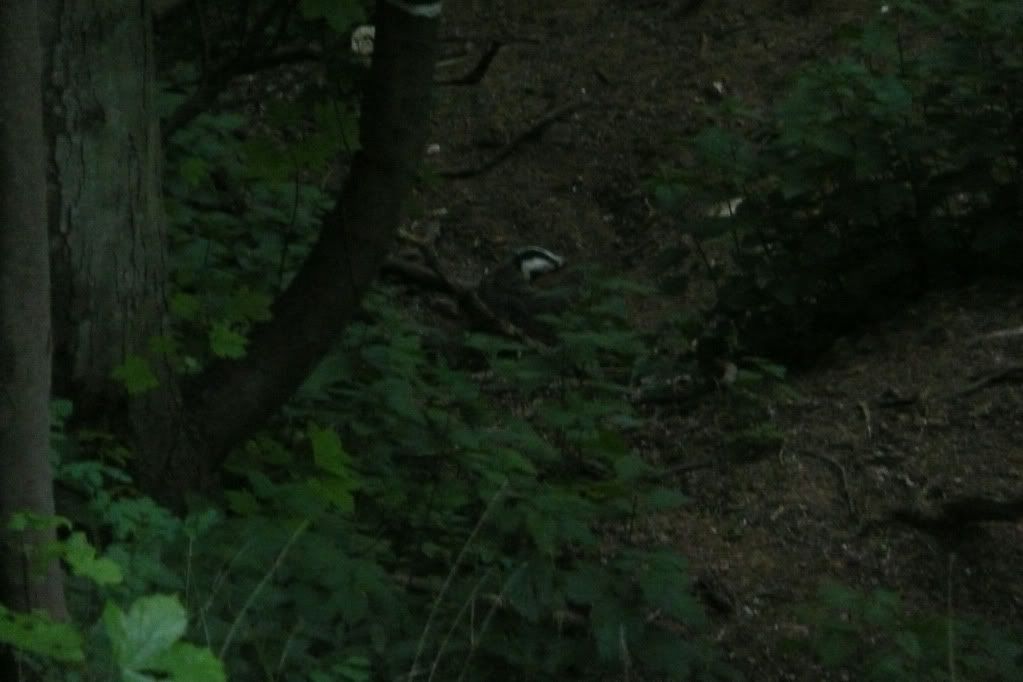
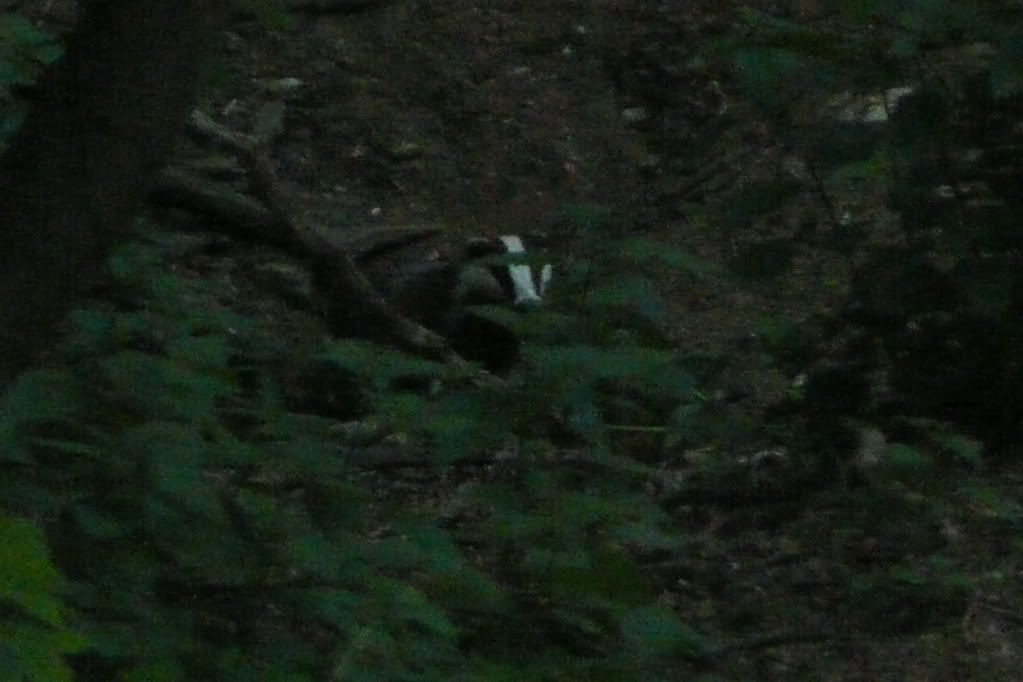
Many don't get to see a badger, but when we did it back in May we saw several and even with a high ISO on a compact camera it is possible to get reasonable pictures.
.
.
.
Bumblebees: 2011 featured several posts on bumblebees - including one on the seldom seen subject of bumblebee mating: http://www.viewsoftheock.blogspot.com/2011/07/perils-of-bumblebee-mating.html
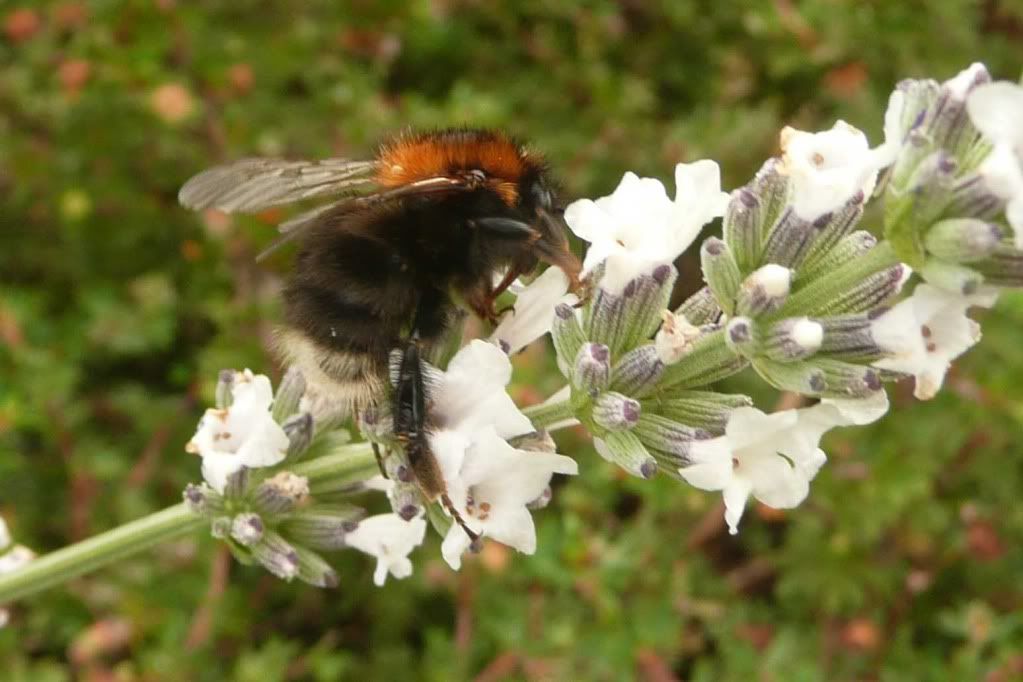
But the best post has to be about Tree Bumblebees:
.
.
First discovered in the UK in 2001, they have spread northwards from the New Forest and it was something special to find one feeding on the lavender in our front garden:
http://www.viewsoftheock.blogspot.com/2011/07/tree-bumblebees.html


Sparrowhawk: Garden birds have featured in this blog several times, whether it is under taking the RSPB Garden Birdwatch Survey (http://www.viewsoftheock.blogspot.com/2011/01/big-garden-birdwatch.html) or documenting the arguments between Goldfinches on the feeders (http://www.viewsoftheock.blogspot.com/2011/12/argumentative-goldfinches.html).
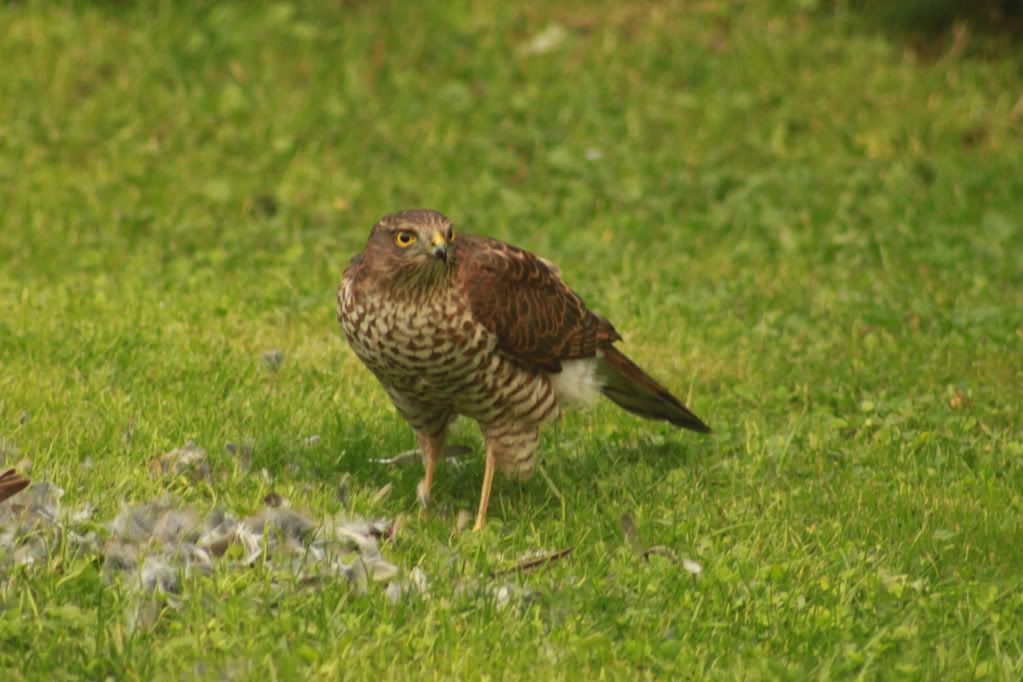
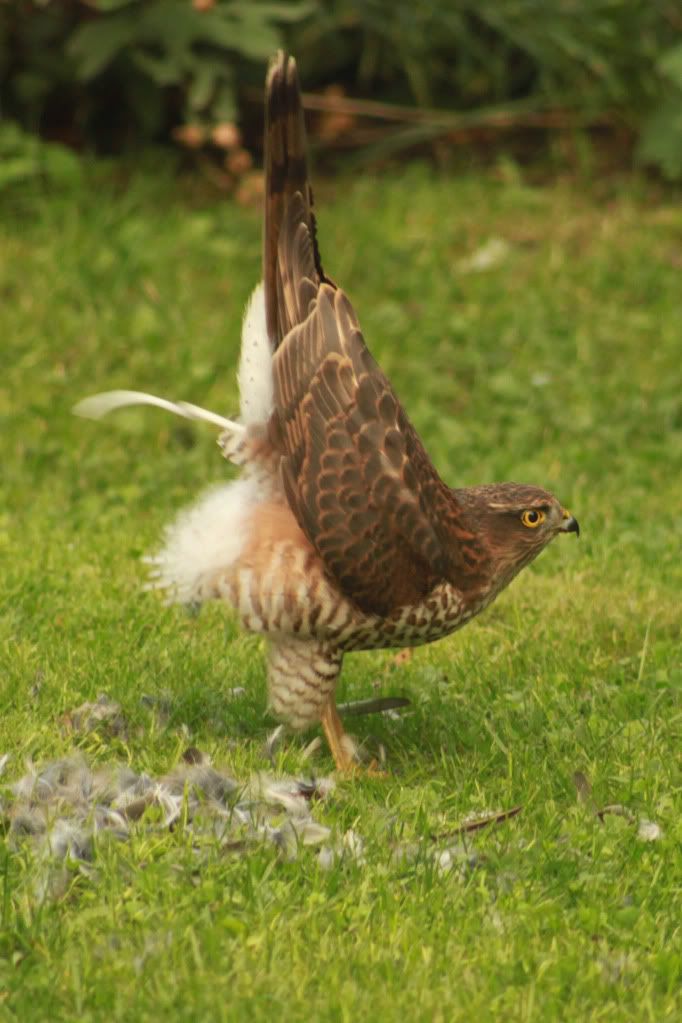
Attracting goldfinches, sparrows, robins and greenfinches into the garden also attracts those who like to feed on them, cats being one, but more welcome visitors are the sparrowhawks. Like this young male seen in October, eating one of the pair of dunnocks that frequented the garden (I'm convinced it was a dunnock, as we only have one visit the garden now):
.
.
The sparrowhawk remained in the garden for 15 minutes, seemingly unconcerned about me taking pictures of it. Until there was hardly anything left of the unfortunate dunnock, but before it left, it allowed me to get my favourite action shot of the year:
.
.
The original post was back in October: http://www.viewsoftheock.blogspot.com/2011/09/return-of-sparrowhawk.html
.
Tree Climbing Water Voles: Another frequent subject of this blog are water voles and they were one of the reasons it was started.  The past year has focused on colonies on the Ock http://viewsoftheock.blogspot.com/2011/05/argumentative-water-voles.htmland at Radley Brook (http://www.viewsoftheock.blogspot.com/2011/06/water-voles-of-radley-brook.html)
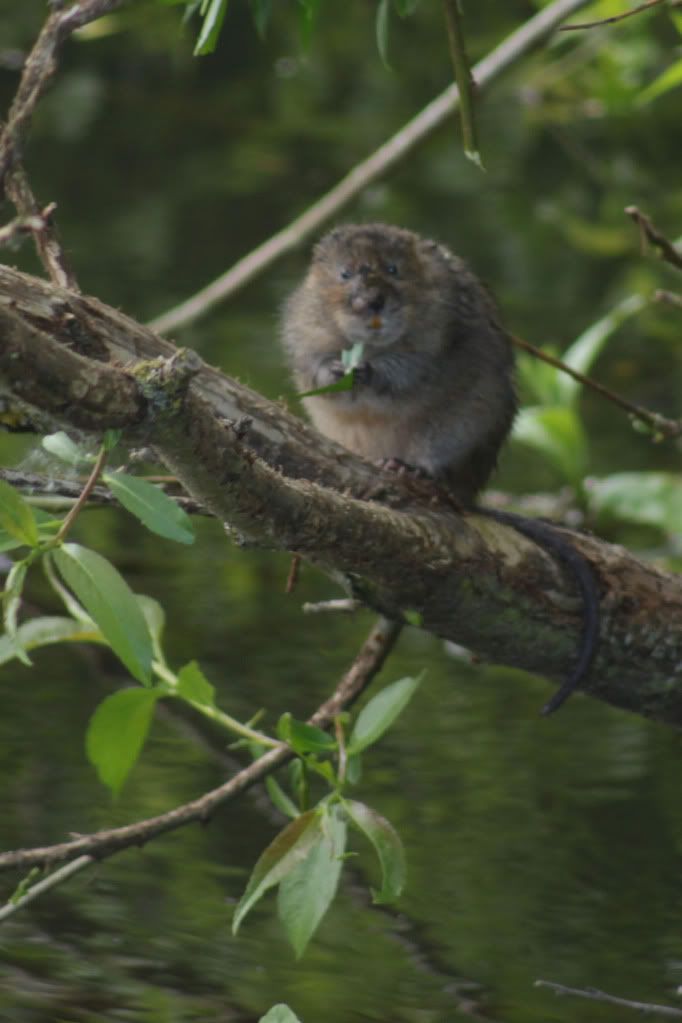
I have read about water voles climbing trees, but thought it was a somewhat unusual activity until I did a survey for the Wildlife Trust. During it  I was suprised to see a water vole swimming along the river, I was more surprised to see it start to climb along one of the branches of an over hanging tree, I was even more surprised as it climbed and climbed until it disappeared out of sight.
.


I kept returning to this part of the river to see them climbing trees, taking two of my favourite pictures of the year providing two posts ( http://www.viewsoftheock.blogspot.com/2011/05/water-voles-and-willow-trees.html  http://www.viewsoftheock.blogspot.com/2011/04/tree-climbing-water-vole.html)


.


But as spring turned to summer, they kept away from the trees preferring the sedge and arrowhead that had started to grow.


Otters: Having detected signs of otters back in February 2010, they have been a semi-regular subject on this blog - whether it is finding spraints () or half eaten crayfish (another favourite subject of this blog - http://viewsoftheock.blogspot.com/2011/08/yet-more-dead-crayfish.html).
So it is perhaps not surprising that the favourite post of this year (or any year) is the sighting of not one, but three otters back in May (http://www.viewsoftheock.blogspot.com/2011/05/otters.html &  http://www.viewsoftheock.blogspot.com/2011/05/more-otter-pictures.html).  
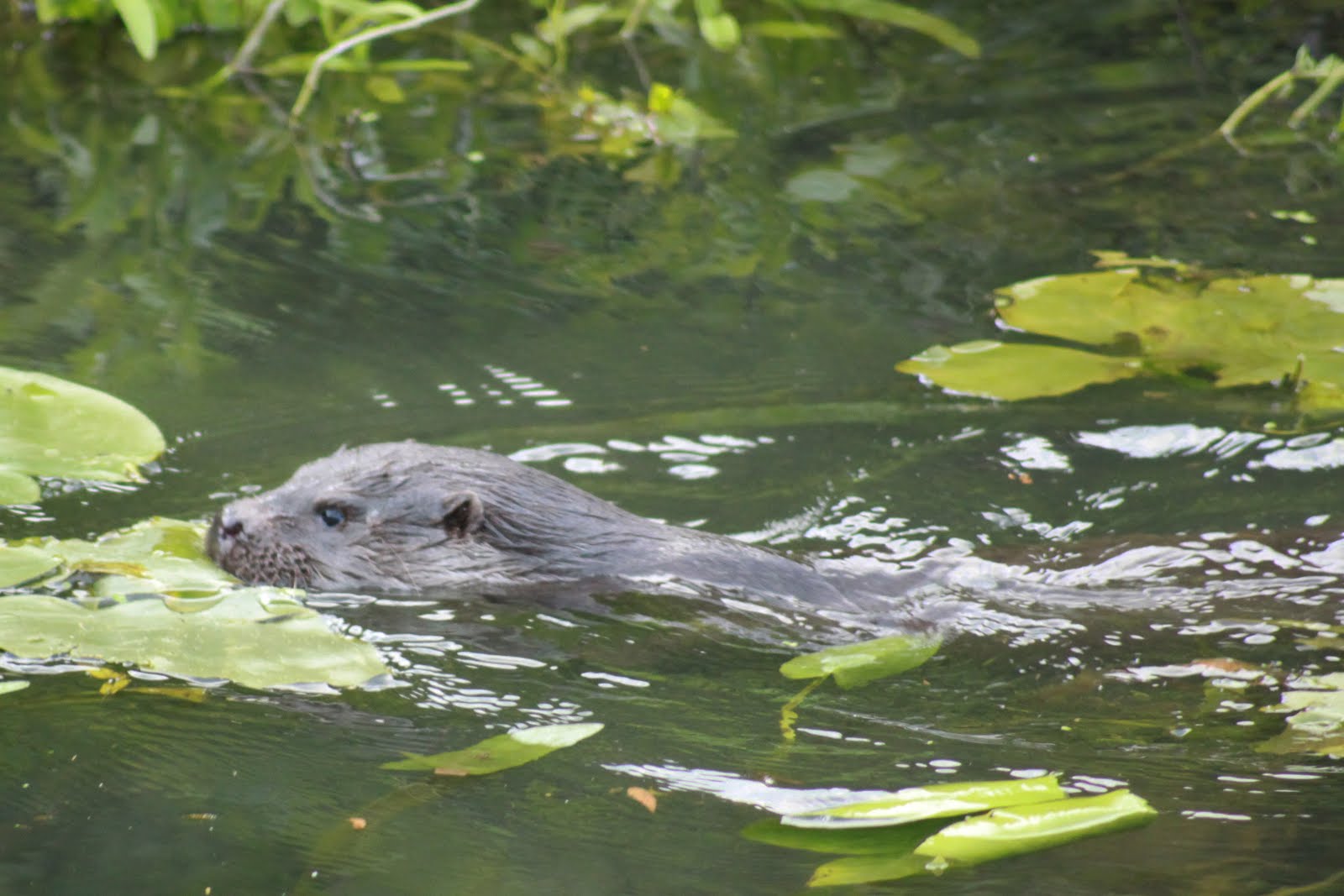
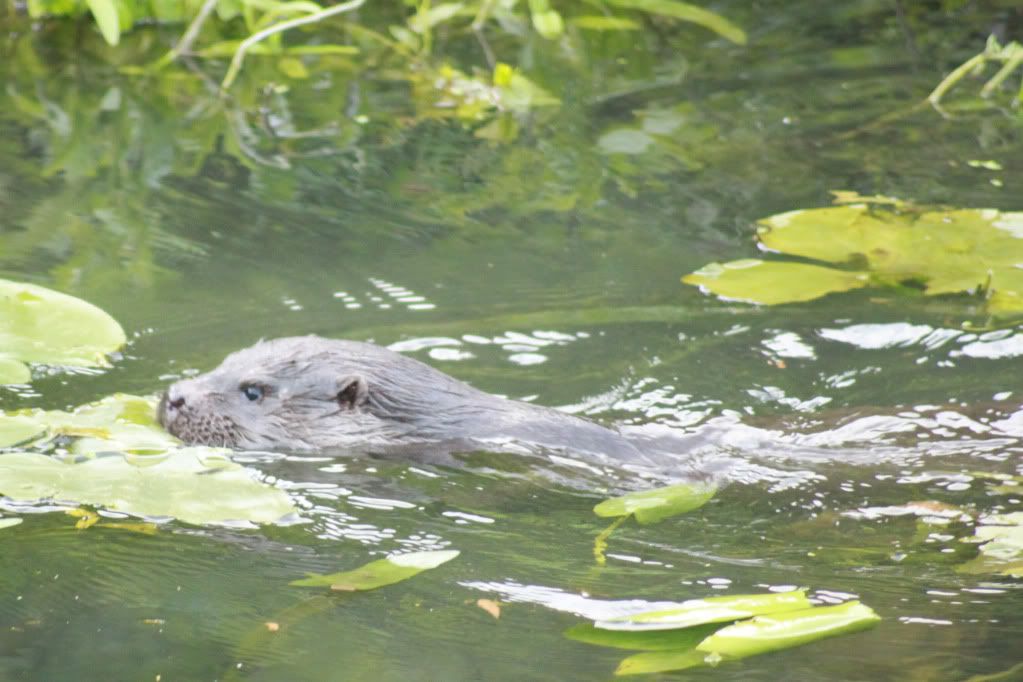
Then, during May and June, I saw the otters several times, sometimes it was the three of them (mother and two cubs) and sometimes it was a solitary otter.  All sightings were accidental, like this one, taken at 6.30 in the evening when I had gone to look for butterflies and bumblebees.
.
.
What is interesing is most reference books describe otters and shy and nocturnal, but not only have I seen them in daylight, but they seem quite curious and they look up if they here the camera shutter 
.
.
And on one occasion one of them swam over for a sniff was less than a metre away.
Unfortunately, my camera focused on the grass in front of it, providing me with the most disappointing picture of the year:
.


It's probable that the cubs have now dispersed and it is unlikely I will see them again next year, and even if I don't, I know I have seen one of the UK's most elusive and fantastic animals and something I will treasure forever.


Many thanks to all who read the blog and especially to those who have left comments, without them it is doubtful if the blog would have lasted this long and without this blog I would never have seen the wonderful array of wildlife that is found on this small river and hopefully I have managed to convey some of these delights.


Thank you, all the best for 2012


Richard

Monday, 19 December 2011

Random Stuff

Dark nights and mornings, Christmas preparations and not to say horrid winter colds has meant that getting down to the river (or elsewhere) has been virtually impossible recently.  Perhaps it's a time to go through some recent pictures which, for whatever reason, did not make it into a post:
.
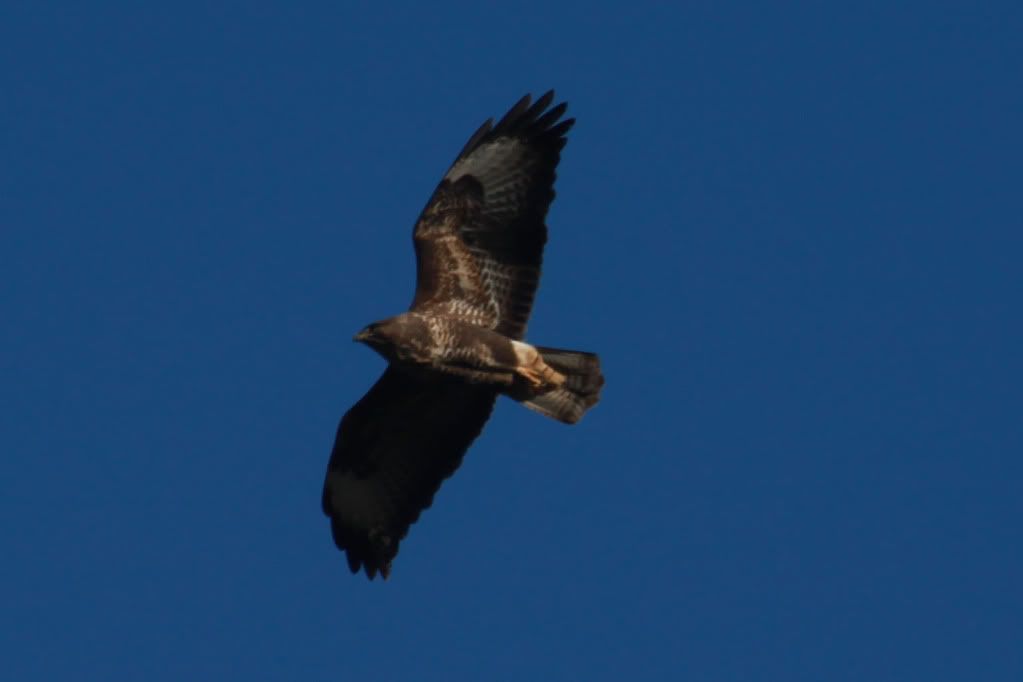
Buzzard: Buzzards are a frequent subject of this blog, as fortunately at least one pair has been breeding near the river. Although having one fly low overhead is somewhat unusual, especially with the lighting conditions making the patterns on their wings and bodies obvious - as this one seen in late November.
.
.
There are four birds of prey that are often seen by the river, sparrowhawks, kestrels, red kites and buzzards.
What is somewhat interesting is red kites and buzzards share the same food - carrion, rabbits and when times are hard - worms, yet they don't seem to be territorial with each other.
.
Severed Fish Head: There probably aren't too many people in Abingdon who not only get excited about finding a severed fish head, let alone stop and take a photograph of one.  But this one, seen along the Ock Valley walk back in October is probably an otter kill.
.
The mother and the two cubs seen back in May would probably have now separated, with the mother driving the cubs out and she seeks to breed again.  Could this have been mother? Or one of the cubs trying to set up a territory or a dog otter, living in the nearby Thames, coming into feed and maybe seek out a receptive female?


Kingfisher: The steep banks along the river make the Ock an ideal habitat for kingfishers and it  is not uncommon to see the bright flash as one streaks past and they can sometimes be seen sat on a branch watching for fish.  But as they are easily disturbed, being able to take a picture of one is unusual. In fact in late November, whilst walking to work, presented one of the few opportunities this year to be close enough to get a picture:


.
As the weather gets harsher and the river gets fuller and starts to freeze, the kingfishers may migrate to warmer parts of the country, where it is easier to find food.  Returning in spring to breed again.


Starlings:As regular readers of this blog will know, the starlings at Otmoor are a favourite subject of this blog.  It is certainly one of the sights of the county, if not the country with hundreds of thousands of starlings woshing overhead and forming mesmerising shapes.
However,  the autumn and winter of 2011 have been very disappointing with starling murmuration consisting of just several hundred, as seen in November


.
There is even a sign saying the starling numbers are significantly down this year, the lack of rain through the summer has meant the reed beds have dried up, as a result predators like foxes make the reeds less secure, so naturally, the starlings have gone on to find safer roosts.

Saturday, 21 May 2011

More otter pictures

It's not everyday you seen one of the UK's most elusive and hard to photograph animals, so here is a few more pictures of the three otters seen last week.
Bubbles in the water indicate that there is obviously something big swimming in the river:
.
.
A couple of nimble bodies break the water before diving below:
.
.
Then, possible sensing someone on the bank, the otters show themselves to have a look:
.
.
.

Tuesday, 17 May 2011

Otters!!

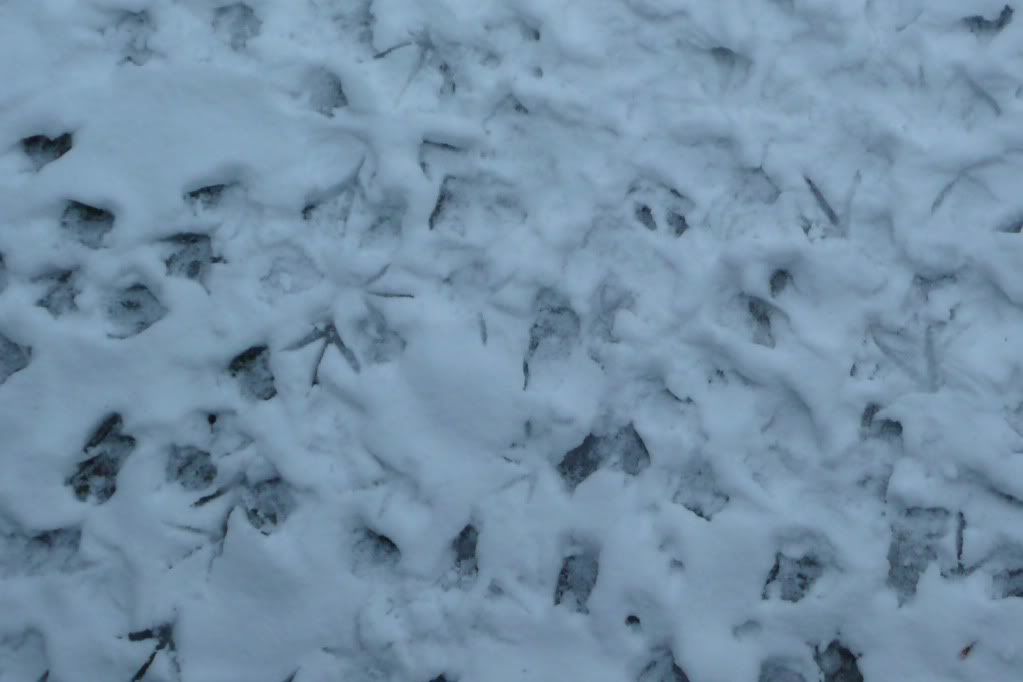
Otters have featured several times in this blog, whether it is indicting them as the culprit of a crayfish mutilationhypothesing on five-toe footprints in the snow or analysing the contents of their droppings.
It is one of the new year's resolutions of this blog to try and see an otter in the wild.  Whilst photographing water voles one evening, there was a commotion amongst the nearby mallards and not one, but three otters showed themselves.
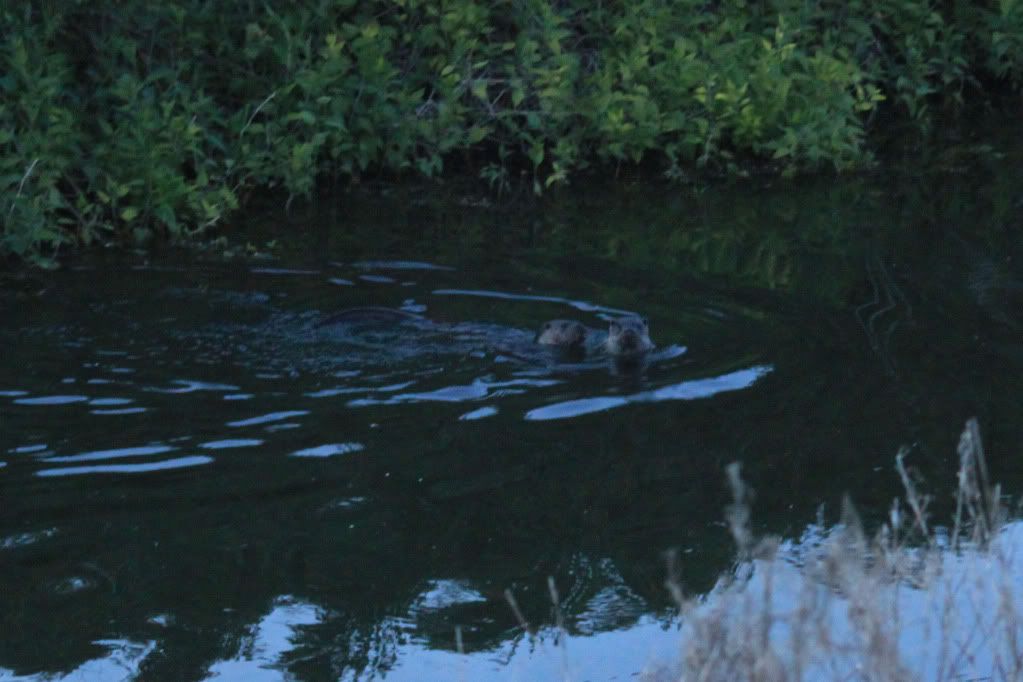
Having watched them swimming and diving below the water, two cubs (or puppies or kits depending upon noun preference) obliged for a photograph and stuck their heads above the water - photographs are dark and grainy as a high ISO (3200) and no flash was used. 
.
.
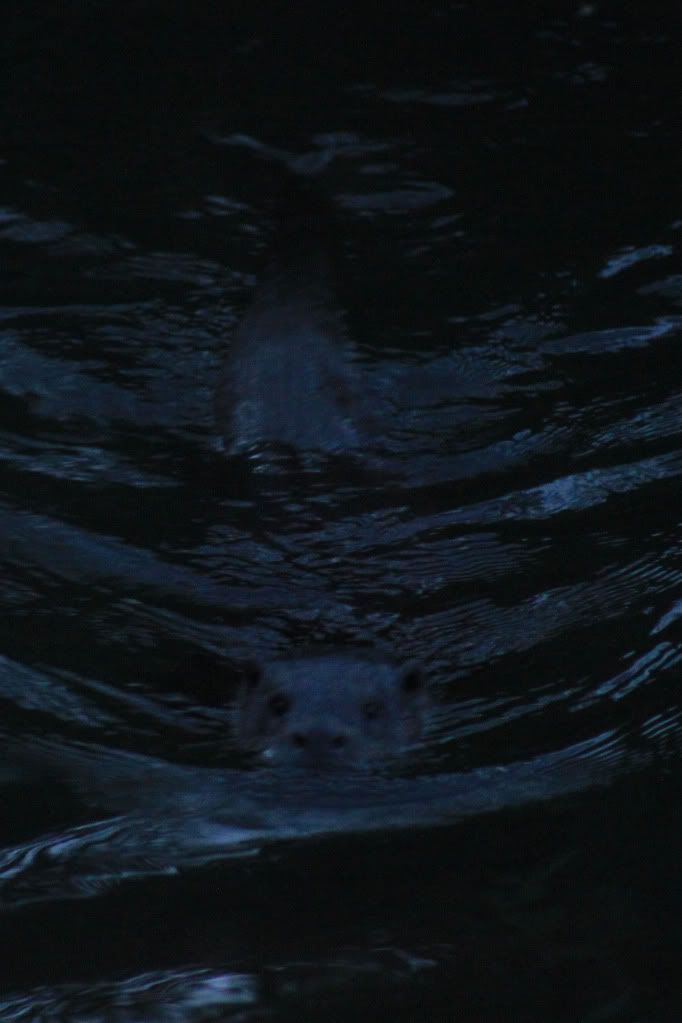
And the mother who could obviously detect my presence on the river bank came for a closer look:.
.
.
Otters are a controversial subject at the moment (although not as much as badgers). Some, like the Environment Agency, view their return as an indication that British rivers are returning to their former health.
Others, having seen rivers adversely affected by poor management, pollution and the introduction of invasive species like the signal crayfish (who eat fish eggs in vast numbers), view  the return of a top predator, which can eat 15% of its own weight each day, as yet another contributer to the decline in numbers of fish and other wildlife, especially aquatic birds.
Yet from conversations I've had alongside the river it transpires there have been otters on the Ock a lot longer than this blog has been in existence, and apparently last year there were three cubs.
So maybe, the Environment Agency's predictions are correct and the river has reached a natural stability, even if some of the damage cannot be undone, and given the otters fondness for crayfish, maybe they can even help the situation.
Two new year's resolutions done (badgers and otters). The next one on the list: a seemingly insignificant, hard to identify and very rare insect.


Update: In an interesting comment below,  Anne says "I've read that otters may keep the numbers of introduced mink down".
The relationship between mink and otters is a somewhat complex subject. Otters can attack and drive mink out their territory, but scats and spraints have been found together, indicating that mink can change their behaviour to avoid the otters.
None the less, mink were once seen on the Ock and as far as I'm aware there haven't been any sightings for a few years. So maybe breeding otters have, as Anne suggests, have had an affect and could be partially responsible for recent water vole resurgence.

Monday, 10 January 2011

First Otter post of 2011

Now the snow has gone, the river has a somewhat melancholic feel to it - there are no water voles, the trees have lost their leaves and the day light does not last long enough.
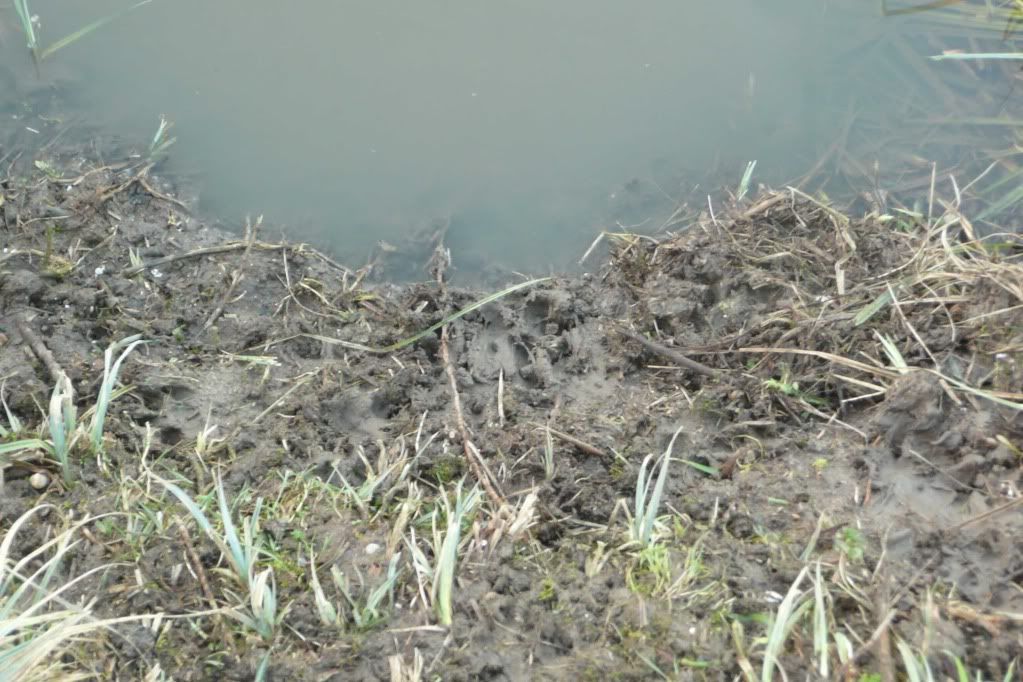
But there are still things to keep an eye out for,  for example, this mudslide has lots of footprints - possibly somewhere a dog has decided to go for a swim..
.
.
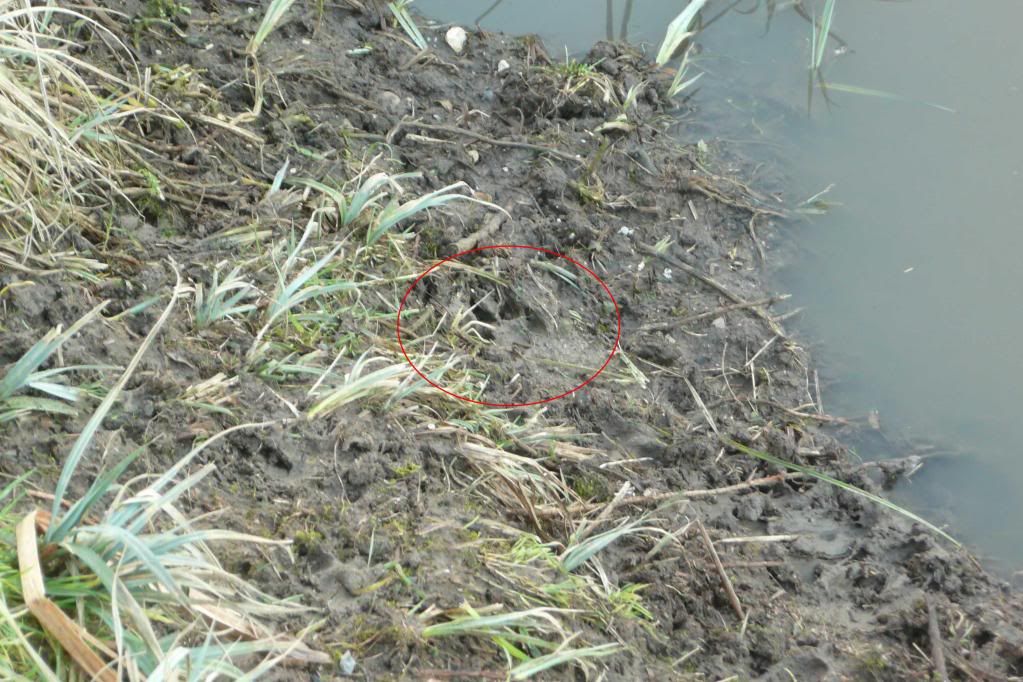
But a closer look shows it could provide access for a different animal, the circled footprint does not appear to be a dog:
.
.
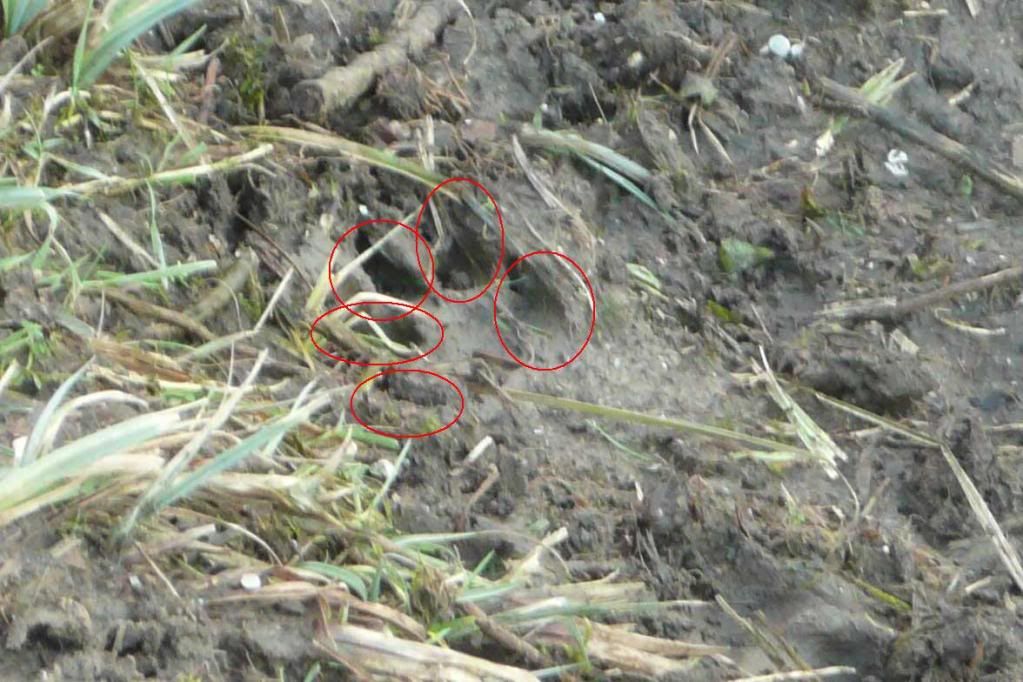
A closer look seems to show the animal has five toes and not four and the size indicates it could be another otter footprint - this bank being a place where it chooses to enter and leave the river:
.
.
This latest find is an opportunity to update the Otter map with three new pins (in red), this footprint is marked as C.  Whilst B is the footprint I discuss in the post on footprints on 23rd December, and A is the footprint found near the allotments as mentioned by Chris in his response to this post (thanks Chris!!):
.


View Otters 2010 in a larger map
.
I have several new years resolutions for this blog and one of them is to get an photograph of an otter.  This is very ambitious and although I have 12 months to try I will be as surprised as anyone if I succeed. 
In order to be successful there are three techniques to consider:
1. Luck - All my sightings of animals on the Ock are just coincidental - I rarely go out to find something specific, instead I just see what I come across, so although unlikely, it is not impossible that if I spend enough time walking by the river in the evening or night I may come across an otter.  This is how I found a badger - another elusive mammal in 2009.
2. Sit and wait - The approach taken by professional photographers to identify a suitable site and wait in one spot for hours and hours.  There are two drawbacks to this, firstly I have a day job so I can't spend all night waiting for an otter and secondly I don't think I have the patience.
Another problem is the lack of light, with otters being nocturnal I may catch a glimpse of one but getting a picture would be harder.  Although a high ISO setting, a steady hand and the light pollution from Oxford might make a picture possible - but I do want to avoid using a flash.
3. Remote Cameras - Often seen on wildlife programmes and now getting cheaper, the best option would be to place a series of remote cameras along the river - allowing the river to monitored over several days and using Infra-Red it would solve the lack of light problem.
Although I would need to find a secure location, which would mean putting them on private land to the west of the A34.
With a lot of experience, a lot of knowledge and a great deal of effort, camera traps can provide incredible results: http://charliehamiltonjames.blogspot.com/2010/09/is-there-anything-you-dont-take-apart.html (although I don't intend to pictures inside a holt).

Thursday, 23 December 2010

Footprints

I received this intriguing comment on a previous post:
I spotted what I think were Otter footprints in the snow beneath the bridge along the Ock Valley Walk - be interesting to see if you can verify they are Otter prints.

Which has inspired me to seek out the various footprints left in the recent snow and to try and identify them:

Birds: Some bird footprints are easy to identify, such as these left by mallards and moorhens along the ock valley walk.
.
.
Smaller birds are harder to identify as they just leave small holes in the snow.

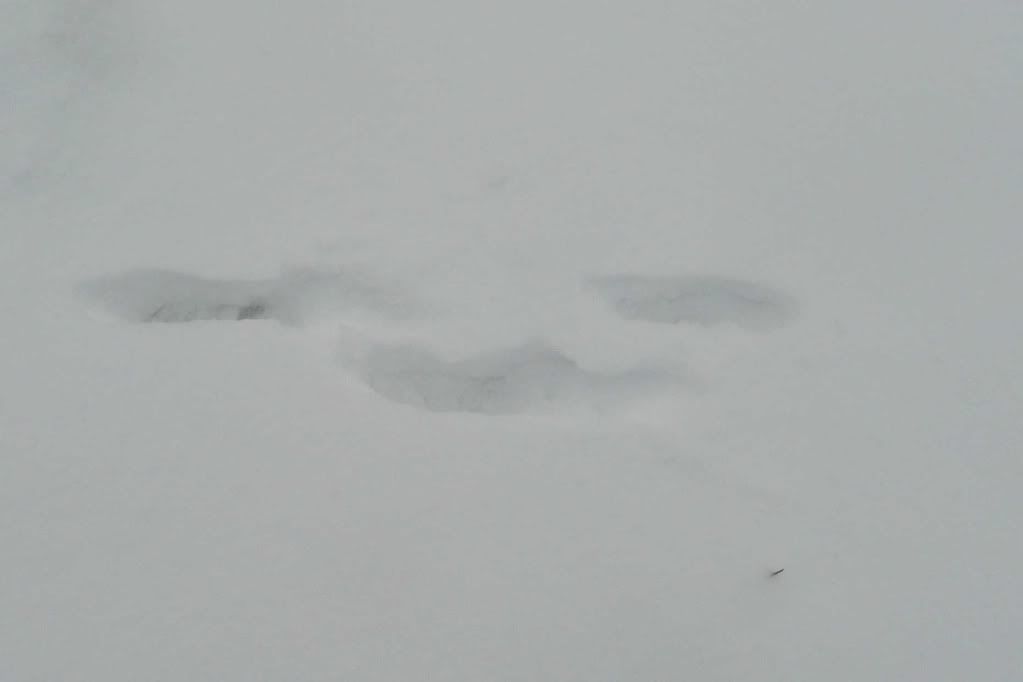
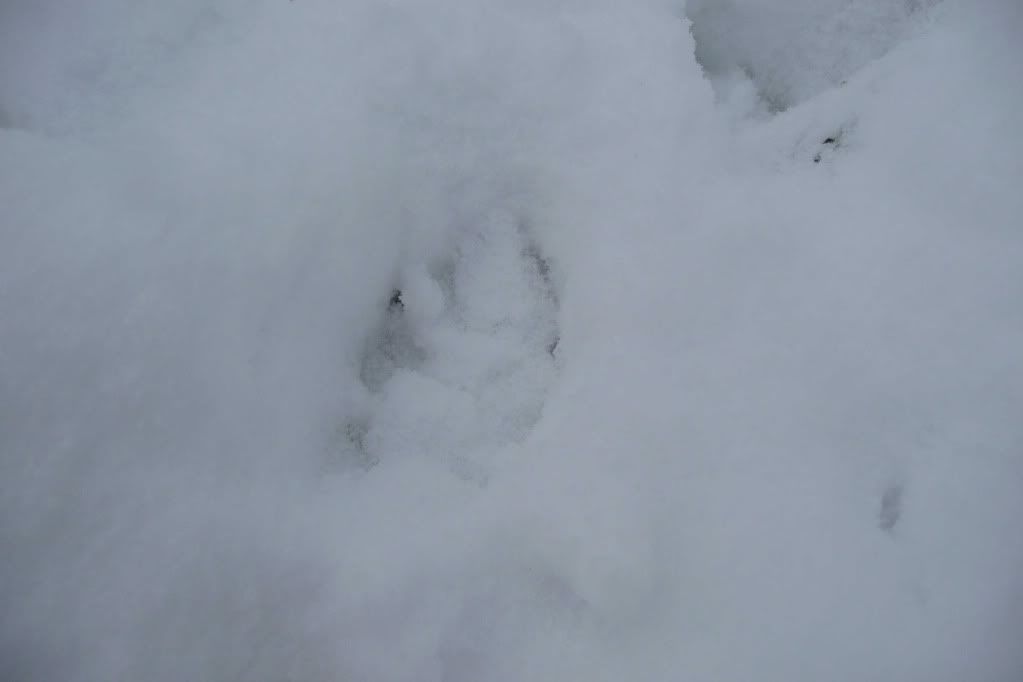
Leporids: The two prints at the front and one behind are almost certainly left by a rabbit
.
.
The other candidate would be a brown hare.  I have never seen a hare in the locality, although I have seen them near Wantage, so it is not impossible that they frequent the area.
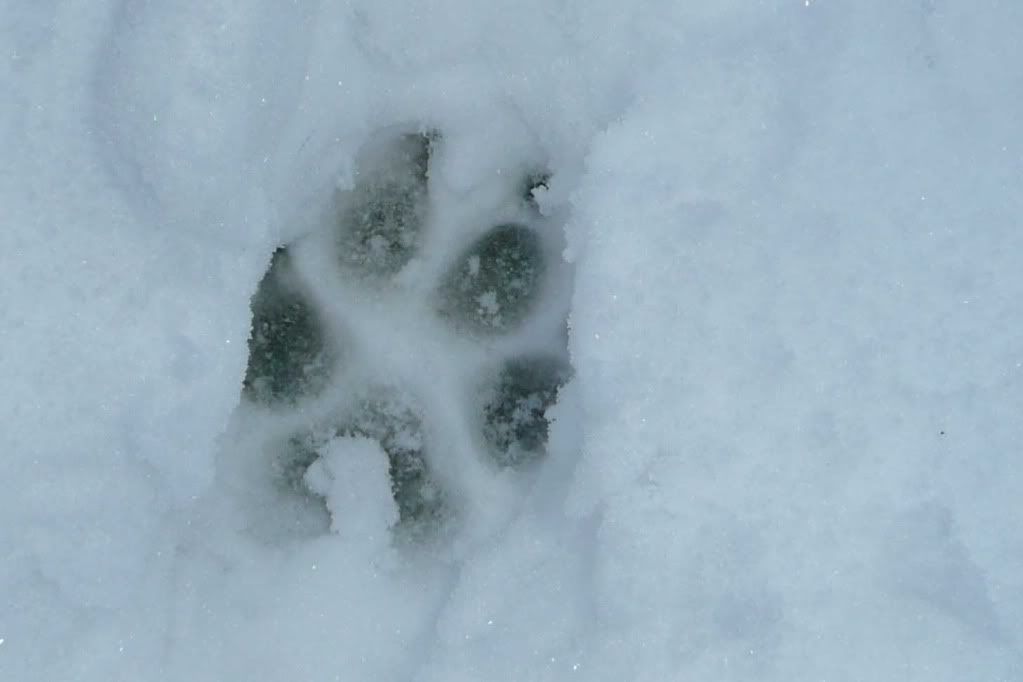
Canine: There are two species of canine that can be seen along ock, the red fox and domestic dog.  This footprint is from a domestic dog, taken in a place that is popular with dog walkers.
.
.
Mustelids: There are several species of mustelid that could be found along the Ock - badger, otter, mink and stoats, weasels and polecats.
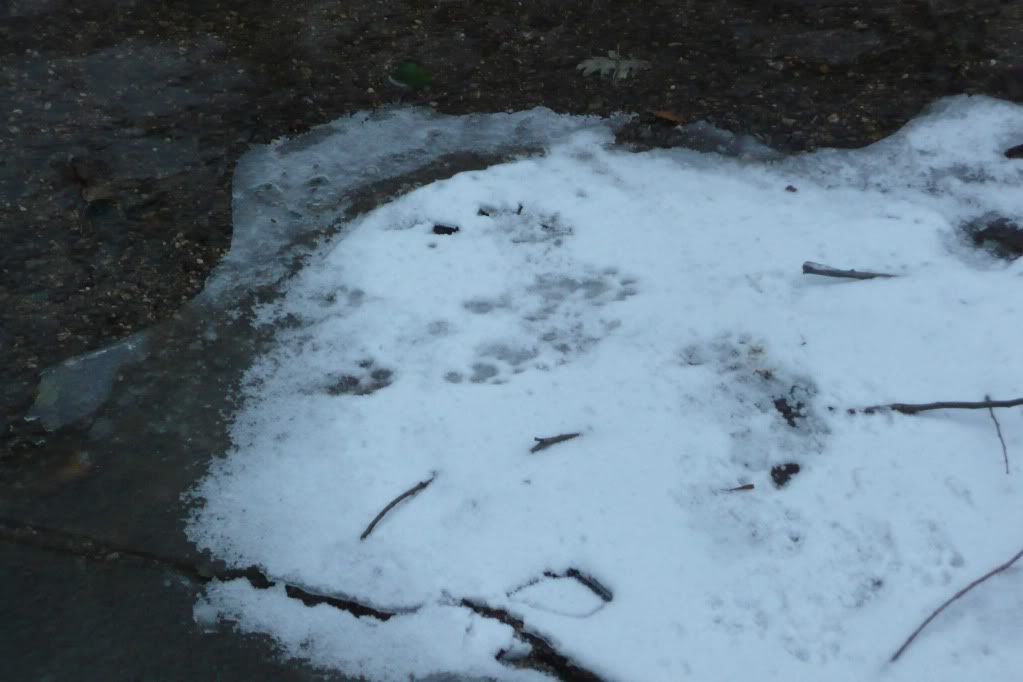
What differentiates a mustelid footprint from a canine is five toes, whilst a canine has four.  This footprint found in south Abingdon could be a badger, but it is hard to count the number of toes but it was found near where I have seen badgers previously:
.
.
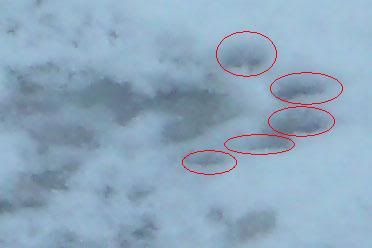
This footprint was found along the ock valley walk, where the previous commenter said they have seen possible otter footprints.
.
.
A close up shows (now circled) five toes, so it almost certainly a mustelid and given it's location it could definitely be an otter and it is where I have previously found a dead crayfish (common otter prey), so thank you very much for the tip-off.
.
A good example of an otter footprint is snow is from Charlie Hamilton James' Twitter Feedhttp://twitpic.com/3if160

As always, comments are very welcome, especially if I have misidentified something.

Monday, 13 December 2010

Otters 2010

As discussed in recent posts, the  recent findings of spraints along the river demonstrate that the spraint found in March wasn't just a single occurrence. So it seems an opportunity to reflect upon the various otter related postings over the past 12 months.
Like the water vole map, a map of otter activity can be plotted using google maps:


View Otters 2010 in a larger map

Pin A: Is the original spraint recorded in February:http://viewsoftheock.blogspot.com/2010/02/in-search-of-otters.html
It is also the site of the recent spraints as recorded in these two recent posts:
http://viewsoftheock.blogspot.com/2010/11/return-of-otter.html in November and this one three weeks later  http://viewsoftheock.blogspot.com/2010/12/more-otter.html 
Pin B: Is the location of a mutilated cray fish found by Drayton Road bridge , found back in July:
http://viewsoftheock.blogspot.com/2010/07/murder-mystery-on-ock.html
Although the post considers various options on what killed it, in retrospect I am convinced it was an Otter.
Pin C: Is another dead crayfish, this one was intact, so it may be not have been an otter killing: http://viewsoftheock.blogspot.com/2010/08/crayfish-murders-another-victim.html
Pin D: Is possible otter sighting, seen having retrieved the spraint as described at the end of this recent spraint post: http://viewsoftheock.blogspot.com/2010/11/return-of-otter.html
As with the water vole and other wildlife sightings recorded in this blog they are sent to the Thames Valley Environmental Records Centre.
.
This blog isn't the only record of otter activity in the area and by expanding the map these can be seen relative to the four discussed in this blog, showing the area now covered by otters in this part of Oxfordshire:


View Otters 2010 in a larger map

Pin E: An otter spraint was recorded earlier in the year at Sandford Brook at the Dry Sandford Pit nature reserve (source BBOWT newsletter)
Pin F (near Oxford): The location of an otter spraint recorded at the BBOWT nature reserve at Iffley Meadows along the river Thames (source - BBOWT newsletter).
.
The level of otter activity is perhaps not suprising as the Thames catchement has shown one of the largest increases in otter numbers as stated in the environment agency's 2010 otter survey
In 2000 / 2002 there was no evidence of otters along the Ock and the Thames, yet in 2009/2010 16 out of 20 surveys revealed evidence of otters.
The Environment Agency suggest this could be due to improved water quality in recent years as otters moved in from the west (possibly via the kennet and avon canal) and a reintroduction programme in the Upper Thames area in 1999.
Although otters seldom live beyond 6 years, it may be the relatives of these reintroduced otters that are currently resident in the Ock.
The Environment Agency report also highlights one of the biggest threats to otters is in road accidents, such as the Pin G  in the map which is where the dead otter was found at Clifton Hampden mentioned by David in a comment to the original otter spraint post: http://viewsoftheock.blogspot.com/2010/02/in-search-of-otters.html

Saturday, 4 December 2010

Yet more spraints...

It's tempting to say otter spraints on the Ock are like buses, you don't see one for a while and then several turn up at the same time.  But this is not entirely accurate as the Abingdon to Oxford bus service is actually very good and reliable.
As mentioned in the post below, the first otter spraint recorded under the A34 was in February 2010 and despite monthly surveys, another one wasn't found till  ten months later.  This is perhaps not surprising as otters are very territorial with a male otter having a territory of over 20 square miles and whilst a female otter has a smaller territory she will not share it with a male and they only meet on the edge of their respective territories. 
Hence it was probable that otters were infrequent visitors, perhaps occasionally moving in from the Thames to feed on crayfish and mark their territory.

However, two days later (19/11/2010) another spraint was found in the same place:
.
.
Then today (4th December 2010), not one but two fresh spraints:
.
.
.
So it seems for the time being that there is a resident otter along the Ock and as four spraints have been found in the same location within a few weeks there could be more than one otter. This could mean the bridge is an overlap between two territories or there could be a female with a cub......

Tuesday, 16 November 2010

Return of the Otter

In Feburary I found an otter spraint under the bridge where the Ock flows underneath the A34. Since then I have  regularly checked the site to find if there are more spraints and nine months later I have at last found a new fresh one:
.
.
Like it's predecessor, it was taken home  (in a plastic pot I reserve for such matters) and dissected it.  The best way I've found is to soak it water, not only does it come apart but the jasmine smell becomes stronger - making it evident that is an otter.
I suspected that it might contain signs of crayfish - as I have found two dead ones in the past twelve months (one almost definately a victim of an otter), instead it consisted of small fish bones (like the first one), the 1p coin is to give a sense of scale:
.
.
.
.
When leaving the bridge, I thought I saw something swim across the river - to big to be a water vole and definitely not a moorhen, although one was making a swift exit.  So not only have I found another spraint, but perhaps I got a quick glimpse of one of the rarest and elusive creatures in Oxfordshire.
Like the best animal mysteries, no photographic evidence was recorded.