Showing posts with label damselfly. Show all posts

Tuesday, 28 May 2013

Life & Death in the pond

Within an hour in a small back garden pond it is possible to witness the absolute beauty and utter horror that is the natural world.
Firstly is the mesmerising metamorphosis of a damselfly larvae into an adult.


But nearby something different and a lot more horrific, a group of ants have found a freshly emerged damselfly. Having spent more than two years as a larvae it's adult life was only a few minutes before being dismembered and eaten alive.


Sunday, 19 May 2013

Pond Life

About three years ago we built a pond in our back garden and despite being small, it has had interesting wildlife - water snails, ostracods and water louses.

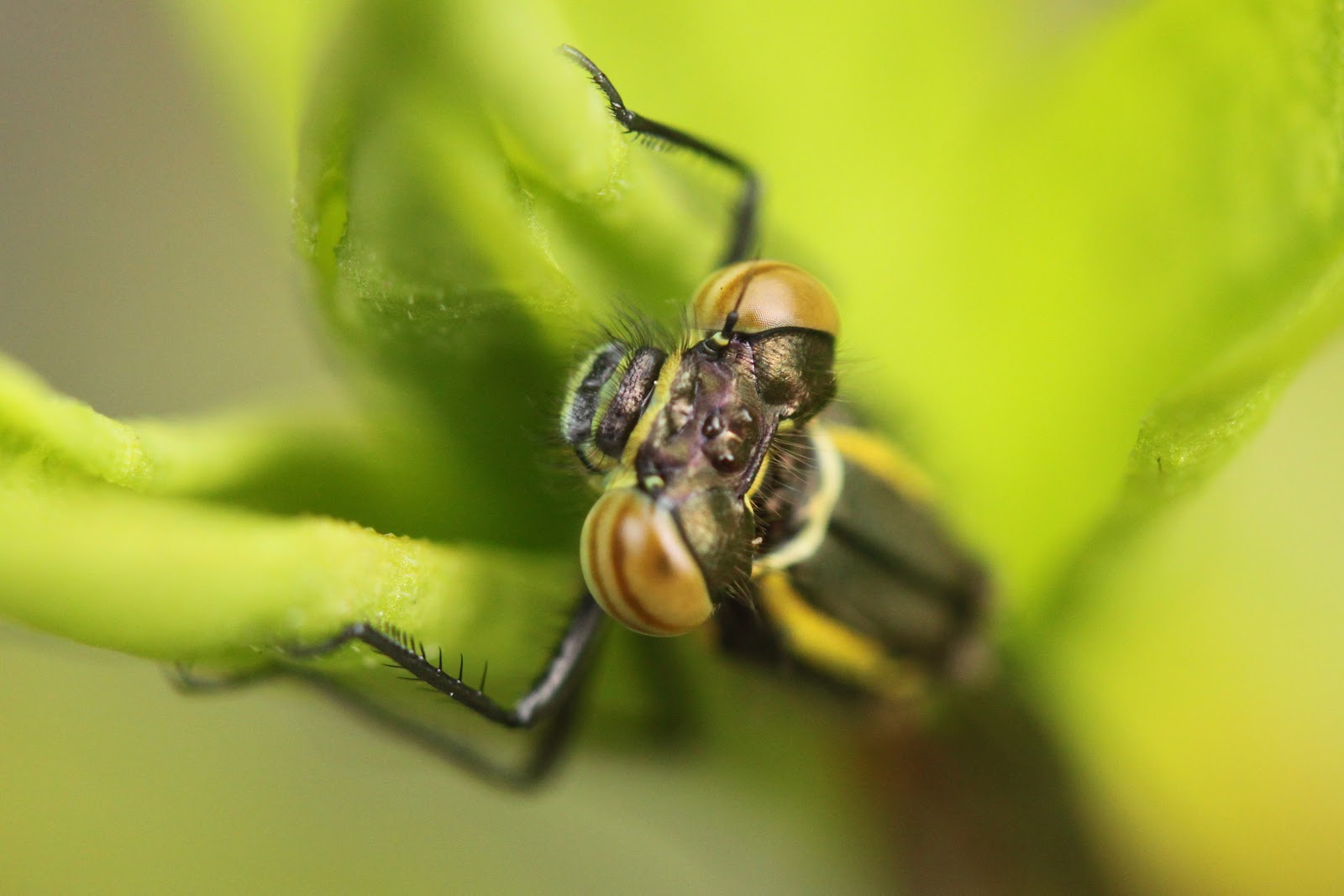
But last week, something else emerged - six damselflies:


Judging by the red abodmen and striped thorax and the time of year they are emerging these are probably large red damselflies. One of the most common damselflies in thee UK they are found in fresh water ponds and rivers throughout the country (including the river Ock, where the parents of these may have come from).


.
.
They will have spent two years in the bottom of the pond as larvae going through 11 stages, the first stages involve eating vegetation, with later stages catching and eating other small creatures within the pond - no wonder the population of water louses seems to have decreased in the past 12 months.
.

.
Like most metamorphosing insects, the adult stage is very short, the immature adult phase lasting two weeks, when they disperse, seeking new breeding sites.
Whilst the mature phase (when mating and egg laying takes place) can be only five days.
.


Tuesday, 5 June 2012

Jubile Weekend Wildlife

In between the  typical holiday chores, visiting family and attending a very wet bun throwing, the long weekend provided a few opportunities (in between the rain) to get down to the river and enjoy the calm and see what was about:
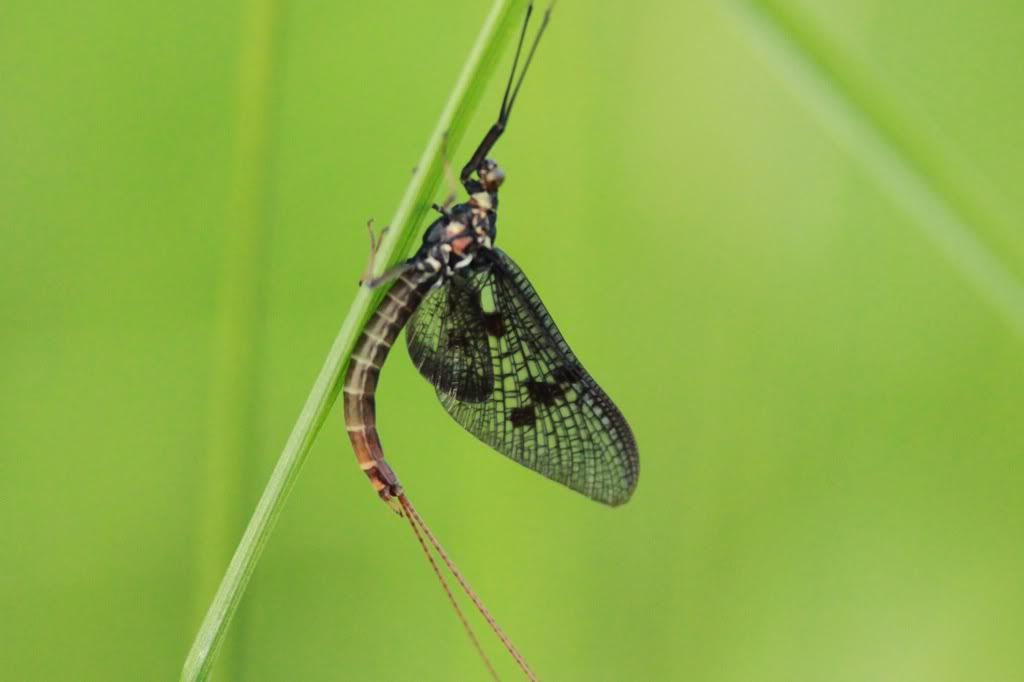
Three weeks later than last year, the mayfly have finally emerged.
.
.
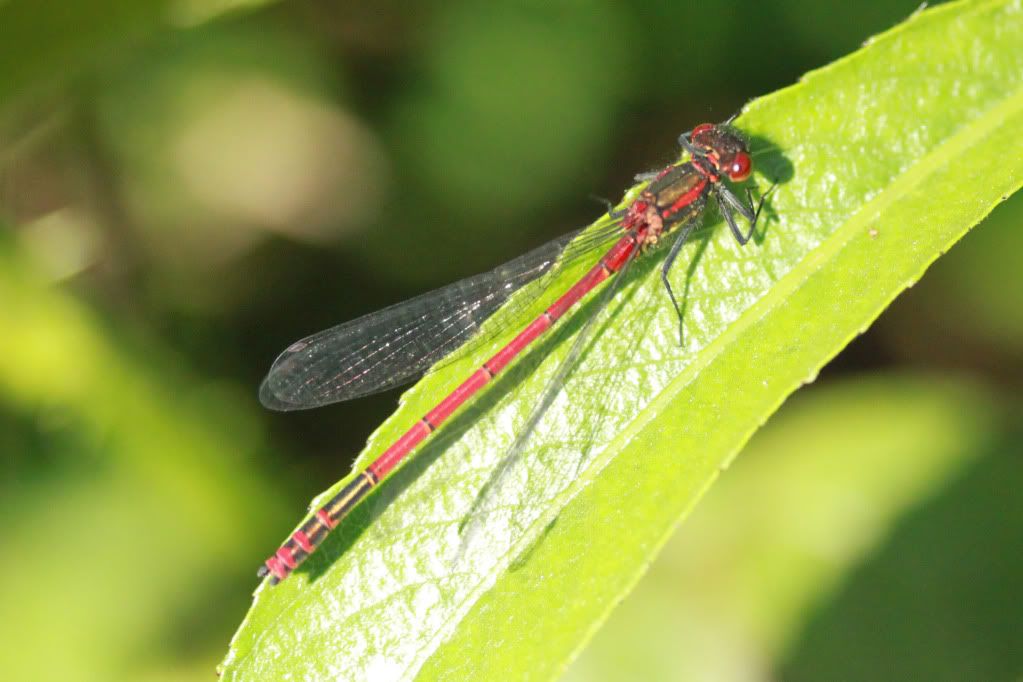
As the mayfly emerge, so do their predators, including this small red damselfly

Update (29/8/2012): This is not, as described above, a small red damselfly (Ceriagrion tenellum), it is a more common large red damselfly (Pyrrhosoma nymphal). 
Thanks to Ian for the correction.
.
.
Also on this part of the river are the first ducklings of the year. As there are so many of them it could mean there are no mink or otters about, as both have a predilection for small water fowl.
.
.
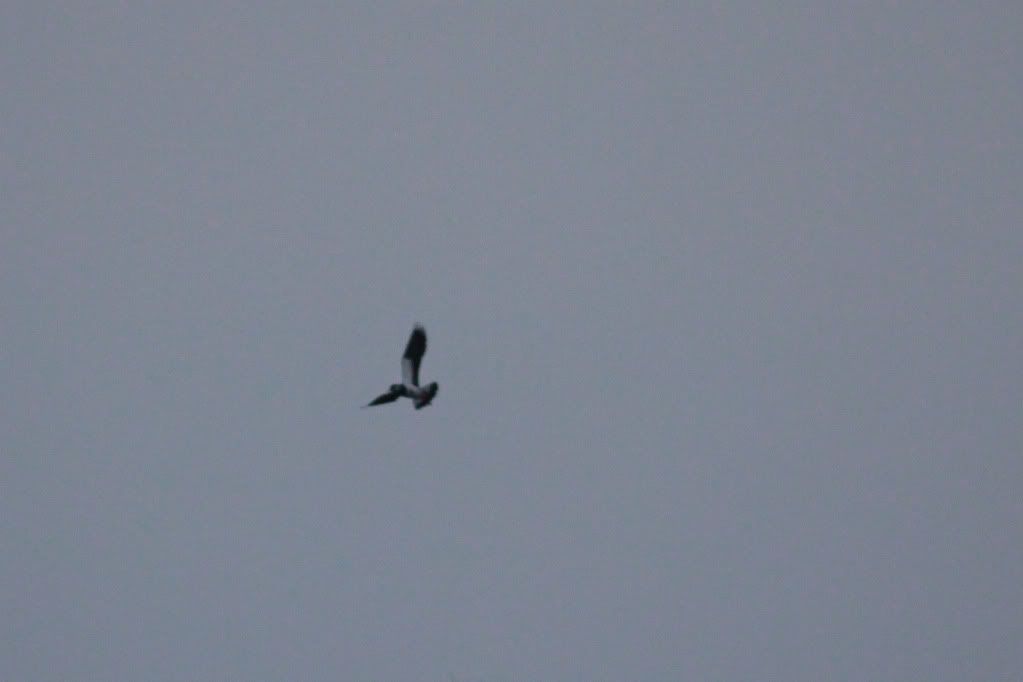
Another new arrival is a pair of lapwings, like most ground nesting birds these have been hit hard to by changes in the use of agricultural land, so it is great to have them nesting in the nearby fields:
.
.
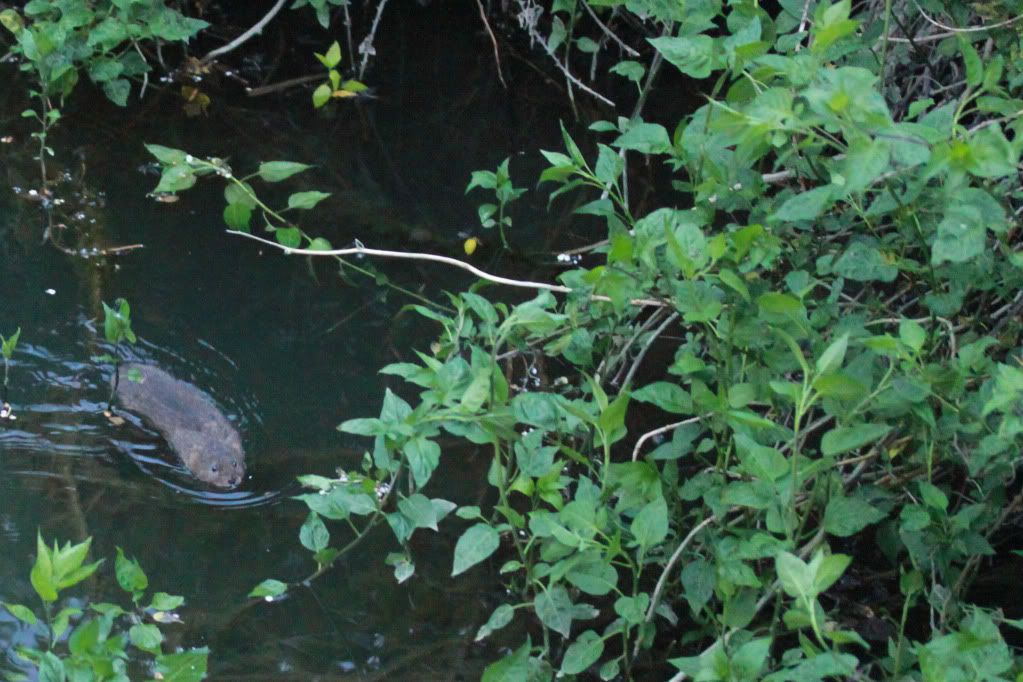
The recent warmer weather allowed the river flora to start growing, making it increasingly hard to spot water voles
.
.
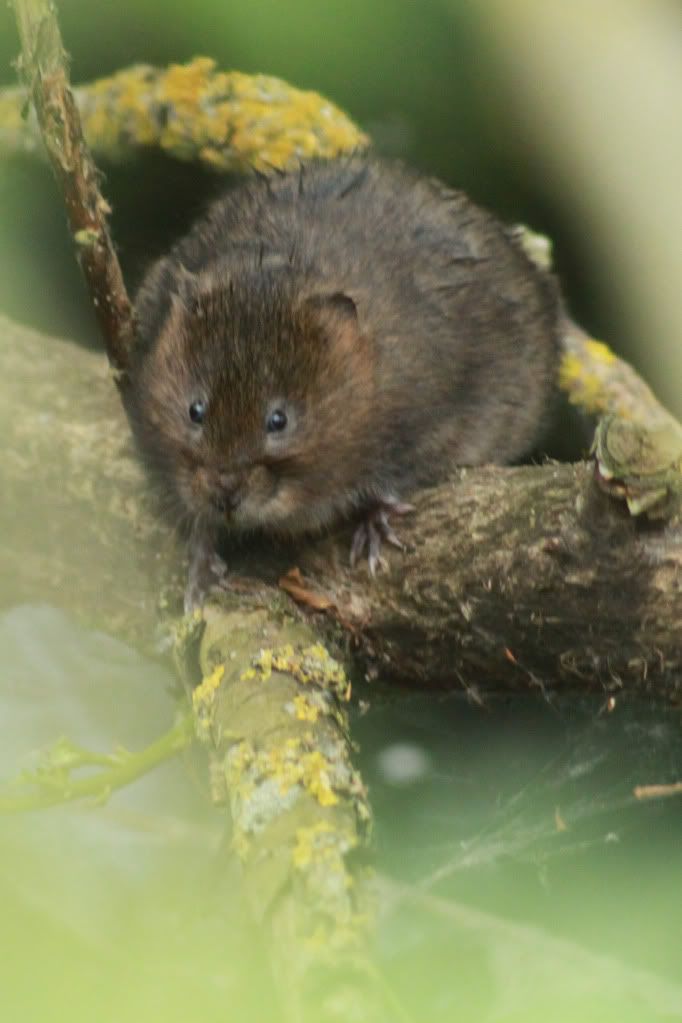
Although some are more obliging, by climbing up the willow trees to head height:
.

Sunday, 4 July 2010

Moths, butterflies & other insects


The warm weather has provided an ideal opportunity to seek out some of the insects that inhabit the ock and the flood meadows - some seem almost exotic.
Male banded demoiselles along the river, possibly competing with each for the best spot to attract a female:
.
.
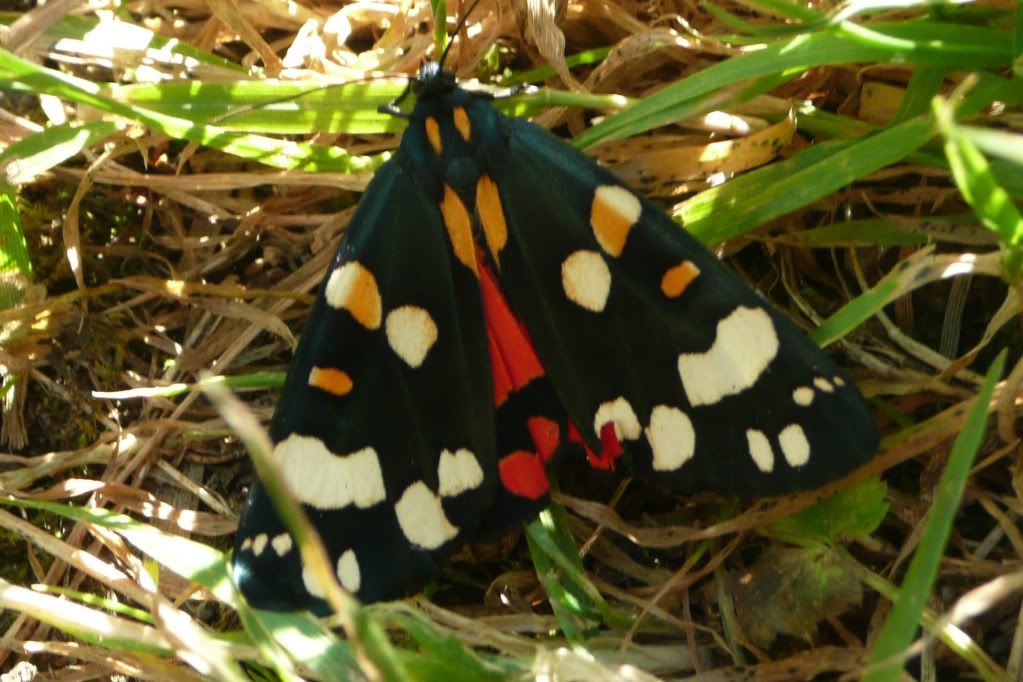
A rather splendid scarlet tiger moth, a locally common to the south of England. A moth that prefers damp habitats and flies during the day.
.
.
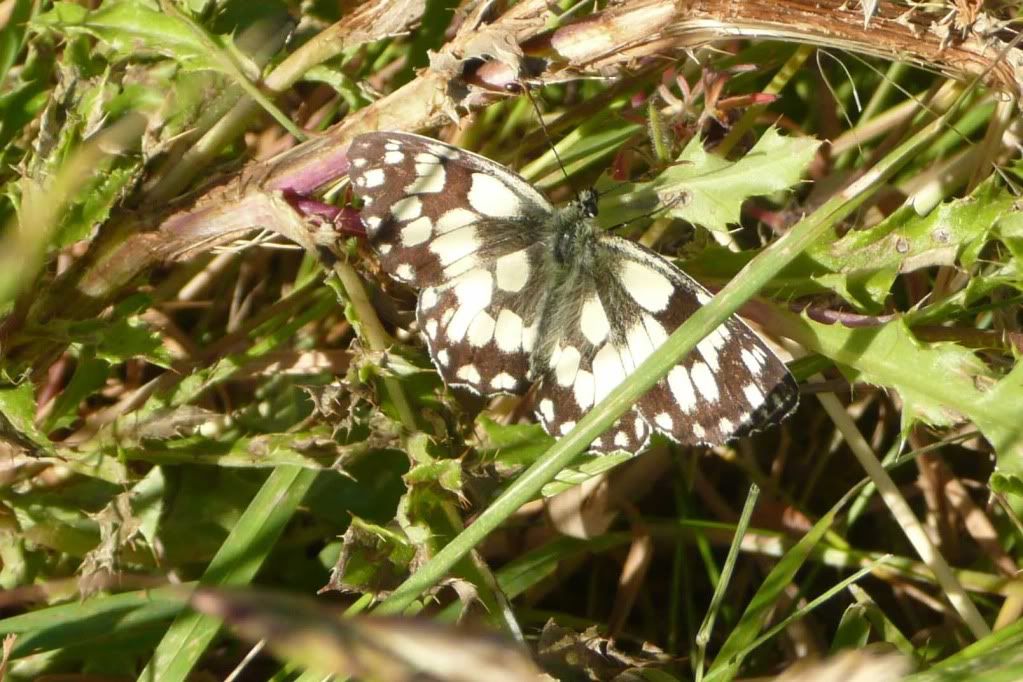
Also locally common is the marbled white butterfly, apparently it favours flower rich meadows, hence several seen flying around the ock meadows:
.
.
Although no sightings of a leaf cutter bee, one has left evidence in the form of these distinct cuttings in a leaf:
.