A cold Tuesday morning seemed an ideal opportunity to start to burn off the Christmas excess by walking to work along the river. Although it can be dark in the morning, there is usually something of interest to see.
The bright flash of a kingfisher is always guaranteed to lift the spirits and seems somewhat out of place and almost exotic on a cold day in January in England.
Kingfishers migrate within the UK, often heading to warmer temperatures in the south, but either this one has decided to see out the winter on the river, is just passing through, or is not yet ready to move on:
.
.
Buzzards are now quite common in Oxfordshire and are usually associated with the open fields and meadows where they hunt. So it is somewhat of a surprise is to see the dark shape of a buzzard as it flies amongst the trees.
Perhaps it is trying to find a suitable nest site? This could be interesting as it is along here that red kites have nested in previous years and they are usually tolerant of each other.
.
.
A more common bird is the robin and they can often be seen, even with it's prominent red breast hidden in the gloom.
Unlike many small birds which from flocks in winter, robins remain territorial and can often be seen chasing each other.
.
.
And a bird that is always common on the Ock, especially near town, where they are often fed is the mallard. Population numbers are boosted by migrants from Iceland and Scandinavia, but a decline in the wintering population has, perhaps surprisingly, resulted in the BTO classifying it's sat us as amber (http://www.bto.org/birdtrends2010/wcrmalla.shtml):
.
Dark nights and mornings, Christmas preparations and not to say horrid winter colds has meant that getting down to the river (or elsewhere) has been virtually impossible recently. Perhaps it's a time to go through some recent pictures which, for whatever reason, did not make it into a post:
.
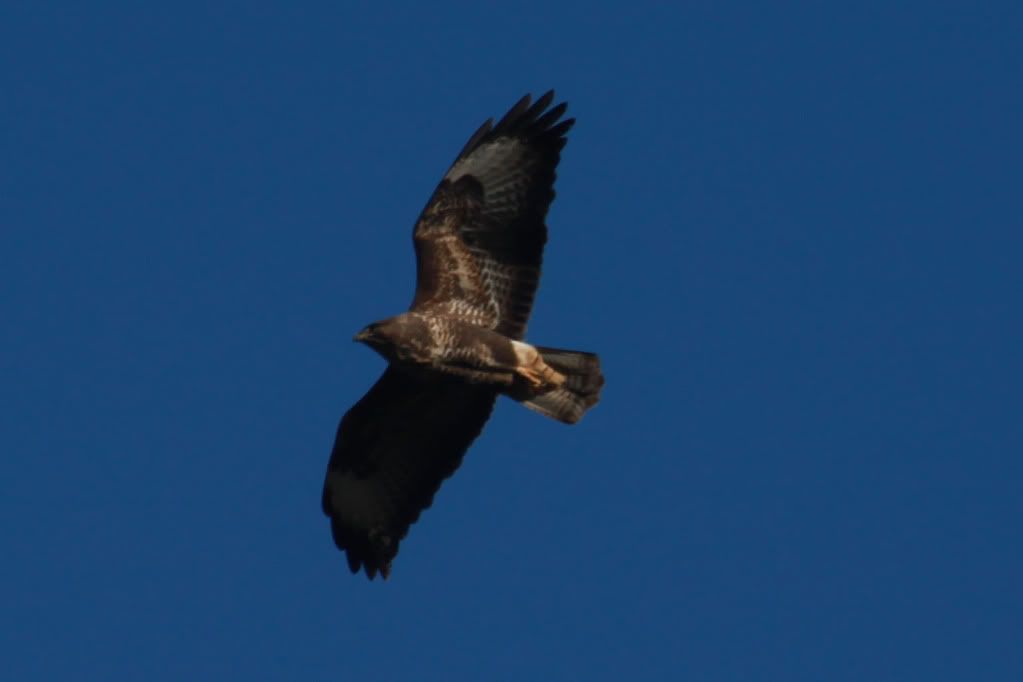
Buzzard: Buzzards are a frequent subject of this blog, as fortunately at least one pair has been breeding near the river. Although having one fly low overhead is somewhat unusual, especially with the lighting conditions making the patterns on their wings and bodies obvious - as this one seen in late November.
.
.
There are four birds of prey that are often seen by the river, sparrowhawks, kestrels, red kites and buzzards.
What is somewhat interesting is red kites and buzzards share the same food - carrion, rabbits and when times are hard - worms, yet they don't seem to be territorial with each other.
.
Severed Fish Head: There probably aren't too many people in Abingdon who not only get excited about finding a severed fish head, let alone stop and take a photograph of one. But this one, seen along the Ock Valley walk back in October is probably an otter kill.
.
The mother and the two cubs seen back in May would probably have now separated, with the mother driving the cubs out and she seeks to breed again. Could this have been mother? Or one of the cubs trying to set up a territory or a dog otter, living in the nearby Thames, coming into feed and maybe seek out a receptive female?
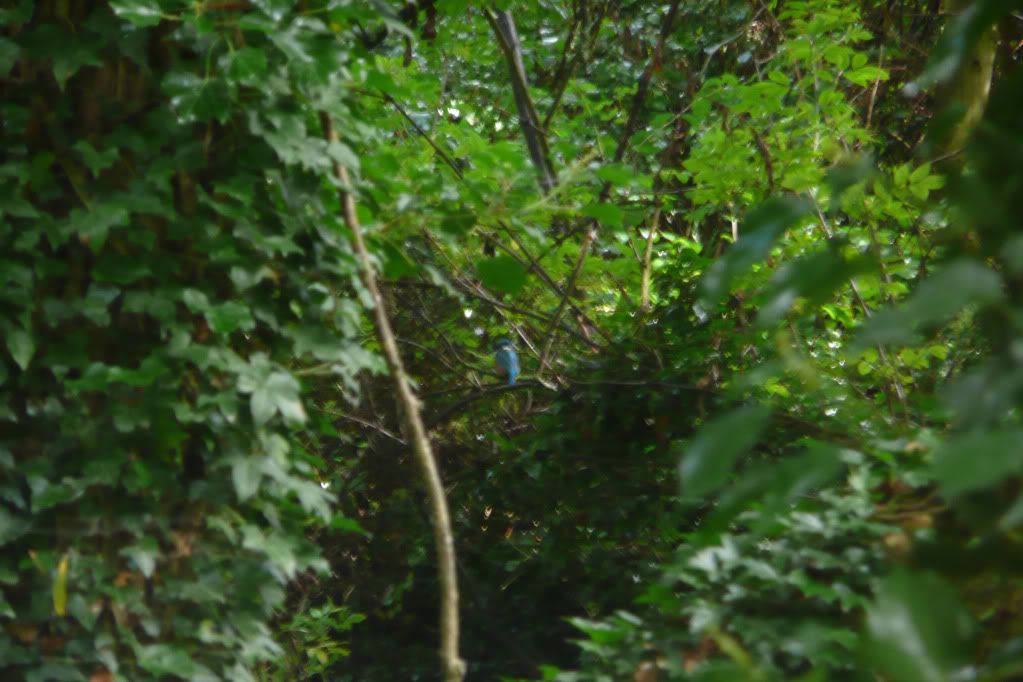
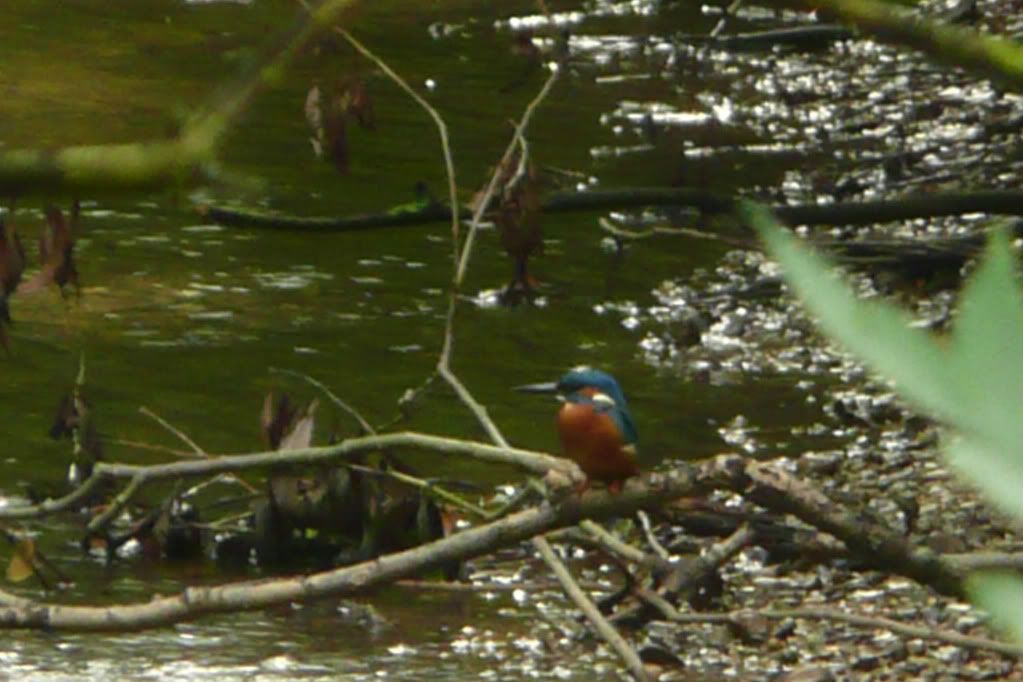
Kingfisher: The steep banks along the river make the Ock an ideal habitat for kingfishers and it is not uncommon to see the bright flash as one streaks past and they can sometimes be seen sat on a branch watching for fish. But as they are easily disturbed, being able to take a picture of one is unusual. In fact in late November, whilst walking to work, presented one of the few opportunities this year to be close enough to get a picture:
.
As the weather gets harsher and the river gets fuller and starts to freeze, the kingfishers may migrate to warmer parts of the country, where it is easier to find food. Returning in spring to breed again.
Starlings:As regular readers of this blog will know, the starlings at Otmoor are a favourite subject of this blog. It is certainly one of the sights of the county, if not the country with hundreds of thousands of starlings woshing overhead and forming mesmerising shapes.
However, the autumn and winter of 2011 have been very disappointing with starling murmuration consisting of just several hundred, as seen in November
.
There is even a sign saying the starling numbers are significantly down this year, the lack of rain through the summer has meant the reed beds have dried up, as a result predators like foxes make the reeds less secure, so naturally, the starlings have gone on to find safer roosts.
Since this blog started 18 months ago it has featured numerous creatures - badgers, water voles and discussed the possibility of otters. But there is one common animal that has only been mentioned in passing - kingfishers.
Kingfishers are common along the ock, which is hardly surprising - the steep soft banks are ideal for nesting and the overhanging branches of sycamore and willow trees are ideal for perching on before catching one of the plentiful supply of small fish. In fact no walk along the ock would be complete without at least one sighting of a bright flash and a high pitched whistle as one flies past.
But there is one simple reason for kingfishers not featuring very prominently in this blog - they can be very difficult to photograph.
For a start, they are surprisingly small, an adult is only 15 cm tall and despite their almost exotic colourings, they can be quite hard to spot if they're perched on the branch. And eventually when one is located, they don't often stay still for long, often disturbed by cyclists, dogs or over optimistic photographers.
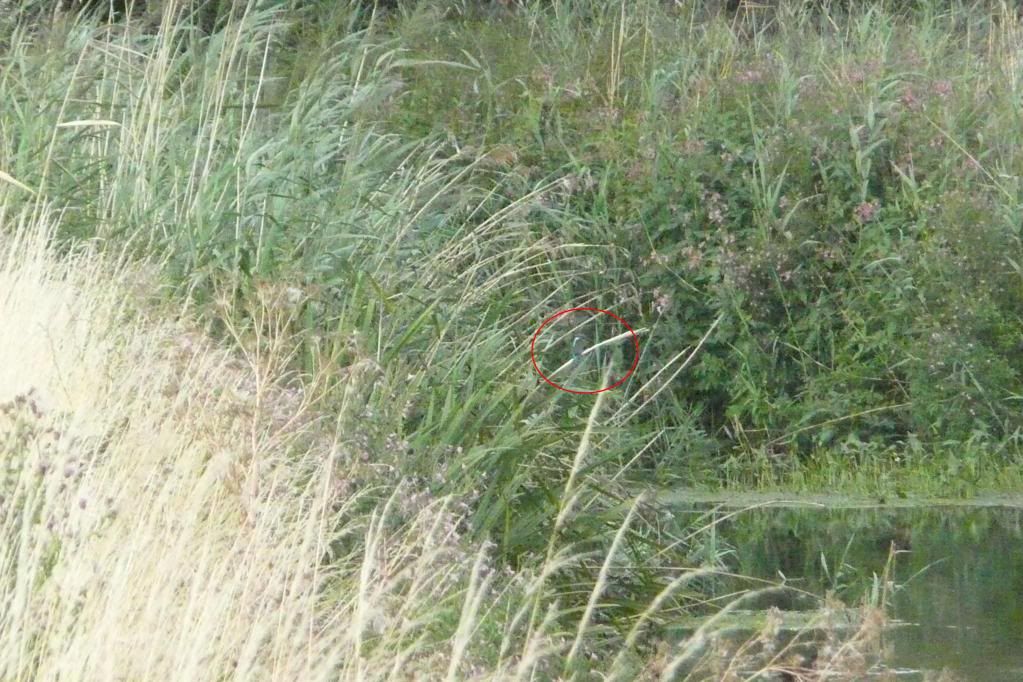
This juvenile shows how difficult it can be to see them, as it sits on a reed:
.
.
The best place to see kingfishers - if not to photograph them - is along the lower ock as it flows through the ock valley walk:
.
.
.
Maybe with a bit more practice and lot more patience, better photographs may appear before the kingfishers leave the ock for winter.
.