Showing posts with label plants. Show all posts

Saturday, 18 June 2016

The orchids of Radley Lakes

It is somewhat surprising that Radley Lakes does not feature more often in this blog.
A collection of lakes formed by quarrying has produced a wildlife oasis in North East Abingdon: where otters can occasionally be seen swimming in the lakes; hobbies feeding on the abundant dragonflies; barn owls quartering over the nearby meadows and even the occasional migratory osprey stopping off as it heads to Africa for the winter.

.
Not only are the lakes are a magnet for wildlife, but the poor quality soil means it is ideal habitat for some of our most impressive flowers - orchids.
The most obvious are the clumps of common spotted orchids.
.
.
.
Elsewhere, the pyramidal orchids are starting to flower.
.
.
Probably the most impressive of the local orchids is also the most difficult to find. The flowers of a bee orchid are less than 1 cm wide and occur in small groups.
.
.
The distinctive flower has evolved for pseudocopulation - achieving pollination through emulating a female insect which attracts a male,  which tries to copulate with the flower, resulting in a frustrated male and a pollinated flower.
Unfortunately for the bee orchids at Radley Lakes, the bee it attempts to mimic is extinct in the UK and hence it relies on self-pollination to reproduce.
The resultant seeds are microscopic and can be blown for hundreds of miles to try and find suitable habitat, where not only will it try to find an insect to help spread it genes, but also a symbiotic fungus; its seeds are so small they do not have any food for the early stages of growth, and so extract it from the fungus.
.
.
Whilst the orchids are impressive, they can be as elusive as the otters, owls and osprey, it is a more common plant which is probably the most attractive. The low nutrient soil restricts the growth of dominant grasses, with the result of thousands of ox-eye daisies turning a disused quarry into a fantastic vista.
.

Thursday, 4 February 2016

Candlemas

Some  perennial plants such as daffodils, snowdrops and crocuses survive the hardships of winter by accumulating food in their bulbs and then when spring approaches, the warmer and lighter days result in the plant putting it's efforts into producing flowers.
With the traditional day of the first snowdrop flowers being Candlemas Day (2nd February).

But this year it has been different... 


.
Like a lot of places, the snowdrops in our garden have been in flower before Christmas.
Rather than flowering on Candlemas, quite of a few are loosing their flowers and once again returning to storing food in their bulbs:
.
.
It's not only the snowdrops aren't the only ones, the daffodils, which normally flower in March, have also started to flower prematurely.
.
.
And so have the crocuses, which usually flower towards the end of February.
.
.
The cause of this early flowering is the unseasonable warm weather the South of England has had in the past few months.
In 2013 the average UK temperature was  5.7 Celsius, in 2014 it was 4.4 and in 2015 it was 7.9 (reaching a maximum temperature of 16.6 in Sunderland) [1].

Whilst it is always good to see flowers on a winters day, it may have an adverse affect on on hibernating animals like insects, bats and hedgehogs.
Yet for animals which don't hibernate - like water voles, this may actually be good news as they won't have to seek food in harsh conditions.

Whether this mild winter is temporary or a more permanent change, time will tell.

Sources: 
[1] Met Office: www.metoffice.gov.uk/

Sunday, 15 April 2012

Fritillary Sunday at Ducklington

Situated near the River Windrush, the fritillary meadow near the village of Ducklington is open to public on only way day a year (http://www.ducklingtonchurch.org.uk/events/fritillary/the-background-to-fritillary-sunday/).
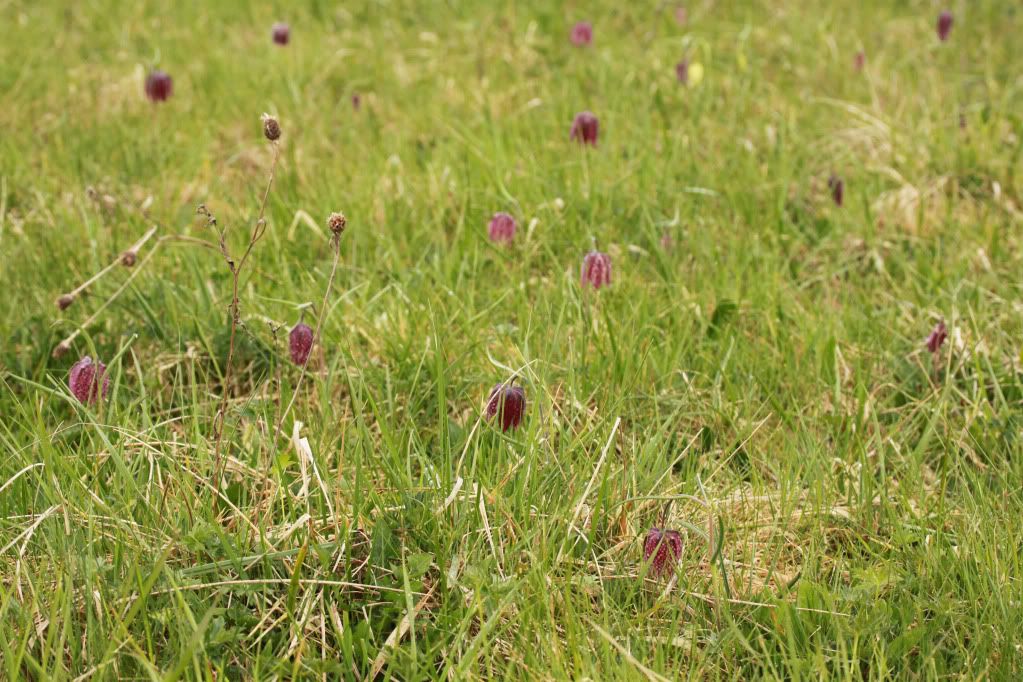
Unlike Iffley meadows, there are more fritillaries in a smaller area and despite the cold wind and lack of sun, it is an impressive sight on a Sunday afternoon:
.
.
.
.
Although they are not normally known for attracting bees, they were several making the most of the short time span the flowers are in bloom:
.
.
.
And on the village pond, appropriately in the village of Ducklington, were the first ducklings of the year.
.


Another impressive display of snake's head fritillaries can be found at Magdalen College in Oxford http://viewsoftheock.blogspot.co.uk/2016/04/the-flowers-of-magdalen-college.html

Friday, 13 April 2012

The flower of Oxfordshire

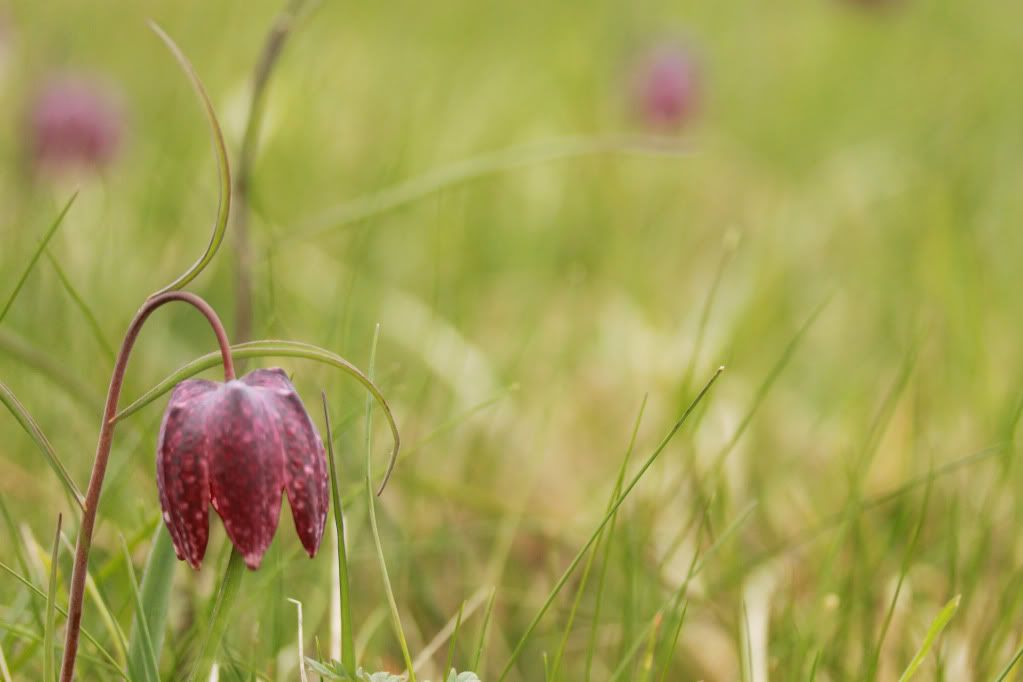
From a distance, the snake head fritillary can seem inconspicuous, but up close it seems more like a work of origami than a flower.
.
.
Once  common, it has suffered a massive decline in recent years as their habitat, flood plains, has been drained and ploughed for agriculture.
This has made it nationally rare and the riverside meadows in Oxfordshire - like the BBOWT reserve at Iffley Meadows - are some of the few places where they can now be found. 
.
..
Flowering in April and early May, most flowers are an elegant purple lantern with a white checked pattern.
.
.
Some are pure white and a few are white with a purple checked pattern.
.
.
As they are most often found in Oxfordshire, the charity Plantlife nominated it as the flower of Oxfordshire to help raise awareness of it's plight: http://www.plantlife.org.uk//wild_plants/plant_species/fritillary/


And Iffley Meadows is not the only place to find them, other notable sites are the grounds of Magdalen College (http://viewsoftheock.blogspot.co.uk/2016/04/the-flowers-of-magdalen-college.html in Oxford and for one day a year, the meadow near Ducklington Church is open to the public and this year it is Sunday 15th March

Wednesday, 3 August 2011

In search of sundew.

Whilst most plants gain their nutrients from the soil via their roots, others have have evolved to obtain theirs from other sources -  consuming insects.
Such insectivorous plants are the staple of wildlife documentaries,  so it somewhat of a surprise to find they can be found only of couple of miles from Abingdon. 
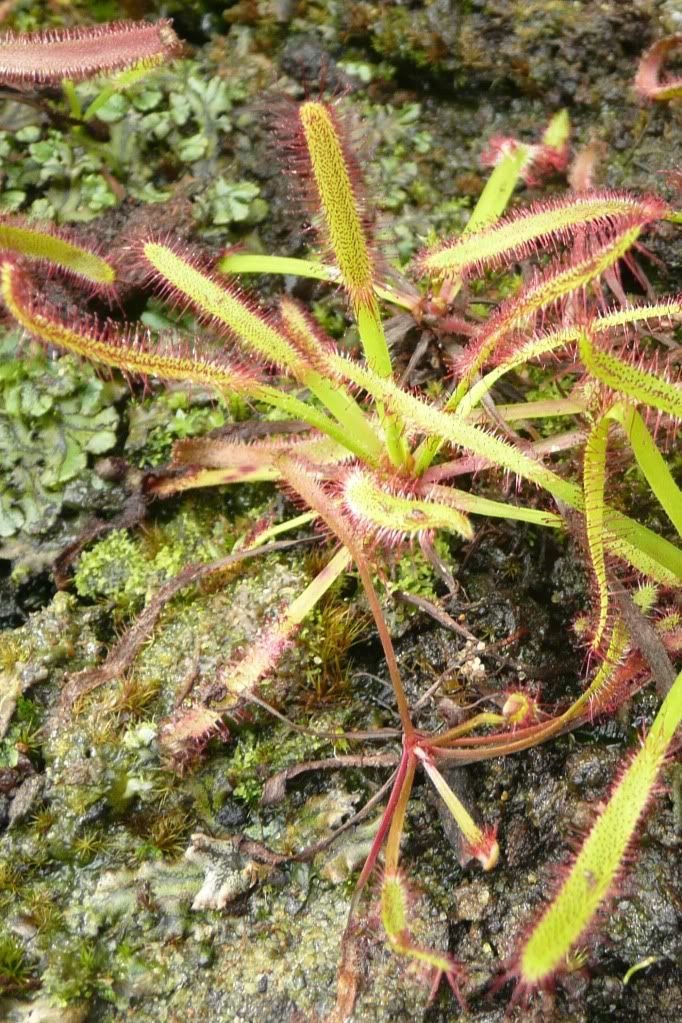
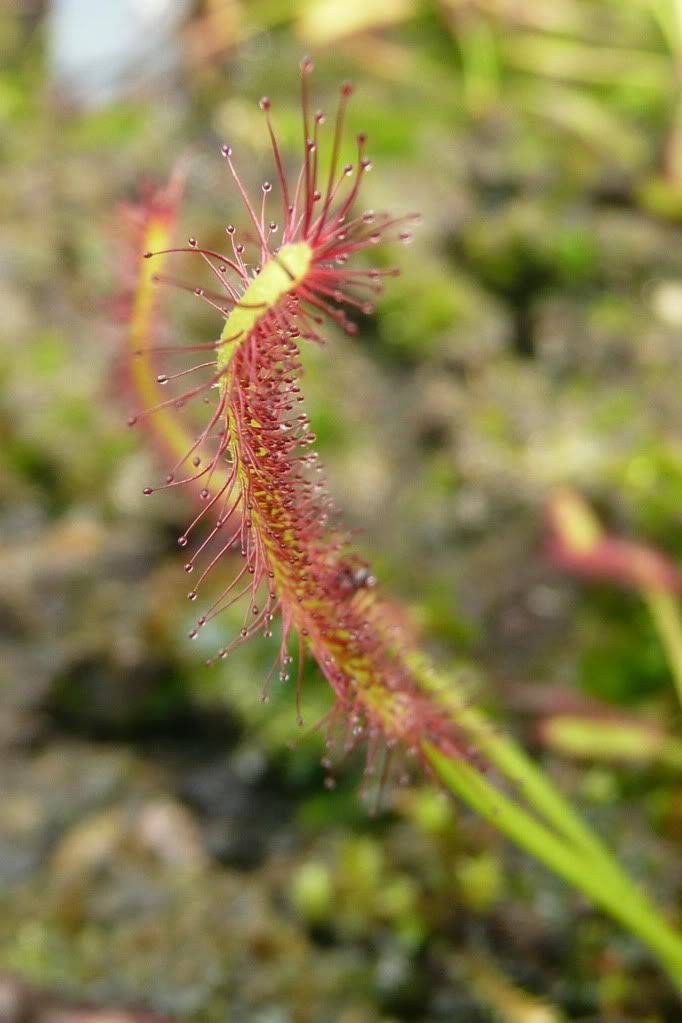
Growing in the fen at Parsonage Moor nature reserve is sundew.  A fascinating plant that secretes a glue from tentacles on it's leaves, which intices insects (which are fooled into thinking it is nectar) but instead of feeding, the unfortunate insect is stuck to the leaves, which slowly fold in as the insect is digested.
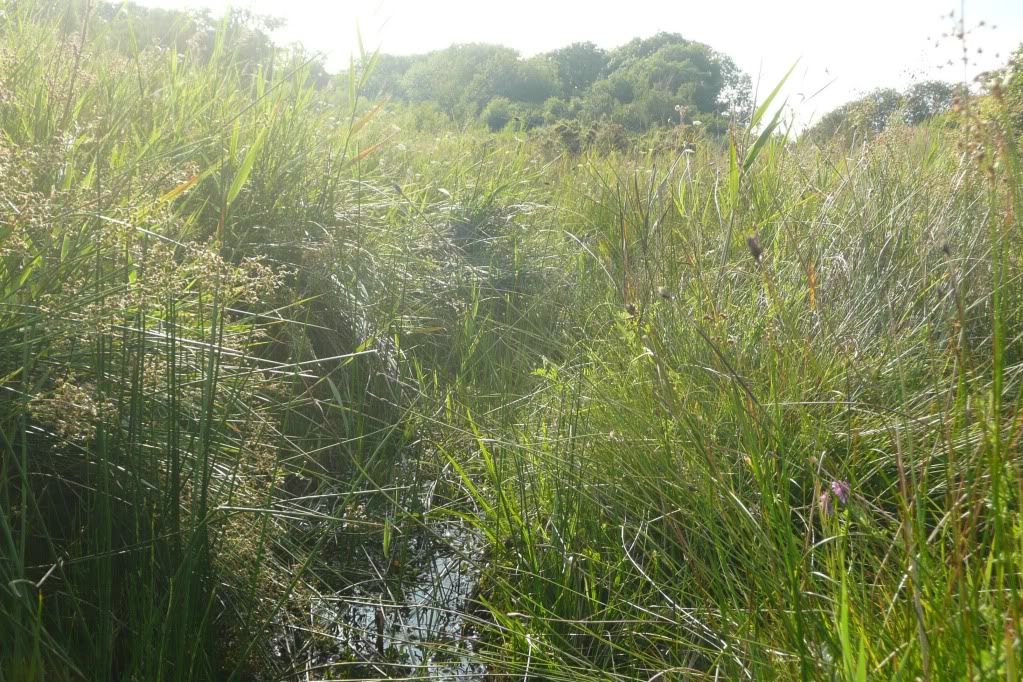
Parsonage Moor is part of the Cothill Fens network of nature reserves which are fed by  a series of springs, these feed into the Ock via Sandford Brook.  And trying to locate such a small, scarce inconspicuous plant  in such an environment is somewhat of a challenge - the fen is covered with tall reeds in which there are small pools where the sundew grow:
.
.
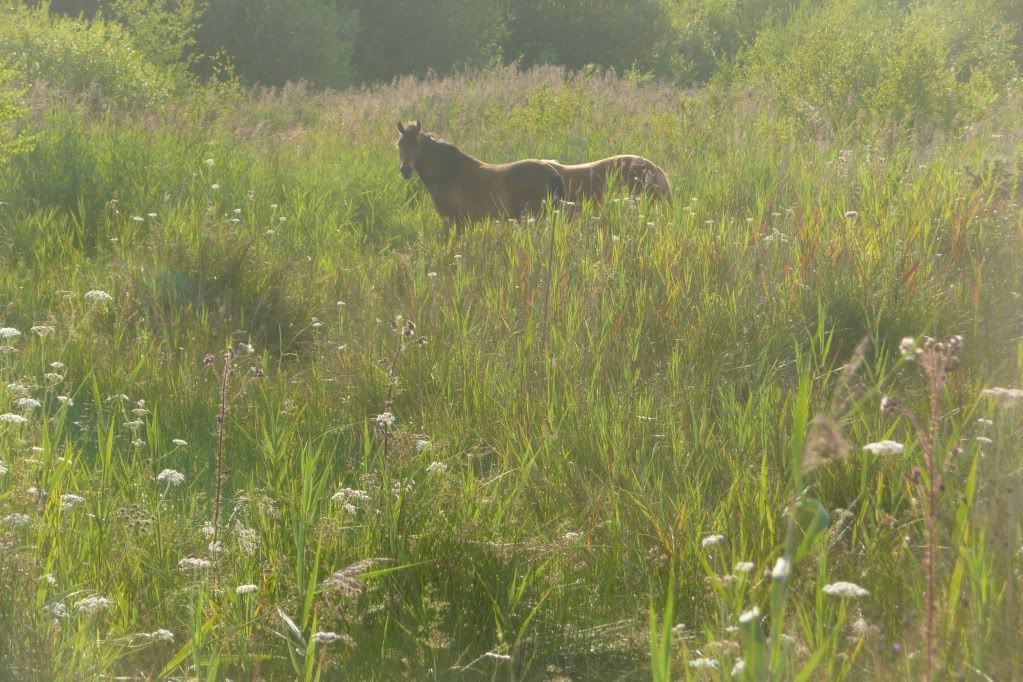
Although there are paths running through the fen, there is a risk of damaging the rare plants and insects which also inhabit the fen, as well as accidentally stumbling into some deep water or scaring the ponies which are used to graze the fen to control the scrub:
.
.
Fortunately another site exists in Oxfordshire where finding and photographing these remarkable plants is a lot more straightforward - the  Oxford Universitry Botanic Gardens, where there is an entire greenhouse devoted to insectivorous plants, including Sundew:
.
.