Showing posts with label water voles. Show all posts

Saturday, 5 March 2016

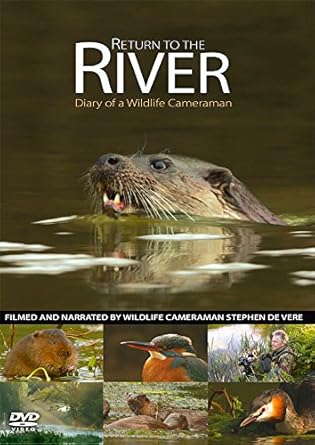
Return to the River

When we think of ground breaking wildlife documentaries we probably think of exotic locations and animals, like snow leopards hunting in the mountains of Pakistan, or killer whales hunting seals in Patagonia or even giant centipedes catching bats in caves in the Amazon - so it is somewhat of surprise to that wildlife behaviour possibly never recorded before has been filmed on the river Ock here in Abingdon.

Filmmaker Stephen De Vere – who has filmed sequences for the BBC’s Life of Birds, Life in the Freezer, Africa and most recently the sparrowhawk sequence in The Hunt - has spent the past few years filming and documenting the wildlife in English rivers for his film ‘Return to the River’.
.
(c) Stephen De Vere
.
It might not have the cinematic scale of the recent BBC wildlife documentaries, but it does provide a more personal insight into our rivers and by returning to the same spot several times he documents the changes in the river and the behaviours of the animals - it seems he is revisiting old friends as he reveals their secret worlds.

Whilst the kingfisher and otter footage is sublime, it was not filmed in the area, it is another charismatic animal – the water vole -  that was filmed on the Ock.
Charting their behaviour, from their first emergence in spring and the establishment of their breeding territories, to seeking out new food sources and avoiding predators – by climbing trees and it is this seldom seen behaviour that has possibly never filmed before.
This was originally recorded in this blog (even if the camera work is somewhat shoddy and there is the everpresent incessant drone of the A34) and even inspired Stephen to seek out the water voles on the Ock (I even get a credit at the end of the film).
.

.
It is Stephen's determination, creativity and professionalism that has exceeded anything recorded in this blog and the way he has captured their behaviour which makes these shy, endearing and now unfortunately very rare creatures the stars of the film.

For anyone with an interest in river wildlife, this film is highly recommended and not just because a leading wildlife cameraman has chosen to film on our local river.

More information on this and Stephen’s other film ‘Through the Garden Gate’ can be found at: http://britishnaturefilms.com/films/

And Stephen is also on Twitter:  https://twitter.com/Stephen_deVere

Thursday, 7 May 2015

Top Ten Tips for watching water voles:

In a comment to a previous post, Becky asked the following question:

Any tips for the best time of day to look for water voles

And whilst I answered the question in the comments section  I thought the subject of finding and watching water voles warranted a longer post, so I have compiled this list of top 10 tips to finding and watching water voles:

1. Identify Habitat
Perhaps the most important thing for spotting water voles is to identify is suitable place where they may live.  As the name suggests water voles inhabit water courses, but many sites are not suitable as they require steep banks to burrow into, such as these local water vole habitats.
.
.
.
The bank itself does not have to be too deep, about 10cm is the minimum, hence water voles can be found in water courses with comparatively shallow banks such as the Oxford canal (near Jericho) and the river Thames (near Chimney Meadows).

Vegetation is very important to water voles, - sedge, arrowhead and water crowfoot are some of the river plants that grow in rivers and streams and provide excellent opportunities to watch them swim across the river to feed:
.
.
.
.
Along the river bank, long grasses provide an additional source of food and bedding as well as cover from predators, and for the determined water vole, there are always nettles.
.

.
Unfortunately the ideal water vole habitat - steep banks and plenty of vegetation - does not always make a good place to watch water voles, like this ditch in north east Abingdon, where there is a very strong water vole population, but it's virtually impossible to see them.
.

.
2. Look for field Signs:
Having identified suitable water vole habitat, the next stage is to identify if water voles inhabit the area and there are three key field signs to look for - burrows, latrines and feeding.
The most obvious sign of water vole activity are burrows, these can be close to water - with grazed lawns or further up the bank:


.


.
Unfortunately the existence of burrows is not sufficient to prove there is an active water vole population, these burrows may have been caused by a now extinct colony or created by another animal - such as  Signal Crayfish (invasive crayfish introduced in the 1970's) that are notorious for burrowing and causing damage on river banks.
Therefore, it is often necessary to find other field signs as well.
Like a lot of mammals (badgers and otters included) water voles use their faeces as form of communication to indicate the existence of a vole's territory and are known as latrines.
Although they can be tricky to spot, when seen they are very distinctive - small, black (sometimes green) and ovoid (often described as looking like tic-tacs).


.
The third key field sign are the characteristic feeding plies -  vegetation (usually grass or sedge) with their ends cut at 45 degrees - and are easily identified when spotted, 


The combination of all three should mean there is an active water vole population

3. Look out for predators
Whilst they are bad news for the water voles, the presence of predators can be indicative of a water vole population.
The sight of an owl or a kestrel flying above the river can mean there are water voles present.  And the presence of rats can make water voles more active during daylight, hence making them easier to spot.

Whilst they normally eat fish and amphibians, herons are also known to eat the occasional water vole (https://www.youtube.com/watch?v=CJZ00MV6YFU), so if one is stalking a ditch, which doesn't seem to have a large fish population then it might have learnt of the presence of water voles and there is one currently stalking the lower Ock, where there is a high water vole population at the moment.
.

The nadir for all water vole spotters is the evidence of American Mink, a single female can wipe out an entire colony. 
Depsite their fearsome reputation, they are shy creatures and are really seen, so the most obvious indication of their presence is their dark, twisted, foul smelling faeces (known as a scat).
.


4. Listen
Even when water voles can't be seen, they can often be heard - a rustling in the vegetation, the nibbling of sedge (water voles are surprisingly loud eaters) and the distinctive plop made when they dive under the water if inadvertently disturbed can indicate the presence of water voles.

5. Look for them in spring:
Water voles do not hibernate and are active all year round, indeed I have seen them in the snow in winter (http://viewsoftheock.blogspot.co.uk/2012/02/winter-water-voles.html ) and are most active during their breeding season which runs from April to September.
I have found the best time to spot water voles is in spring - especially April and May - when the breeding season has started and the first generation are leaving their burrows and themselves looking to breed as well.
Surprisingly, as the population continues to expand they can be harder to see.  Perhaps due to the younger generations seeking new territories, the increase in population may attract predators and perhaps the biggest factor for decreased water vole sightings is the increase in riverside foliage making it a lot harder to see the river and the banks.
As this graph of my average water vole sightings along the Ock over the previous 4 years shows:


6. Look in the morning and evening:
During the breeding season water voles are active day and night, but maybe because they are avoiding predators I have found the best time to see them is either early morning (7 to 9am) or early evening (6pm to 8pm)


7. Do water vole surveys:
I first leant about water voles through doing the BBOWT surveys - these have several advantages for a would-be water vole spotter - the opportunity to attend a training day to learn about the field signs and understand water vole habitat; an opportunity to explore areas which would normally be out of bounds; and the chance to meet fellow surveyors.
More details on the BBOWT water vole recovery project can be found at: http://www.bbowt.org.uk/what-we-do/protecting-wildlife/water-vole-recovery-project-0

For those who don't live in the three counties, other wildlife trusts and organisations may offer similar survey opportunities.

8. Visit a water vole reserve:
Several places have introduced water voles into safe suitable habitats including WWT Slimbridge (http://www.wwt.org.uk/wetland-centres/slimbridge/) and WWT London Wetlands Centre (http://www.wwt.org.uk/wetland-centres/london/) and can provide excellent viewing opportunities - if you are not distracted by the other wildlife.
But on my visits I have never actually seen any water voles.

9. Go on a water vole safari
For those wanting to take photographs of water voles photographers Ian Greene (http://www.wildwonder.co.uk/adult-courses/) and Terry Whitaker (http://www.terrywhittaker.com/#!/p/workshops-and-tuitio) run workshops with highly photogenic water voles in photogenic locations.
Unfortunately I have not had the opportunity to attend any of these courses, so cannot make a personal recommendation on them.

10. Be patient:
A key skill I have learnt whilst watching water voles is to be patient, even if there are plenty of signs of them and it is early evening on a warm spring evening, there is no guarantee of actually seeing a water vole.
But with a lot of patience, sometimes many weeks, all it takes is one glimpse of these charismatic creatures to know it has been worthwhile.
 .


Whilst waiting, there are plenty of other things to enjoy along a river, I have also seen kingfishers (http://viewsoftheock.blogspot.co.uk/2010/08/kingfishers.html), a great white egret (http://viewsoftheock.blogspot.co.uk/2012/09/great-white-egret.htmland even otters (http://viewsoftheock.blogspot.co.uk/2011/05/otters.html)
- all whilst failing to see water voles.

Saturday, 25 April 2015

A Bless of water voles?

The concept for collective nouns originated back in the 15th century in the Book of Saint Albans and some of them - a pride of lions, a shoal of fish and a pod of dolphins - have made it into regular use.
Yet some seem just bizarre - an unkindness of ravens, an ostentation of peacocks and fluther of jellyfish - and are unlikely to make it into a typical conversation.

The collective name for voles is rather dull - a colony - and there isn't one specifically for water voles. A conversation on twitter suggested a plop and a nibble and these are good descriptive words for the behaviour for water voles, but maybe they are not obscure enough for a collective noun. 
I prefer 'a bless of water voles' as this is the word quite often said when someone sees one of these small, endearing, yet endangered mammals.

And so far this year, there has been a big bless along the Ock.


Source: Wikipedia

Sunday, 19 April 2015

Spring 2015

After what seemed like a never ending winter, spring arrived a couple of weeks ago and along with that, the river and the surrounding area have returned to life. 

The most obvious sign of the spring is the huge sway of blackthorn blossom along the hedgerows, especially along the old canal, where unlike most of the hedgerows in the area, they are not cut.

.
Another sign that winter is behind us is the songs of warblers, who have returned from Africa where they have spent the winter.
Whilst it is not the most distinctive of the warblers, the chiffchaff does have the most distinctive song.
.

The reed buntings, who may not have come from as far as Africa have also returned to the river to raise this years young.


.
Along the Jubilee walk near Marcham, the hares can be easily be seen before the crops get too high.


.
And after a very disappointing year last year, there is a lot of water vole activity, maybe because of mild winter and the perhaps because the Ock didn't flood over winter.
.

.
Another side effect of this late spring is the unexpected return of the blogging muse.

Monday, 30 March 2015

The Water Vole - A Quick Guide

Wildlife cameraman and filmmaker Stephen de Vere (https://twitter.com/Stephen_deVere) has been making a film about river wildlife  - River Diary - and has used some of the footage, including water voles filmed on the River Ock, to produce this fascinating short film on water voles and rats:


More footage from Stephen's wildlife films can be found on his YouTube channel:  https://www.youtube.com/channel/UCkB0Suiw0Y206cYCsIJL3Hg

Monday, 19 May 2014

Along the Lower Ock

Following Martin's previous comment, I chose to have a walk along the Lower Ock and immediately there are signs of water vole activity:
On the extruding pipe there is what looks like a water vole latrine:
.
.
Whilst other animals will make burrows (especially signal crayfish), this one may well be  made by a water vole.
.
.
And to confirm the feed signs, sat on a promontory is a small water vole:.
.
.
Which then swam across the small river:
 .
.
Before climbing up the bank and feasting on the waterside vegetation which is so important for water voles:
.
.
So it seems that at least on one part of the river, the water voles are still hanging on.  And thanks to Martin for the tip-off.

Saturday, 19 April 2014

Abbey Fishponds

Tucked away in-between housing estates in the north of Abingdon is a small nature reserve known as the Abbey Fishponds.
.
.
In medieval times it is believed it once consisted of large ponds used to provide carp and other fish for the nearby Abingdon Abbey.
Now those ponds are have dried out and have been replaced by a well managed nature reserve which has smaller ponds, that are no longer suitable for farming fish, but are ideal for aquatic insects such as damselflies and dragonflies - which will emerge later in the year:  
.
.
As well as the ponds there is a small stream running through the centre of the reserve - which eventually joins the Thames at Barton Fields.

.
The shallow water, steep banks and sympathetic management mean it is ideal habitat for water voles and with enough patience and a bit of luck it is possible to see one lurking at the edge of the stream.
.

Proving the interconnected waterways, streams and ditches make Abingdon one of the important areas for water voles in county - if not the country.

Thursday, 23 May 2013

The water voles of the Oxford Canal

The Oxford Canal, completed in 1790, links the River Thames to Coventry and was one of the main methods of transporting goods from the manufacturing heart of the midlands to Oxford, Reading and London
The canal now stops at Hythe Bridge Street in Oxford city centre, but once continued to Worcester Street to a basin at Worcester Street - now an expensive car park.
The freight may have declined, but it is popular place for mooring a barge and and is an enjoyable place for an evening stroll:
.
.
As it has become more of a source of leisure than commerce, it has become a haven for wildlife and as the canal passes through Jericho, there are what looks like signs of water vole feeding by the canal path:
.
.
Further along the canal there are very obvious signs of water vole latrine
.

Although trying to catch a glimpse of them is very hard, to the far side of the canal are gardens and the habitat is more suitable for snoozing ducklings than water voles.
.
.
But lurking in the undergrowth, next to the canal path is the unmistakable nose of a water vole.
.

.
The water voles along this stretch are well known (if somewhat hard to see) and have caused a few problems when attempts have been made to renovate the footpath

http://www.oxfordmail.co.uk/news/10099754.Voles_scupper_plans_for_towpath_revamp/


Thursday, 25 April 2013

First water vole photo of 2013

This year has seems to have been a slow year for water voles along the Ock, the very poor spring has meant that the breeding season is late as well as not being conducive to looking for wildlife.
So it is great to see that they have survived the winter (and any Mink) and are still about, even if sightings are less frequent than this time last year:
.
.