Showing posts with label birds. Show all posts

Friday, 1 May 2026

In search of Sklylarks

As mentioned in the previous blog post, there are indications that Skylarks are singing (if not nesting successfully) over the fields of south Abingdon

So with a new sense of optimism the blog set out early morning to try to and catch a sight of this iconic bird.

Although seeing them is unlikely. Not only are they are a small bird which flies up the fields to either deter predators or to try to attract a mate but the UK population has fell by 50% since the 1980's[1] with the most likely cause loss and changes of habitiat, especially the modern move to different crops[2].

But to the blog's suprise they are in Abingdon are what a delight to spend a late April morning watching them sing.  So someone appears to be doing something right in the nearby fields and may they continue to sing for years to come.

Although one of the things that has not changed over the past 5 years is the poor quality photography in the blog


Sources

[1] RSPB Handbook of British Birds (2006)

[2] BTO  https://www.bto.org/learn/about-birds/birdfacts/skylark

New Technology #1

 Whilst this blog has been dorment, the world has moved on, and things which seemed like science fiction five years ago and now used all the time. 

One of the obvious changes is the rise in wildlife identifation apps and probably the most impressive of those is Merlin:  https://merlin.allaboutbirds.org.

Whilst some bird songs are fairly easy to distinguish - robins, blackbirds, wren - most seem only identifiable by experienced Ornithologists. So Cornell Univesity (https://www.birds.cornell.edu/home/) have set out to help answer one of most common questions "what is that bird song?" and best of all it's free (although donations are welcome).
Using a smart phone, whilst the app is open, it detects even the quietest bird song (and amazingly ignores the any background noise).

And this is what it recorded in the fields around south Abingdon:

.

The Redstart & Stonechat seem somewhat optimistic and the probability of Redshank in south Abingdon is almost certainly fanciful, but the others are very good identifications. And illustrates that whilst UK birds are declining there is still a diverse range of song birds in the area.
And interesting and tantalising is the thought of skylarks nesting in the fields near where we live.....

Thursday, 21 May 2015

Cygnets & Ducklings

It is very challenging for an aquatic bird to raise young on the Ock.  In the water they face threats from otters, mink and pike, if they stray onto land they face predation from stoats, foxes and uncontrolled pet dogs and from the air there is the permanent threat of kestrels and buzzards

Yet despite these risks, a pair of swans have managed to raise three young cygnets.

.
Swans normally have large broods of 8 to 10 cygnets, so this pair may have already lost a large a large proportion of theirs.
.


.
Whilst it is unlikely that all three will survive, at least they have two attentive parents who will do their utmost to care and protect them, unlike this lonesome duckling.
.


With no parents or siblings it has either been abandoned or it's relatives have been predated leaving it will very little chance of it surviving the night, yet alone to adulthood.

Sunday, 19 April 2015

Spring 2015

After what seemed like a never ending winter, spring arrived a couple of weeks ago and along with that, the river and the surrounding area have returned to life. 

The most obvious sign of the spring is the huge sway of blackthorn blossom along the hedgerows, especially along the old canal, where unlike most of the hedgerows in the area, they are not cut.

.
Another sign that winter is behind us is the songs of warblers, who have returned from Africa where they have spent the winter.
Whilst it is not the most distinctive of the warblers, the chiffchaff does have the most distinctive song.
.

The reed buntings, who may not have come from as far as Africa have also returned to the river to raise this years young.


.
Along the Jubilee walk near Marcham, the hares can be easily be seen before the crops get too high.


.
And after a very disappointing year last year, there is a lot of water vole activity, maybe because of mild winter and the perhaps because the Ock didn't flood over winter.
.

.
Another side effect of this late spring is the unexpected return of the blogging muse.

Sunday, 17 March 2013

Siskins

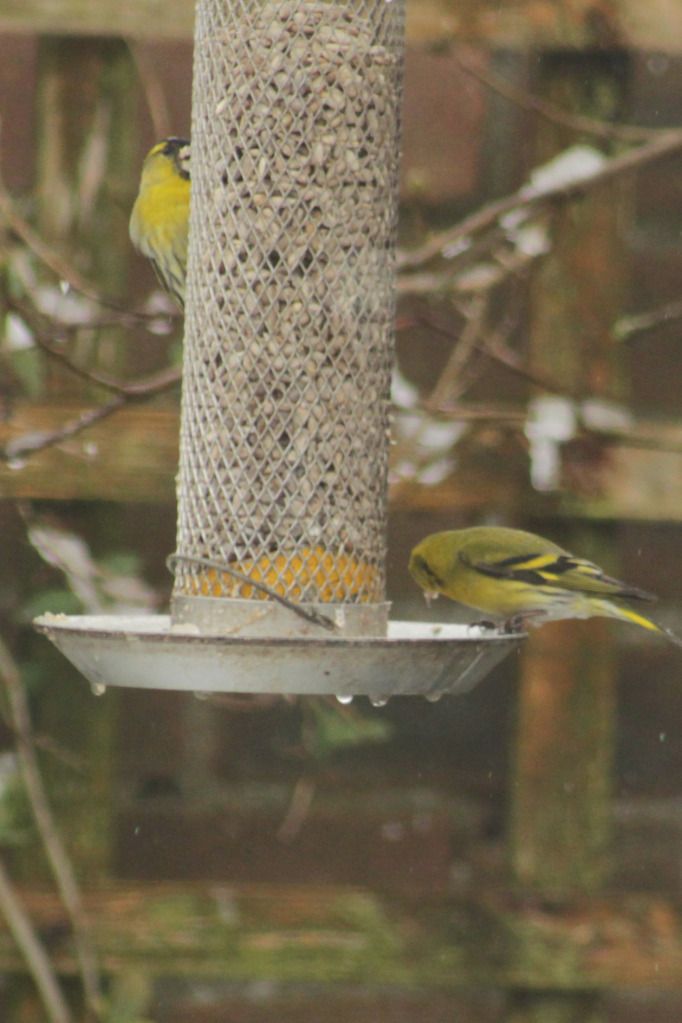
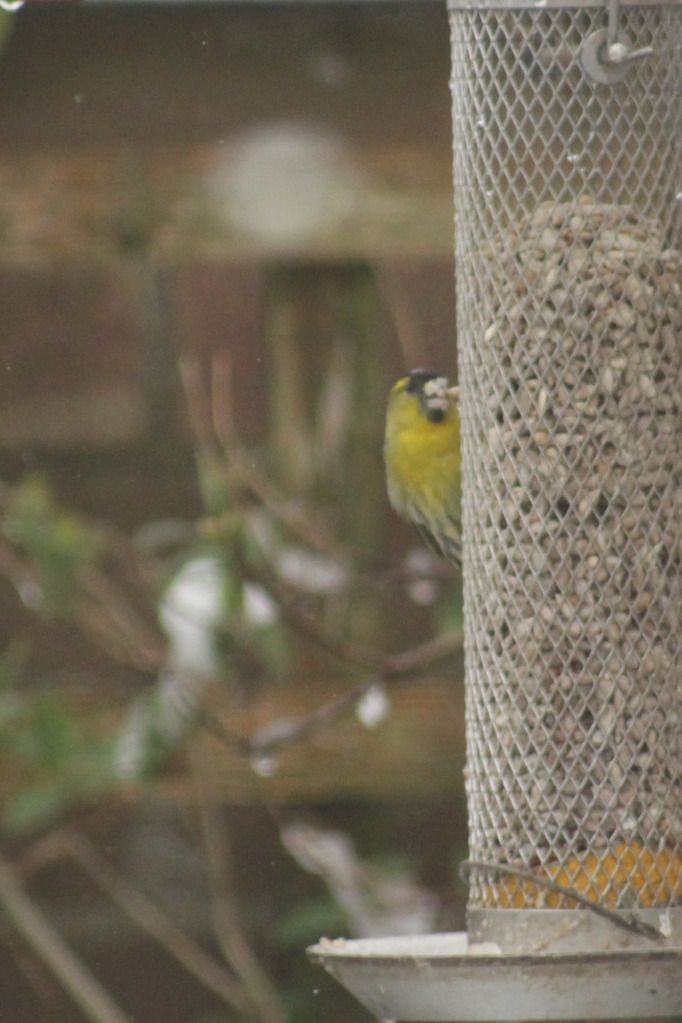
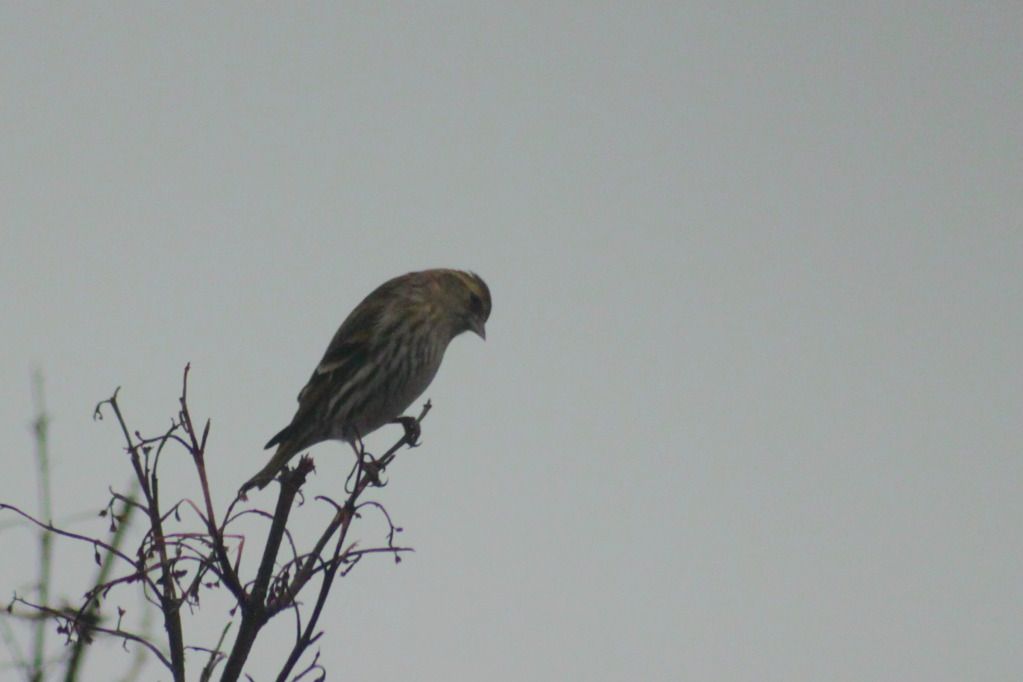
Among the usual visitors to the bird feeders in our garden - blue tits, chaffinches, goldfinches and the occasional greenfinch - there is a bird that we have not seen for over five years - siskins:
.
.
.
Siskins are migratory birds and so these will have chosen to spend the winter in south, usually eating tree seeds,  before returning to their breeding areas of Northern Britain or Europe.
.
.
However, this year seed availability has been lower the average and they have been attracted to garden feeders (in our case, sunflower hearts) in record numbers, with the BTO recording the highest influx of siskins into gardens since 1998.

Saturday, 10 March 2012

River birds

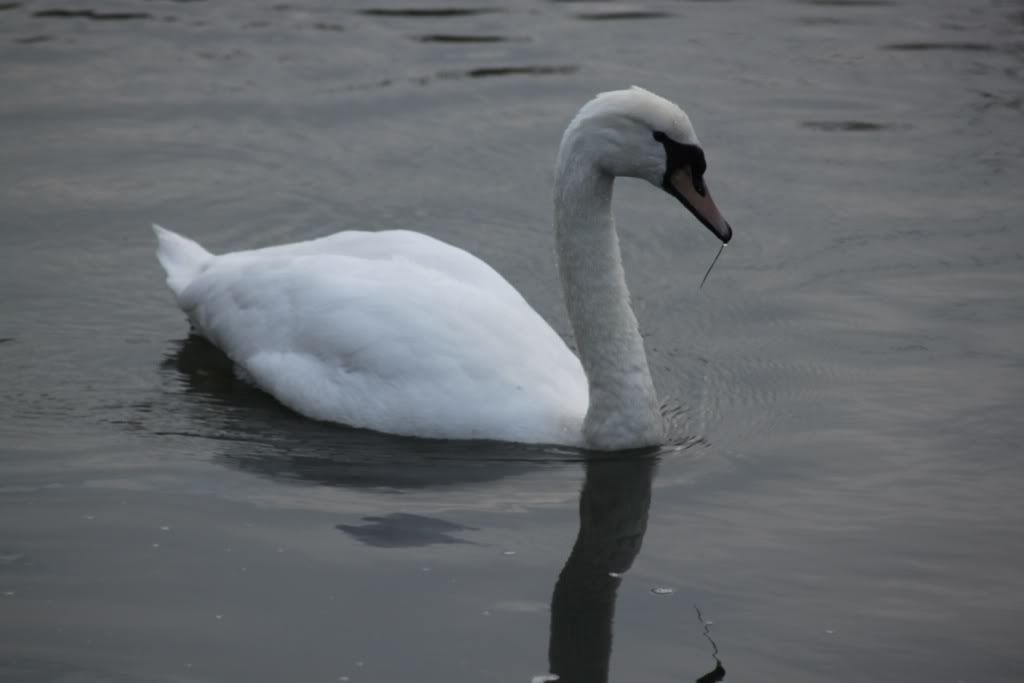
Last year, a pair of mute swans tried to set up a nest along the river (http://viewsoftheock.blogspot.com/2011/04/swans.html), but unfortunately did not successfully breed .  This year, a swan has arrived, but it is on it's own.
Adult swans form partnerships for life and divorce is very rare, so either this is a new swan or last years pair have separated, possibly due to the unsuccessful breeding. 
What ever the reason it looks a somewhat sad and lonely sight as it swims solitary up and down the river.

.
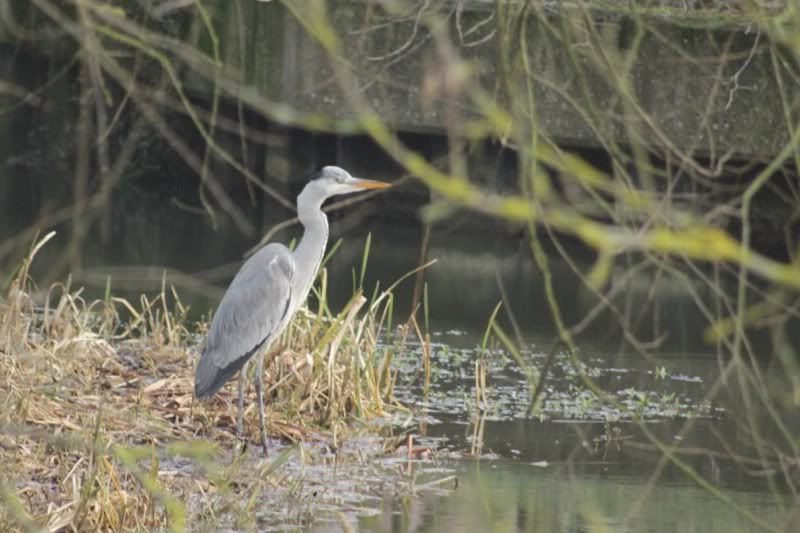
Grey herons are occasional visitors to the river and they can be seen stood silently by the river as they look for their prey, usually small fish and amphibians, but they will also take river birds like moorhens and small mammals - including water voles 
.
.
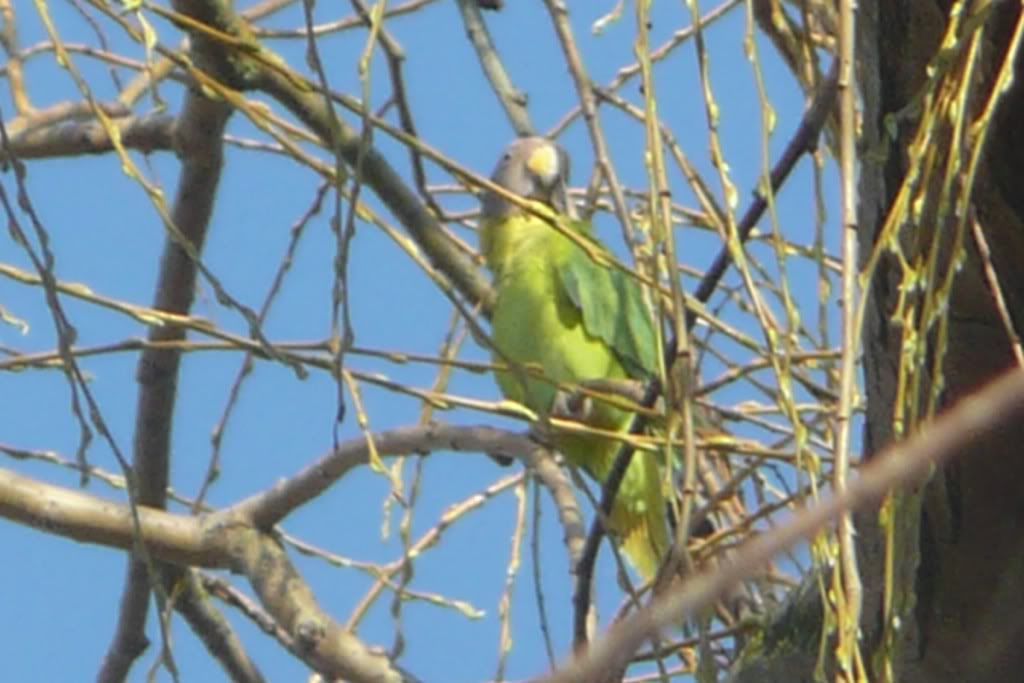
A somewhat more unusual sight is a parrot, squawking at the top of one of the tallest trees by the river (seen Sunday 26th February):
.
.
Of course parrots are not native to the UK, but ring necked parakeet's released in the 1980's and 90's have become so numerous in the south of England - they can be seen in Hyde Park in London and Windsor Great Park - they have become a nuisance 
According to the Oxfordshire Bird Blog a ring necked parakeet was seen at the Drayton Road Allotments the next day.
With the grey head and yellow beak, it does not look like a parakeet - which have green body, head and a read beak (http://www.rspb.org.uk/wildlife/birdguide/name/r/ringneckedparakeet/)  , so this is may well be a recent escapee.
If it is, can it survive? The parakeets have demonstrated it is possible for exotic birds to flourish in the UK, but there is a lack of fruit on the Ock (the fieldfares and redwings have eaten it), so it will have to find a new place to squawk, and as it wasn't there last weekend, maybe it has...

Sunday, 29 January 2012

Big Garden Birdwatch - 2012

The weekend of 28th and 29th is the RSPB Big Garden Birdwatch, the largest citizen science project in the world.
An opportunity to sit back, drink tea, eat cake and by counting the birds in the garden for one hour help contribute to a project which has documented the fortunes of the UK's garden birds over the past 30 years.
Last year, was the first time the survey featured in this blog (http://viewsoftheock.blogspot.com/2011/01/big-garden-birdwatch.html)
This year our  garden survey tool place on  between 3pm and 4pm on Saturday 28th February.
Chaffinch 6 (2011 count of 2)
Chaffinches are regular visitors to the garden, but this year was a record number, with six at the feeders at any time.
.
.
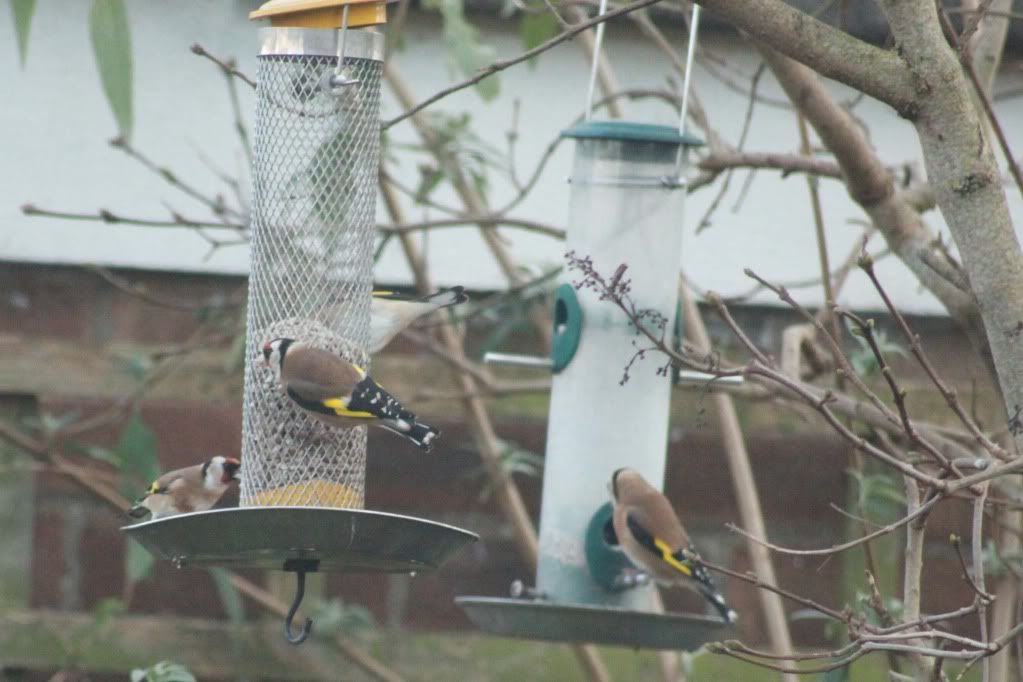
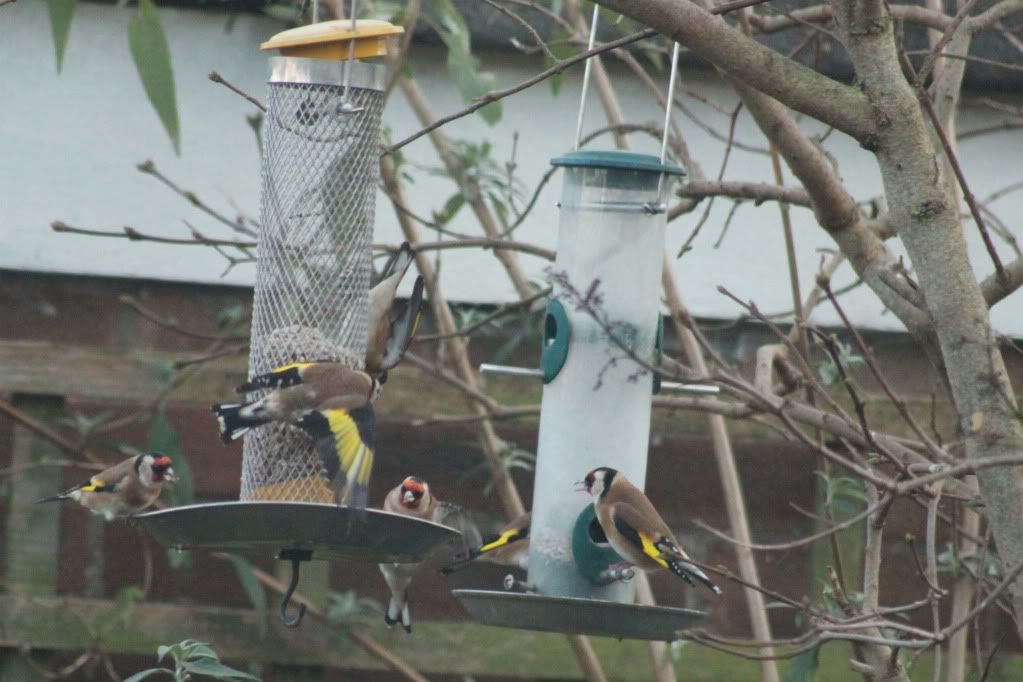
Goldfinches 4 (2011 count of 4):
At the end of last year, the number of goldfinches was quite high, but in recent weeks there have only been a few visiting the garden, perhaps the mild winter has not forced them into gardens.  It will be interesting to see if the forecast cold spell will increase them.
However, there were only four in the garden this year, even so, with the 6 chaffinches at the same time, they were hard to count, until they all landed on the feeder at the same time:
.
.
Collared Dove 2 (2011 count of 0):
Collared doves are now a regular bird in our garden, having worked out how to use a bird feeder:
.
.
Blackbird 1 (2011 count of 2):
A pair of blackbirds have once again set up a residency in the garden and can often be seen hoping around, pulling worms out of the lawn and being argumentative with each other.  During the survey, only the male put in an appearance:
.
.
Blue Tit 1 (2011 count of 2):
A blue tit made a fleeting appearance towards the end of the survey, taking some seeds off the feeder before disappearing:
.
.

Wren 1 (2011 count of 0):
Surprisingly, wrens are one of the most numerous birds in the UK so it should not be too surprising that one is visiting the garden, but this is the first time we have seen one here.
Unlike most garden birds, wrens do not raise the young as a pair, instead the male will build a series of nests and the female will select her favourite and raise the young in it on her own.
The wren in our garden is almost certainly a male seeking out suitable nest sites, but it was hoping in and out of the compost bin, probably eating fruit flies and hopefully not thinking of it as a place for a nest:
Unfortunately there is no picture for the wren.

Dunnock 1 (2011 count of 0):
Dunnocks are another regular visitor to the garden (there used to be a pair, but one came into close contact with a sparrowhawk last year).
.
.
Birds that were seen last year but not his year include:
Starlings -  Which occasionally land but will fly overheard most days
House Sparrows - Last year there were two house sparrows, but they have not visited our garden for many months, so not surprising there were no sightings during the survey
Pied Wagtail - Last years surprise was a pied wagtail, a very infrequent visitor to the garden, so again perhaps not surprising that it did not feature this year.


The results for the 2011 Big Garden Survey can be found at: http://www.rspb.org.uk/birdwatch/results.aspx

Tuesday, 17 January 2012

Winter birds on the Ock Valley Walk

A cold Tuesday morning seemed an ideal opportunity to start to burn off the Christmas excess by walking to work along the river. Although it can be dark in the morning, there is usually something of interest to see.
The bright flash of a kingfisher is always guaranteed to lift the spirits and seems somewhat out of place and almost exotic on a cold day in January in England.
Kingfishers migrate within the UK, often heading to warmer temperatures in the south, but either this one has decided to see out the winter on the river, is just passing through, or is not yet ready to move on:
.

.
Buzzards are now quite common in Oxfordshire and are usually associated with the open fields and meadows where they hunt. So it is somewhat of a surprise is to see the dark shape of a buzzard as it flies amongst the trees. 
Perhaps it is trying to find a suitable nest site?  This could be interesting as it is along here that red kites have nested in previous years and they are usually tolerant of each other.
.
.
A more common bird is the robin and they can often be seen, even with it's prominent red breast hidden in the gloom.
Unlike many small birds which from flocks in winter, robins remain territorial and can often be seen chasing each other. 
.
.
And a bird that is always common on the Ock, especially near town, where they are often fed is the mallard.  Population numbers are boosted by migrants from Iceland and Scandinavia, but a decline in the wintering population has, perhaps surprisingly, resulted in the BTO classifying it's sat us as amber (http://www.bto.org/birdtrends2010/wcrmalla.shtml):
.

Saturday, 10 December 2011

Argumentative Goldfinches

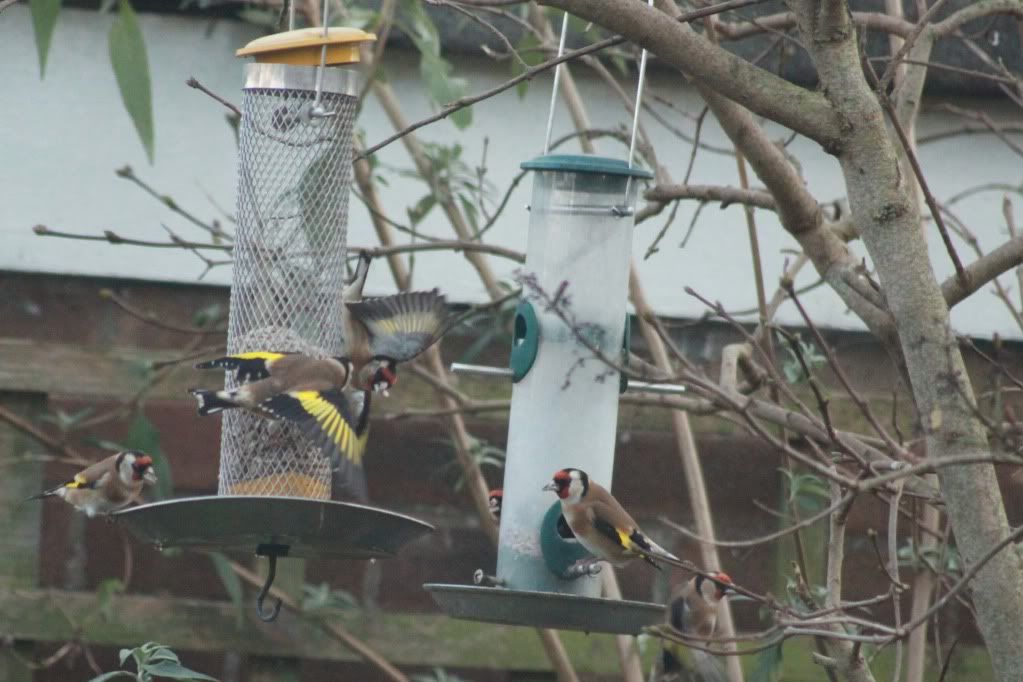
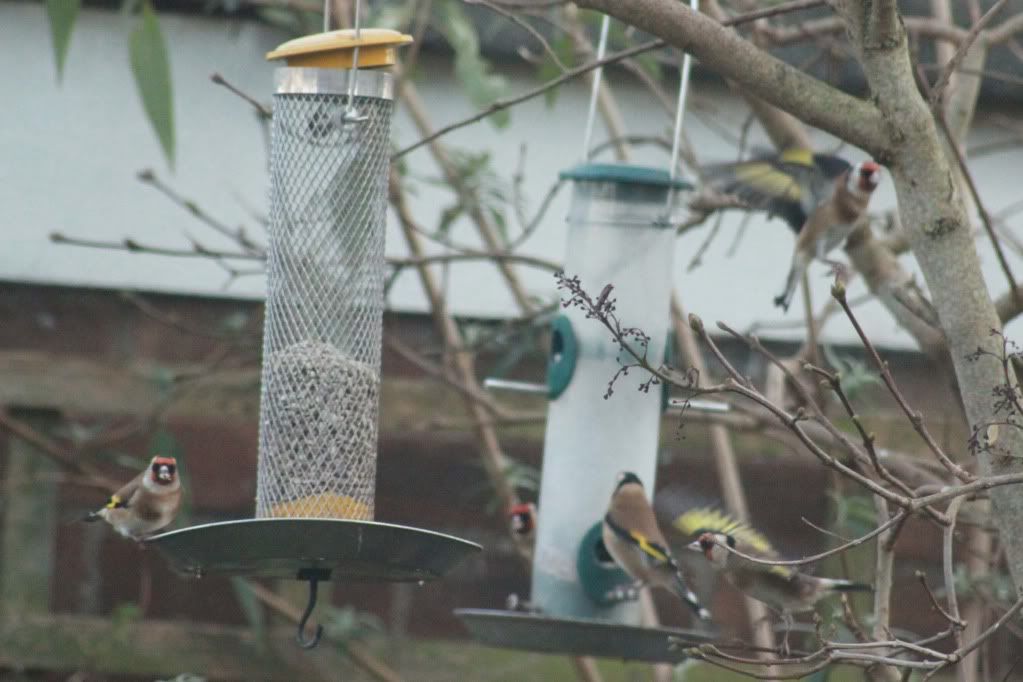
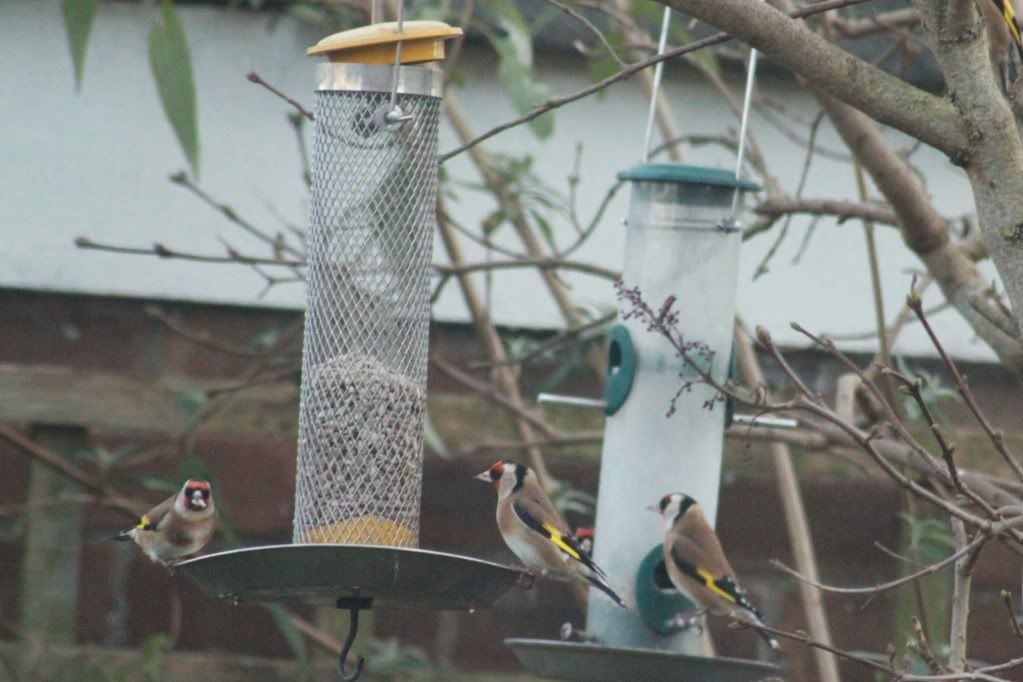
As winter sets in and the weather gets colder the number of goldfinches in the garden increases, sometimes as many of 30 can be seen competing for the sunflower hearts in the bird feeders.
Most of the times they are harmonious, seemingly not to mind being in close proximity to each other.
.
.
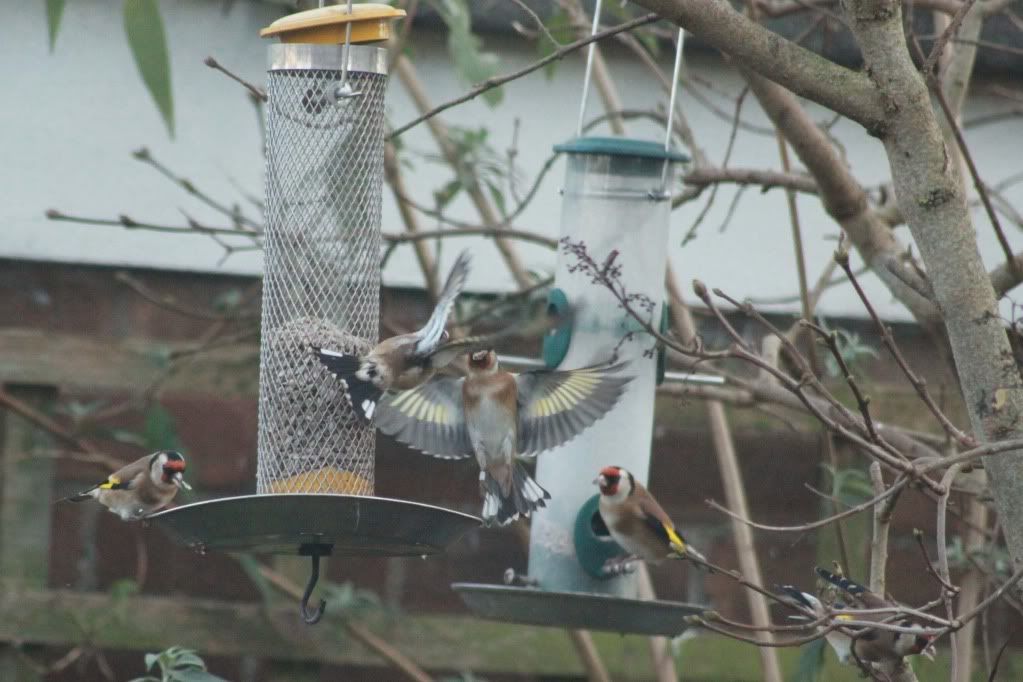
However, occasionally, for apparently no reason, one can take offence at another:


.
A skirmish on the feeder can then often ensue:
.
.
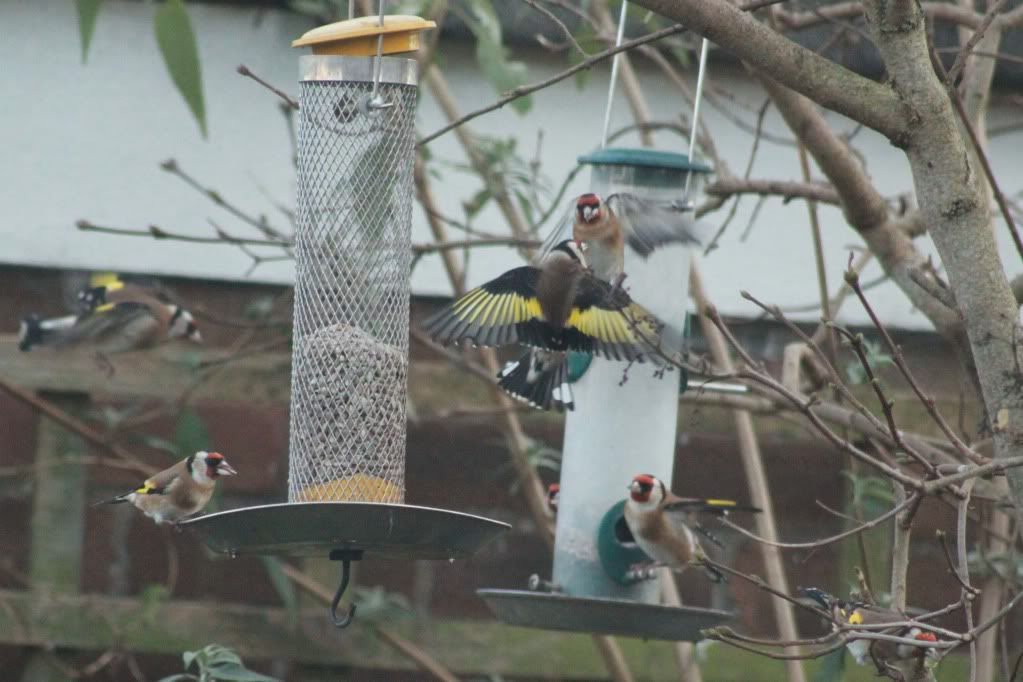
The skirmish then increases as the birds start to move off the feeder
.
.
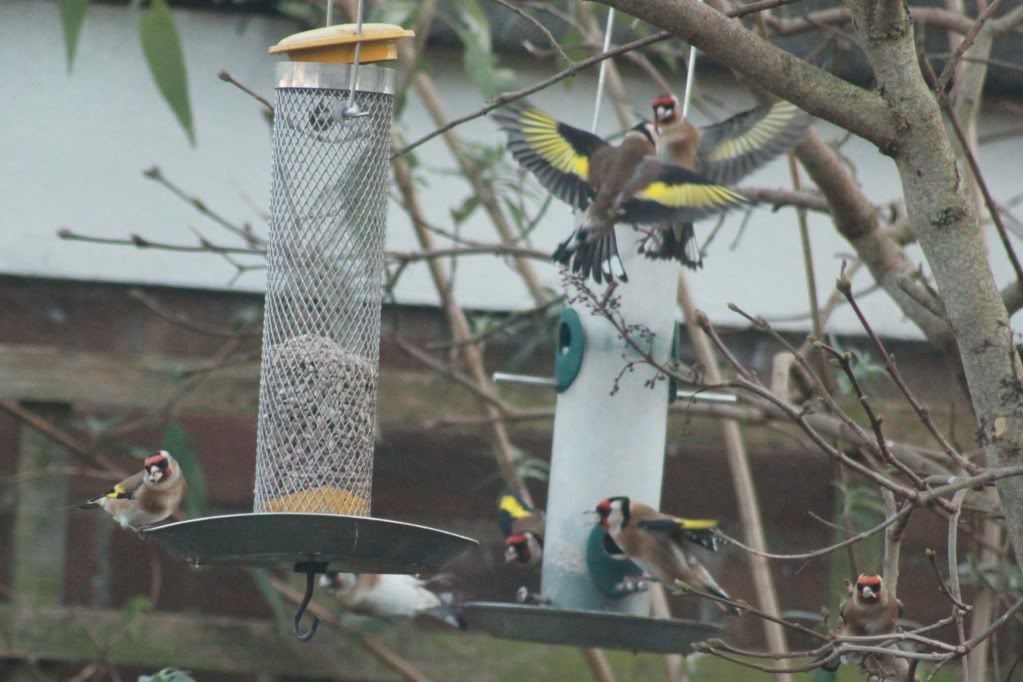
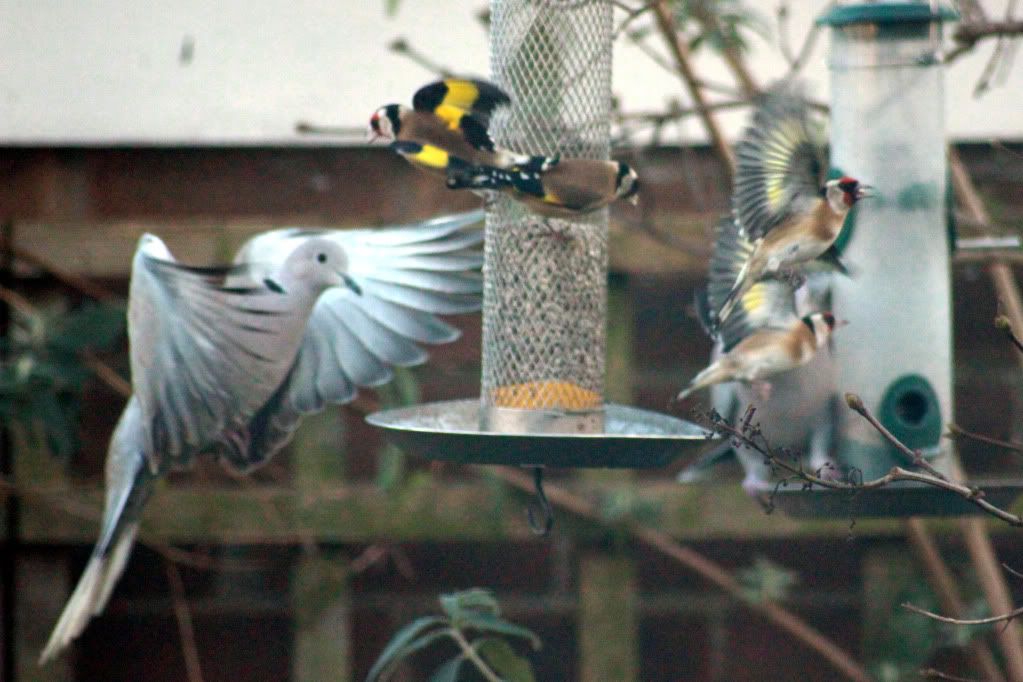
Before taking the argument into the air
.
.
And eventually away from the feeders.
.
.
Any opportunist Goldfinches,  watching the argument from a branch nearby, can make the most of the situation:
.
.
 With the two trouble makers no where to be seen and the new arrival making most of the opportunity, it seems peace has returned to the feeders, at least for a short while......
.
.
.. That is until a collared dove turns up:
.

Monday, 31 October 2011

Long Tailed Tits

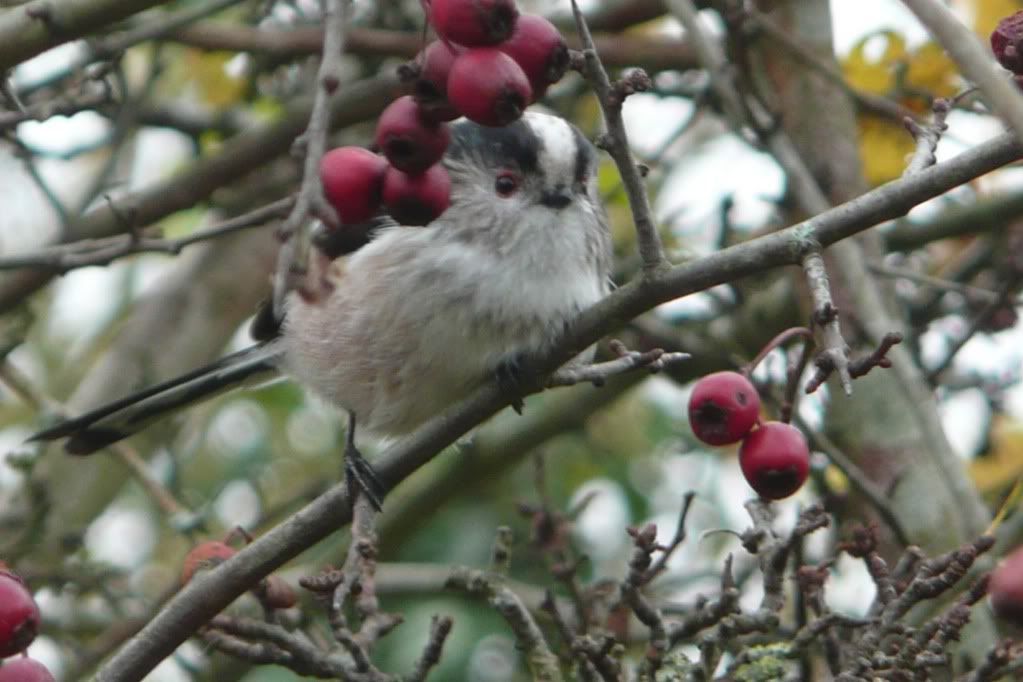
Along the cycle path between Abingdon and Oxford the hawthorn bushes are now full of berries. Shortly they will be consumed by the redwings and fieldfares which will soon be arriving from Northern Europe.  
Until then, the native small birds are making the most of them, goldfinches, blue tits, great tits and this  flock of long tailed tits:
.
.

Sunday, 23 October 2011

More signs of autumn

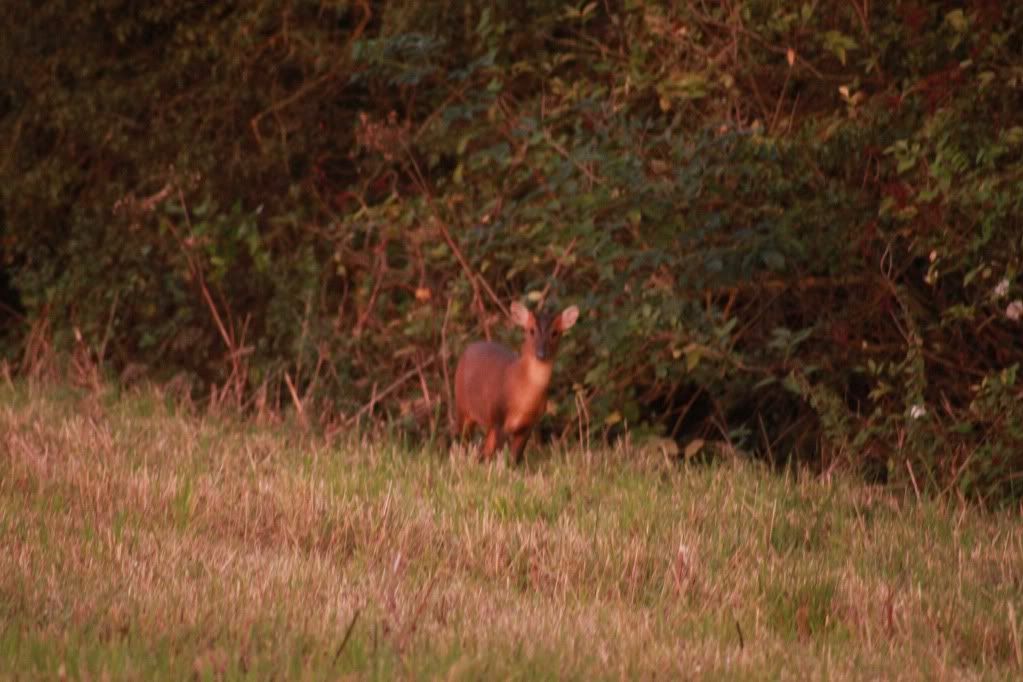
The recent dark and cold evenings mean the opportunities for wildlife watching on the river get reduced by the day and the chances of seeing water vole, an otter or a kingfisher become virtually impossible (although the chances of seeing an otter are very low at the best of times). Even so, the occasional muntjac deer stumble into view - even if it requires a high ISO and slow shutter speed.
.
.
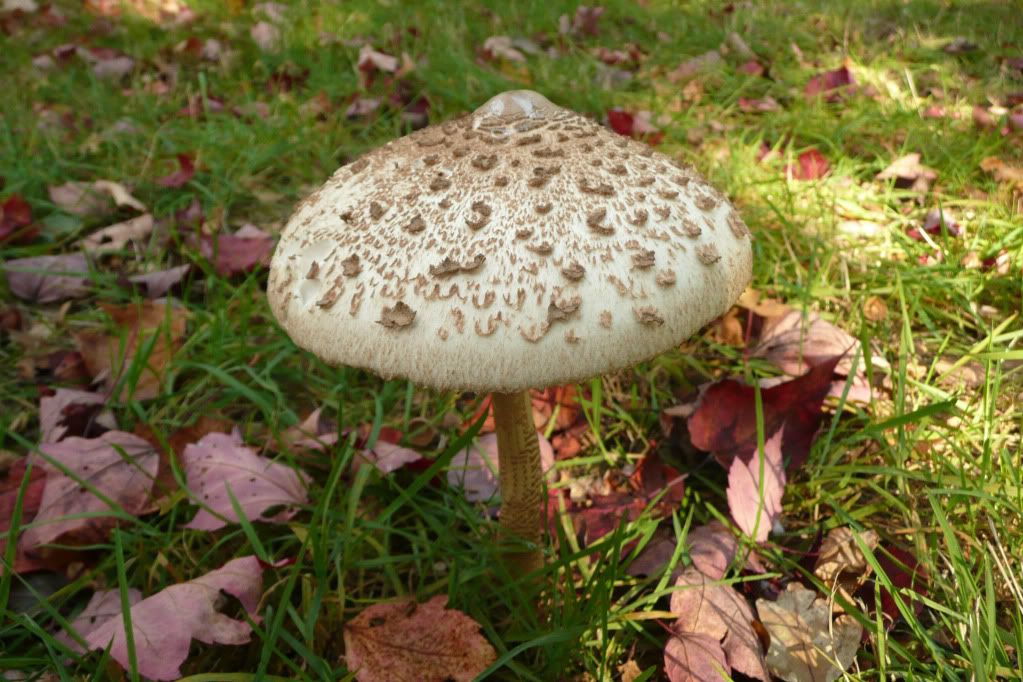
However, autumn does provide other opportunities for the wildlife enthusiast in Oxfordshire. There are many sites which are just abundent in Fungus, including what seems to be a parasol mushroom growing at Harcourt Arboretum. 
.
.
It's not just woods where fungus can be found, this 'Dead Man's Fingers' is growing in our garden.  It can be differentiated from the similar looking 'Dead Moll's Fingers' by bending the stem, which breaks (rather than bouncing back).
Whilst a lot of fungus only produce their fruiting bodies in autumn, this one can be found all year at the base of dead wood, but it has taken the seasonal clearance of the garden to find it.
.
.
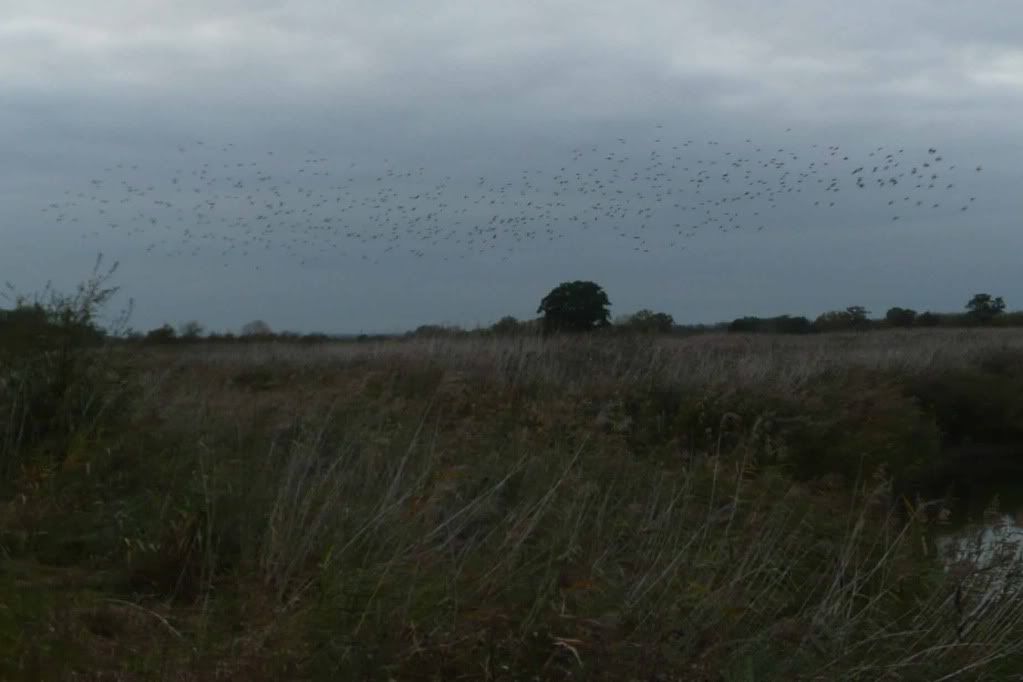
Over at Otmoor, the starling murmurations are just starting and although they are not yet near the vast numbers that can congregate there, it is still an impressive sight on a cold autumn evening:
.

Thursday, 6 October 2011

Moorhens

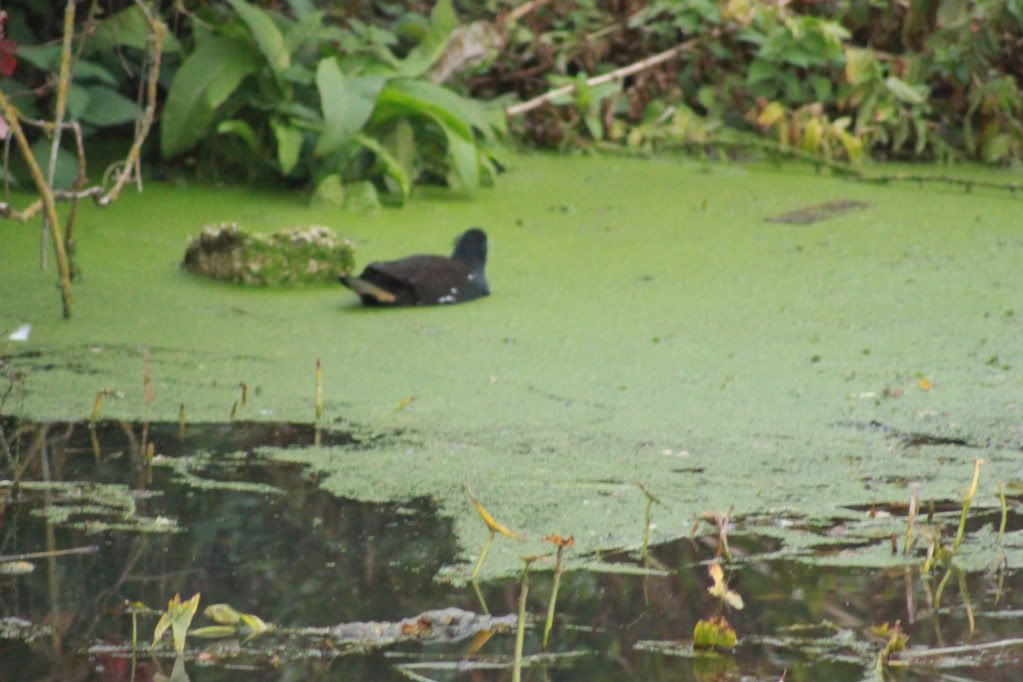
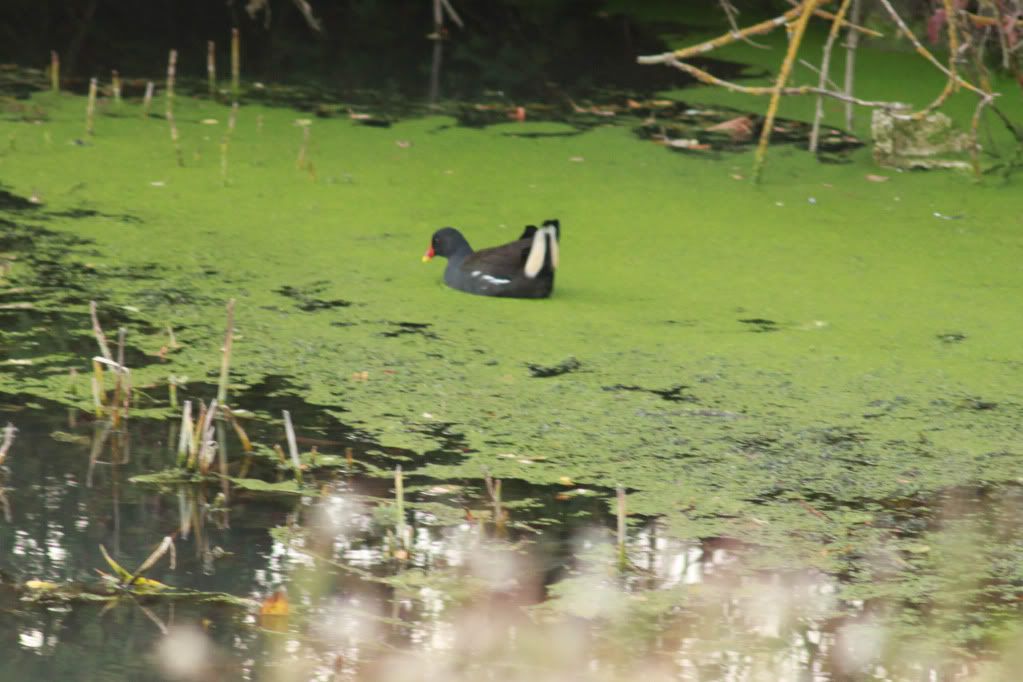
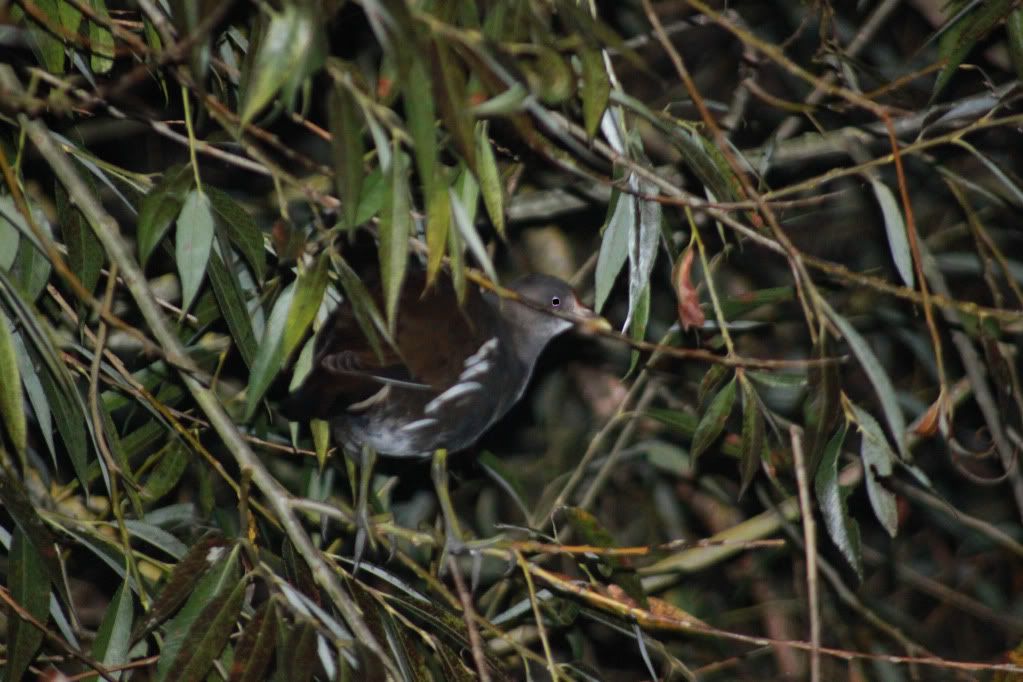
Moorhens are so common on the rivers in Abingdon that they are often taken for granted, yet they can be somewhat difficult to photograph, they quickly sense the slightest movement and scamper into the undergrowth.
.
.
.
Even though they a favourite food of otters, it has been a good breeding year with several young moorhen now finding their independence.
Perhaps one of the reasons they have survived is when it starts to get dark they group together and slowly climb up the over hanging willow trees, safely out of the way of any passing otter.
.
.
Maybe the moorhens shouldn't be too complacent -  apparently otters can climb trees as well: http://news.bbc.co.uk/local/gloucestershire/hi/people_and_places/nature/newsid_8468000/8468065.stm

Wednesday, 20 April 2011

More signs of spring

With temperatures reaching 25 degrees and rainfall becoming a distant memory, it seems spring is turning into an early summer (although with a long holiday approaching, that is almost certainly going to change).
Alongside the Thames, the warblers have returned from their winter migration to Africa and are now in full song, including this blackcap lurking in a willow tree, it seems to have a browner cap, which could make it a female:
.
.
Blackcaps aren't the only warbler, unfortunately a lot of them look the same, but at a guess this may be a willow warbler:
.
.
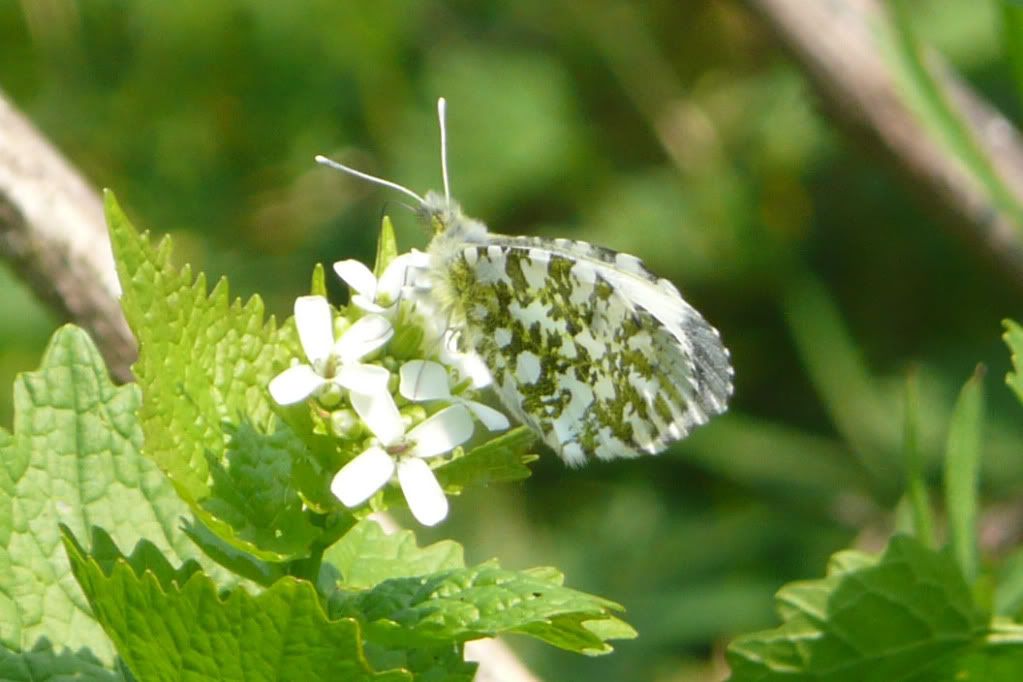
As mentioned in a previous spring post, the orange tips are in full flight and taking a photograph of a male is very hard as never seem to settle.  Unlike the females whilst they do settle are harder to identify - as they don't have orange tips:
.
.
Butterflies aren't the only insect to emerge from hibernation, this queen buff tailed bumblebee is seeking out a nest site:
.
.
And whilst red kites can now be seen all year round (it was only a few years ago when they couldn't be seen at all) the bare leaves of spring mean they too can be viewed seeking out nest sites, like this one on the Ock Valley Walk:
.