Showing posts with label bees. Show all posts

Thursday, 24 July 2014

Bee identification

I received the following comment from Becky in a previous post.

Hi. Could you recomend a book or website to get me started on identifying bees. I have lots of visitors to my garden, but not sure what they are. Many thanks. Becky

Whilst some bees are easy to identify - such as the tree bumblebee, with it's brown thorax and white tipped abdomen:
.
.
However, most of the times it is  fraught with difficulties - males and females  of the same species often look completely different and even older worker bees can look different to their younger sisters.

I am not an expert in bee identification, but I though the subject warranted a post in it's own right.

Bumblebes
For bumblebees, the first point of call is this excellent identification chart from the Bumblebee Conservation Trust, it has large, clear pictures with text  and showing queens, workers and is available on-line as a PDF: http://bumblebeeconservation.org/images/uploads/Resources/BBCT_Bumblebee_ID_sheet_(big_8).pdf


(C) Bumblebee Conservation Trust

A more detailed guide is The Field Guide to Bumblebees of Great Britain and Ireland by Martin Edwards and Martin Jenner: 

http://www.waterstones.com/waterstonesweb/products/michael+chinery/british+insects/6440438/

It contains a very good identification guide where different abdomens and thorax can be matched together.
It's main drawback is that it doesn't use common names, so whilst it can be used to identify Bombus Terrestris, it takes an internet search to find out it is a buff tailed bumblebee.

Solitary Bees Whilst bumblebee identification is hard enough, trying to identify the any of the 200 solitary bees found in the UK is even harder.

The most common are found in the informative Collins guide to British Insects:


http://www.amazon.com/Complete-British-Guides-Collins-Photographic/dp/0007298994/ref=sr_1_3?ie=UTF8&qid=1403810338&sr=8-3&keywords=collins+guide+to+insects

Another source of information is the the excellent Guide to Garden Wildlife, by the local artist Richard Lewington (http://www.richardlewington.co.uk/) which features drawings rather than photographs, making identification somewhat easier.


http://www.britishwildlife.com/viewbook.asp?bookid=2


Internet:

The internet is a great source of identification and the forums on Wild About Britain (http://www.wildaboutbritain.co.uk/forums/) are always a friendly place to ask for identification.

And the bumblebee conservation trust has launched Bee Watch: http://homepages.abdn.ac.uk/wpn003/beewatch/index.php?r=user/auth

Apps:

Apps are now replacing books on as field guides and the art work of Richard Lewington can be found on Nature Guides Bumblebees of Britain and Ireland, as of yet, it is only available on iOS:

https://itunes.apple.com/gb/app/bumblebees-britain-ireland/id657077156?mt=8


Hopefully Becky, you've found this useful

Thursday, 29 May 2014

Beetastic

Making the most of the respite from the recent rain, the garden has proved popular with the bees.
Building upon the success of previous solitary bee boxes (http://viewsoftheock.blogspot.co.uk/2013/05/return-of-mason-bees.html), two new simple constructions (blocks of wood 5 x 8 cm deep with 8mm diameter drilled holes) are now providing over 100 new nest sites. 
With red mason bees checking them out within 5 minutes of them being put up:

.
It's not only solitary bees visiting the garden, most bumblebee nests have are now established so the worker bees are making the most of the warmth and the flowering plants to provide food for the nest, including this garden bumblebee:
.
.
And the once scarce tree bumblebee, easily identifiable by its brown thorax and white tip on it's abdomen, is probably the most common bumblebee in the garden:
.

But this year there is a new visitor to the garden, a large queen. The markings on her thorax, two very faint brown stripes on the top and bottom, could be those of a discoloured tree bumblebee:

.
Yet it is either late or early (for a second brood) for a tree queen bumblebee, so it is more likely to be a ruderal bumblebee (Bombus ruderatus) - identification confirmed thanks to the excellent people on Wild About Britain (http://www.wildaboutbritain.co.uk/)

.

.
The bumblebee conservation trust (http://bumblebeeconservation.org/about-bees/identification/scarce/) describe the bee as 'scarce' and mainly found in the south of England.
In the Field Guide to Bumblebees of Great Britain & Ireland (Edwards & Jenner, 2005) it is described as a declining species which nests in old mouse and voles nests and is associated with taller open grassland and scrub.
.
 .
Hopefully this is the first of many sightings of the ruderal bumblebee and in the next few years it may become as common as the now ubiquitous tree bumblebees

Friday, 7 March 2014

First Bees of 2014

Another one of the gems of Oxford is the Botanic Gardens (http://www.botanic-garden.ox.ac.uk/) and on Saturday 1st March seemed it seemed we weren't the only ones to enjoy what was possibly the first warm day of the year.
A honeybee was collecting pollen from some of the snowdrops that were still flowering.


And the early flowering Hellaborus were attracting several bufftailed bumblebees queens who may have just emerged from hibernation


.

Sunday, 5 May 2013

Return of the mason bees

As a Christmas present in 2012 I was given a home made bee box for solitary bees and in the first year, red mason bees swiftly moved in a laid their eggs in in the holes: http://viewsoftheock.blogspot.co.uk/2012/05/red-mason-bees.html

Now 12 months later, the next generation are emerging:


The white face and long antenna indicate that these are males and have emerged first and are waiting for the females who will emerge later before mating and repeating the cycle.


Sunday, 15 April 2012

Fritillary Sunday at Ducklington

Situated near the River Windrush, the fritillary meadow near the village of Ducklington is open to public on only way day a year (http://www.ducklingtonchurch.org.uk/events/fritillary/the-background-to-fritillary-sunday/).
Unlike Iffley meadows, there are more fritillaries in a smaller area and despite the cold wind and lack of sun, it is an impressive sight on a Sunday afternoon:
.
.
.
.
Although they are not normally known for attracting bees, they were several making the most of the short time span the flowers are in bloom:
.
.
.
And on the village pond, appropriately in the village of Ducklington, were the first ducklings of the year.
.


Another impressive display of snake's head fritillaries can be found at Magdalen College in Oxford http://viewsoftheock.blogspot.co.uk/2016/04/the-flowers-of-magdalen-college.html

Wednesday, 20 April 2011

More signs of spring

With temperatures reaching 25 degrees and rainfall becoming a distant memory, it seems spring is turning into an early summer (although with a long holiday approaching, that is almost certainly going to change).
Alongside the Thames, the warblers have returned from their winter migration to Africa and are now in full song, including this blackcap lurking in a willow tree, it seems to have a browner cap, which could make it a female:
.
.
Blackcaps aren't the only warbler, unfortunately a lot of them look the same, but at a guess this may be a willow warbler:
.
.
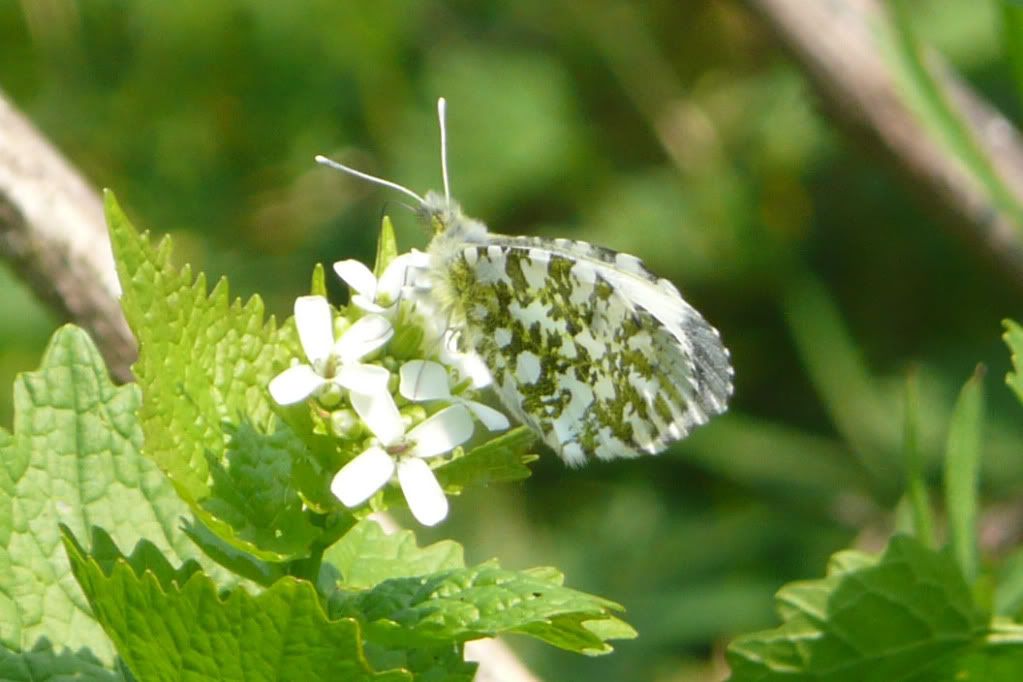
As mentioned in a previous spring post, the orange tips are in full flight and taking a photograph of a male is very hard as never seem to settle.  Unlike the females whilst they do settle are harder to identify - as they don't have orange tips:
.
.
Butterflies aren't the only insect to emerge from hibernation, this queen buff tailed bumblebee is seeking out a nest site:
.
.
And whilst red kites can now be seen all year round (it was only a few years ago when they couldn't be seen at all) the bare leaves of spring mean they too can be viewed seeking out nest sites, like this one on the Ock Valley Walk:
.

Sunday, 18 April 2010

Hairy Footed Bee

Ironically, a hard weekend working the garden was rewarded by enjoying someone else's garden - the University of Oxford Botanic Gardens.  As would be expected on hot spring days, the borders were alive with bees, including these small black ones -  spring flower bees (also known as hairy footed bees).


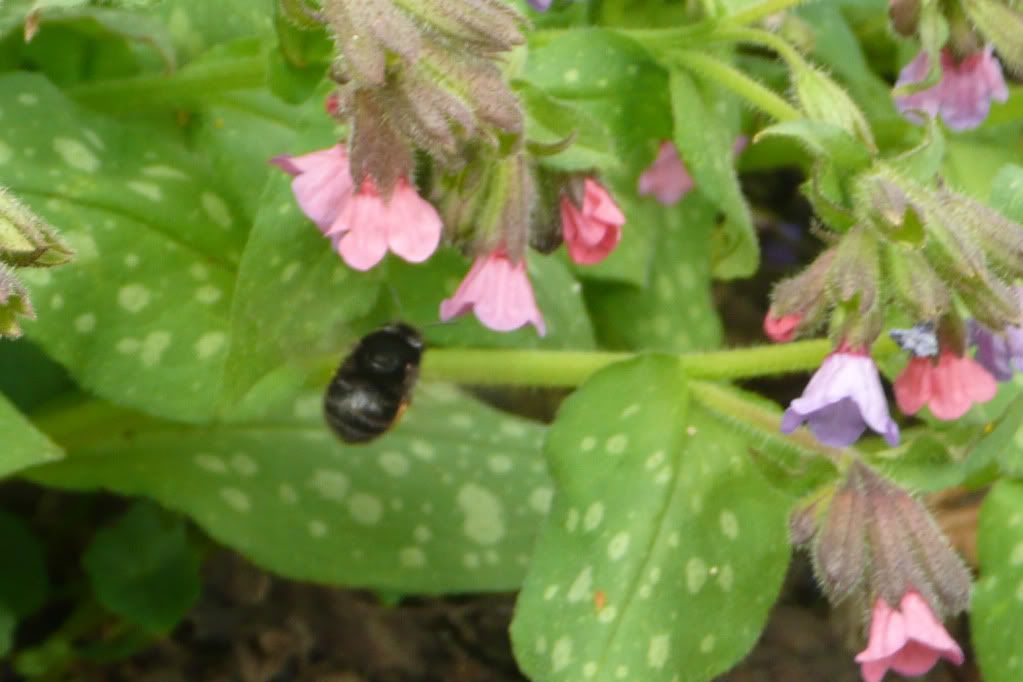
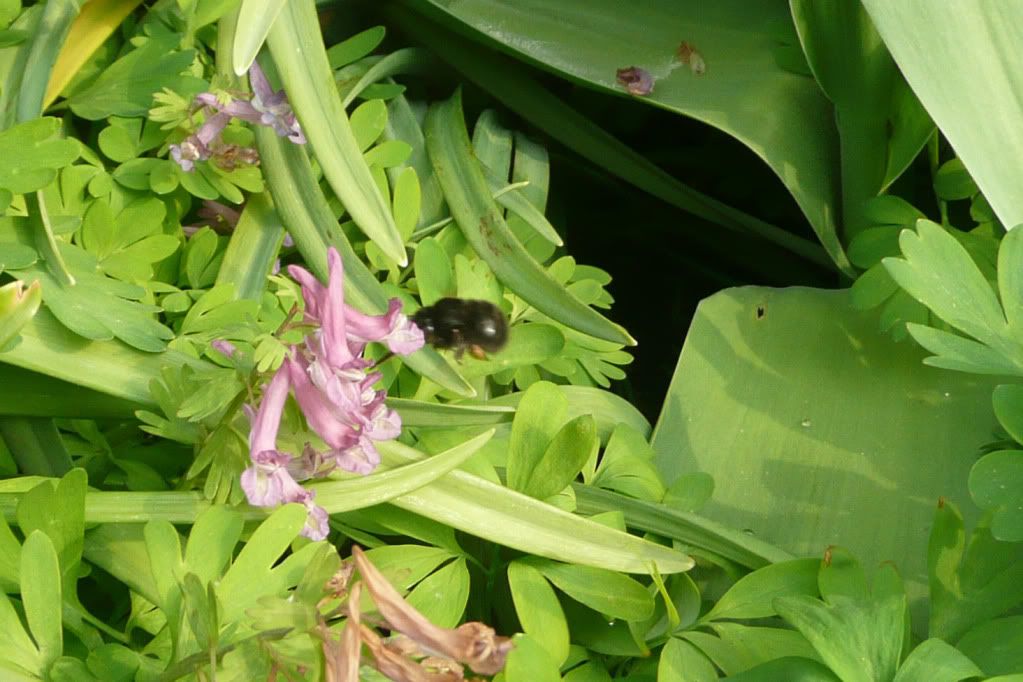
Although it looks like a worker bumblebee, it is actually a solitary bee and can be seen seeking nesting sights in the sandstone walls of the gardens.
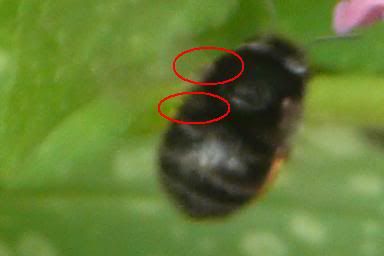
It also looks like a bee fly, but thanks to digital photography it can be shown it has two sets of wings and not one:
This post exists thanks to the excellent 'dog's life in the Tamar Valley' blog, which has a post on the same subject and was used for identification.  
For better pictures of this oasis in Oxford,  I refer you to Martin Gulliver's 'Gullivers Travel' Blog

Thursday, 25 March 2010

Insects

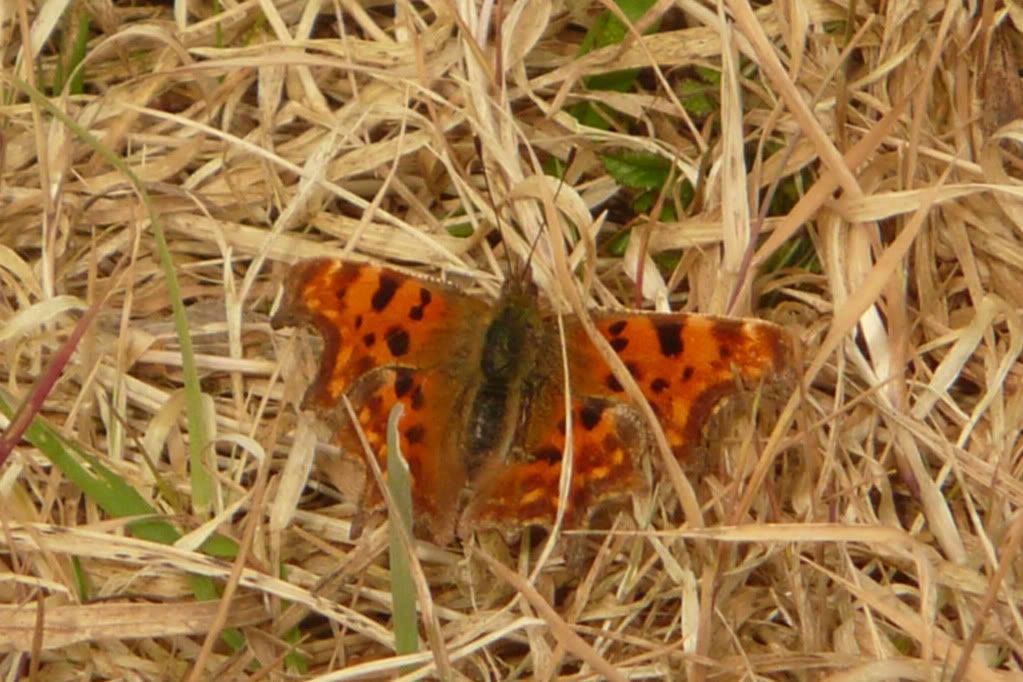
The warmer spring weather over the past couple of weeks has bought out the hibernating insects. This coma butterfly, sunning itself by the Thames last week:
  
  
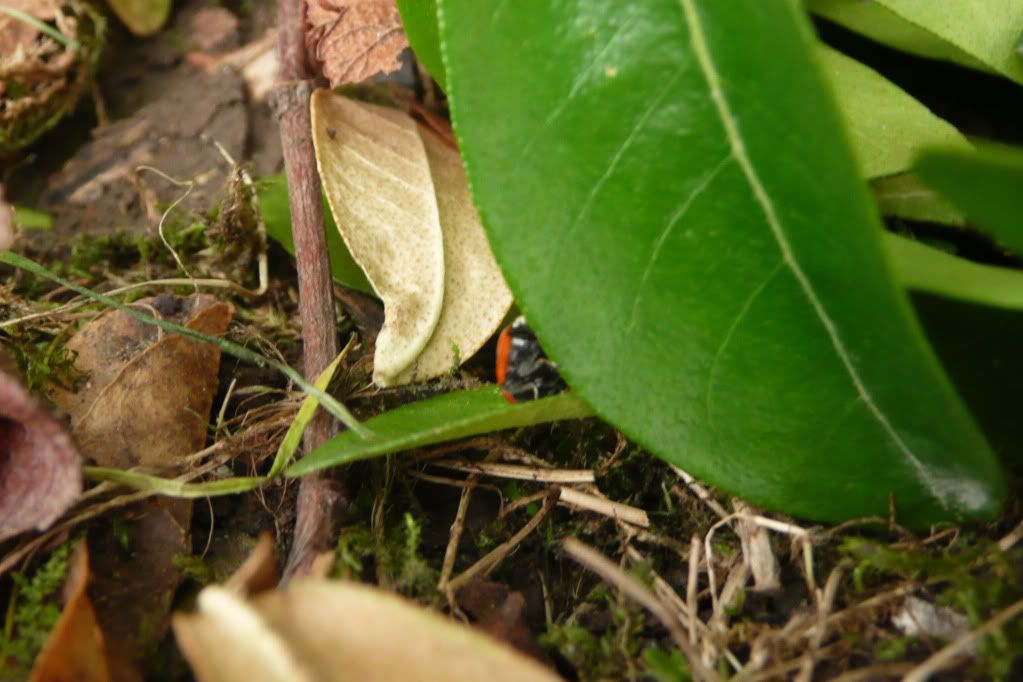
This ladybird was moving around in the garden
   
   
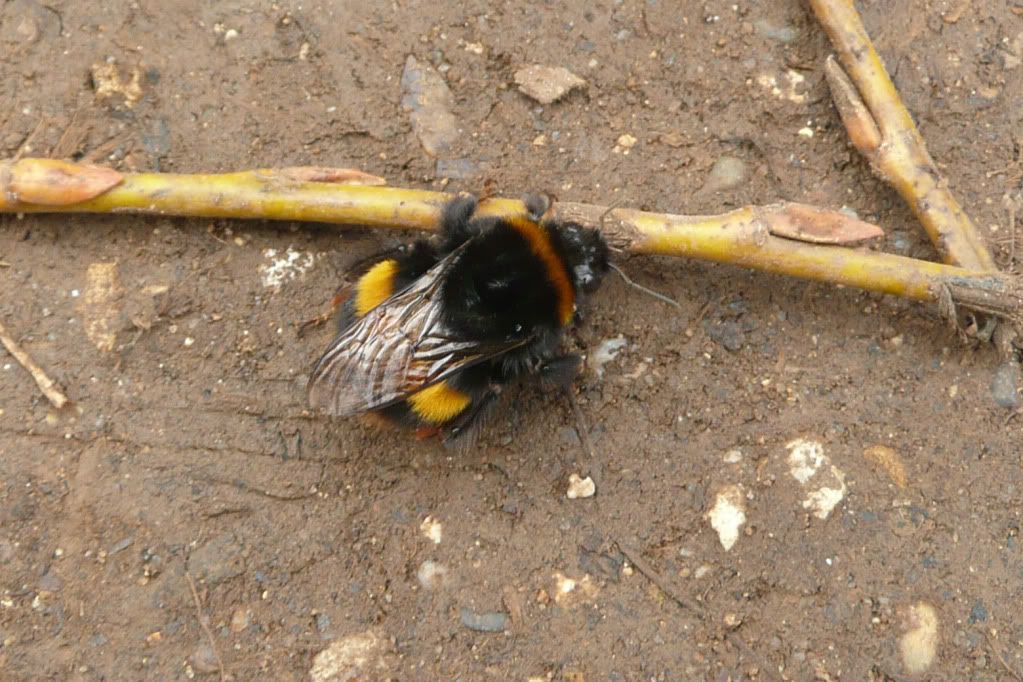
Although this buff tailed bumblebee had not fared to well, movingly slow and probably dieing along the ock valley walk
   
   
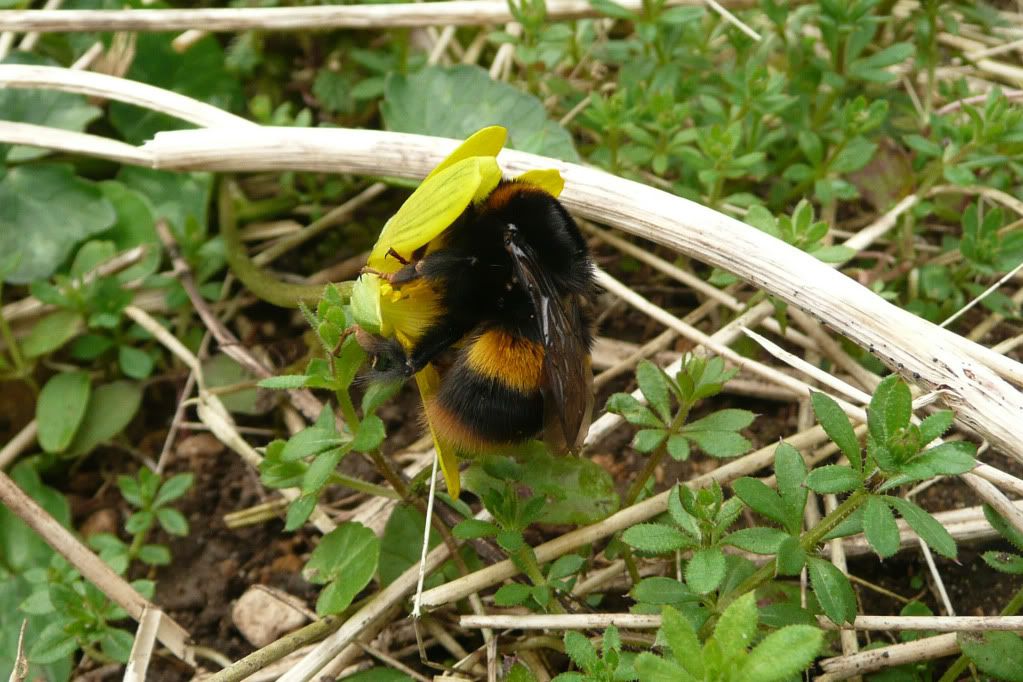
But it did seem grateful to be moved to a nearby flower: