Showing posts with label radley brook. Show all posts

Saturday, 17 March 2012

The resilience of water voles

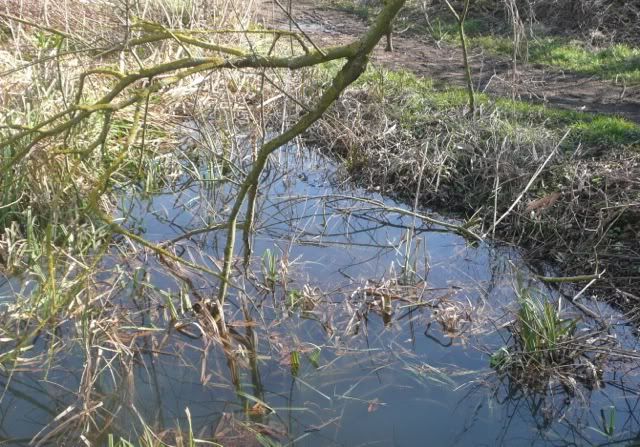
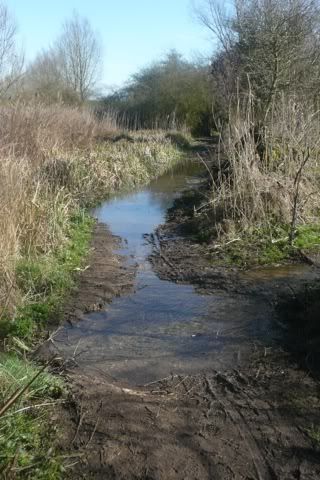
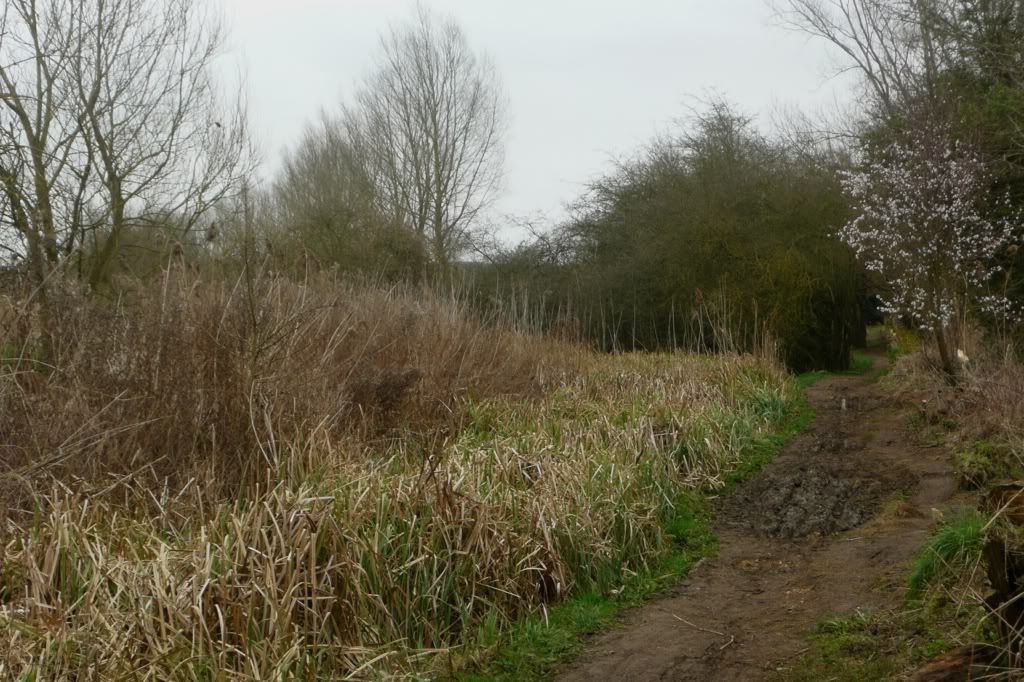
Two weeks ago, Radley Brook had burst it's banks and the Thames path was flooded and impassable
.
.
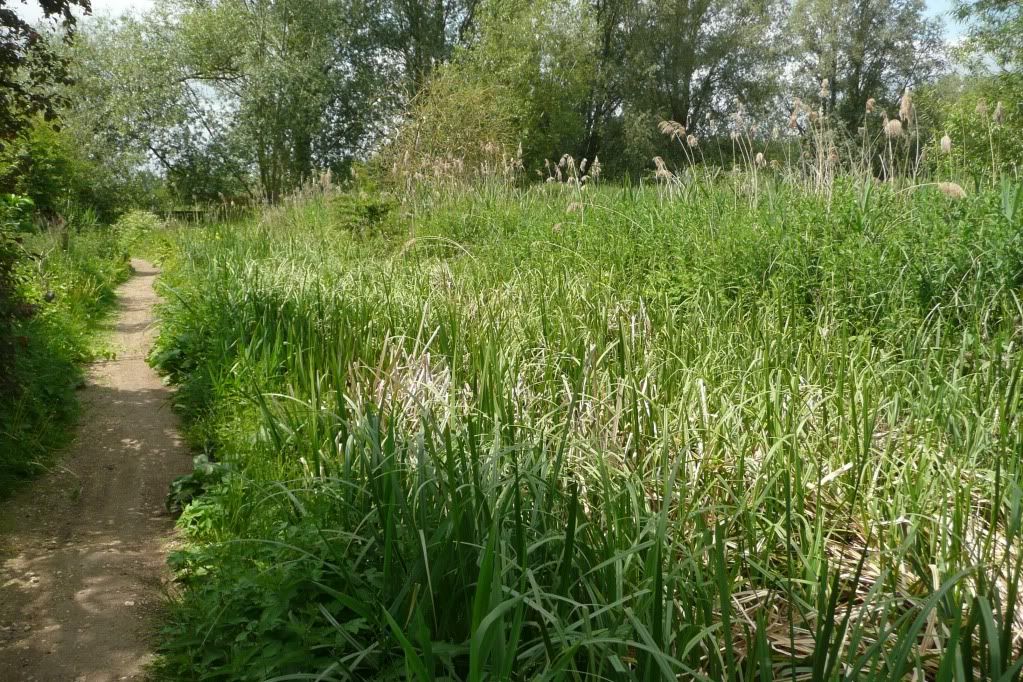
Now the water level has subsided and the weather has been so dry that the path is now passable again:
.
.
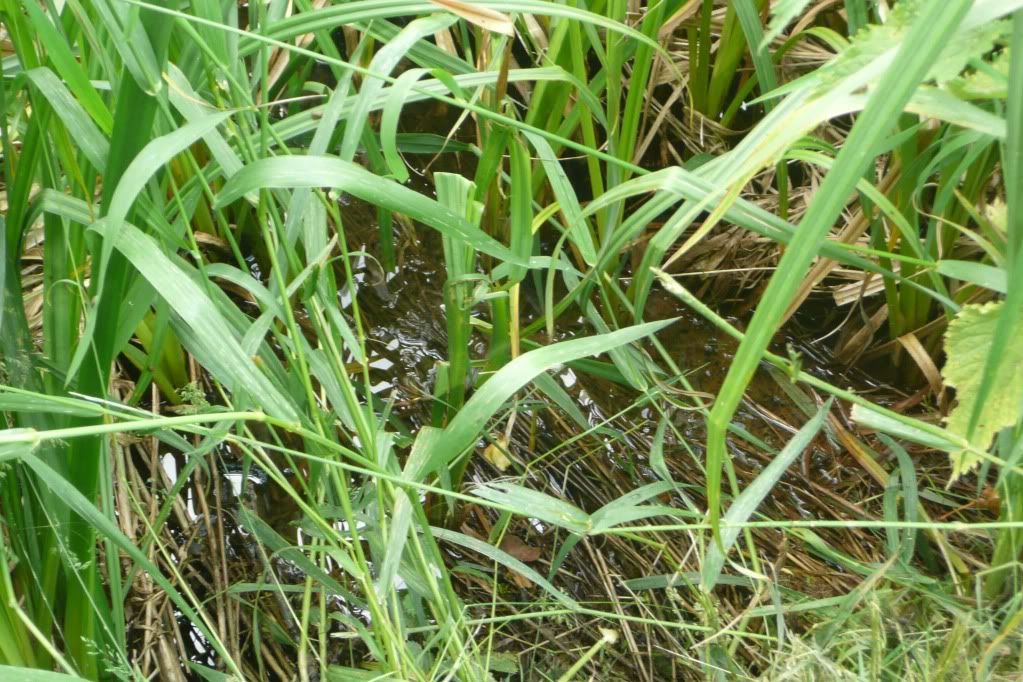
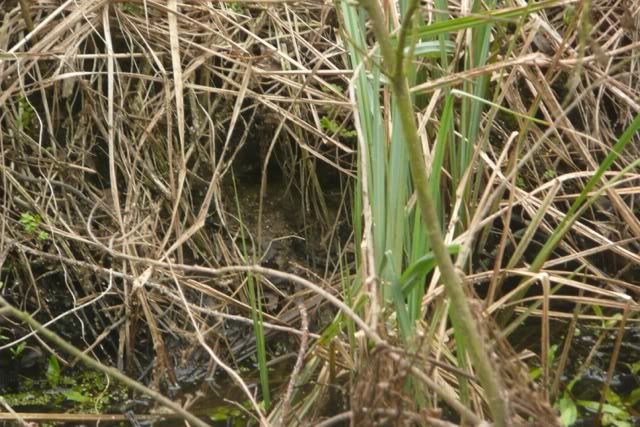
So it is an opportunity to try and find if any water voles are still there and have survived the recent flooding.  In the bank, it looks like there might be a burrow:
.
.
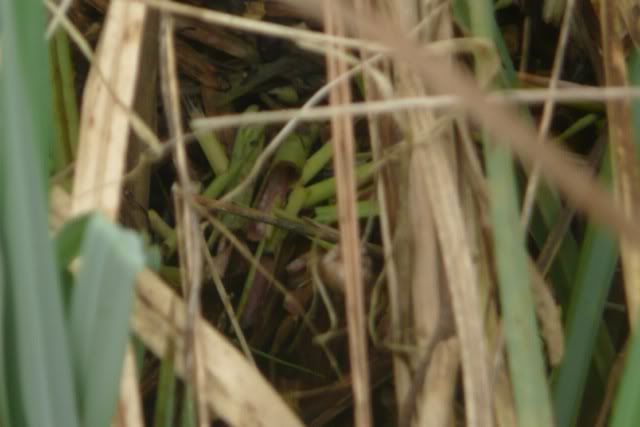
And in-between the sedge, a collection of small cut grass stems, a definite sign of water vole feeding.
.
.
It seems, despite the weather, the water voles of Radley Brook are still resilient - for the time being -  to the  many hardships  that water voles suffer.

Tuesday, 6 March 2012

Not so good on Radley Brook

Over the past few years, this blog has focused on the trials and tribulations of two water vole colonies and whilst things are currently looking good for those one River Ock (), life is a lot harder for those on Radley Brook.
Running between the Barton Fields nature reserve and the River Thames, it is more of a ditch with stagnant water than an actual brook, but during summer, much fun can be had feeding the water voles an apple core or two.
However, it's proximity to the Thames can cause problems - the river is corridor for mink and this is where several have been seen in recent years 
And whilst there are almost certainly in otters in the river, the river is so wide that they are unlikely to offer any protection to the water voles.
Although at the moment, there are other problems for any water voles, the heavy rain on Sunday has meant the river has burst it's banks and flowed into the brook, which is now very high:
.
.
With such a rapid increase in water level, any water voles trying to define their territory or make and renovate  their burrows could have been drowned.
And not only is the brook very high, but the Thames Path which runs alongside the brook is underwater and impassable
.
.
Water vole colonies are fragile, and even though things look very precarious, experience says - when it comes to water voles - never to give up hope:

Thursday, 16 June 2011

More from the water voles at Radley Brook

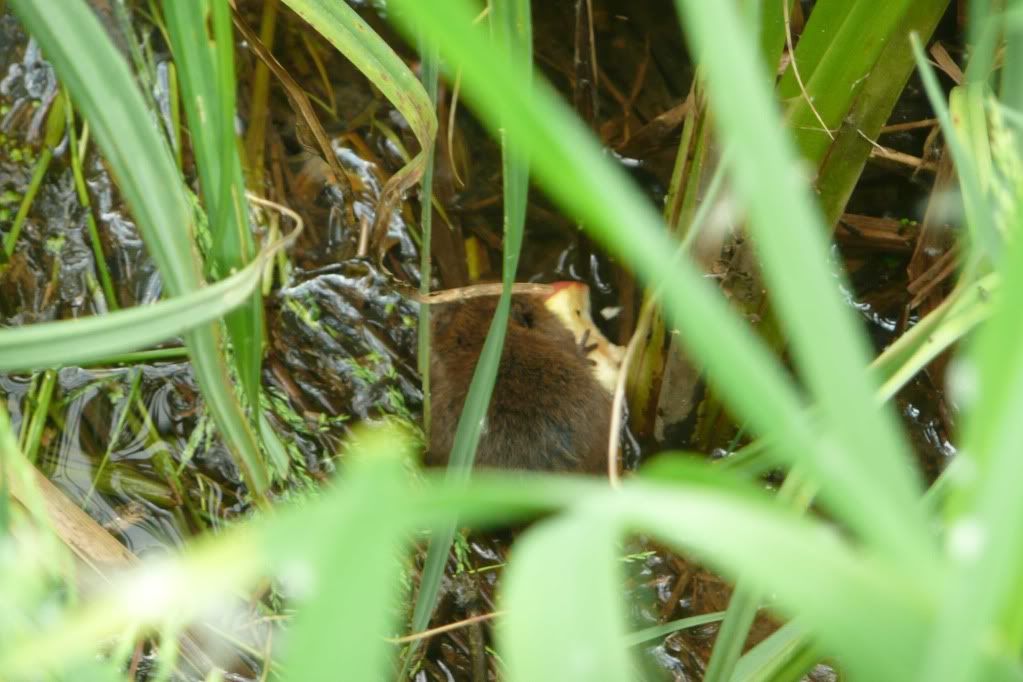
Most lunch breaks spent watching water voles  usually involve half an hour watching an ignored apple core slowly going brown:.
.
.
Sometimes, a water vole may appear then disappear into the reed beds, offering only the slightest of glimpses as it carries of it's prize:
.


.
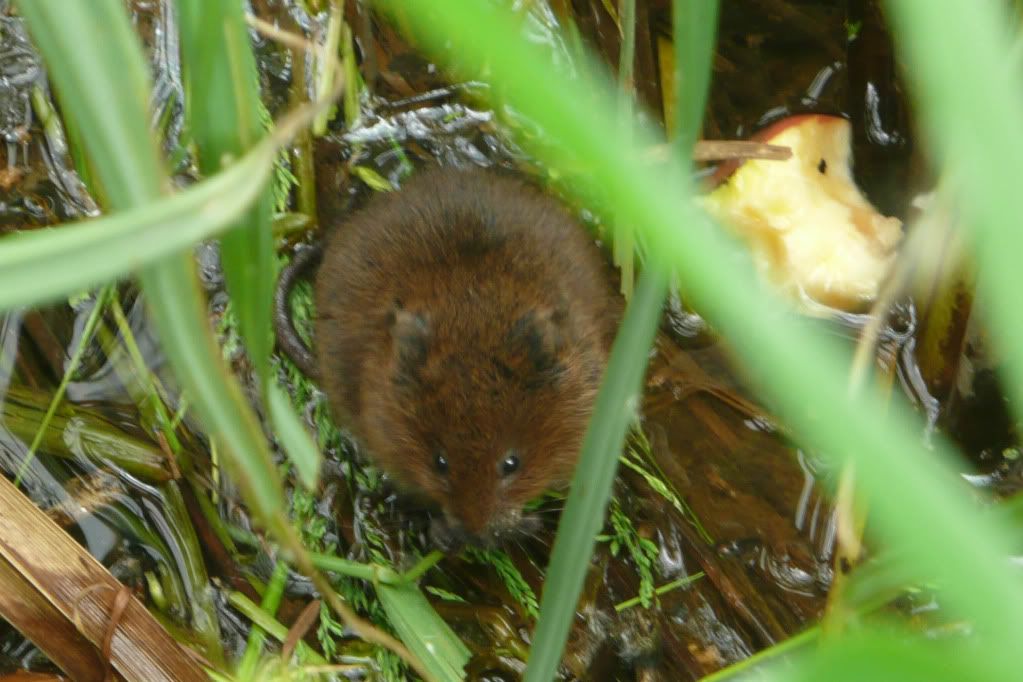
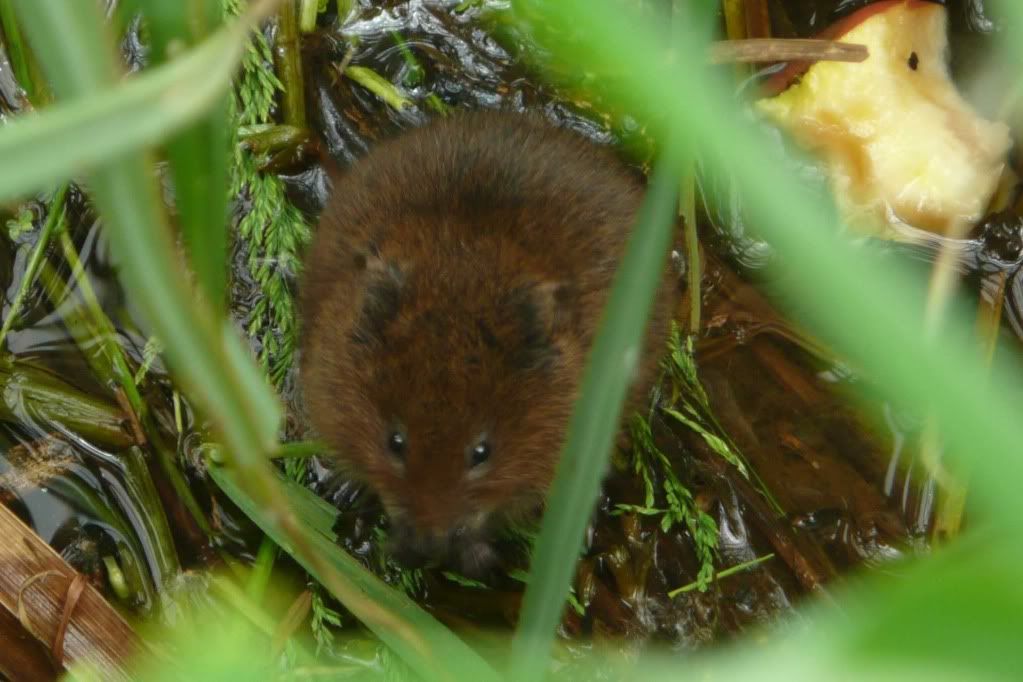
Yet on days like today, they sit and eat the apple core in front of you:
.

.
Before, once again, returning to the reeds with the apple core:
.

Monday, 6 June 2011

The water voles of Radley Brook

A small stream in North East Abingdon, Radley Brook has featured several times in this blog. Unfortunately, due to this proximity to the Thames, it is ideal hunting territory for mink, who have been seen this year in the nearby lagoon,  making it probably the most fragile water vole colony in Abingdon.  
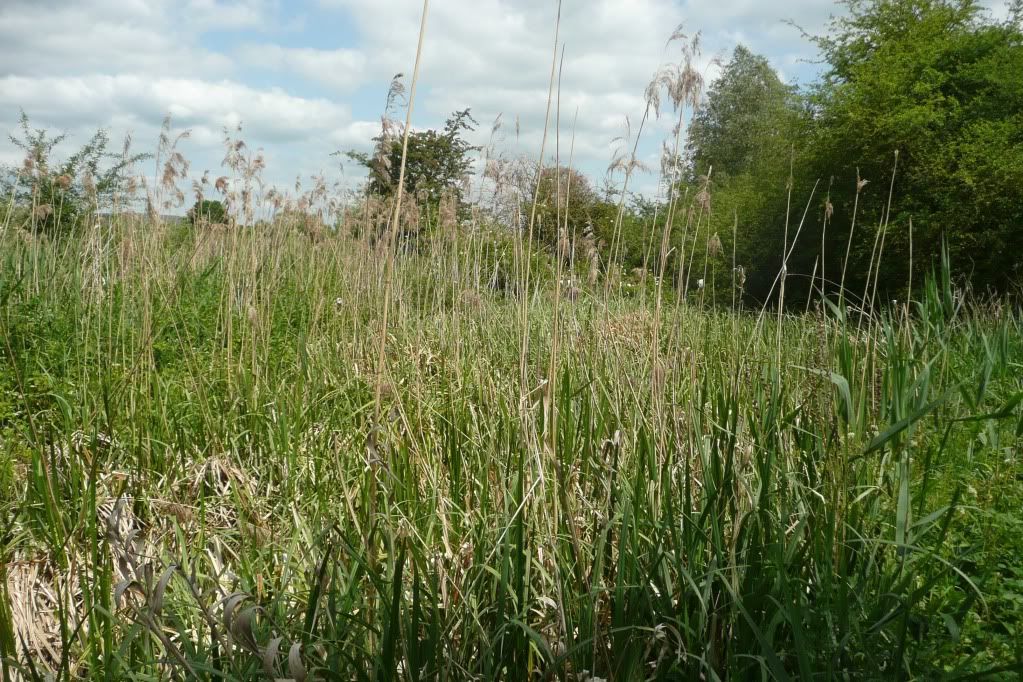
The thick and tall sedge can make it virtually impossible to see if the water voles are still hanging on or if the colony is now extinct.
.
.
.
A good way to see if they are still present is to throw down a small apple core and see if any thing takes it.... after a month of waiting a water vole finally appears and it seems to be a juvenile, so not only are the water voles still present, but they are breeding.
.
.
.
Watching water voles whilst listening to the nearby warblers and the occasional cuckoo, make it one of the best places to spend a lunch break in Abingdon.
.