Showing posts with label fungus. Show all posts

Thursday, 21 March 2013

The Judas Ear

The seemingly never ending rain (and sometimes snow) has reduced the opportunities for a favourite of this blog - watching water voles.
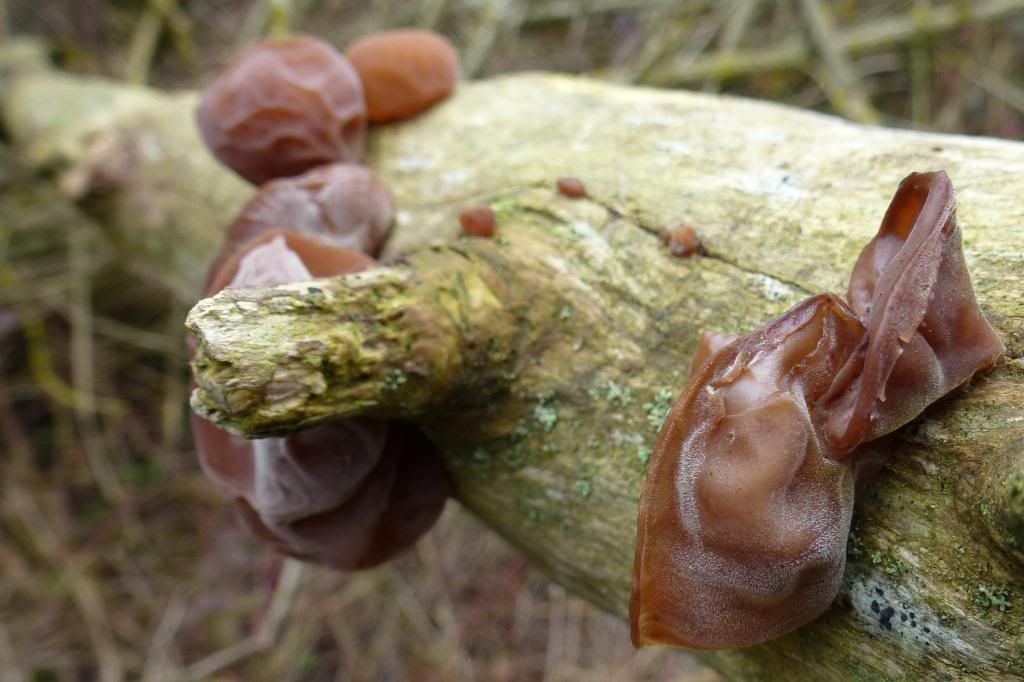
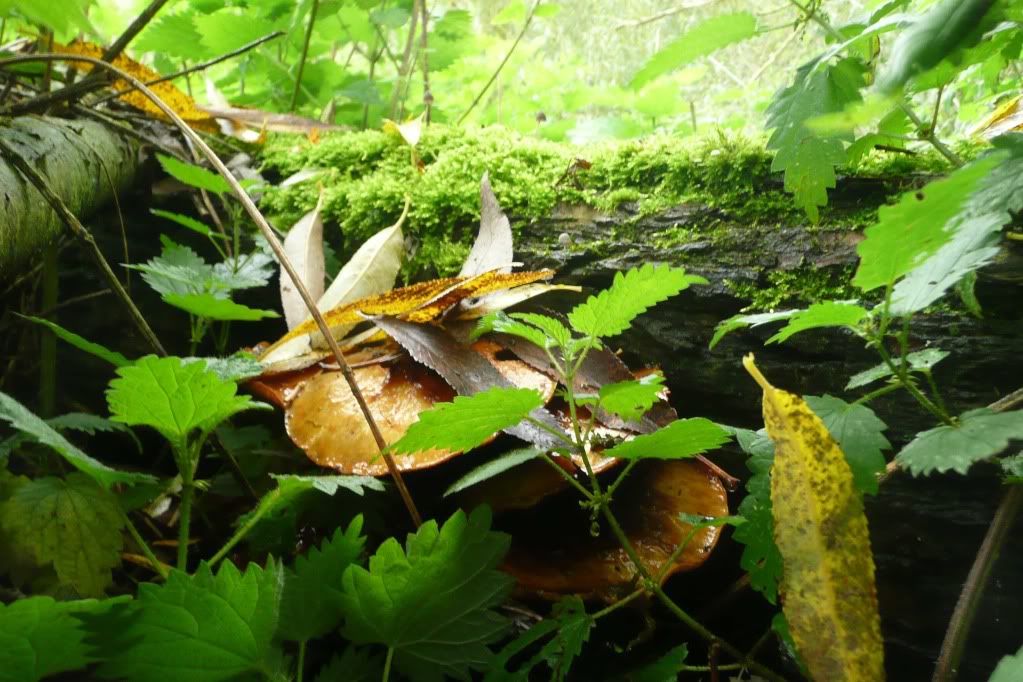
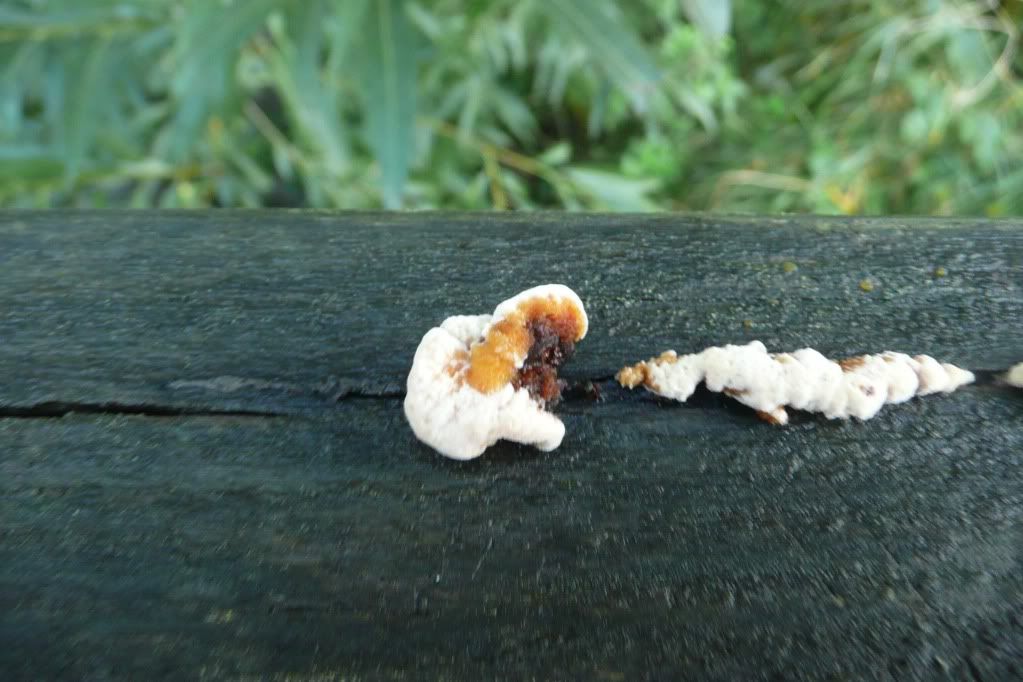
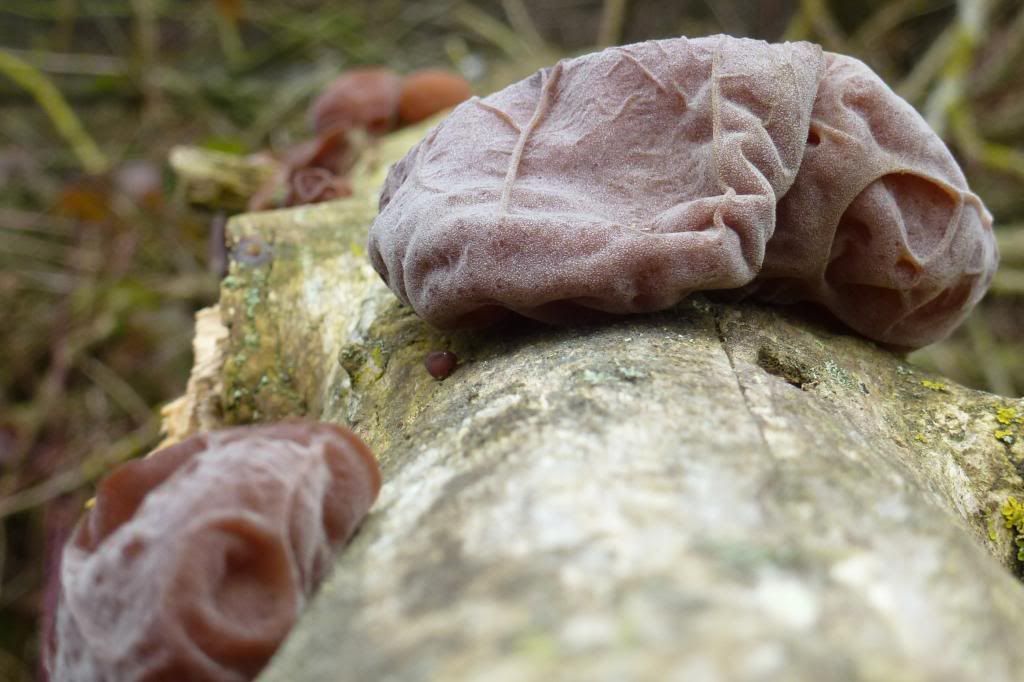
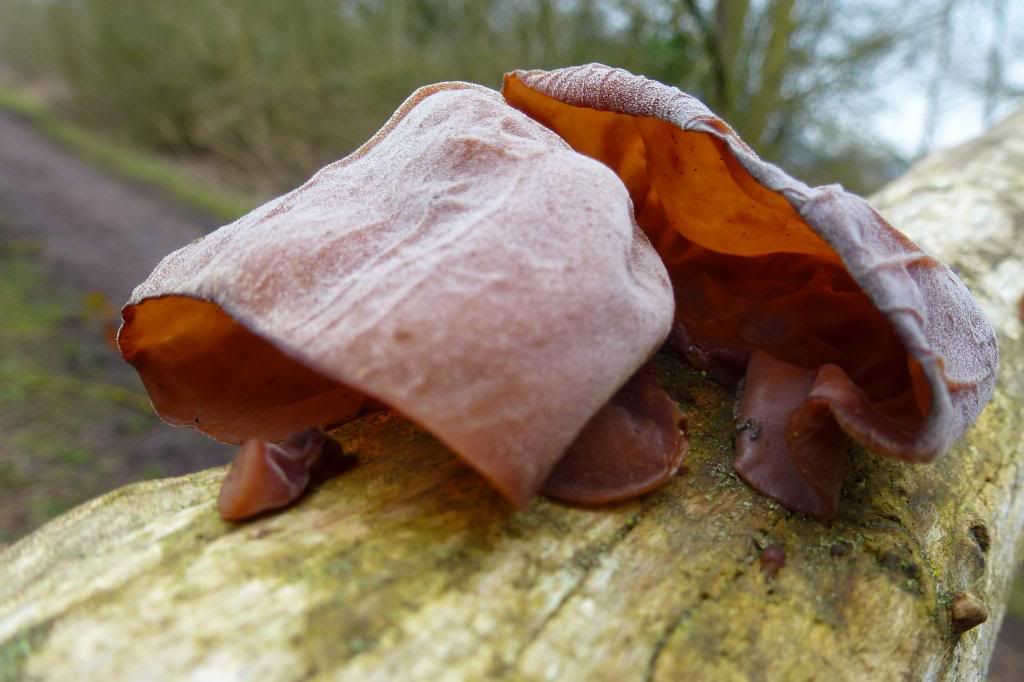
But the dampness has produced other things of interest, such as this fungal fruiting body growing on a dead tree near Radley Lakes in North-East Abingdon.
.
.
Before scientific classification it was known the Judas Ear - because it looks like an ear and because one it's preferred habitats is the elder - the tree from which it was believed Judas Iscariot hanged himself:
The common name was subsequently changed to the politically incorrect Jews Ear, which is reflected in it's scientific name: - Auricularia auricla-judae
.
.
More recent field guides now refer to it by a more politically acceptable and probably more accurate name of Jelly Ear 
.
.
Whatever the chosen name, it is an impressive sight, even if it is one of the most common fungi found in Britain.

Sunday, 27 November 2011

Sunday morning wildlife

A warm sunny late November morning provided the first opportunity for a while to get down to the river and enjoy the wildlife
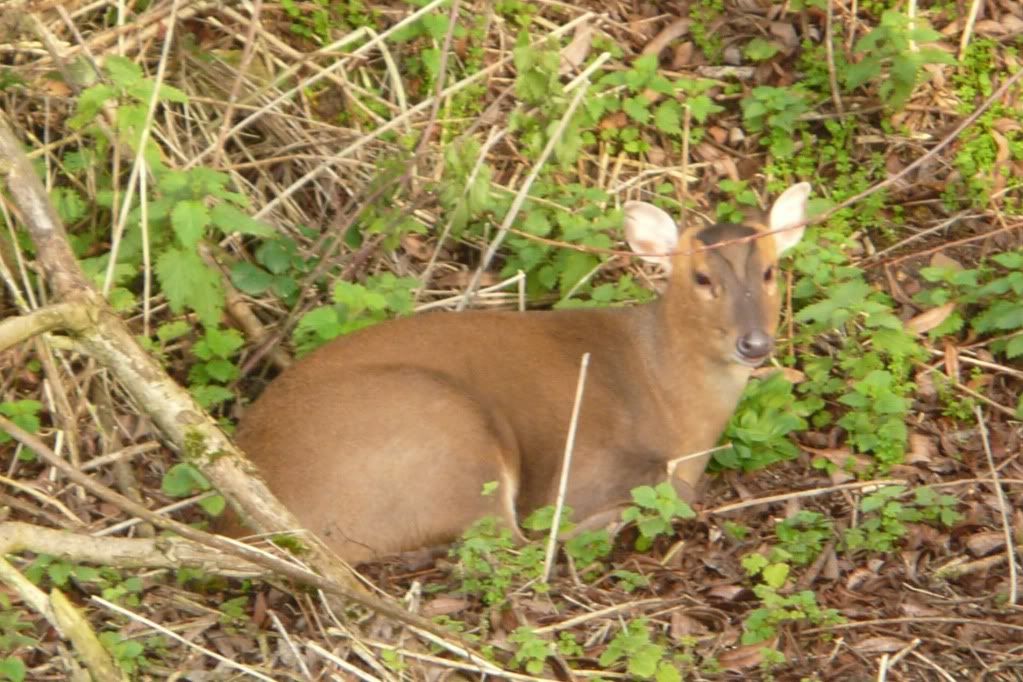
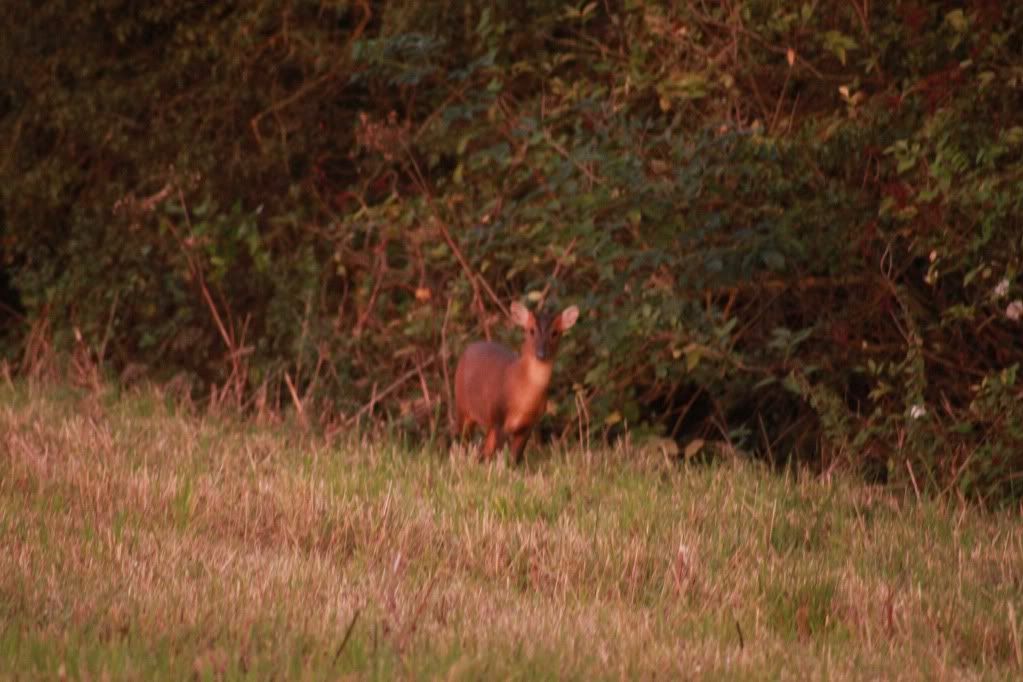
A nonchalant muntjac just lay by the side of the river, seemingly unconcerned with dog walkers and photographers:
.
.
Growing out of the footbridge, turkey tail fungus:
.
.
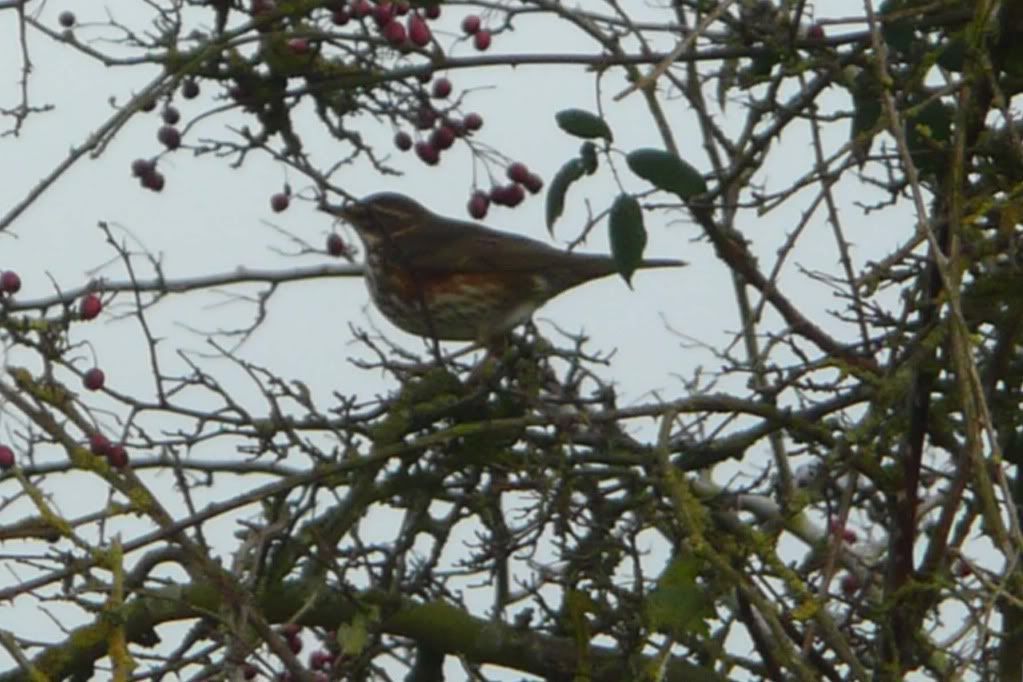
Winter migrant red wings have started to feed off the berries on the over hanging bushes:
.
.
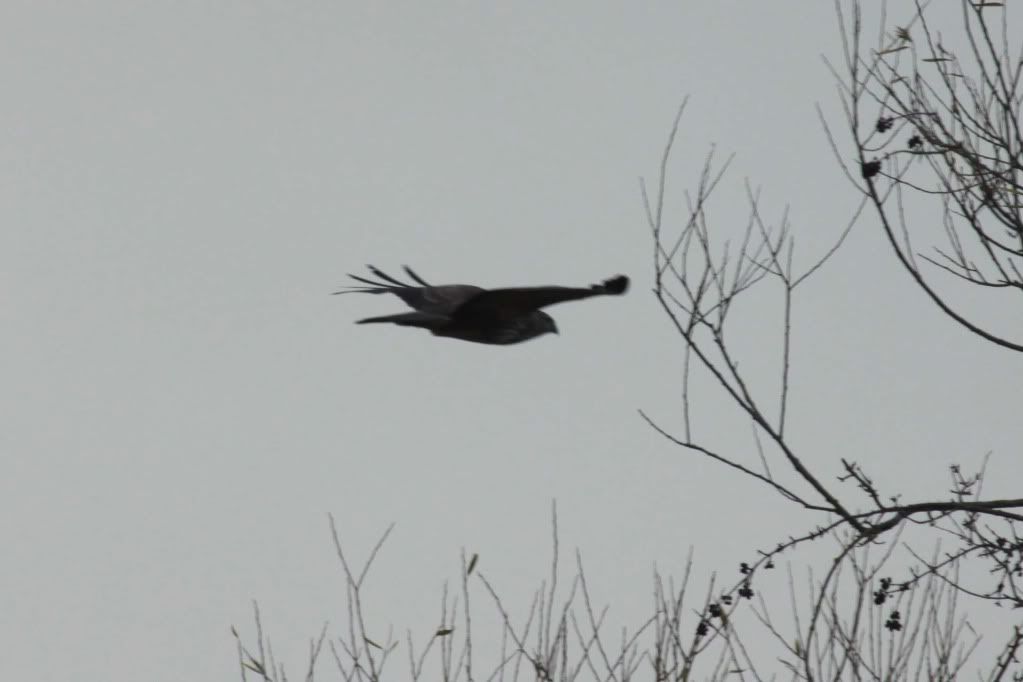
And an opportunity, to see three of the four local raptors out hunting within half an hour of each other:
A common buzzard, flying low over the hedges before moving to the field:
.
.
The once extinct in England, but now very common (if slightly fuzzy), red kite:
.
.
And the once common, but sadly seen less frequently , a kestrel:
.
.
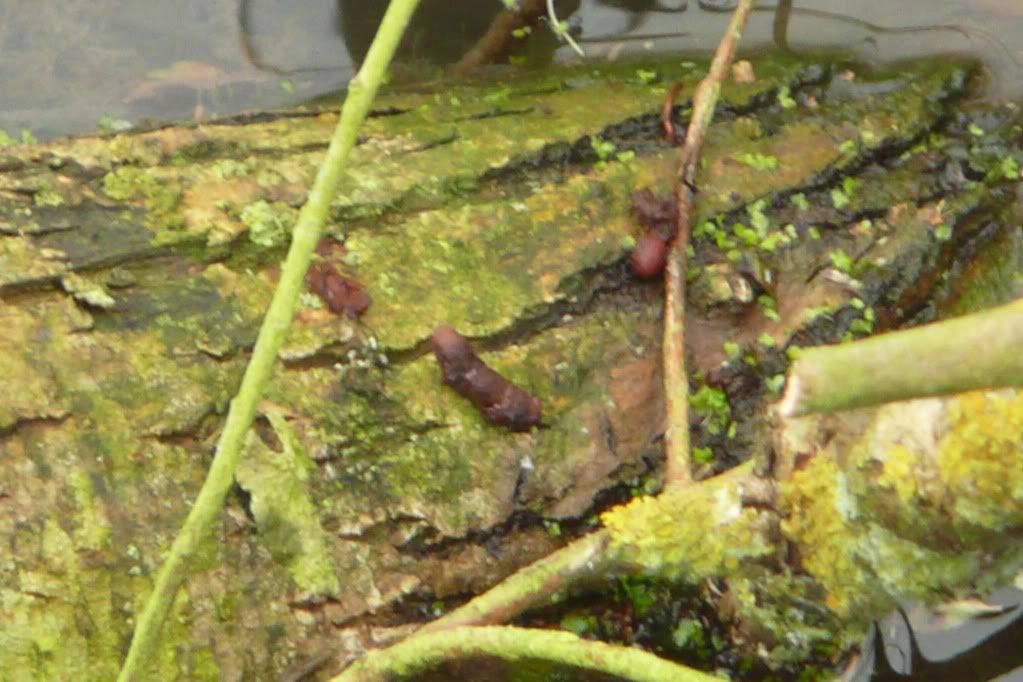
Although no good walk would be complete, without some poo, and this looks distinctly like a water vole latrine:
.
.

Sunday, 23 October 2011

More signs of autumn

The recent dark and cold evenings mean the opportunities for wildlife watching on the river get reduced by the day and the chances of seeing water vole, an otter or a kingfisher become virtually impossible (although the chances of seeing an otter are very low at the best of times). Even so, the occasional muntjac deer stumble into view - even if it requires a high ISO and slow shutter speed.
.
.
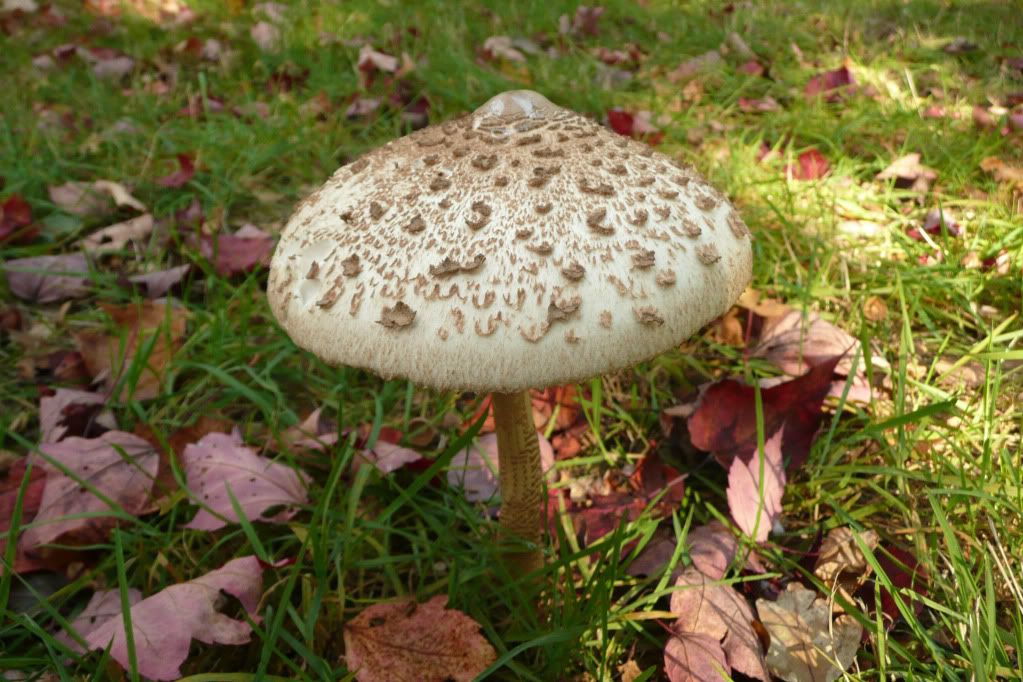
However, autumn does provide other opportunities for the wildlife enthusiast in Oxfordshire. There are many sites which are just abundent in Fungus, including what seems to be a parasol mushroom growing at Harcourt Arboretum. 
.
.
It's not just woods where fungus can be found, this 'Dead Man's Fingers' is growing in our garden.  It can be differentiated from the similar looking 'Dead Moll's Fingers' by bending the stem, which breaks (rather than bouncing back).
Whilst a lot of fungus only produce their fruiting bodies in autumn, this one can be found all year at the base of dead wood, but it has taken the seasonal clearance of the garden to find it.
.
.
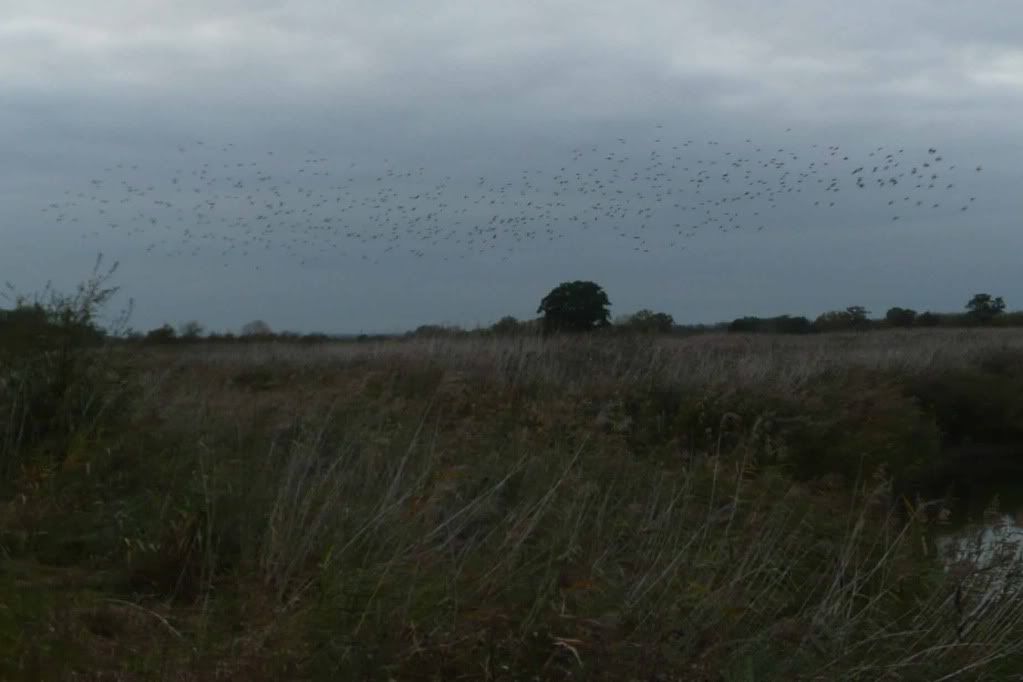
Over at Otmoor, the starling murmurations are just starting and although they are not yet near the vast numbers that can congregate there, it is still an impressive sight on a cold autumn evening:
.

Tuesday, 26 October 2010

Final Fungal Thoughts

Over the past few posts I've tried to identify a small number of the vast quantity of fungus that can be found in this part of Oxfordshire. Rather than try to identify yet more fungus (which can be somewhat frustrating).  I thought the final post on the subject (for this year at least)  would look at different types of fungus.


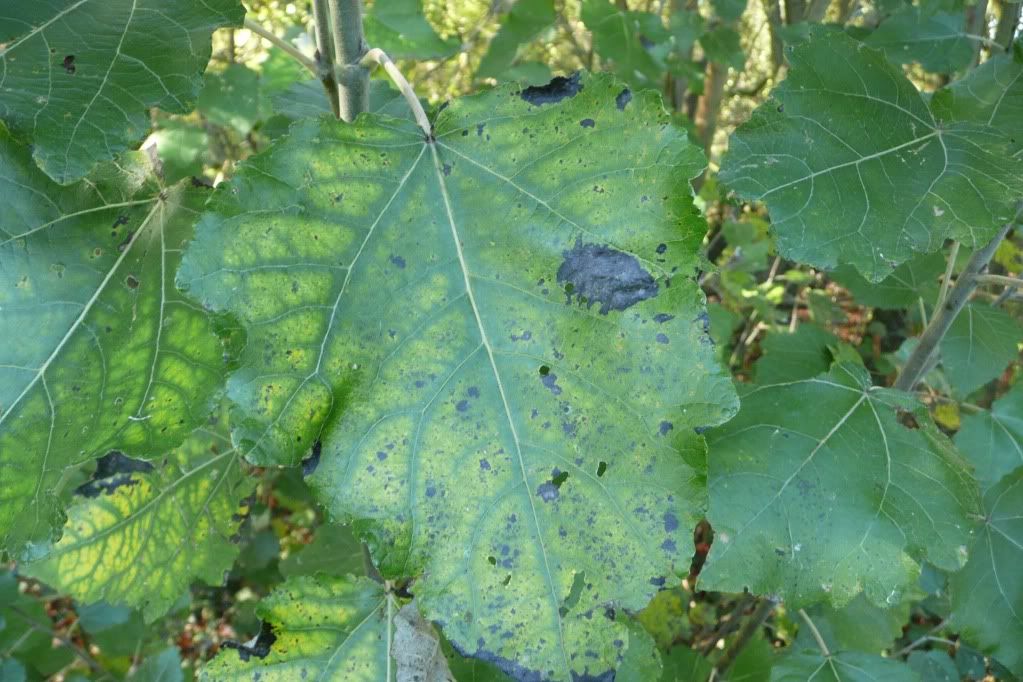
Parasitic: Where a fungus extracts nutrients from a host, but does not offer anything in return, most like this tar spot on a sycamore leaf may kill the leaf, but will not have an adverse affect on the tree.
.
.
Others like the honey fungus can be a lot more damaging and can eventually kill the host tree.  There are also fungus which are parasitic on other parasitic fungus.
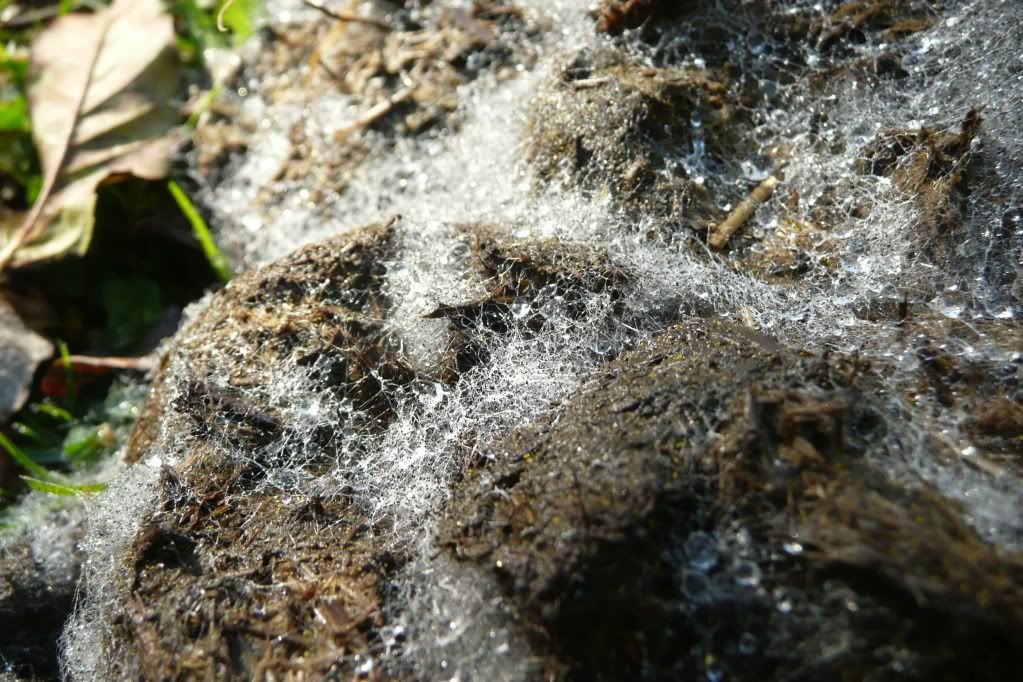
Saprophytic: Are fungus that derive their nutrients from dead or decaying matter, for example, this fungus growing on horse dung on a cycle path:
.
.
It is highly probable that the spores were consumed by the horse, passing through it's gut and then germinating when released. Not only is this fungus helping to break down the dung, but it also turning it into nutrients in the soil that will be used by plants and trees.


Symbiotic: With symbiotic relationships, the fungus takes carbon from the plant and returns nutrients in the form of nitrogen and phosphorus.  This milkcap fungus is growing around the roots of oak trees, in a form of symbiosis known as mycorrhiza (a relationship between a fungus and a tree).
.


.
In his fantastic book on Mushrooms, Roger Phillips recounts an experiment by NASA, where two pine trees were planted in sterile soil - one injected with a symbiotic fungus, the other not. Fifteen years later the tree with the fungus had grown 5 times larger than the none fungal tree.
This is just one example of how fungi are an intrisinic part of our environment and as Roger Phillips goes onto say, once a habitat is destroyed it cannot be replaced by just planting more trees.


References:
Many different sources have been used in the past few posts.  I have stayed clear of posting on internet forums as the purpose of these posts is try and identify them myself,  even if I have been unsuccessful in the identification.
The following have been invaluable in my identification quest:
Roger Phillips Mushrooms (Book, Website & iPhone App): http://www.rogersmushrooms.com/
Collins complete british  mushrooms and toadstools: http://www.harpercollins.co.uk/Titles/36133/collins-complete-british-mushrooms-and-toadstools-paul-sterry-barry-hughes-9780007232246
Wild About Britain Fungi Pages: http://www.wildaboutbritain.co.uk/fungi


Where I think I have identified a fungus I have used google to search for the scientific name and included the most suitable links.

Sunday, 24 October 2010

More Fungus

As discuissed in the previous posts there are several types of fungus growing by the Ock, but the budding mycologist doesn't have to venture far from Abingdon to encounter a whole range of fungus. One of the best places to see fungi in autumn is in mixed deciduous woodland, like Wytham Woods for example:

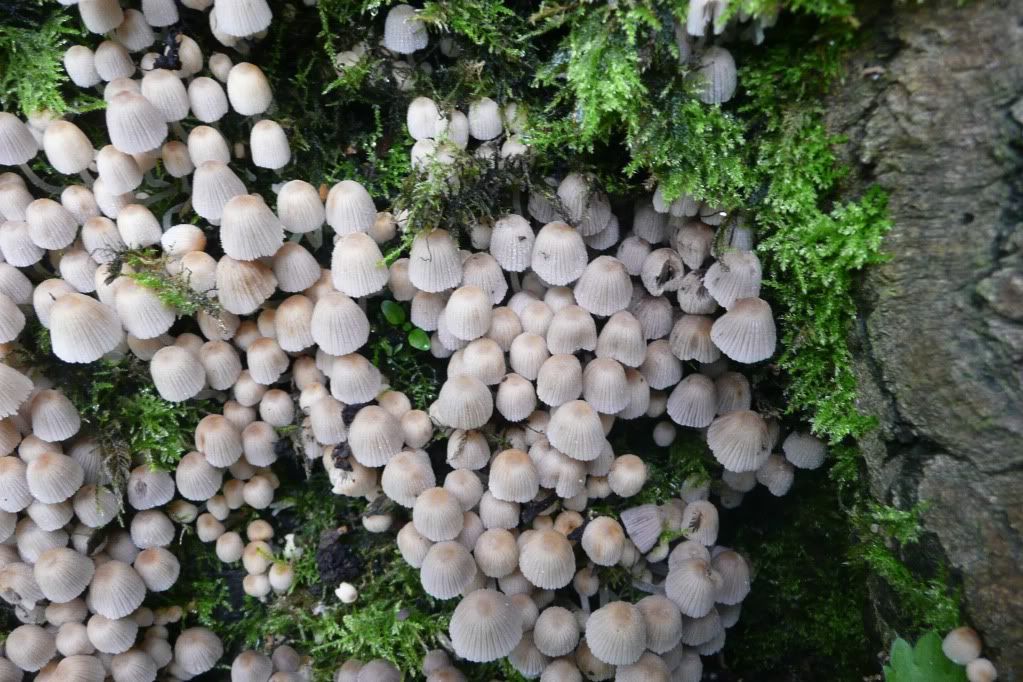
The growing in large clumps on a beech tree, this is possibly 'fairy inkcap'.

.
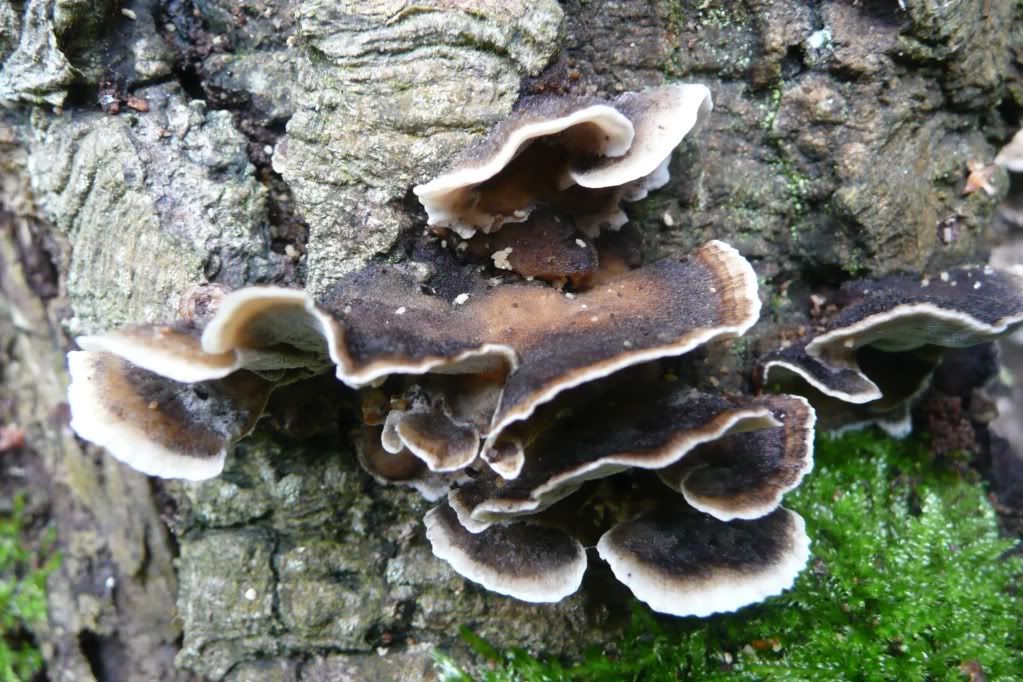
A bracket fungus are easy to spot, but less easy to identify, this one is possibly 'turkey tail', which is very common in deciduous woodland.
.
.
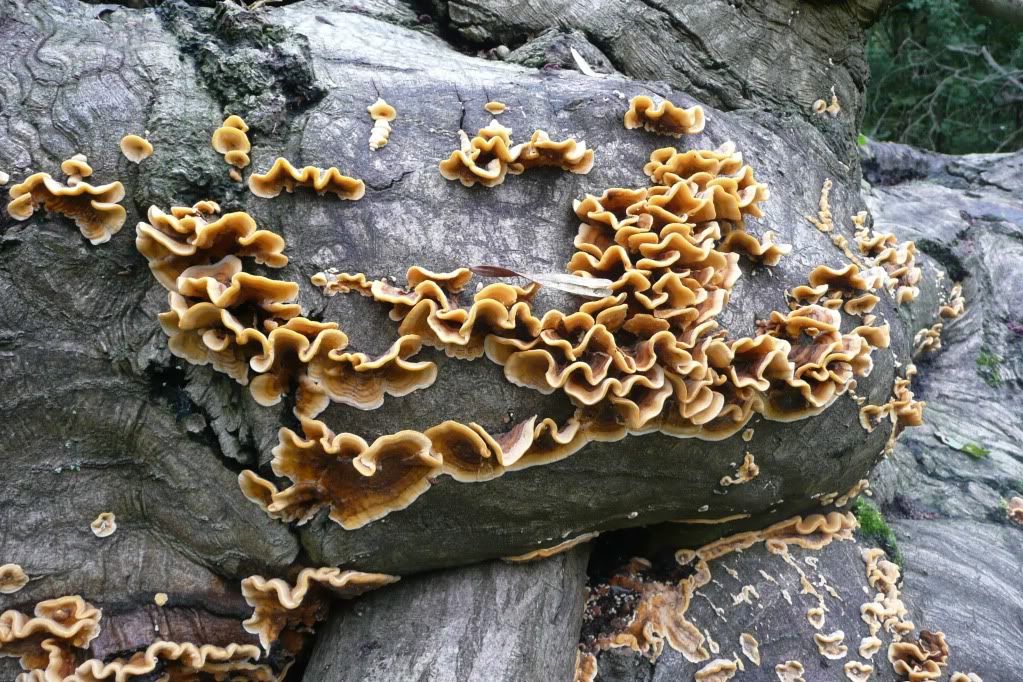
Another bracket fungus, growing on a the trunk of a fallen oak tree:

.
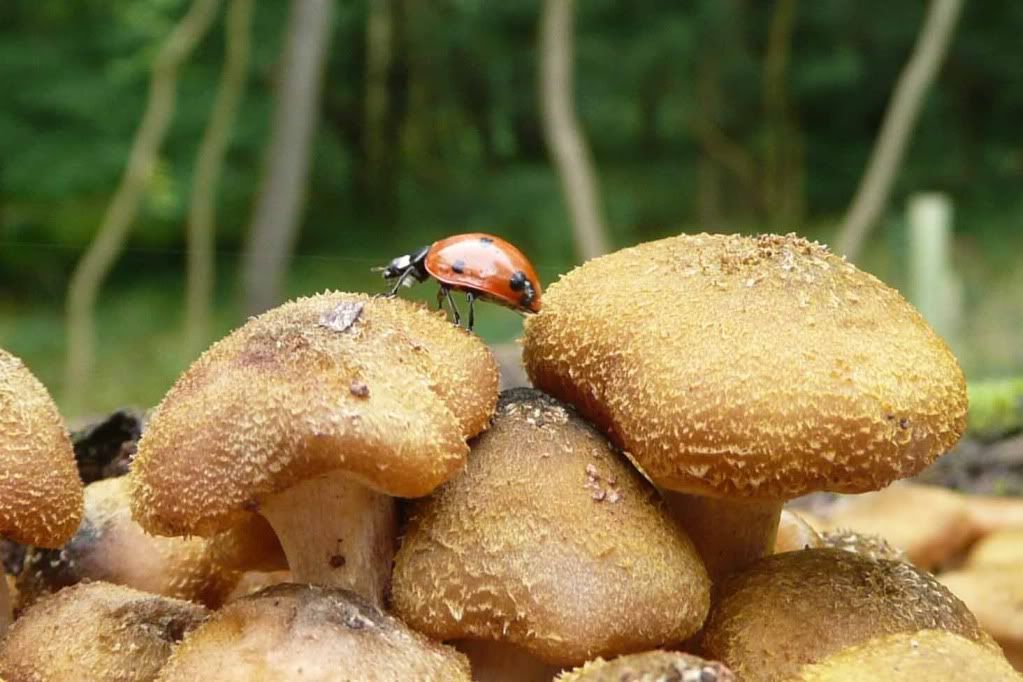
This seven spot ladybird is crawling over what could be a cluster of shaggy scalycaps.
.
.
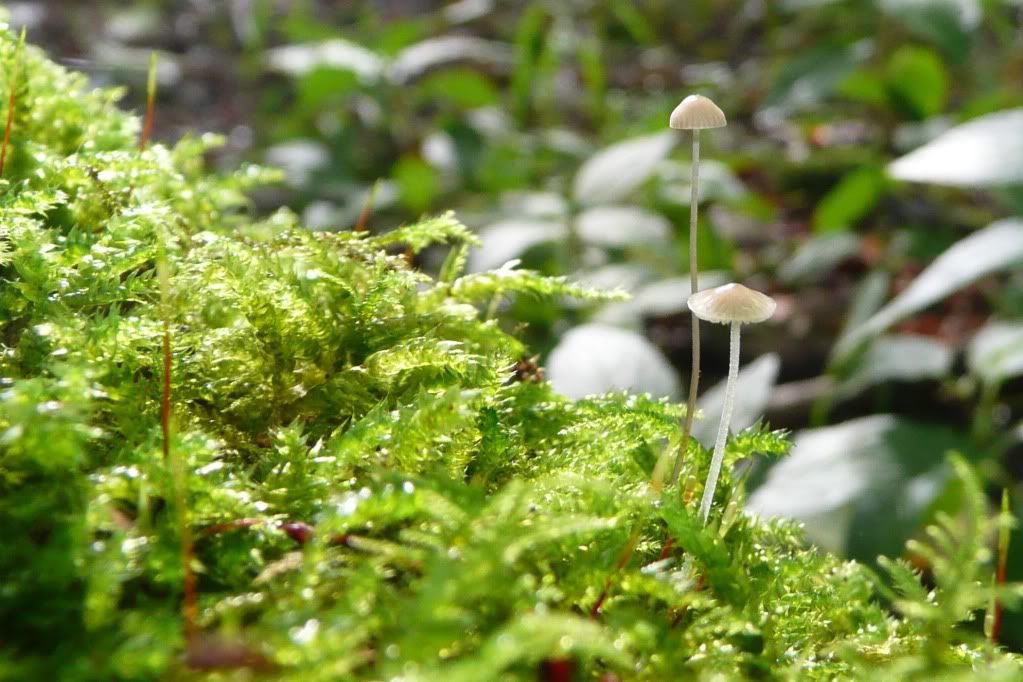
Of the 250 fungus photographs taken over the past two weeks, this is probably my favourite.- although puff balls are fun and the brackets impressive (especially the giant polypore) - there is something elegant and unassuming about such small fungus. These are possibly bonnets, maybe a bulbous bonnet.  To confirm this, it would require studying the stem to see if there is a disc at the stem. And given the size of Wytham Woods and the small size of the fungus, I doubt if I would ever find it again. 
.

Thursday, 21 October 2010

In search of fungus

Although it can be seen throughout the year, autumn is the best time to find the fruiting bodies of fungus . 
There are nearly 40 different types of fungus (milkcaps, brittlegills, funnels and brackets to name few).  Identification is a complex task done by assessing the cap texture (cracking, wrinkled, downy....); how the gills are attached (adnate, adnexed & sinuate); Gill Arangement (crowded; forked...); habitat (grassland, deciduous, marsh, conifer.. ) and the colours (red, black, brown) don't always help as they can change as the fruiting body grows and wither.
It is easy to understand how it can take a life time to become an expert in fungal identification.
There are over 12,000 recorded species of fungus recorded in the UK and even armed with a field guide (in this case the Collins complete guide to British mushrooms & toadstools and a rather nifty iPod app version of the Roger Phillips Fungus Guide) identification is incredibly difficult. 
One of the key ways to identify a fungus is to pick it and study the gills, smell and how it behaves when cut. But as identification for this blog is more for curosity than scientific study and the important role fungus can have in an ecosystem all have been left in situ for others to enjoy and study. All the fungus in this post have been found alongside the river Ock:
.
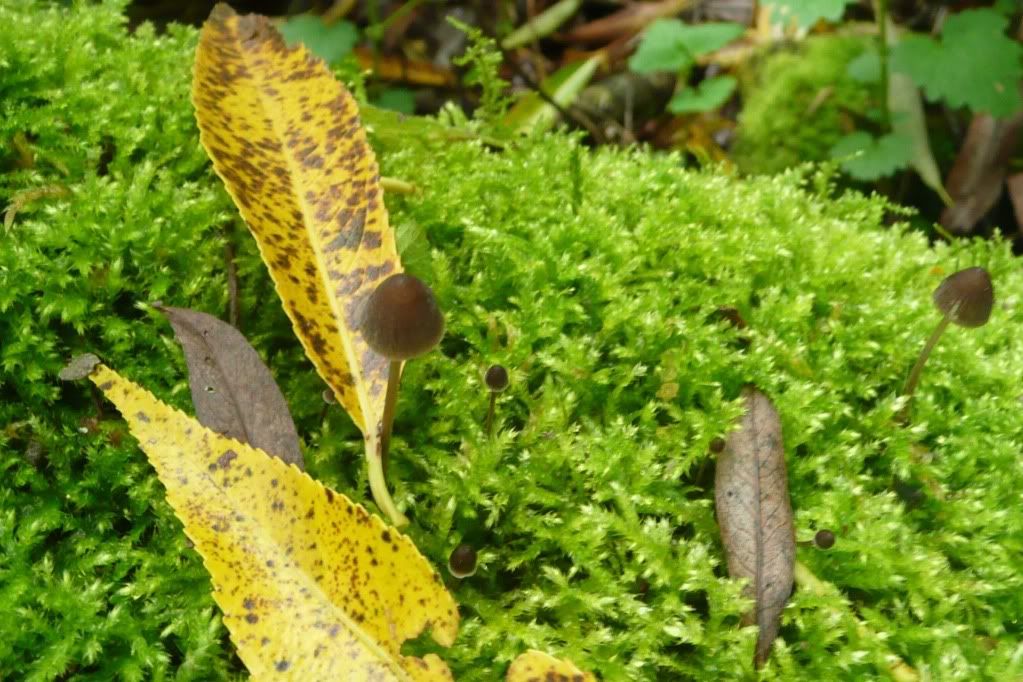
These small ones are growing on a felled branch of a willow tree, which  could make it a 'common bonnet'. But it might not be the dead wood it's feeding off, instead it could be moss on the branch, then it is more likely to be a 'Moss Bell'.
.
.
This fungus growing off the same willow branch has the appearance of a bracket fungus - sticking out and growing perpendicular to the wood, but having spent some time studying the field guides it may be a polypore (maybe a winter polypore).  The way to identify it would be check underneath as it polypores do not have gills, instead tubes are used to release their spores.  So if opportunity presents itself, I may sneak out with my wife's make up mirror at the weekend and have another look.
.
.
Even the footbridges aren't spared, this is possibly an oyster fungus at an early stage of development:
.
.
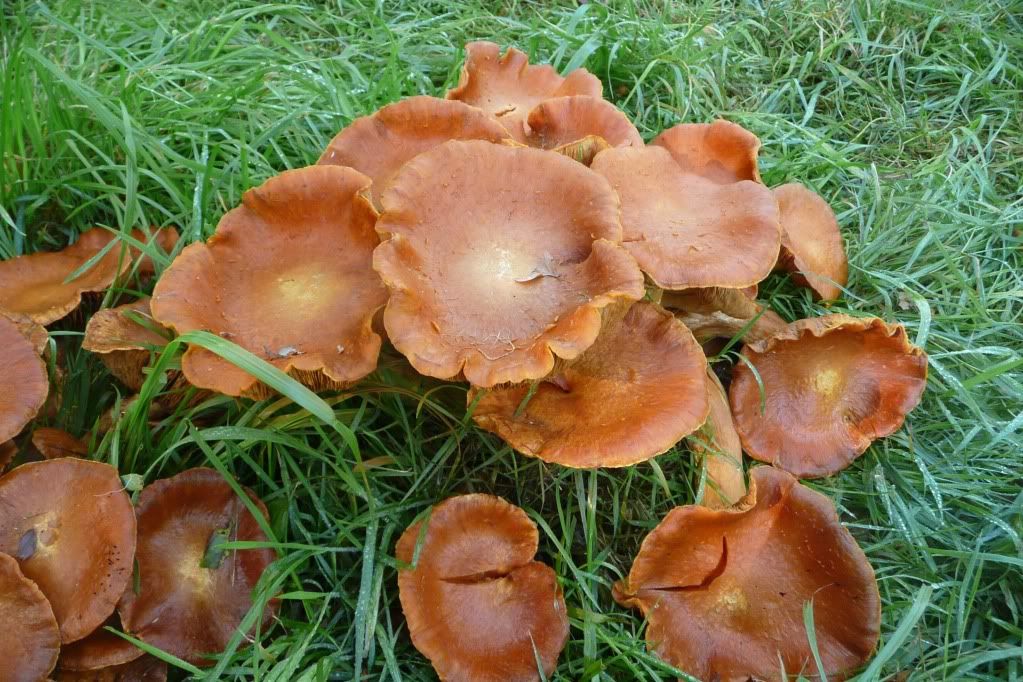
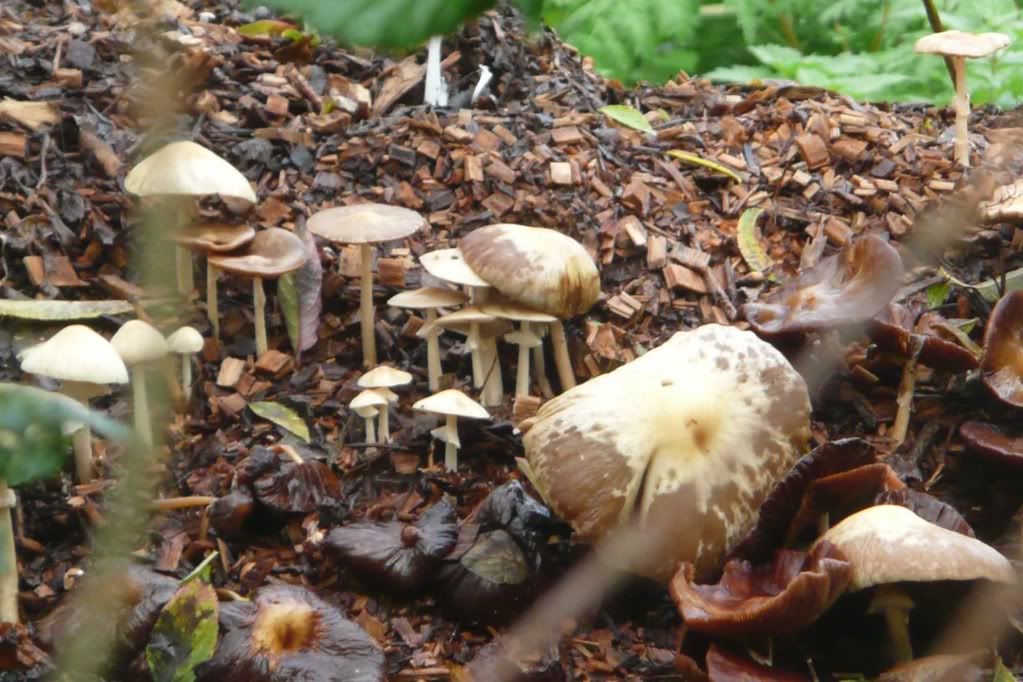
Along the Ock valley walk several willow trees have had their branches felled and chipped.  This is an ideal habitat for fungus of decaying deciduous trees, so could be 'Sheathed Woodtuft' or a milkcap, maybe 'mild milkcap'
.
.

Many apologises to any mycologists reading, I have spent several hours pouring over field guides and web sites and I have utmost respect for anyone who can identify a fungus.  As always not only are corrections are really appreciated.
Some field guides state which fungus are edible, inedible and poisonous, but if one thing is evident from this post, I will not consider eating anything picked in the wild and will continue to purchase my fungus from the supermarket.
Thursday, 9 September 2010

Random Stuff

Sorting out the 4Gb of pictures that were still on the memory card of my camera - most were rubbish; some have been posted before; some are irrelevant (a picture of Fairlop tube station !?!) and some are interesting, but did not seem to relate to any particular subject or were part of an ill fated post that was never completed.
These have been collated into a kind of miscellaneous post:
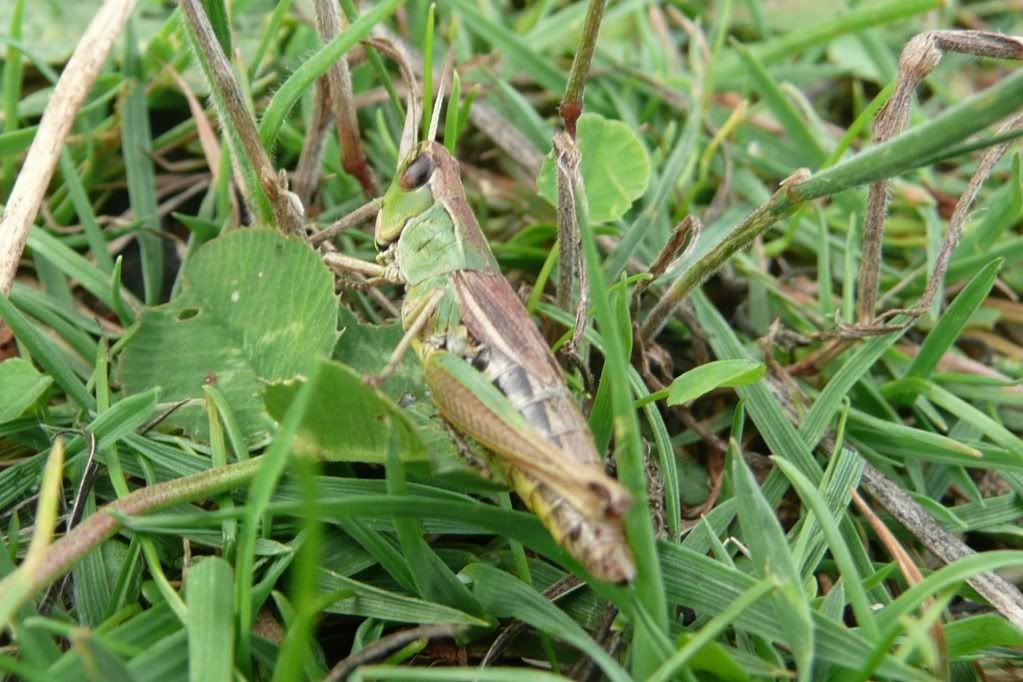
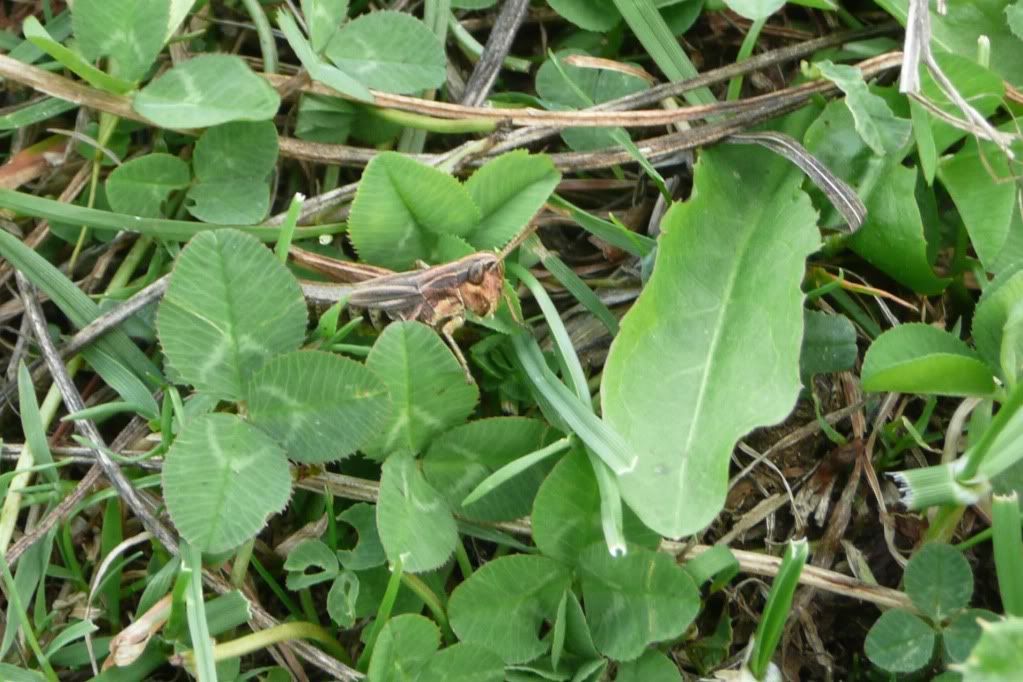
Grasshoppers: Despite their difference colours, these two are possibly 'common green grasshoppers', which aren't always green, they can also be grey or brown. Seen in the Ock meadows in August.
.
.
.
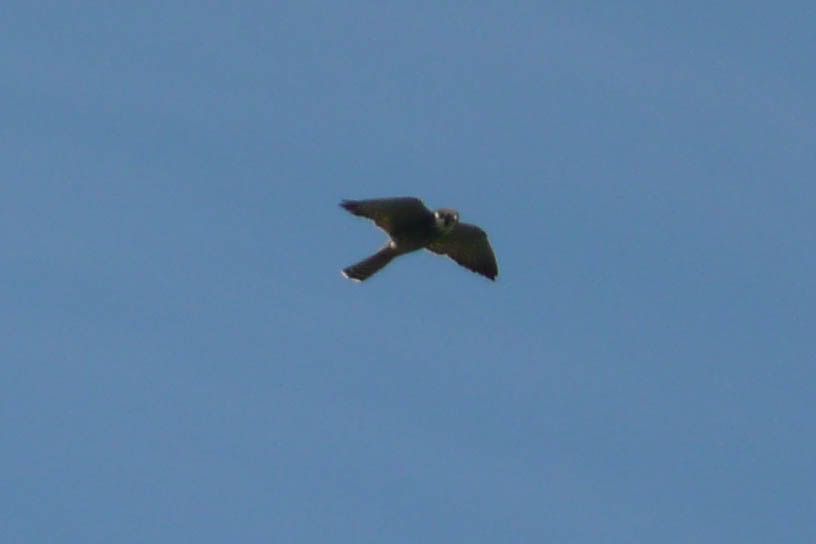
Radley Brook: Whilst waiting for the previously mentioned water vole to make an appearance (or not as the case may be), there are plenty of other things to see, including a sparrowhawk.  One of the four birds of prey that can seen in the area (buzzard, red kite and kestrel being the others, it is an objective of this blog to get decent pictures of all of them).
.
.
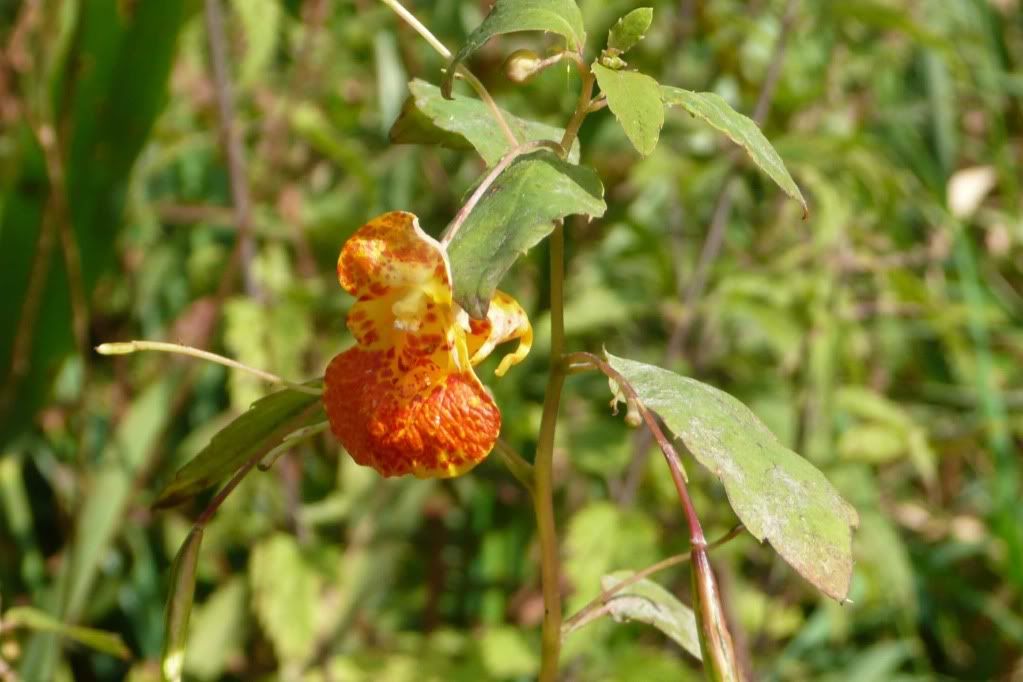
Orange Balsam, is a relative to the dreaded to himalayan balsam and is also an introduced plant that has escaped into the wild.  But unlike it's relative it is not as invasive and is rather attractive:
.
.
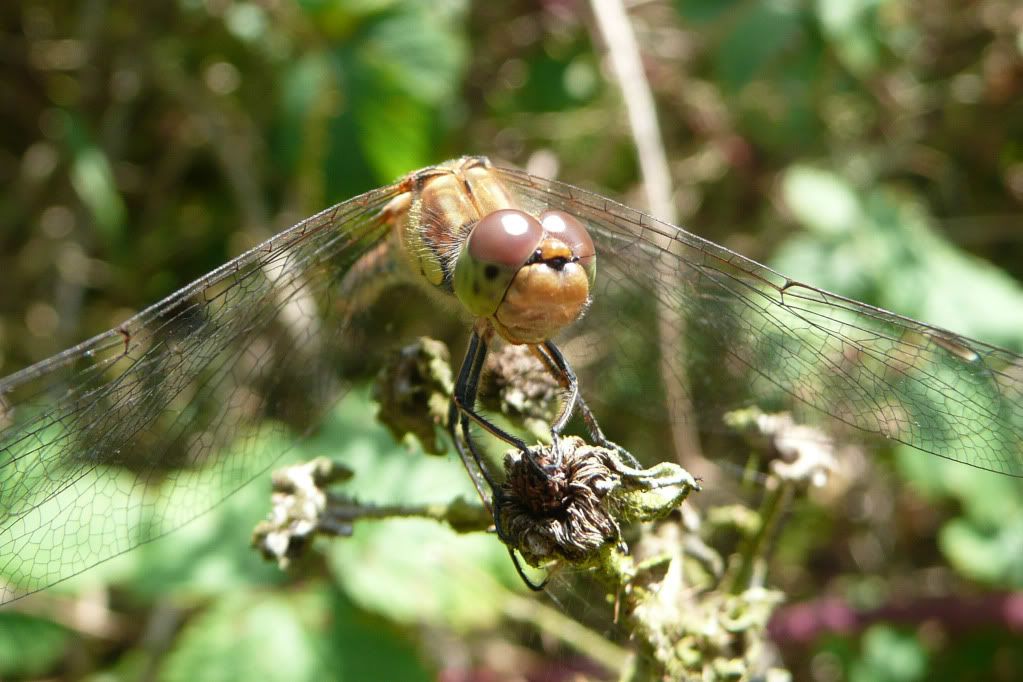
Dragonfly: A photograph of this particular dragonfly has appeared elsewhere in this blog, but in retrospect, I prefer this picture:
.
.
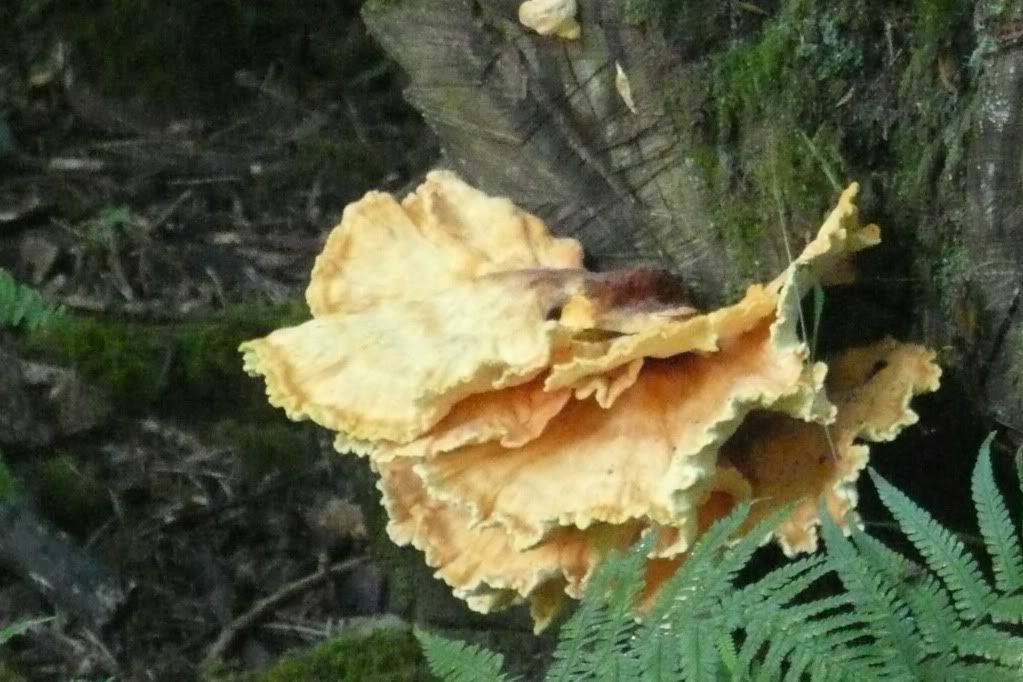
Wytham Woods: This rather impressive bracket fungus (with less impressive camera focus) in Wytham Woods near Oxford:
.
.
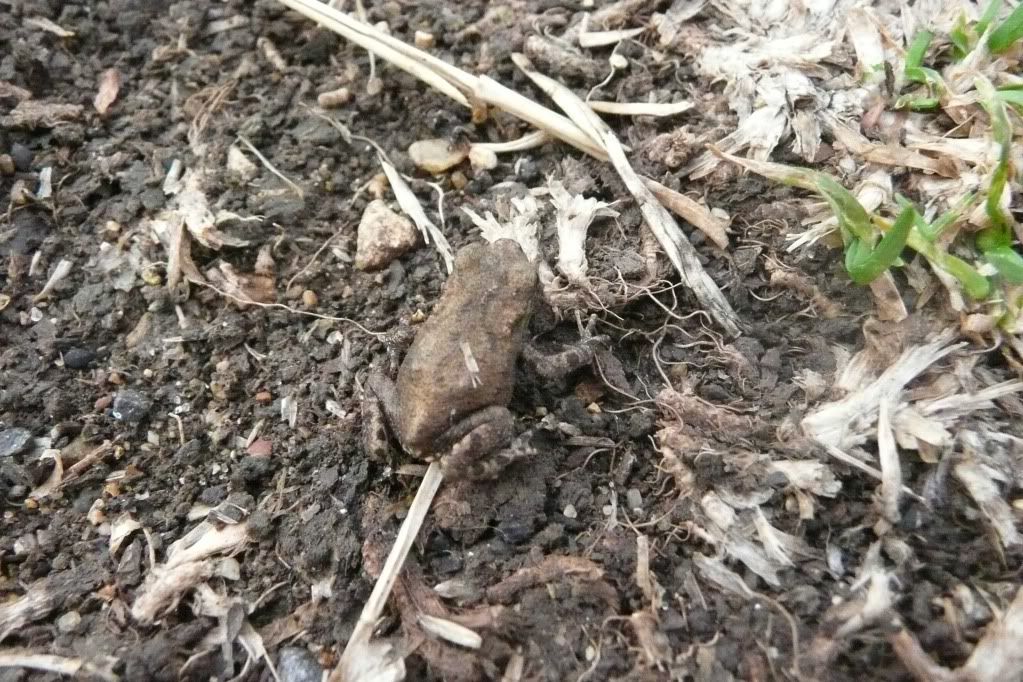
A small toad, also seen in Wytham Woods:
.
.
Managed by the University of Oxford Wildlife Conservation Unit, it has been intention to write a blog post about this fascinating place for a while. But like Sandford Brook, the Cothill Fens and the rivers Stert and Thames, it will have to remain on the list of posts that never seem to get written....