.
Buzzard: Buzzards are a frequent subject of this blog, as fortunately at least one pair has been breeding near the river. Although having one fly low overhead is somewhat unusual, especially with the lighting conditions making the patterns on their wings and bodies obvious - as this one seen in late November.
.
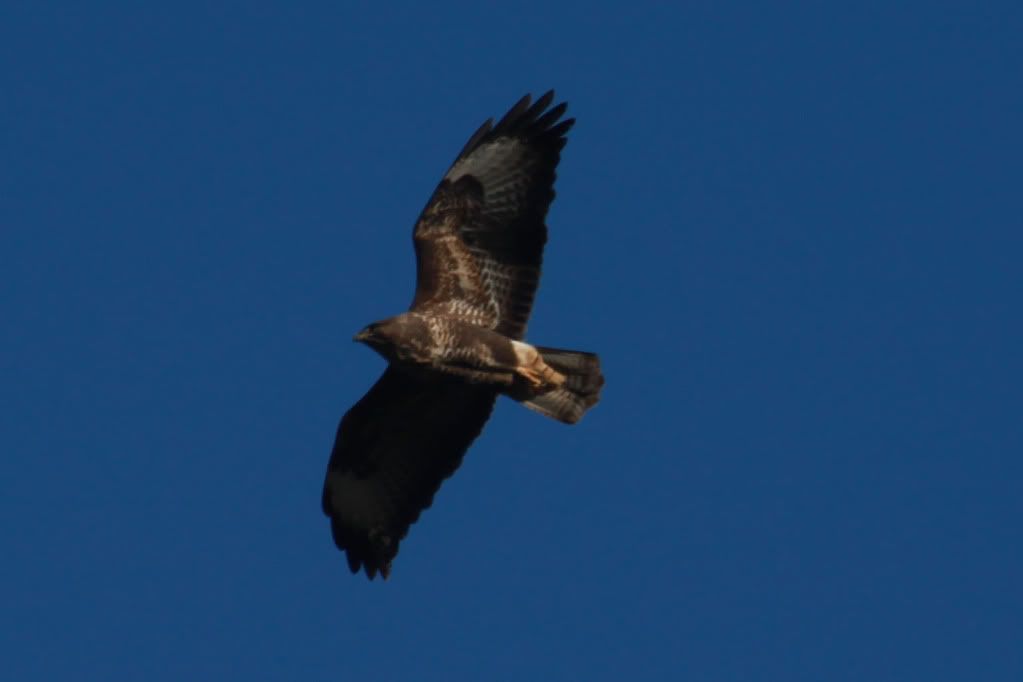
There are four birds of prey that are often seen by the river, sparrowhawks, kestrels, red kites and buzzards.
What is somewhat interesting is red kites and buzzards share the same food - carrion, rabbits and when times are hard - worms, yet they don't seem to be territorial with each other.
.
Severed Fish Head: There probably aren't too many people in Abingdon who not only get excited about finding a severed fish head, let alone stop and take a photograph of one. But this one, seen along the Ock Valley walk back in October is probably an otter kill.
.

Kingfisher: The steep banks along the river make the Ock an ideal habitat for kingfishers and it is not uncommon to see the bright flash as one streaks past and they can sometimes be seen sat on a branch watching for fish. But as they are easily disturbed, being able to take a picture of one is unusual. In fact in late November, whilst walking to work, presented one of the few opportunities this year to be close enough to get a picture:

As the weather gets harsher and the river gets fuller and starts to freeze, the kingfishers may migrate to warmer parts of the country, where it is easier to find food. Returning in spring to breed again.
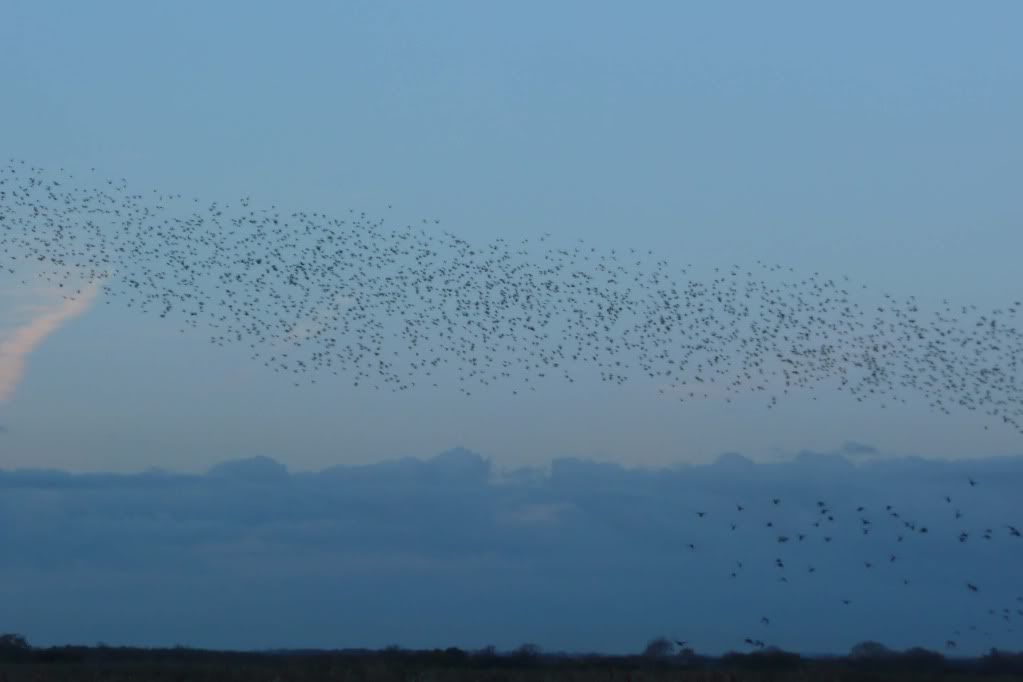
Starlings:As regular readers of this blog will know, the starlings at Otmoor are a favourite subject of this blog. It is certainly one of the sights of the county, if not the country with hundreds of thousands of starlings woshing overhead and forming mesmerising shapes.
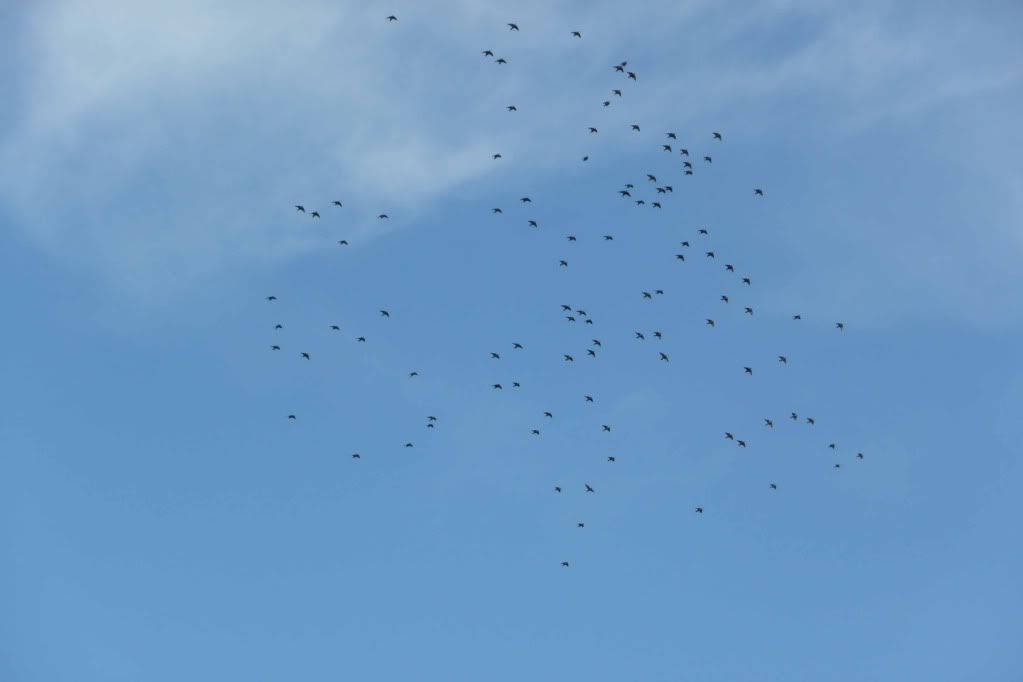
However, the autumn and winter of 2011 have been very disappointing with starling murmuration consisting of just several hundred, as seen in November
.
There is even a sign saying the starling numbers are significantly down this year, the lack of rain through the summer has meant the reed beds have dried up, as a result predators like foxes make the reeds less secure, so naturally, the starlings have gone on to find safer roosts.