Showing posts with label museums. Show all posts

Saturday, 2 July 2016

Microsculpture

The University of Oxford Natural History Museum (http://www.oum.ox.ac.uk/) is often featured in this blog and it has recently opened a temporary exhibition called Microsculpture, consisting of a series of exquisite photographs of 22 of the museums 5 million specimens from its Hope Entomological collection.

.
Photographer Levon Biss has used a microscope lens to painstakingly take 8000 photographs of different parts of each subject, each with its own lighting arrangements and then combined them to produce these remarkable images, such as this orchid cuckoo bee:
.
.
The exhibition also includes the actual insects, which demonstrates Bliss's remarkable talent in showing the exquisite beauty of these insects.
.

Such as the Jewel longhorn beetle:


.
And he has shown the Mantis Fly can look like something from a science fiction nightmare:
.
.
.
Even the most mundane of British insects, like the blow fly, is shown to be just as magnificent as any of the exotic ones featured in the exhibition.
.
.
The exhibition runs until the 30th October and is highly recommended to anyone in the locality or anyone visiting Oxford.

For those not fortunate enough to be able to visit, the exhibition has it's own website: http://microsculpture.net


Saturday, 13 June 2015

Grant Museum of Zoology

Most visitors to London, who are interested in the natural world, flock to the Natural History  Museum, yet on the corner of Gower Street and University Street is the Grant Museum of Zoology, the last university zoological museum in London
.
.
It doesn't have a plaster cast of a Pennsylvanian diplodocus or a near complete stegosaurs, and is considerably smaller than it's more famous counterpart on Cromwell Road.
But it does have many interesting and fascinating items on display, including a hippo skull:


.
A fascinating boa constrictor skeleton:
.
.
A cast of an archaeopteryx fossil:
.
.
And a skeleton of a Thylacines (Tasmanian Tiger), which become extinct in 1936:
.

.
Although some of the displays are just bizarre, including a jar of pickled moles:
.
.
Yet the most interesting and fascinating thing is the Micraium, a collection of over 2000 of the universities slides, backlit by light boxes:
.
.
.

.
 .
A fascinating and clever feature which hopefully other Natural History Museums might emulate.

Saturday, 16 May 2015

Sophie the Stegosaurus

The Natural History Museum in London is famous for it's dinosaurs, yet it's most iconic, Dippy the Diplodocus in the entrance hall is actually one of ten plaster casts of a dinosaur in Pennsylvania and it now has a rival - Sophie the stegosaurus


Named after the daughter of the benefactor who helped pay for it, this young dinosaur (whose gender is actually unknown) is 85% complete is the most complete stegosaurs yet found.


And it makes a mesmerising display in the Earth Hall when entering via Exhibition Road.


.
Sophie is a Stegasarus stenops and belongs to the group of dinosaurs known as the stegosaurs which are defined by their heavy body armour and defensive tail spines.
.
.
Sophie isn't the only stegosaur at the Natural History Museum, located across from the vast display of itchyosaurs are the fossilised remains of a Dacentrurus armatus:
.
.
Whilst not as impressive as Sophie - consisting of only a pelvis, vertebrates, femur and the defining tail spine -  it is the first ever stegosaur to be described and whilst Sophie was found in Wyoming in 2003, this one found in Swindon in 1875.

Reference:
Dinosaurs of the British Isles by Dean Lomax: http://www.deanrlomax.co.uk/Books.html

Tuesday, 18 February 2014

Return to the Oxford University Museum of Natural History

After 14 months the University of Oxford Museum of Natural History has reopened it's doors.  During that time the splendid gothic roof has been repaired and for the first time since it was opened in 1860 it has not leaked.
.
.
As always the cast of the Tyrannosaurus Rex makes an impressive centre piece.
.
.
It takes something special to outclass a dinosaur and on the opening Saturday it was by the opportunity handle some live exhibits, including this Pervian bird eating spider:
 .
.
But even this was outclassed by a remarkable Leaf Insect:
.
.
Now it has reopened, there will be many opportunities to enjoy the museum, including an new exhibition on Wytham Woods and what looks like a rearranged Dinosaur collection.
And as there is now a cafe in the top gallery there is no need to leave to get a cup of tea and cake.

The museum now has a twitter account: https://twitter.com/morethanadodo

And a new blog: http://morethanadodo.com/

Sunday, 7 October 2012

University of Oxford Natural History Museum


For the enthusiast of the natural world, there are many reasons to enjoy living near to the city of Oxford – Wytham Woods to the west, Harcourt Arboretum to the south and the Botanic Gardens in the city centre are splendid places to spend a sunny and warm day.
But as the days start to get shorter and the weather starts to get colder a turn, the best place to head is the Oxford University Museum of Natural History:
.
.
Built in 1859, the fantastic neo-gothic building houses the Oxford University’s collection of zoology, entomology and geology and  is the casts of the Tyrannosaurus and Iguanodon that first grasp your attention as you walk through the entrance:
.
.
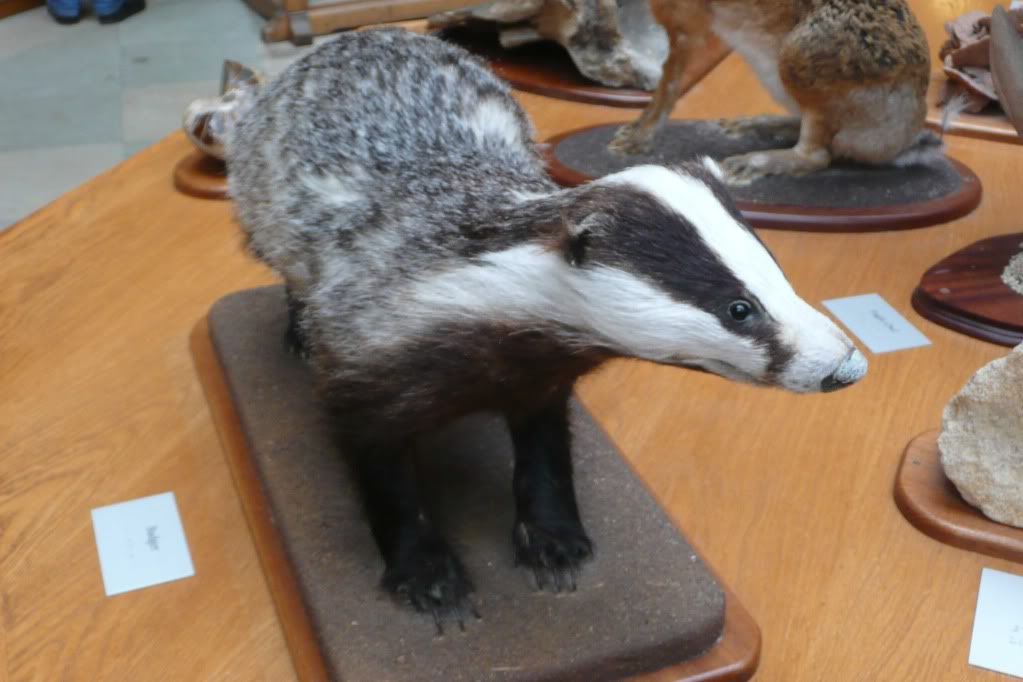
The exhibits of local geology & palaeontology are fascinating and even the ones local wildlife are interesting, even if it is somewhat sad to see animals that have featured in this blog as stuffed exhibits in a museum (even one as good as this):
.
.
.
.
Although it is the entomological exhibits that are probably the most engrossing - especially the displays of living insects, perhaps none more than the honey bees, which can be seen bringing pollen from outside the museum to their specially constructed glass walled hive and then doing their waggle dance to explain the location of nearby flowers.
.

It is best  to make the most of the Museum this year, as it closes throughout 2013 for the splendid (but leaking) gothic roof to be repaired (although access to the Pitt Rivers museum remains open):

Wednesday, 7 September 2011

Natural History Museum at Tring

Located only a few miles from College Lake is the Natural History Museum at Tring. It was built for and still houses the collection of Lionel Walter Rothschild, 2nd Baron Rothschild.
Walter Rothschild was an eccentric, in the only way a Victorian from a very wealthy banking family could be. Having failed to make the grade in the family's bank he dedicated his life to amassing an extraordinary collection of dead animals, including:
  • 2000 mammals
  • 2000 birds
  • 2,000,000 butterflies and moths
  • 300,000 beetles
  • 300,000 bird skins
  • 200,000 bird eggs.
The collection was stored in a private museum (paid for by the family) - the Walter Rothschild Zoological Museum - and bequeathed the museum to the country just before his death in 1937.  It is now managed by Natural History Museum and has free entry for the public.
Spread over five floors the museum is a jaw dropping monument to one man's obsession with killing and stuffing animals.
.
.
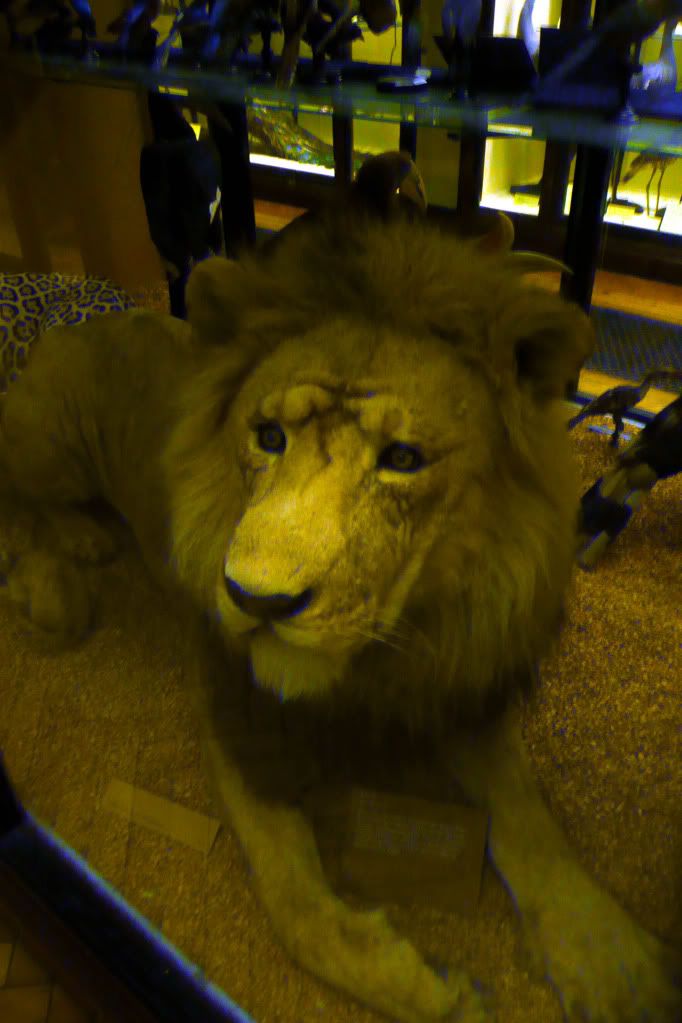
Some of these seem to be rather poorly done, rather than looking like apex predators, the lion and polar bear just look like giant soft toys:
.
.

In his book, A short history of nearly everything, Bill Bryson describes the sad story of the lesser koa finch, a small Hawaiian bird; only one has ever been seen and this was when it was shot for Rothschild's collection.
The finch, along with the majority of Rothschild's bird collection, was sold to the American Museum of Natural History in order to pay off a woman who had been blackmailing him for years.  Even so, most of his British bird collection remains at Tring, including this family of grey partridges:
.
.
It's easy to be critical of Rothschild and is obsession with killing and stuffing animals, certainly the mountain gorilla would be laughable if wasn't so tragic. But employed skilled zoologists, entomologists and ornithologists who helped him catalogue the collection, and in the process discover over 5000 new species, and published 1,700 scientific books.

Even today, the museum plays an important role for illustrators of field guides and for helping to identify recently discovered birds, like the Indian warbler.