Ladybirds are prolific breeders, a female can lay several thousand eggs each yea. Now having woken from their winter diapause, producing more eggs is exactly what a lot of ladybirds are starting to do.
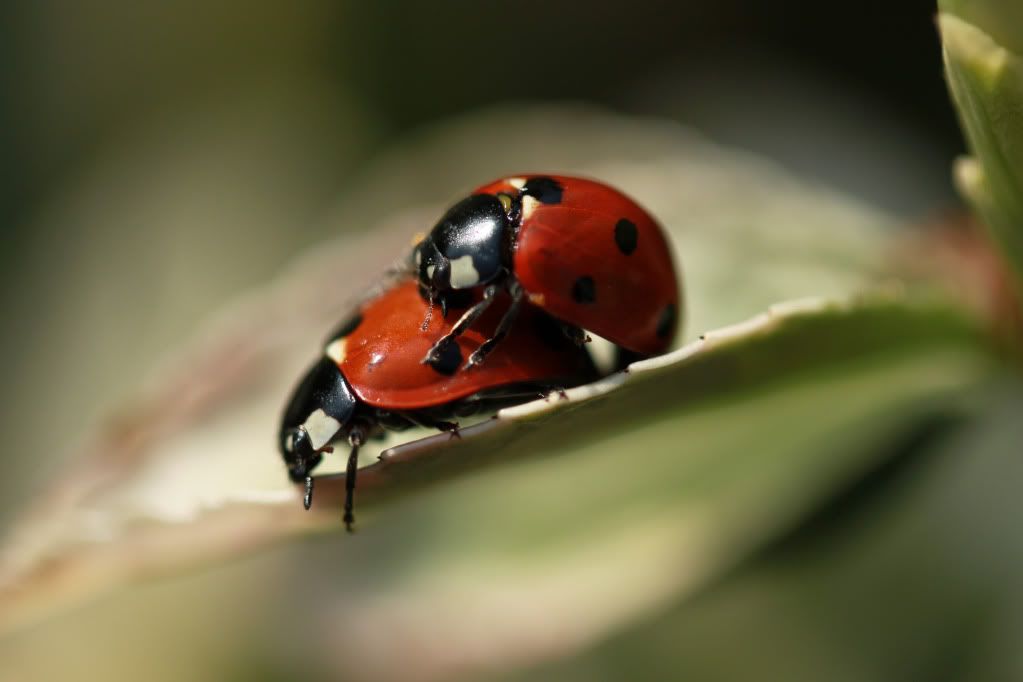
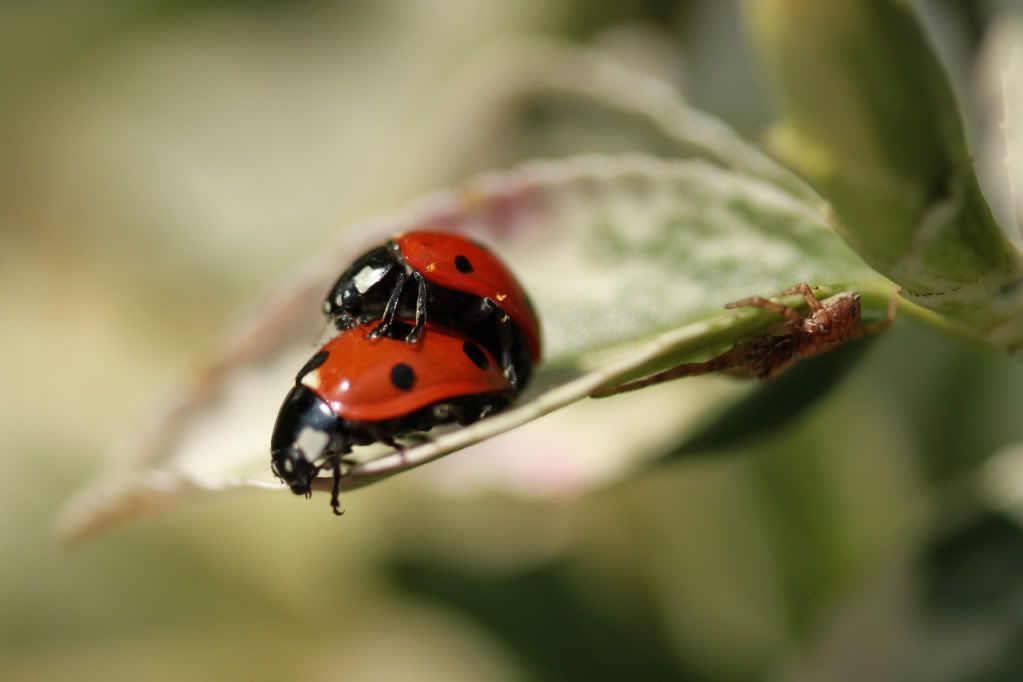
Bumblebees can take 45 minutes to mate, but ladybirds take it to an extreme, and these 7 spot ladybirds can spend 3 hours to 9 hours mating (http://www.naturescalendar.org.uk/NR/rdonlyres/B7AEA263-F3D3-4C69-8901-B992BFF26819/0/facts_ladybird.pdf).
.
.
Although this particular couple need to be careful, spending so long mating can bring risks, as a spider slowly approaches underneath the leaf:
.
Wildlife and other things of interest on and around the river Ock in south Oxfordshire
Showing posts with label ladybirds. Show all posts
Saturday, 31 March 2012
Tuesday, 27 March 2012
A loveliness of ladybirds...
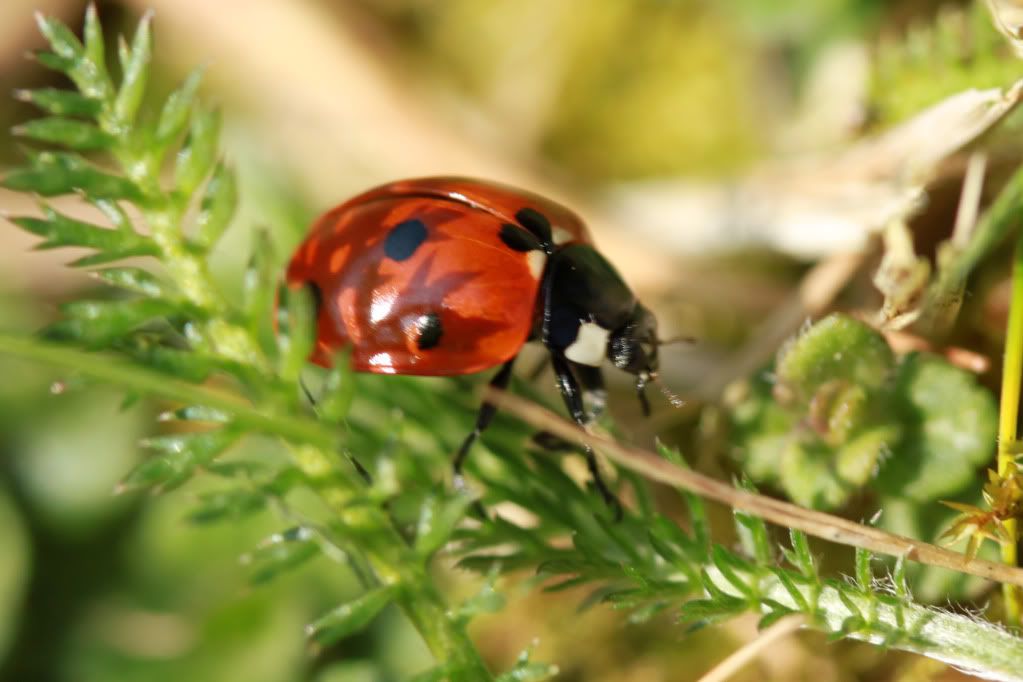
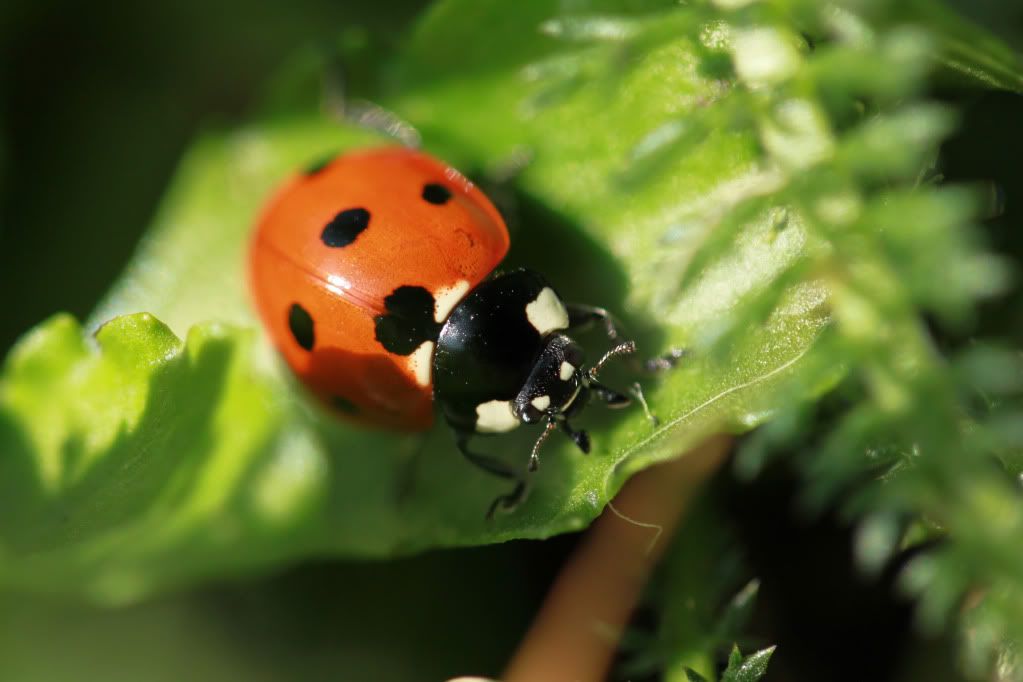
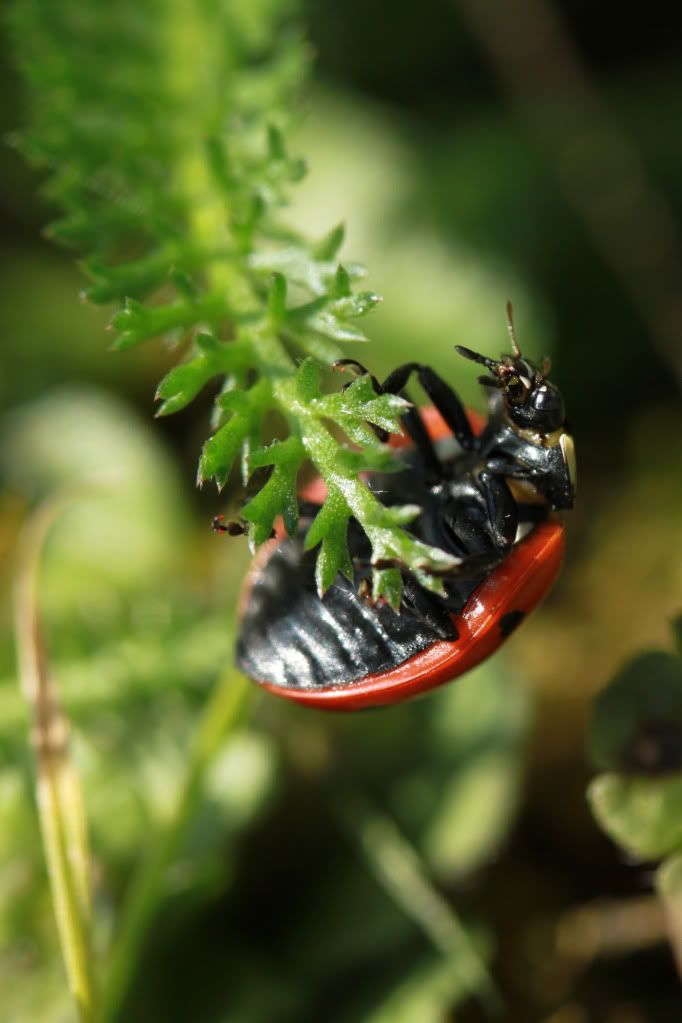
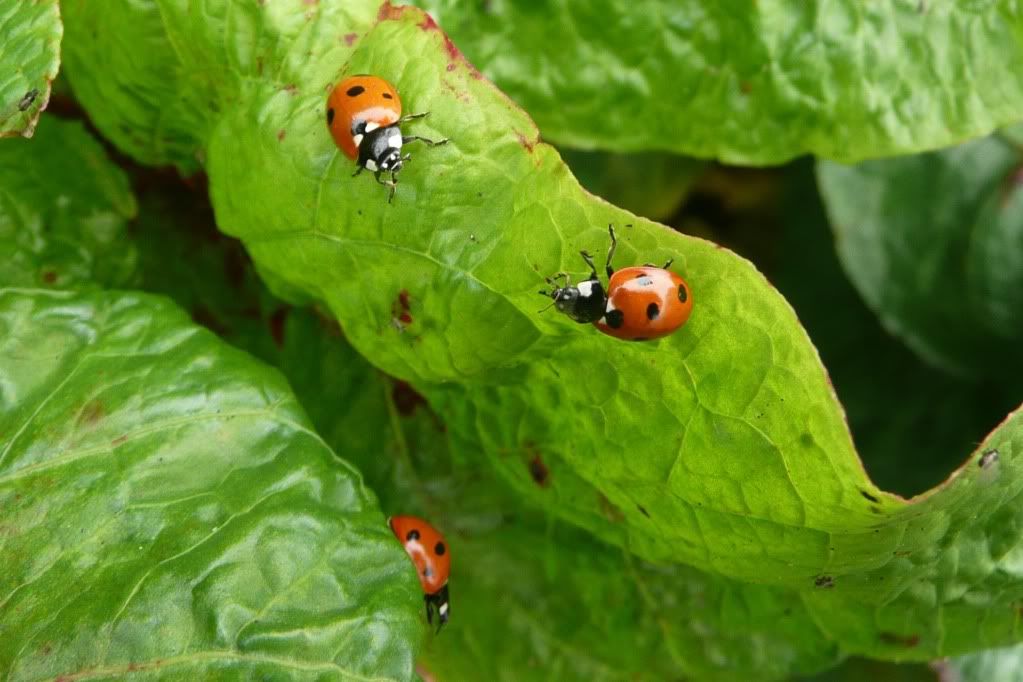
The recent spring heat wave has provided an opportunity to explore the garden and at the weekend, there was a multitude of ladybirds, who seem to have waken from their diapause (insect hibernation):
.
.
.
They are all seven spot ladybirds, one of the most common in the UK:
.
The collective name for ladybirds is a 'loveliness' and it does seem a suitable noun as the ladybirds took to the air and sought food and other ladybirds
.
.
There are 43 different species of ladybird in the UK, with the native species coming under threat from the invasive harlequin ladybird.
As usual, there is an irony with alien species, the seven spot ladybird has been introduced into North America - which now threatens their native ladybirds.
Thursday, 26 August 2010
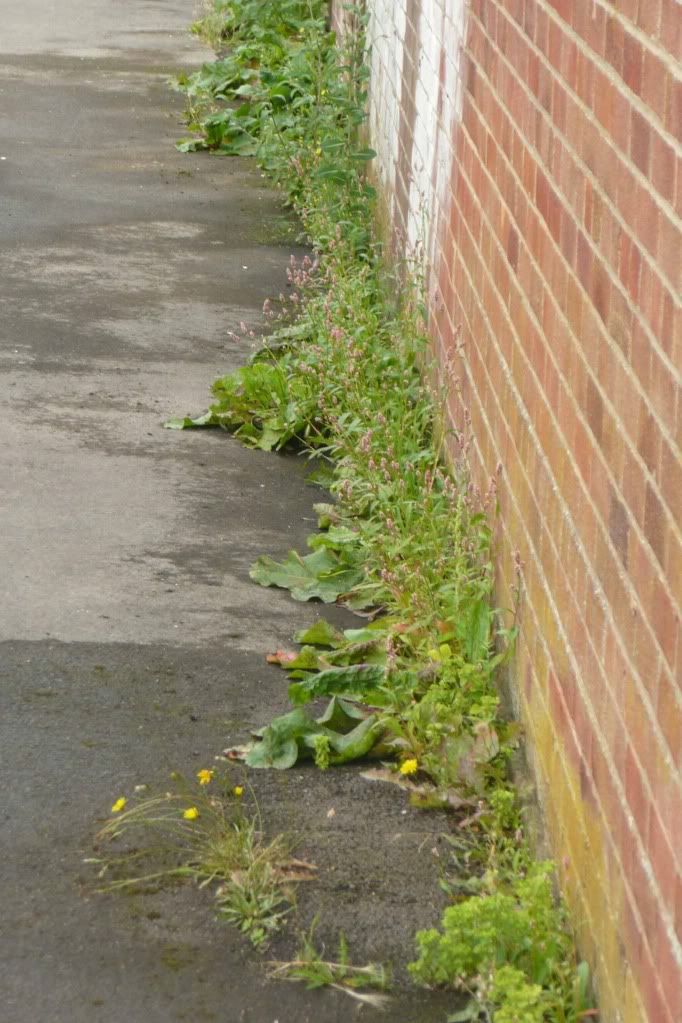
Views of the pavement
Whilst walking back from the river the other day, I noticed a clump of plants growing through the pavement. Every year they seem to get cut and every year they grow back.
.
.
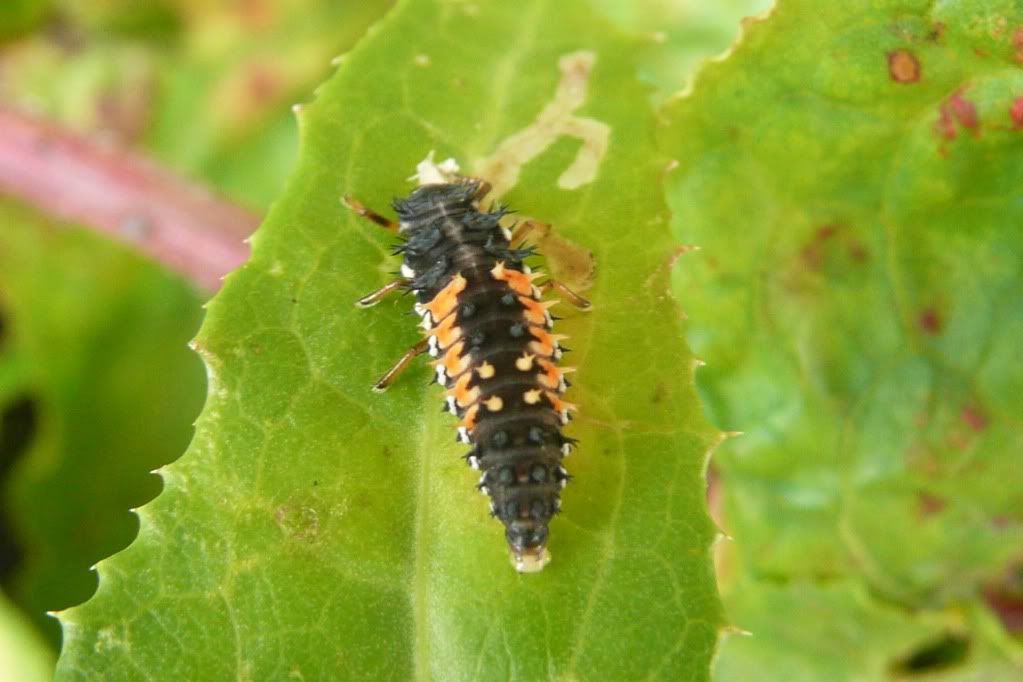
But closer inspection it turns out to be a haven for ladybirds, including the larvae of an invasive harlequin:
.
.
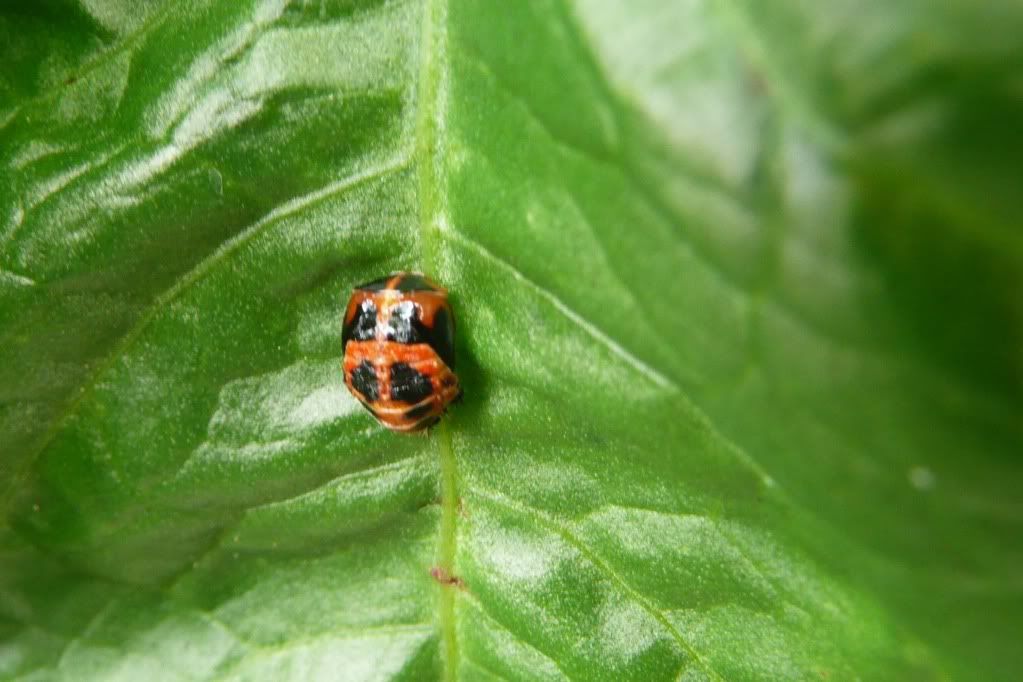
After a few weeks the larvae turn into pupa, also seen on the same plant:
.
.
The full size adult then emerges, on these plants there countless seven spot adults. Perhaps surprisingly, there were no obvious harlequin adults.
.
.
Although the seven spot is one of the UK's most common ladybirds, the rapid spreading of the harlequin may soon out compete it - as harlequins will feed on the eggs, larvae and pupae of the native ladybirds:
But closer inspection it turns out to be a haven for ladybirds, including the larvae of an invasive harlequin:
.
.
After a few weeks the larvae turn into pupa, also seen on the same plant:
.
.
The full size adult then emerges, on these plants there countless seven spot adults. Perhaps surprisingly, there were no obvious harlequin adults.
.
.
Although the seven spot is one of the UK's most common ladybirds, the rapid spreading of the harlequin may soon out compete it - as harlequins will feed on the eggs, larvae and pupae of the native ladybirds:
Subscribe to:
Posts (Atom)