For what is only a small insignificant river, there have been a suprising variety of subjects - boxing hares (females fending of amorous males): http://viewsoftheock.blogspot.com/2011/12/festive-plasmodial-slime-mould.html, hobbies chasing swifts and swallows: http://viewsoftheock.blogspot.com/2011/06/annoying-insects.html and slime moulds living bizzare and complex lives (http://viewsoftheock.blogspot.com/2011/12/festive-plasmodial-slime-mould.html).
So choosing five was always going to be difficult....
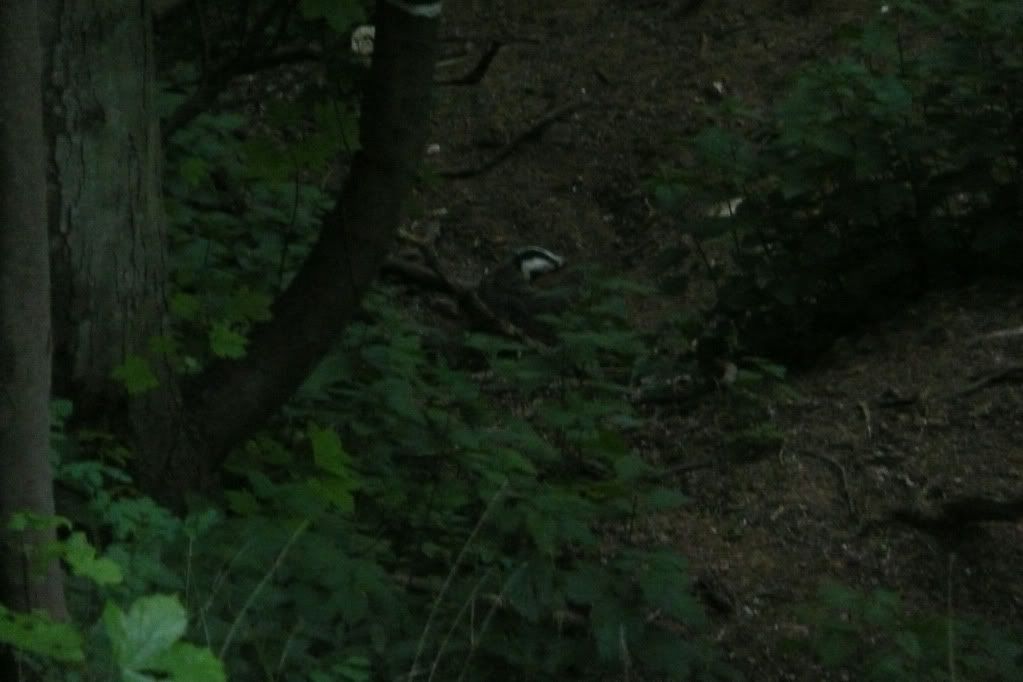
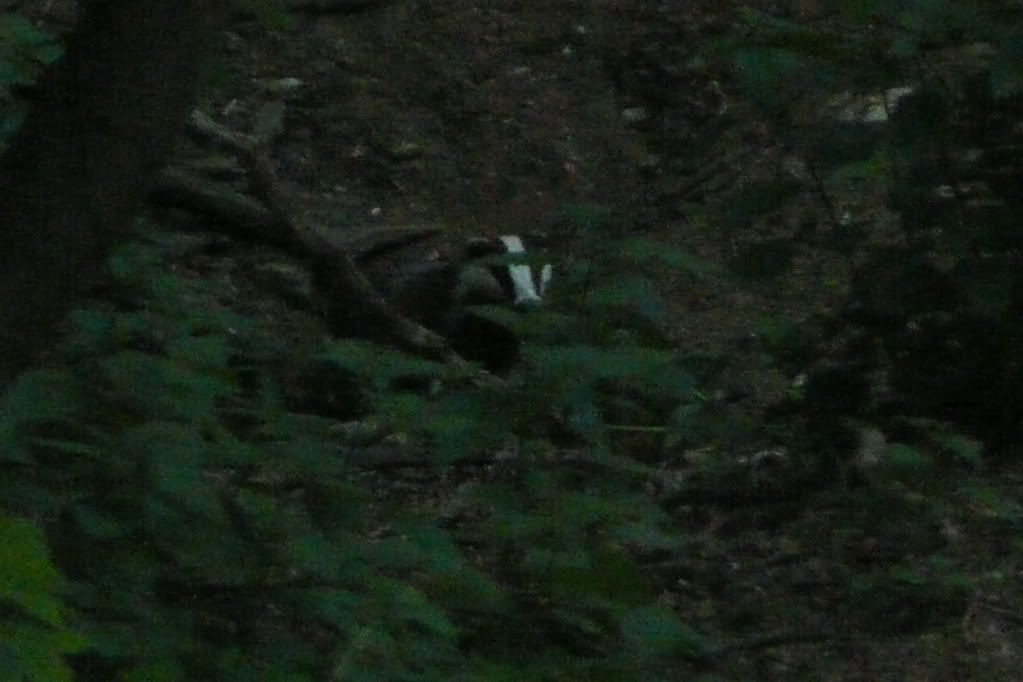
Badgers at Wytham Woods: Once in a while, this blog leaves it's native territory and explorer further afield and one of the places it likes to visit is Wytham Woods to the west of Oxford.
Owned by the University of Oxford, it is famous for it's badgers and in spring, members of the public are invited to take part in the badger census (to give the researchers an idea of which setts are active).
This involves sitting silently (and uncomfortably) for several hours watching a designated badger sett: http://www.viewsoftheock.blogspot.com/2011/05/badger-census-at-wytham-woods.html
Many don't get to see a badger, but when we did it back in May we saw several and even with a high ISO on a compact camera it is possible to get reasonable pictures.
.
Bumblebees: 2011 featured several posts on bumblebees - including one on the seldom seen subject of bumblebee mating: http://www.viewsoftheock.blogspot.com/2011/07/perils-of-bumblebee-mating.html
But the best post has to be about Tree Bumblebees:
.
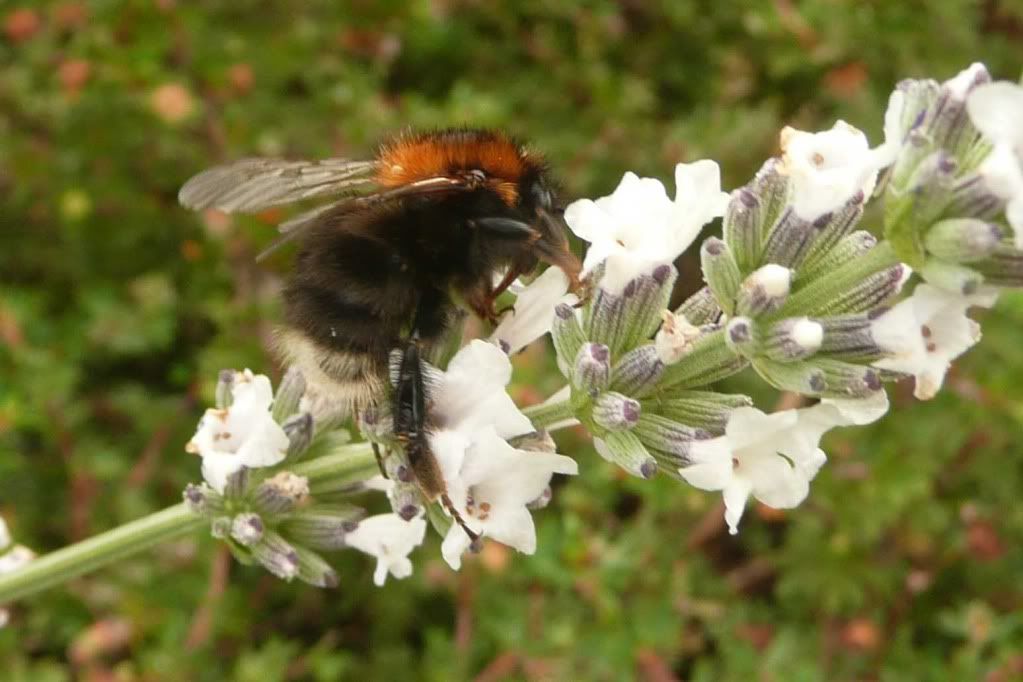
First discovered in the UK in 2001, they have spread northwards from the New Forest and it was something special to find one feeding on the lavender in our front garden:
http://www.viewsoftheock.blogspot.com/2011/07/tree-bumblebees.html
Sparrowhawk: Garden birds have featured in this blog several times, whether it is under taking the RSPB Garden Birdwatch Survey (http://www.viewsoftheock.blogspot.com/2011/01/big-garden-birdwatch.html) or documenting the arguments between Goldfinches on the feeders (http://www.viewsoftheock.blogspot.com/2011/12/argumentative-goldfinches.html).
Attracting goldfinches, sparrows, robins and greenfinches into the garden also attracts those who like to feed on them, cats being one, but more welcome visitors are the sparrowhawks. Like this young male seen in October, eating one of the pair of dunnocks that frequented the garden (I'm convinced it was a dunnock, as we only have one visit the garden now):
.
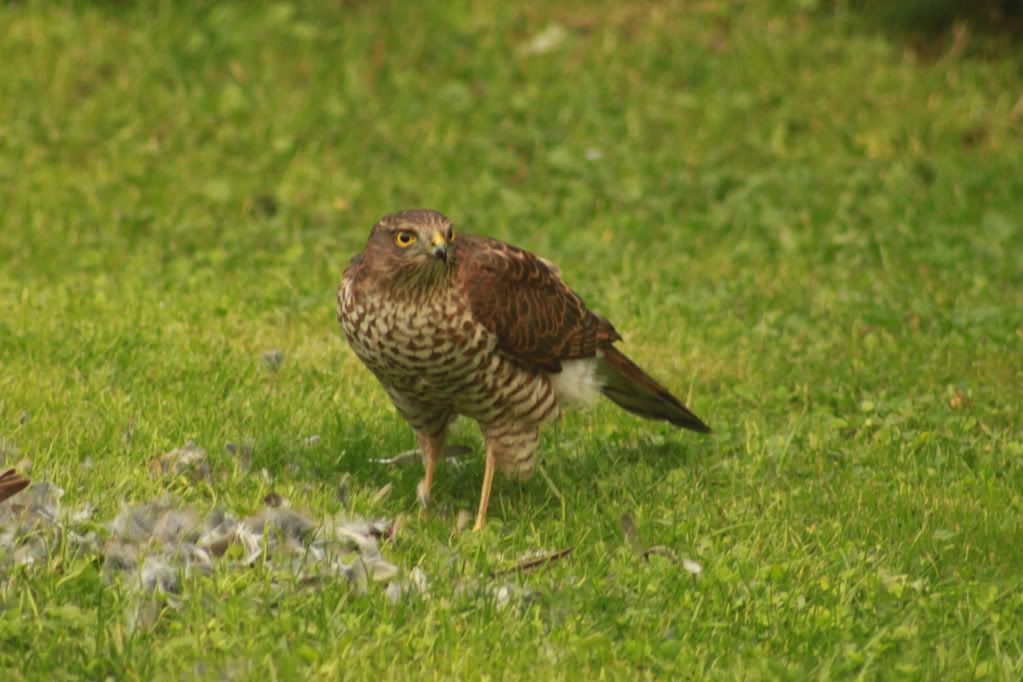
The sparrowhawk remained in the garden for 15 minutes, seemingly unconcerned about me taking pictures of it. Until there was hardly anything left of the unfortunate dunnock, but before it left, it allowed me to get my favourite action shot of the year:
.
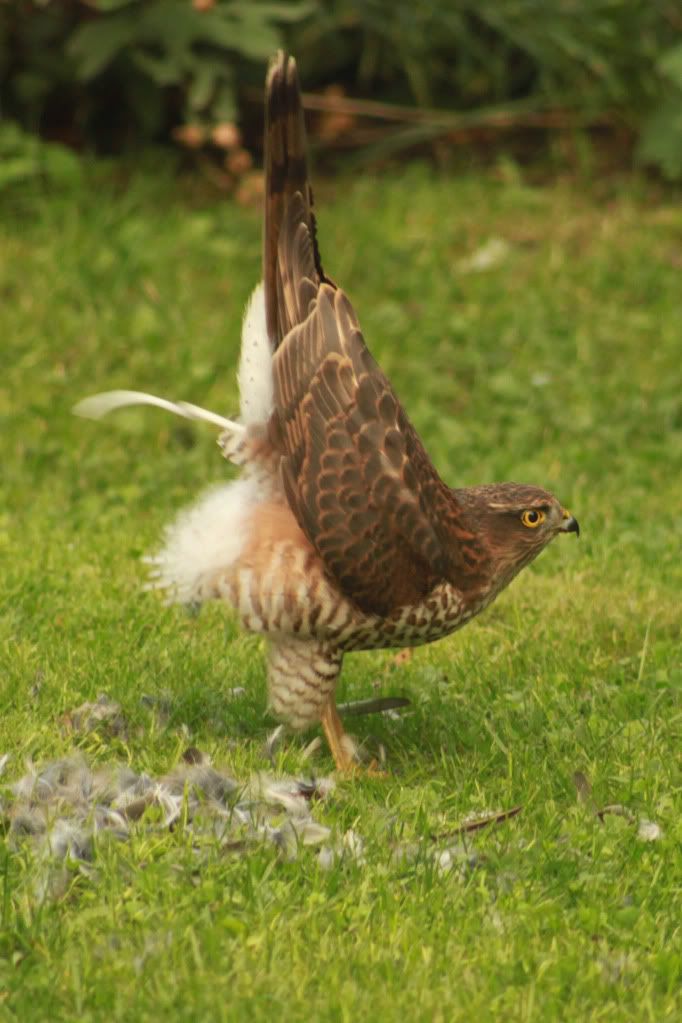
.
The original post was back in October: http://www.viewsoftheock.blogspot.com/2011/09/return-of-sparrowhawk.html.
Tree Climbing Water Voles: Another frequent subject of this blog are water voles and they were one of the reasons it was started. The past year has focused on colonies on the Ock http://viewsoftheock.blogspot.com/2011/05/argumentative-water-voles.html) and at Radley Brook (http://www.viewsoftheock.blogspot.com/2011/06/water-voles-of-radley-brook.html)
I have read about water voles climbing trees, but thought it was a somewhat unusual activity until I did a survey for the Wildlife Trust. During it I was suprised to see a water vole swimming along the river, I was more surprised to see it start to climb along one of the branches of an over hanging tree, I was even more surprised as it climbed and climbed until it disappeared out of sight.
.
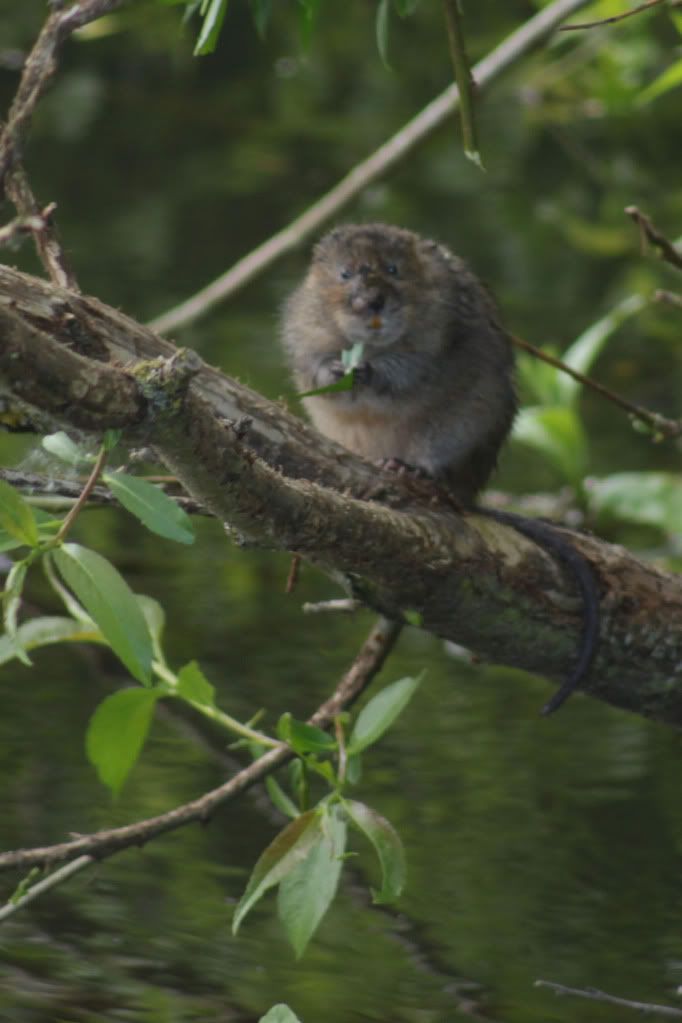

But as spring turned to summer, they kept away from the trees preferring the sedge and arrowhead that had started to grow.
Otters: Having detected signs of otters back in February 2010, they have been a semi-regular subject on this blog - whether it is finding spraints () or half eaten crayfish (another favourite subject of this blog - http://viewsoftheock.blogspot.com/2011/08/yet-more-dead-crayfish.html).
So it is perhaps not surprising that the favourite post of this year (or any year) is the sighting of not one, but three otters back in May (http://www.viewsoftheock.blogspot.com/2011/05/otters.html & http://www.viewsoftheock.blogspot.com/2011/05/more-otter-pictures.html).
Then, during May and June, I saw the otters several times, sometimes it was the three of them (mother and two cubs) and sometimes it was a solitary otter. All sightings were accidental, like this one, taken at 6.30 in the evening when I had gone to look for butterflies and bumblebees.
.
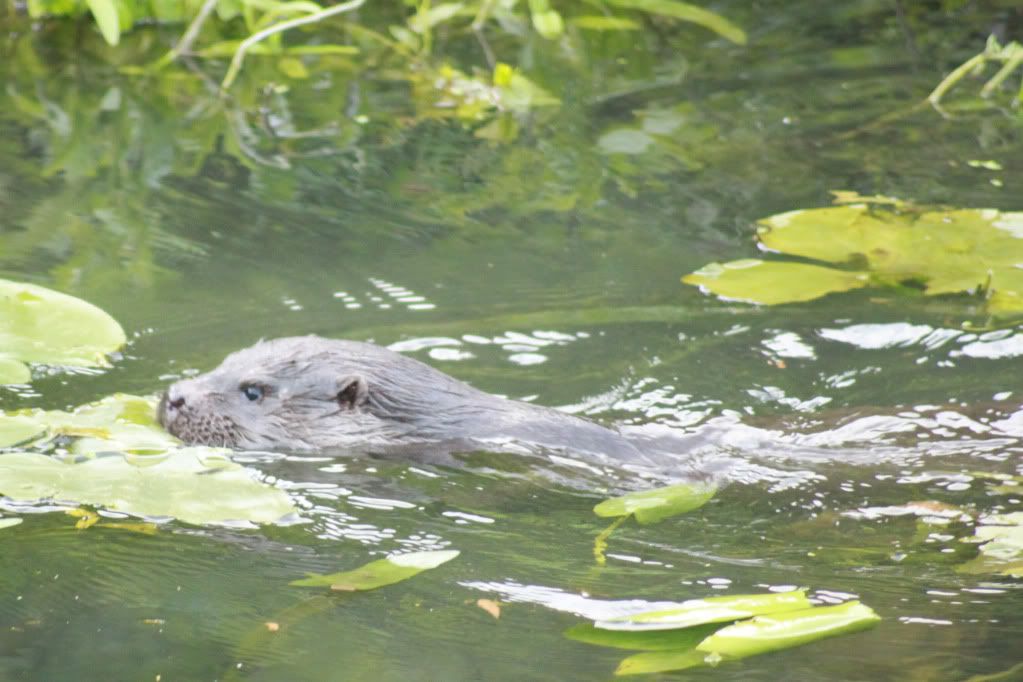
What is interesing is most reference books describe otters and shy and nocturnal, but not only have I seen them in daylight, but they seem quite curious and they look up if they here the camera shutter
.

And on one occasion one of them swam over for a sniff was less than a metre away.
Unfortunately, my camera focused on the grass in front of it, providing me with the most disappointing picture of the year:
.
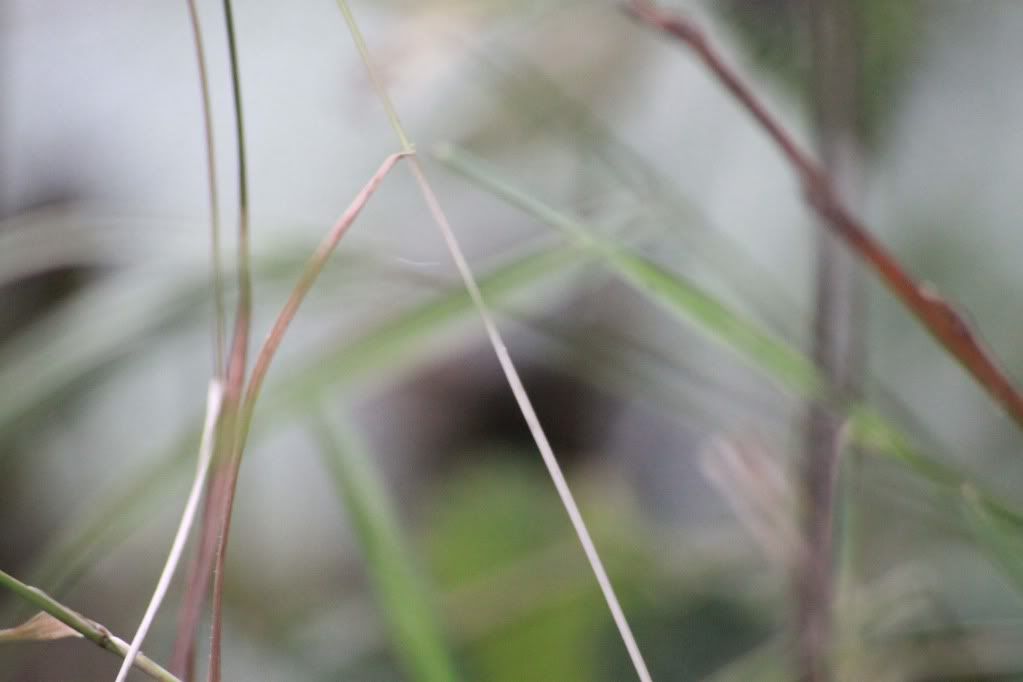
It's probable that the cubs have now dispersed and it is unlikely I will see them again next year, and even if I don't, I know I have seen one of the UK's most elusive and fantastic animals and something I will treasure forever.
Many thanks to all who read the blog and especially to those who have left comments, without them it is doubtful if the blog would have lasted this long and without this blog I would never have seen the wonderful array of wildlife that is found on this small river and hopefully I have managed to convey some of these delights.
Thank you, all the best for 2012
Richard