The Oxford Canal, completed in 1790, links the River Thames to Coventry and was one of the main methods of transporting goods from the manufacturing heart of the midlands to Oxford, Reading and London
The canal now stops at Hythe Bridge Street in Oxford city centre, but once continued to Worcester Street to a basin at Worcester Street - now an expensive car park.
The freight may have declined, but it is popular place for mooring a barge and and is an enjoyable place for an evening stroll:
.
.
As it has become more of a source of leisure than commerce, it has become a haven for wildlife and as the canal passes through Jericho, there are what looks like signs of water vole feeding by the canal path:
.
.
Further along the canal there are very obvious signs of water vole latrine
.
Although trying to catch a glimpse of them is very hard, to the far side of the canal are gardens and the habitat is more suitable for snoozing ducklings than water voles.
.
.
But lurking in the undergrowth, next to the canal path is the unmistakable nose of a water vole.
.
.
The water voles along this stretch are well known (if somewhat hard to see) and have caused a few problems when attempts have been made to renovate the footpath
http://www.oxfordmail.co.uk/news/10099754.Voles_scupper_plans_for_towpath_revamp/
Wildlife and other things of interest on and around the river Ock in south Oxfordshire
Thursday, 23 May 2013
Sunday, 19 May 2013
Pond Life
About three years ago we built a pond in our back garden and despite being small, it has had interesting wildlife - water snails, ostracods and water louses.
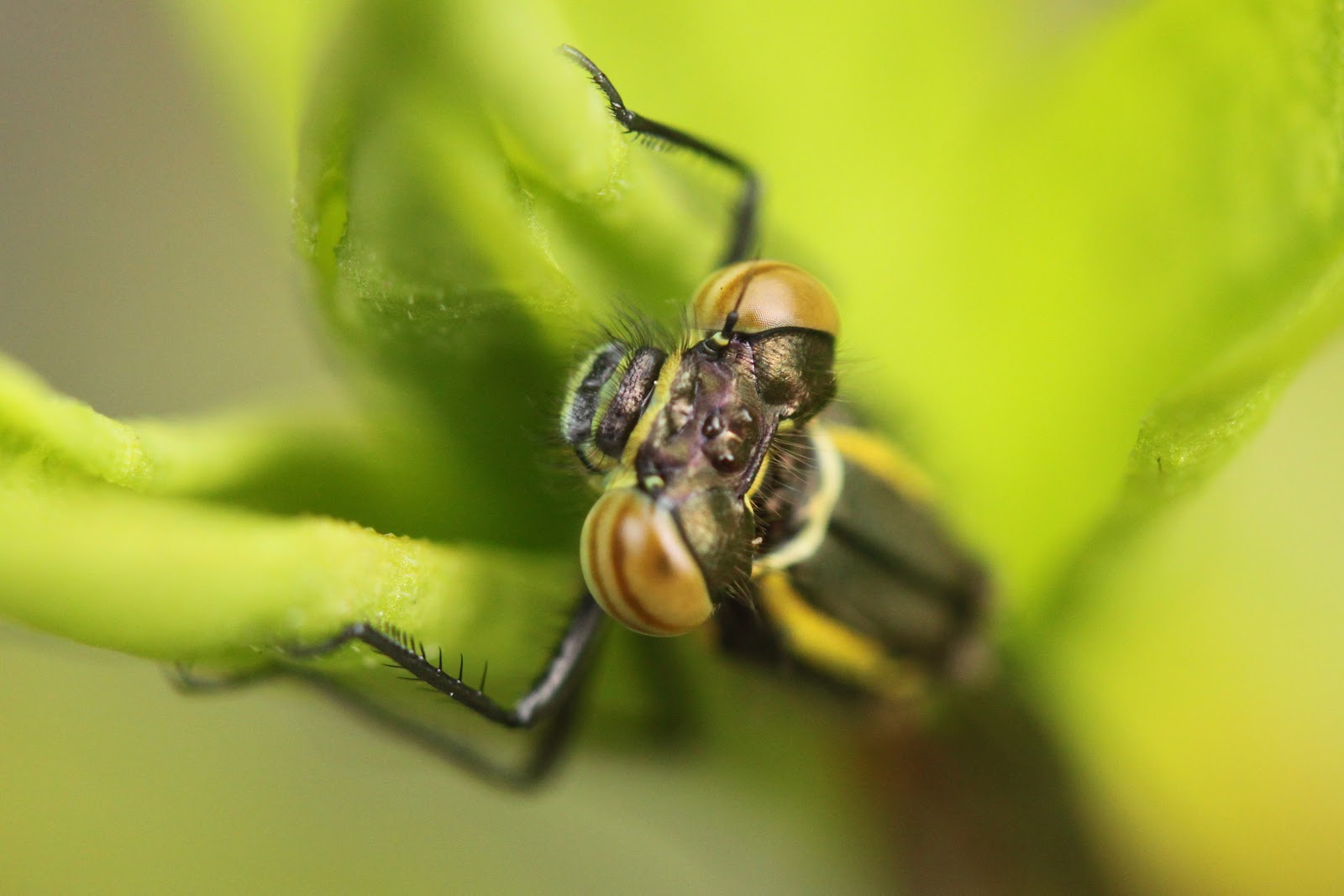
But last week, something else emerged - six damselflies:
Judging by the red abodmen and striped thorax and the time of year they are emerging these are probably large red damselflies. One of the most common damselflies in thee UK they are found in fresh water ponds and rivers throughout the country (including the river Ock, where the parents of these may have come from).
.
Like most metamorphosing insects, the adult stage is very short, the immature adult phase lasting two weeks, when they disperse, seeking new breeding sites.
Whilst the mature phase (when mating and egg laying takes place) can be only five days.
.
But last week, something else emerged - six damselflies:
Judging by the red abodmen and striped thorax and the time of year they are emerging these are probably large red damselflies. One of the most common damselflies in thee UK they are found in fresh water ponds and rivers throughout the country (including the river Ock, where the parents of these may have come from).
.
They will have spent two years in the bottom of the pond as larvae going through 11 stages, the first stages involve eating vegetation, with later stages catching and eating other small creatures within the pond - no wonder the population of water louses seems to have decreased in the past 12 months.
.
.
.
Like most metamorphosing insects, the adult stage is very short, the immature adult phase lasting two weeks, when they disperse, seeking new breeding sites.
Whilst the mature phase (when mating and egg laying takes place) can be only five days.
.
Sunday, 5 May 2013
Return of the mason bees
As a Christmas present in 2012 I was given a home made bee box for solitary bees and in the first year, red mason bees swiftly moved in a laid their eggs in in the holes: http://viewsoftheock.blogspot.co.uk/2012/05/red-mason-bees.html
Now 12 months later, the next generation are emerging:
The white face and long antenna indicate that these are males and have emerged first and are waiting for the females who will emerge later before mating and repeating the cycle.
Monday, 29 April 2013
Thursday, 25 April 2013
First water vole photo of 2013
This year has seems to have been a slow year for water voles along the Ock, the very poor spring has meant that the breeding season is late as well as not being conducive to looking for wildlife.
So it is great to see that they have survived the winter (and any Mink) and are still about, even if sightings are less frequent than this time last year:
.
.
So it is great to see that they have survived the winter (and any Mink) and are still about, even if sightings are less frequent than this time last year:
.
.
Wednesday, 17 April 2013
First day of spring?
On Sunday, it seemed spring had finally arrived, the sun was shining and the temperature (in the morning at least) reached 16 degrees. As a result there was more activity along the river:
Such as a peacock butterfly - possibly just risen from hibernation and basking in the sun, maybe a male defining a territory.
.
.
The lesser celandine is now in flower, providing food for a tortoiseshell butterfly, also risen from hibernation.
.
.
Not all animals have chosen to spend the winter in hibernation, some choose to spend in a different country, including the warblers and have now started to return - such as this chiffchaff - to make the most of the abundance of insects which spring and summer along the river should provide.
.
Such as a peacock butterfly - possibly just risen from hibernation and basking in the sun, maybe a male defining a territory.
.
.
The lesser celandine is now in flower, providing food for a tortoiseshell butterfly, also risen from hibernation.
.
.
Another insect rising from hibernation is this queen bumblebee. Bumblebees often make their nests in defunct small mammal burrows, so perhaps she is checking out the suitability of the water vole burrows along the river banks.
Not all animals have chosen to spend the winter in hibernation, some choose to spend in a different country, including the warblers and have now started to return - such as this chiffchaff - to make the most of the abundance of insects which spring and summer along the river should provide.
.
Wednesday, 10 April 2013
Where are the water voles?
Normally, along the river there would be lots of signs of water vole activity and they would be fairly easy to see as they define breeding territories.
But the cold spring seems to have delayed the start of the water vole season, but there a few signs of increased activity, including the distinctive evidence of feeding:
.
.
And the first water vole latrines are starting to appear:
.
.
Although the most obvious sign is the ever increasing number of new burrows:
.
.
But it's not all good news, opposite these burrows is a fairly fresh mink scat.
.
Meanwhile over at the 'About a Brook; blog, Kate is seeing a lot more water vole activity and close encounters with a different mustelid: http://staggsbrook.blogspot.co.uk/
But the cold spring seems to have delayed the start of the water vole season, but there a few signs of increased activity, including the distinctive evidence of feeding:
.
.
And the first water vole latrines are starting to appear:
.
.
Although the most obvious sign is the ever increasing number of new burrows:
.
.
But it's not all good news, opposite these burrows is a fairly fresh mink scat.
.
.
Yet further downstrain, there is evidence of a different mammal activity - a dry spraint, indicating there is still otter activity of the river.
.
.Meanwhile over at the 'About a Brook; blog, Kate is seeing a lot more water vole activity and close encounters with a different mustelid: http://staggsbrook.blogspot.co.uk/
Subscribe to:
Posts (Atom)