Saturday, 29 January 2011

Big Garden Birdwatch

The weekend of 29th and 30th January is the RSPB Big Garden Birdwatch. The simple concept of spending one hour watching the birds in the garden and recording the highest number of each bird at any one time has become the world's biggest wildlife survey. Helping to provide a snapshot of the health of the UK's bird populations and to see positive and negative population trends.
For fans of twitter it has it's own hash tag #BGBW and the results will be available in May.
.
Our garden survey was undertaken between 3pm and 4pm on Saturday 29th:
.
Starlings: 10
Starling have previously featured in this blog back in October and were probably attracted to the dried meal worms and the pond as a source of drinking water.
.
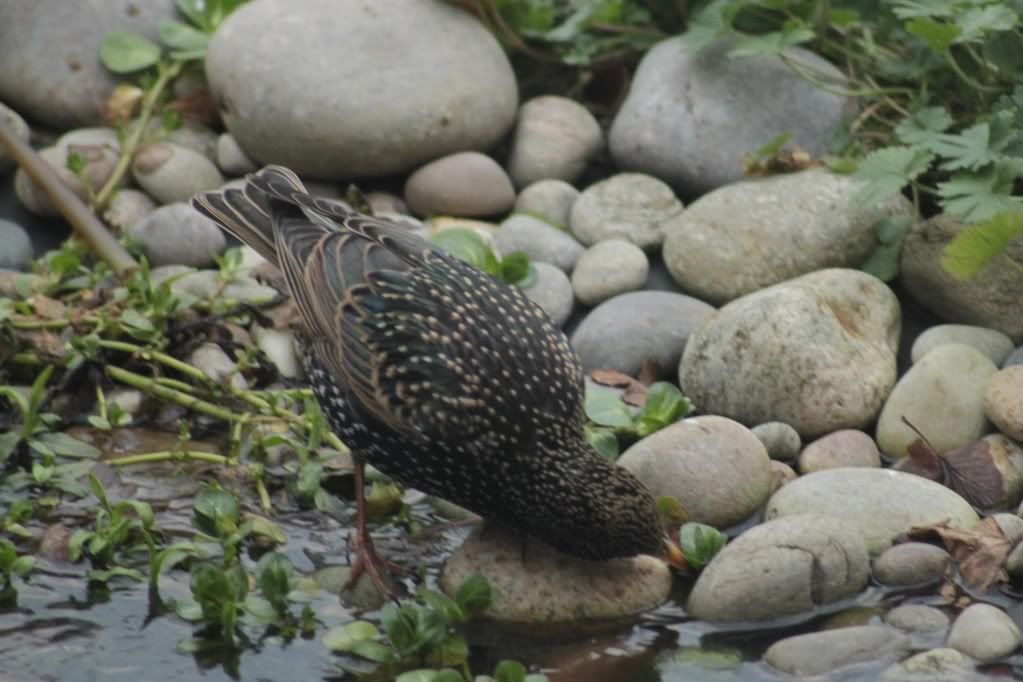
..
One of the things that the Big Garden Birdwatch has demonstrated is the number of starlings recorded in our gardens has declined by 75% since 1985: http://www.rspb.org.uk/birdwatch/results/trends.aspx
South Abingdon seems to have a healthy starling population, somewhat helped by the nesting opportunities presented by roofs of the houses.
.
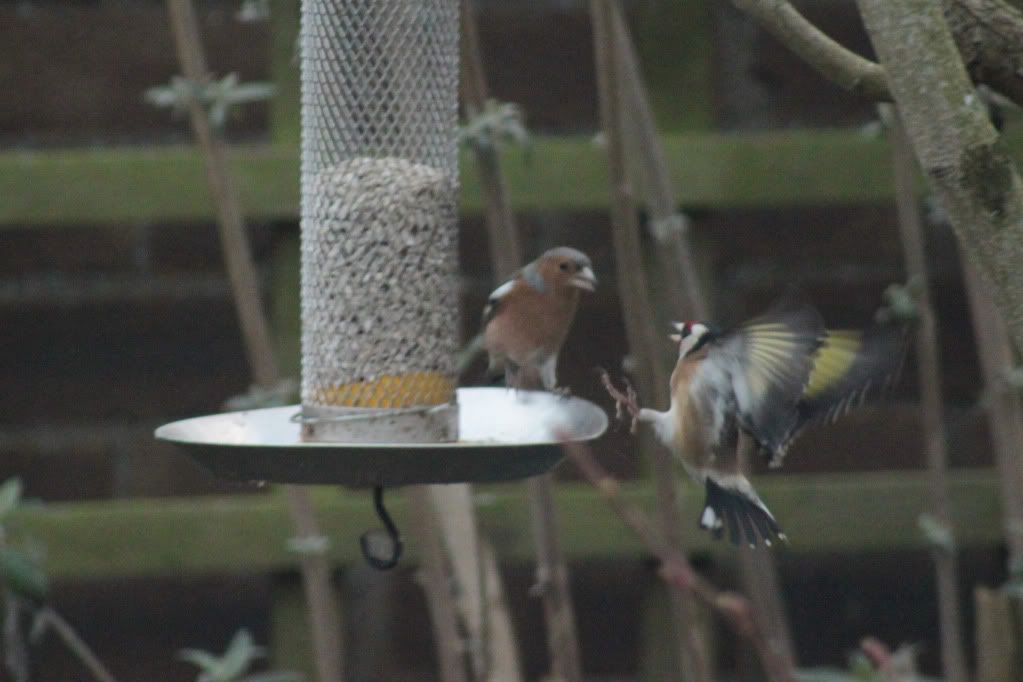
Goldfinches: 4
A disappointing number of goldfinches, they often appear in charms (collective name for goldfinches) of between 10 and 20, but during this hour there were only four.
.
.
Goldfinches have been a real success in recent years, possibly because of people who putting out nyger seed for them.  We stopped using this as it was often ignored in favour of sunflower hearts - as seen above, with a goldfinch trying to intimidate a chaffinch, it failed and they shared the seeds.
.
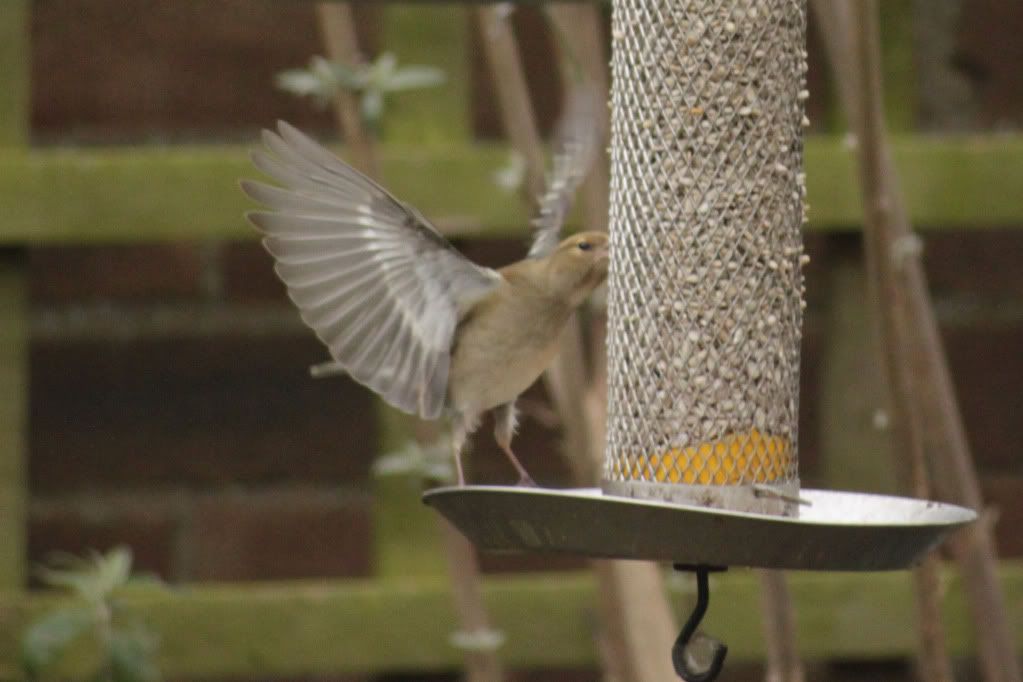
Chaffinch: 3 
There have been five chaffinches in the garden at any one time, but during the survey there were two males and one female:
.
.
Chaffinches are traditionally ground feeders, so it's interesting to see that they've learnt to use a feeder.
.
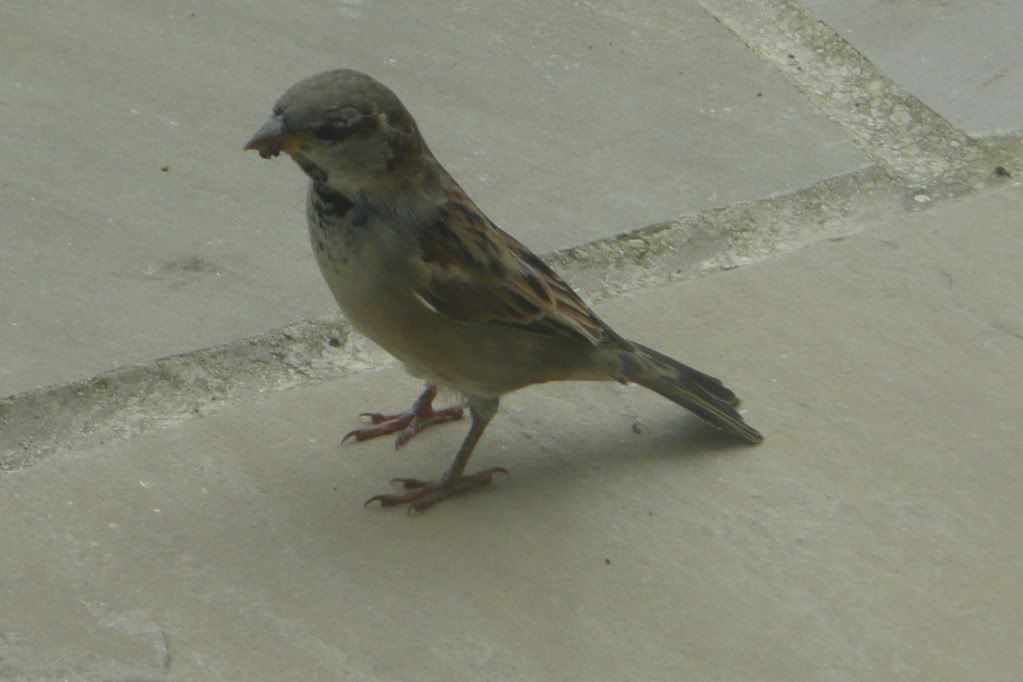
House Sparrow: 2
Like starlings, house sparrows have also suffered a huge decline in recent years (50%), also recorded by the big garden birdwatch: http://www.rspb.org.uk/birdwatch/results/trends.aspx
.
.
Sparrows also like the sunflower hearts and eat off the ground or off the feeders.
.
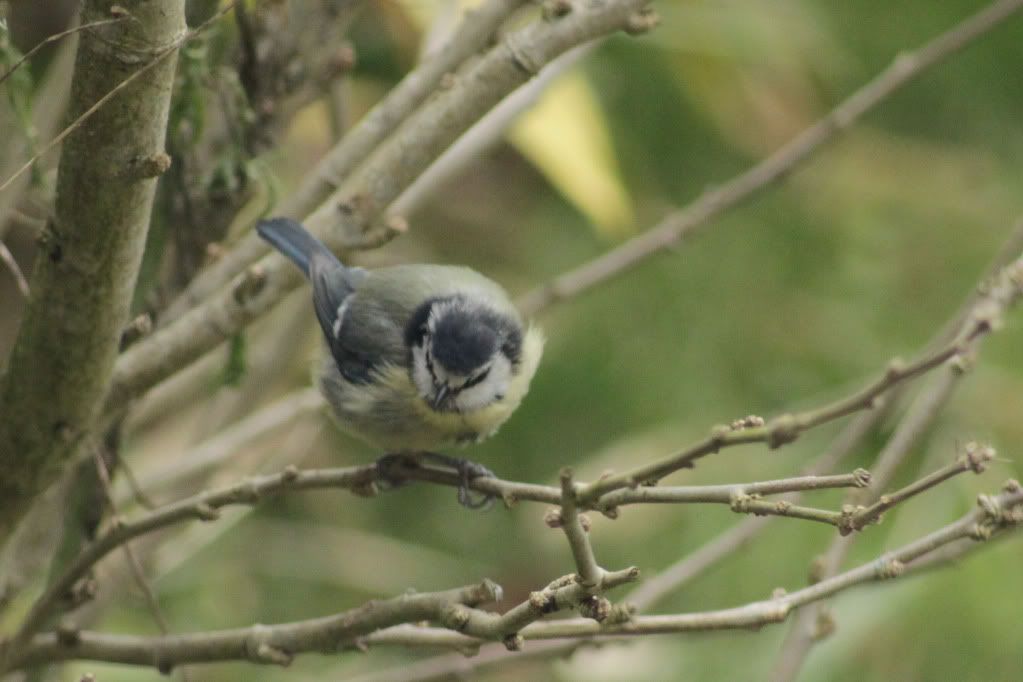
Blue Tit: 2
Blue Tits aren't migrants, so it is good to see a pair has survived the harsh winter and hopefully they'll make use of the garden's nest box.
.
.
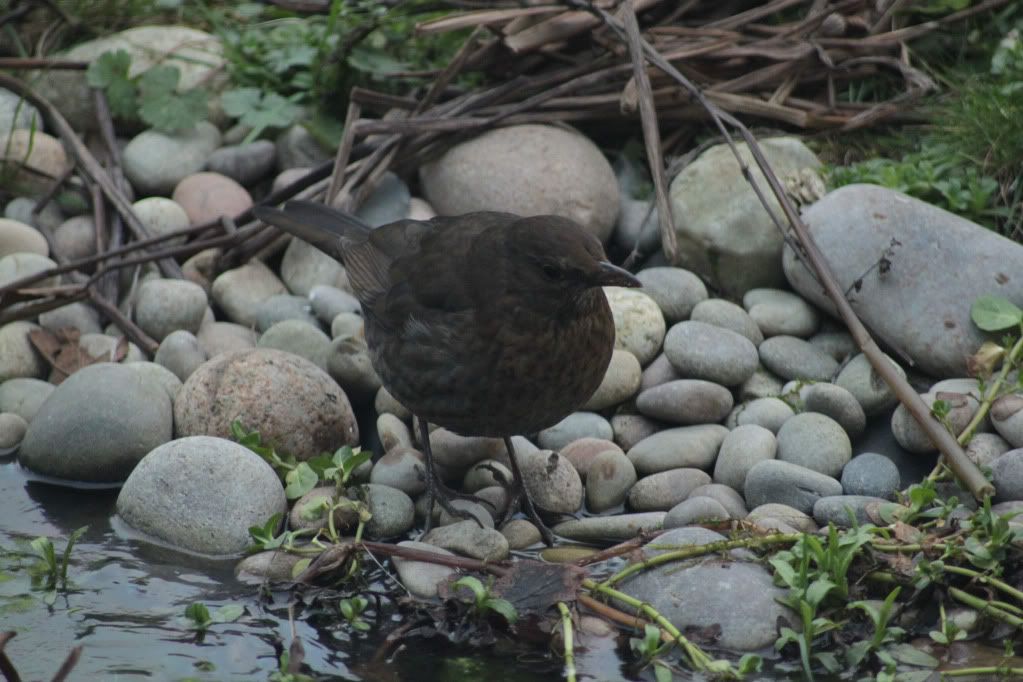
Blackbird: 2
A male and female blackbird are often to be seen in the garden - either winter migrants yet to return to Scandinavia or maybe they are a residential pair returned from migrating to warmer climates in europe.  They have been digging for worms, eating crumbs dropped from the feeders and drinking from the pond:
.
.
.
Blackbirds are very territorial and will chase not only smaller birds (blue tits and chaffinches) but also each other) although they do seem wary of the starlings. 
.
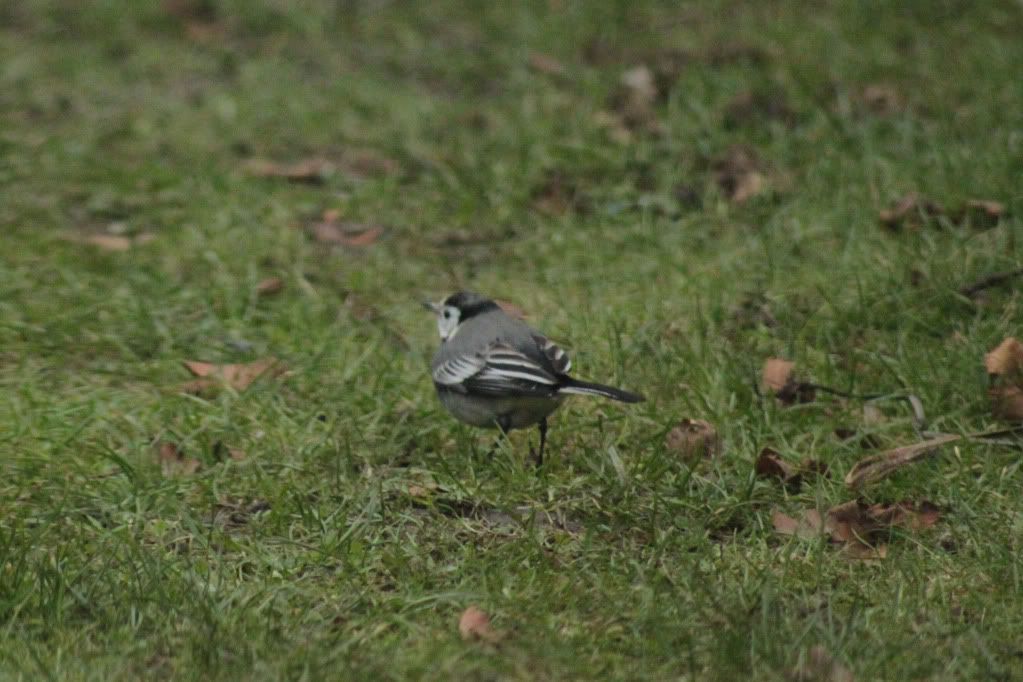
Pied Wagtail: 1
A real surprise, I've never seen one in the garden before and it only stayed for enough time to get a quick snap.
.
.
They are insectivorous and so it wouldn't have been interested in the sunflower hearts or meal worms, so maybe there are small flies over the lawn.
.
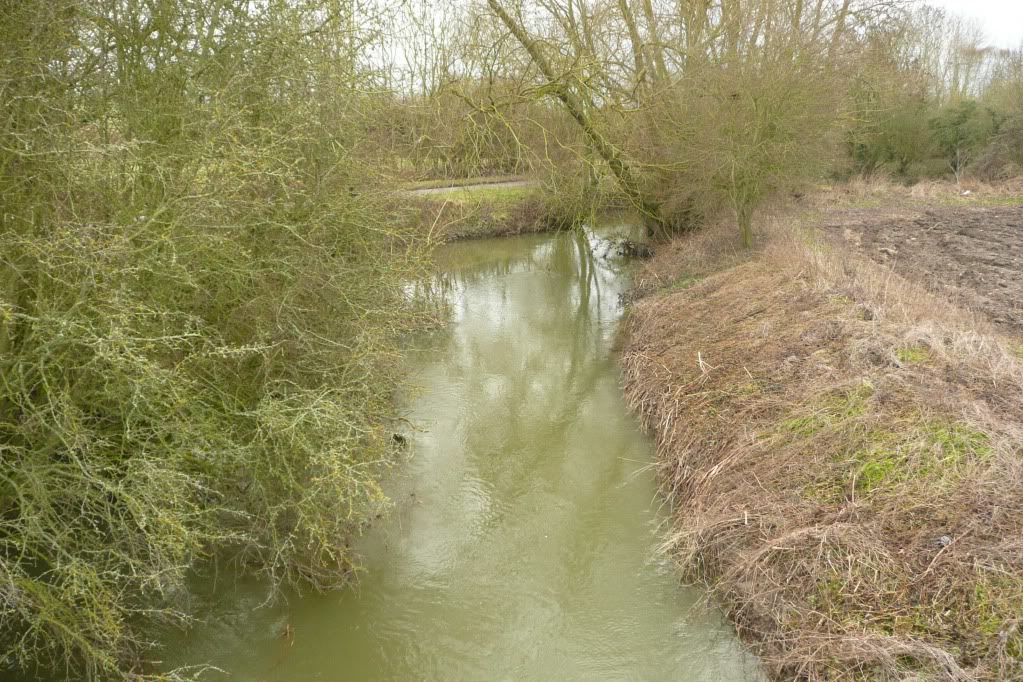
Other birds that regularly frequent the garden, but not during the period of the survey, are collard doves, woodpigeons, dunnocks and greenfinches, but one bird that has been absent from our garden for the past couple of years is the robin.
Maybe this national survey will reveal if it is just ours, or if there has been a national decline in robin numbers.

Sunday, 23 January 2011

Quiet day on the Ock

Following the snow and recent heavy rain the river was place on flood watch this week.  Now the water and the flood alerts have now receded leaving the river surrounding area with a somewhat drab and dank, but thankfully without the risk of homes being flooded:
.
.
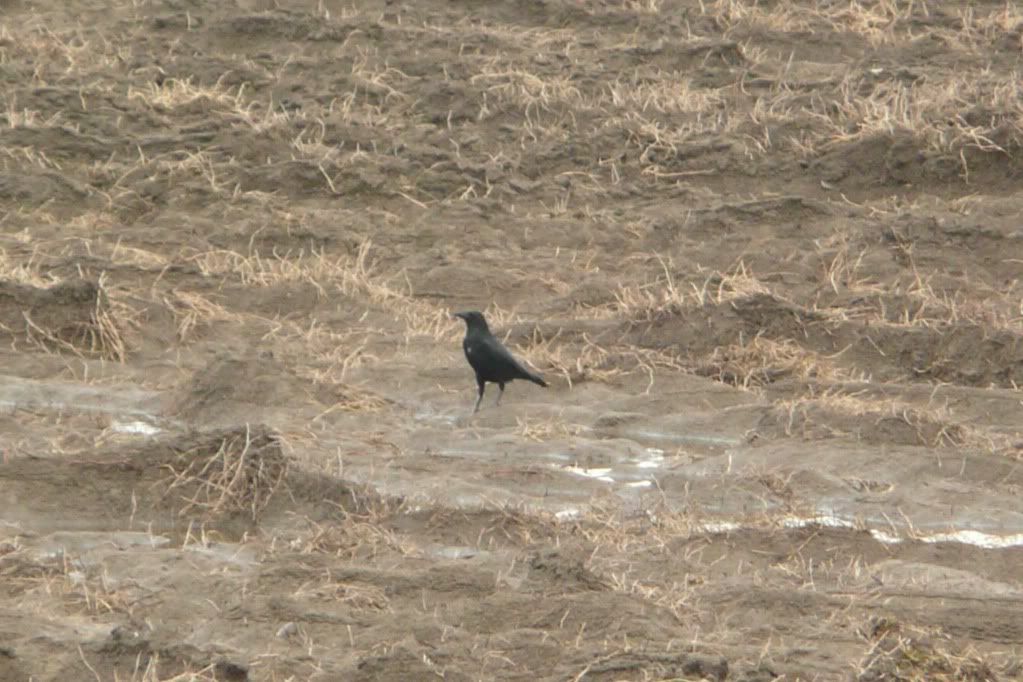
Not much of interest in the river and only a crow taking the opportunity of the now muddy meadow:
.
.
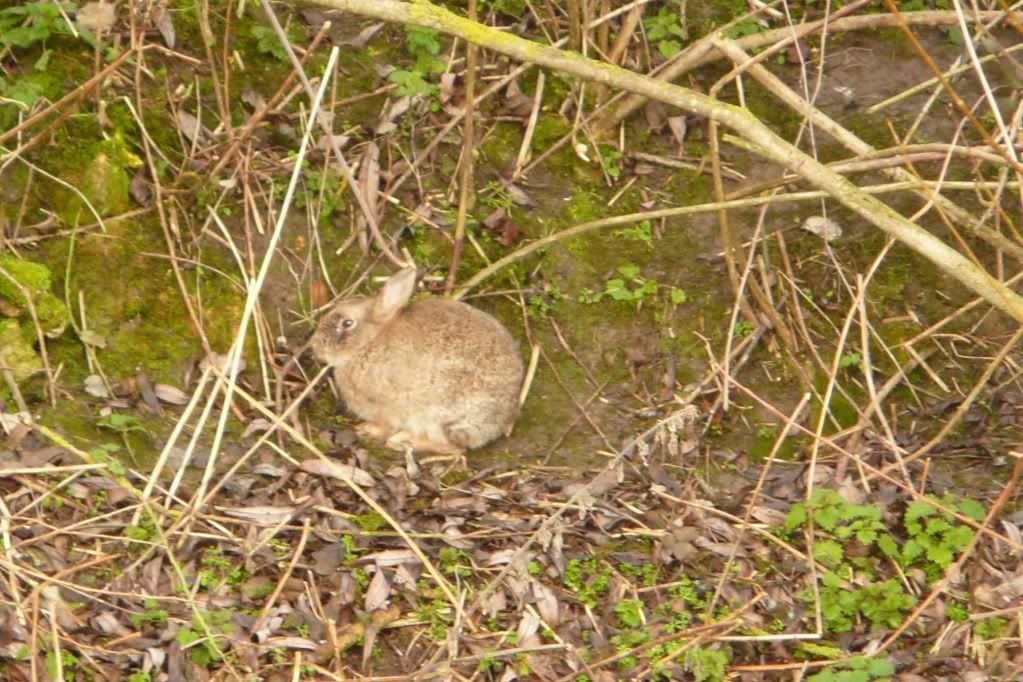
And what appears to be an poorly rabbit adding to the general melancholic feel of the river in January:
.

Monday, 10 January 2011

First Otter post of 2011

Now the snow has gone, the river has a somewhat melancholic feel to it - there are no water voles, the trees have lost their leaves and the day light does not last long enough.
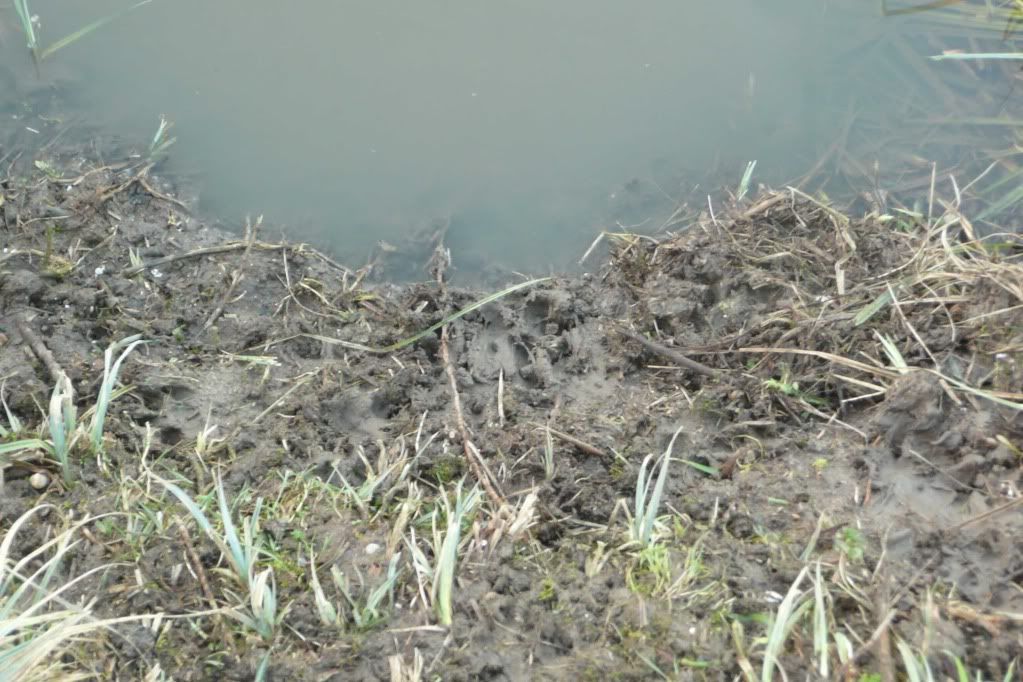
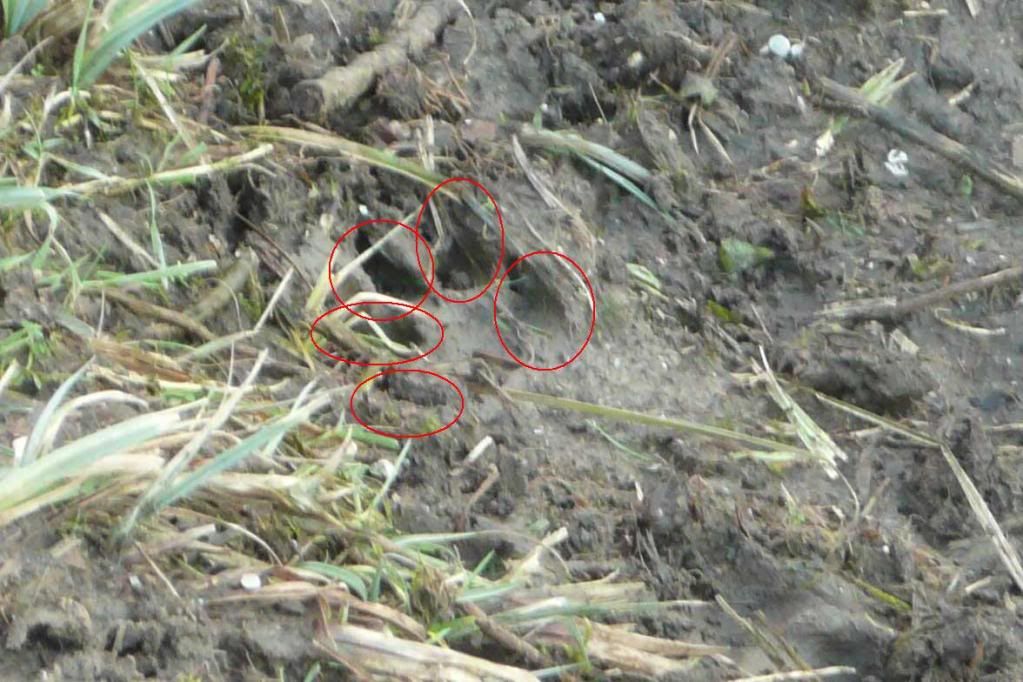
But there are still things to keep an eye out for,  for example, this mudslide has lots of footprints - possibly somewhere a dog has decided to go for a swim..
.
.
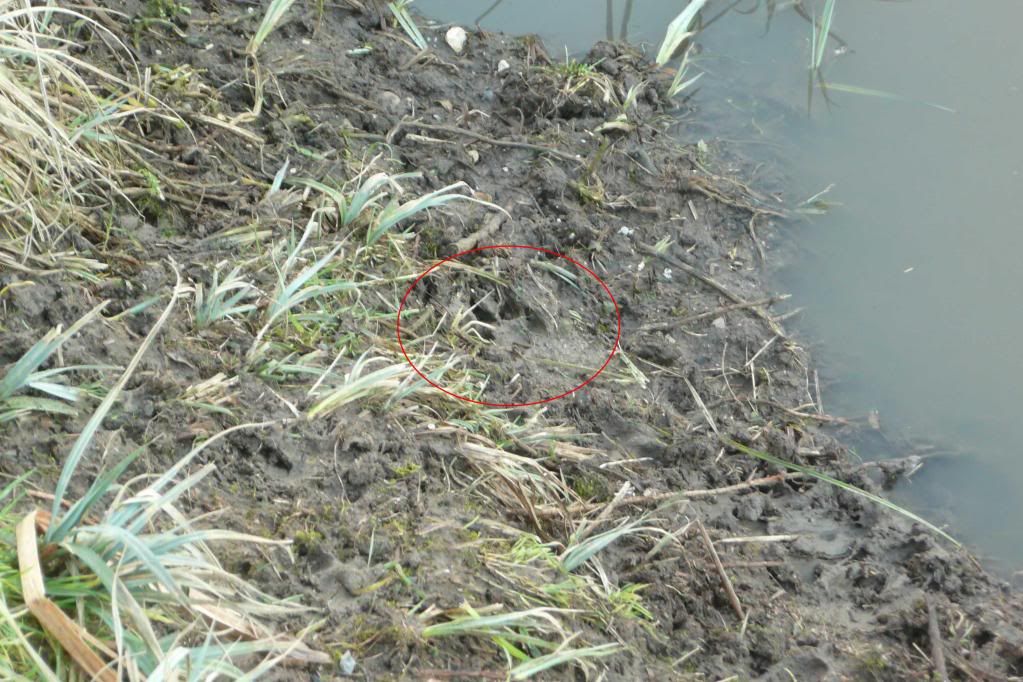
But a closer look shows it could provide access for a different animal, the circled footprint does not appear to be a dog:
.
.
A closer look seems to show the animal has five toes and not four and the size indicates it could be another otter footprint - this bank being a place where it chooses to enter and leave the river:
.
.
This latest find is an opportunity to update the Otter map with three new pins (in red), this footprint is marked as C.  Whilst B is the footprint I discuss in the post on footprints on 23rd December, and A is the footprint found near the allotments as mentioned by Chris in his response to this post (thanks Chris!!):
.


View Otters 2010 in a larger map
.
I have several new years resolutions for this blog and one of them is to get an photograph of an otter.  This is very ambitious and although I have 12 months to try I will be as surprised as anyone if I succeed. 
In order to be successful there are three techniques to consider:
1. Luck - All my sightings of animals on the Ock are just coincidental - I rarely go out to find something specific, instead I just see what I come across, so although unlikely, it is not impossible that if I spend enough time walking by the river in the evening or night I may come across an otter.  This is how I found a badger - another elusive mammal in 2009.
2. Sit and wait - The approach taken by professional photographers to identify a suitable site and wait in one spot for hours and hours.  There are two drawbacks to this, firstly I have a day job so I can't spend all night waiting for an otter and secondly I don't think I have the patience.
Another problem is the lack of light, with otters being nocturnal I may catch a glimpse of one but getting a picture would be harder.  Although a high ISO setting, a steady hand and the light pollution from Oxford might make a picture possible - but I do want to avoid using a flash.
3. Remote Cameras - Often seen on wildlife programmes and now getting cheaper, the best option would be to place a series of remote cameras along the river - allowing the river to monitored over several days and using Infra-Red it would solve the lack of light problem.
Although I would need to find a secure location, which would mean putting them on private land to the west of the A34.
With a lot of experience, a lot of knowledge and a great deal of effort, camera traps can provide incredible results: http://charliehamiltonjames.blogspot.com/2010/09/is-there-anything-you-dont-take-apart.html (although I don't intend to pictures inside a holt).

Thursday, 30 December 2010

Review of the year.

Looking back over the past 12 months, this blog has consisted of 82 posts, a staggering 150 comments have been received and 2851 photographs have been taken (thankfully most of them have not been posted). And as this is probably the last post of the year it seems a good opportunity to reflect upon my favourite posts:
.
Wytham Woods:  During 2010 this blog ventured further afield  - from the beech trees of Buckinghamshire to a Ghost Forest in Oxford.  But probably the favourite places visited is Wytham Woods near Oxford.
As it is owned by the University of Oxford it requires a permit to visit and as a result you are more likely to encounter a badger than a dog walker.
http://viewsoftheock.blogspot.com/2010/10/way-through-woods.html
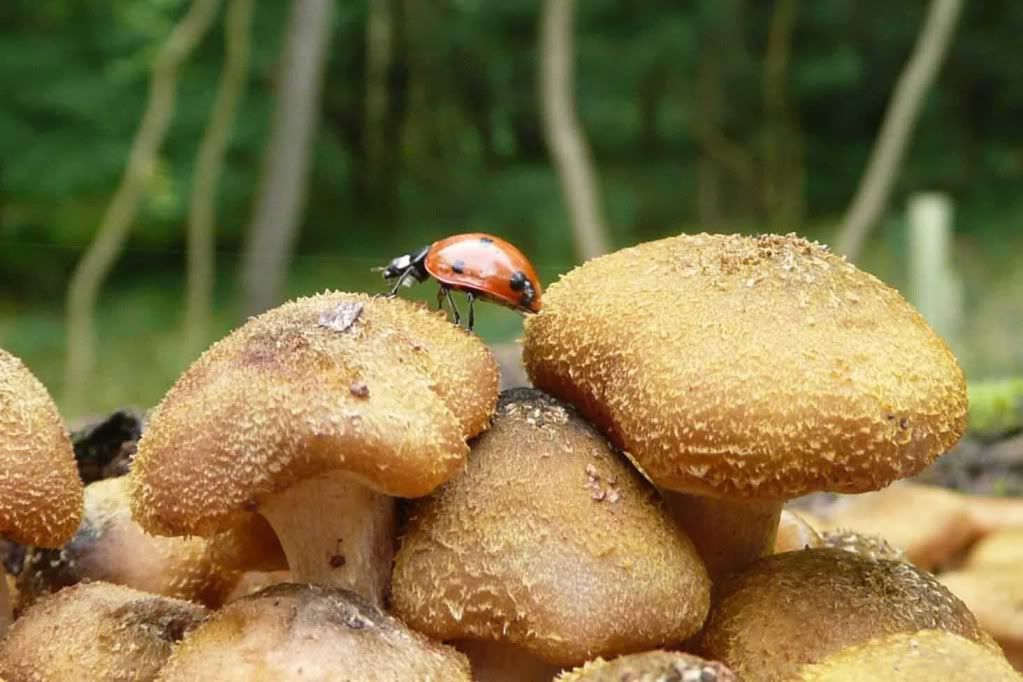
With over 200 different types, it is also a great place to try to search for fungus:
.
.
Even armed with two field guides and an iPod app it proved to be very difficult: http://viewsoftheock.blogspot.com/2010/10/more-fungus.html
.
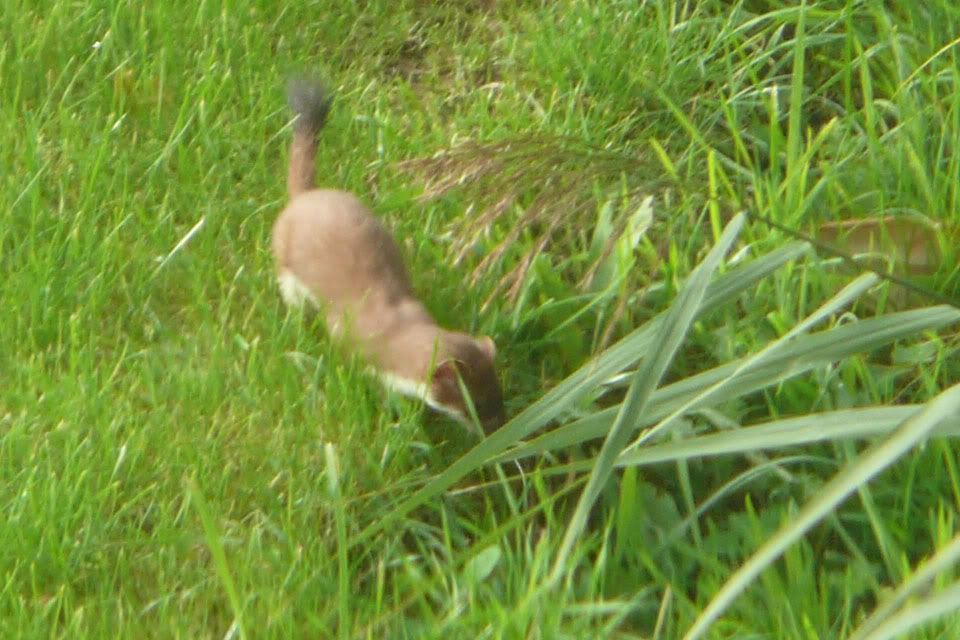
Views of Norfolk:  Written after a holiday in Norfolk and  despite not being near the Ock (or Oxfordshire) it does contain two of my favourite photographs taken this year - a stoat (one of my favourite animals), given it's proximity to a small stream, it could be hunting water voles: 
.
.
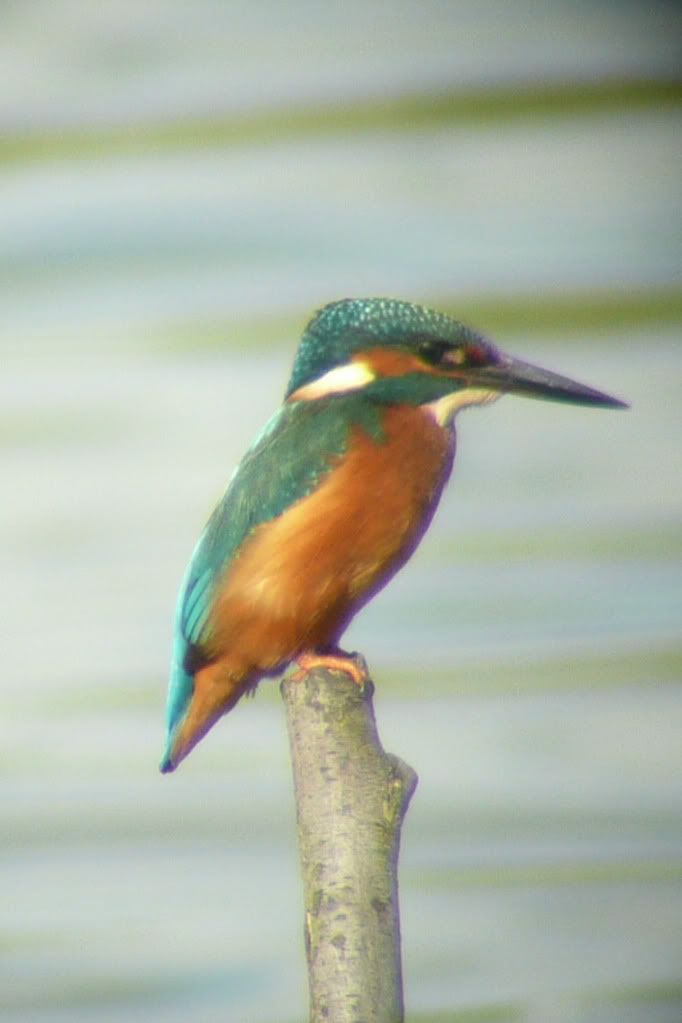
And possibly the best kingfisher photo I'll ever take, it did help that I was in a hide - something which isn't possible on the Ock.
.
.
The full post (and seal photos) at: http://viewsoftheock.blogspot.com/2010/09/views-of-norfolk.html
.
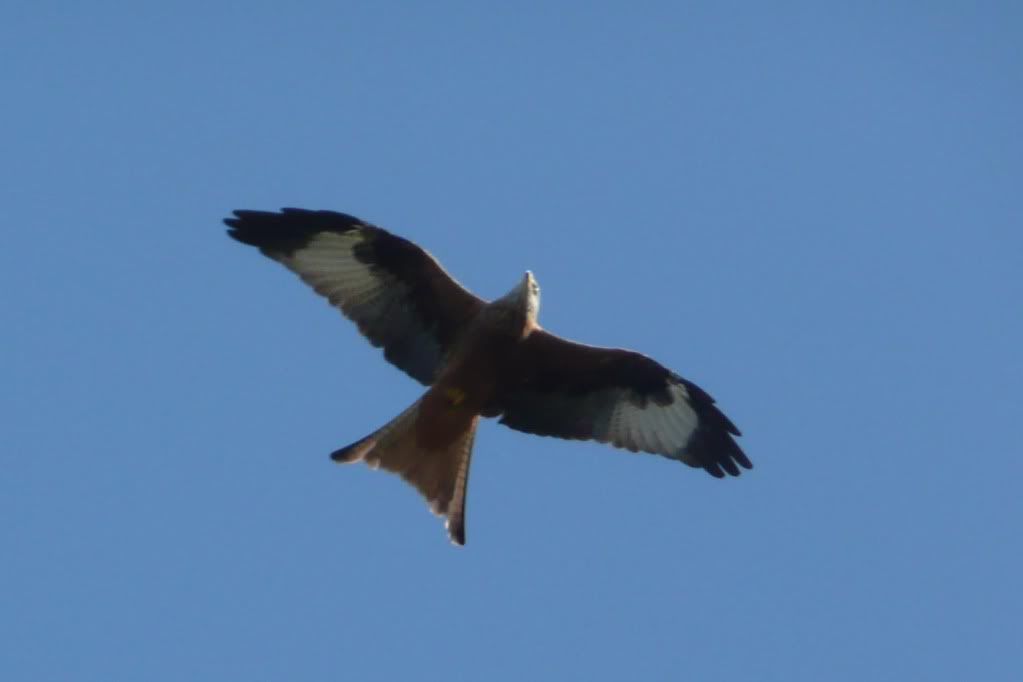
Birds of Prey: Once rare, birds of Prey are now quite common. Buzzards now nest near-by; peregrines can been seen in Oxfordshire (I've seen them at Otmoor) and kestrels are often seen hunting over the fields.  But to have a sparrowhawk in the garden was a bonus(even though it is a rubbish picture) and I have struggled to get decent picture of a red kite since (once extinct in England, now have made a remarkable comeback), so it was good to finally get one.
.
.
The full post: http://viewsoftheock.blogspot.com/2010/10/birds-of-prey.html
.
Water Voles: Nearly 20% of the this years posts have been about water voles, so there are plenty to choose from, but my favourite is the post documenting the water voles on Radley Brook where I managed to film this one eating an apple core I left for it (not quite Terry Whittaker standard).
..

.
What makes this post the best of the year is that it was thought the colony was extinct (a BBOWT survey earlier had drawn a blank) - wiped out by mink, one of which I saw in March:
The full post (and more films): http://viewsoftheock.blogspot.com/2010/09/movies-from-radley-brook.html
.
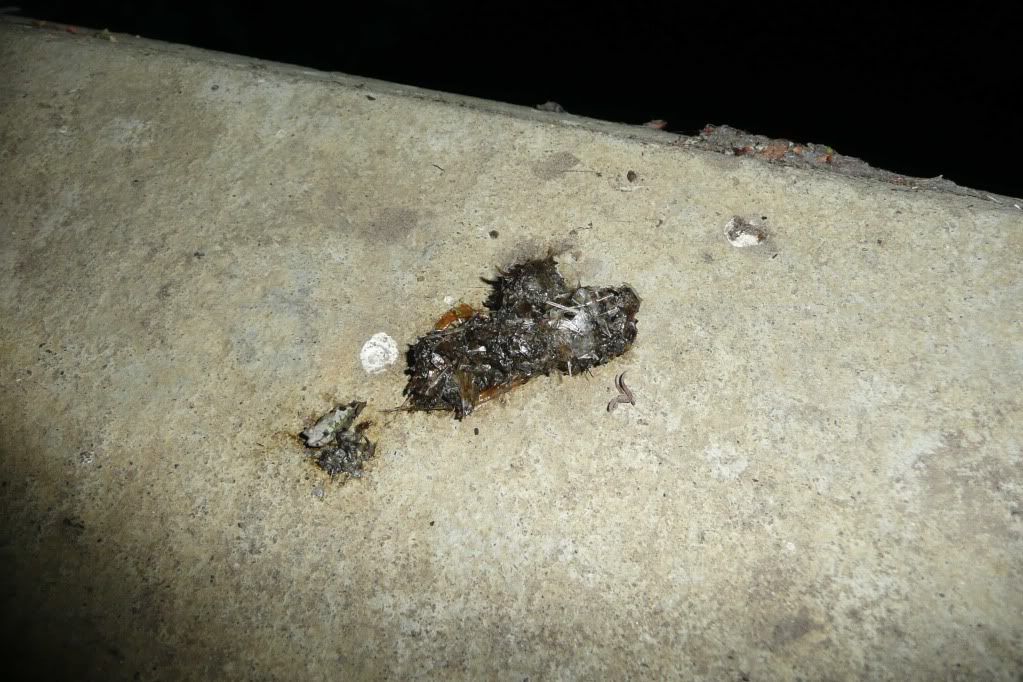
Otter:The otter activity in the Ock has become a bit of an obsession in recent posts, perhaps not surprising as it was only 20 years ago that they were extinct in Oxfordshire, now they have  recolonised the Ock and the Thames and without doubt my favourite post of the year was back in February when I first found signs of otters (even if it was just a pile of poo!!):
.
.
The full post is at: http://viewsoftheock.blogspot.com/2010/02/in-search-of-otters.html
.
Thank you to everyone who has read this blog in the past 12 months, whether a regular or an occasional visitor and thank you to everyone who has commented on this blog  - hopefully there has occasionally been something of interest.  

Tuesday, 28 December 2010

Blog Roll review of the year

2010 has been a mixed year in the blogosphere, Martin decided to end his 'Gullivers Travels' blog, which was also an inspiration for photography, but on the plus side I've found several excellent new blogs.
So, as last year, I thought I would use this period up to new year to review some of my favourite posts over the past 12 months:
.
Life in an Oxfordshire Lawn - Crane Fly: I am a huge fan of Henry Wallon's extraordinary blog on the wildlife found in his garden, but this recent post grabbed my attention:
.
http://lifeonanoxfordlawn.blogspot.com/2010/12/crane-fly-in-family-limonia-nebeculosa.html
.
In a post in Autumn I tried to identify some of the crane flies I encountered and found it virtually impossible as there are 10,000 species of fly that can be considered as a crane fly  and as Henry discusses it is very difficult to identify them. So full credit to Henry for managing to identify his - remarkable.
.
Abingdon Blog -  Fox on Ock Street: I am an avid reader of Backstreeter's Abingdon Blog, showing a daily update in our town and it is the first web site I visit each day (followed by the cricket scores on the BBC).
But this post caught my interest, firstly it is one of the best fox photographs I've seen - a lovely portrait of a young fox cub:
.
http://www.abingdonblog.co.uk/?p=275
.
But what makes this post is the 10 comments that follow, showing that blogging is as much dependent upon the commenters as the blogger - especially the last one from Lyndsey "... then I see he’s been killed near town.".

About a Brook: Kate's water vole blog is a gem and one of the inspirations behind my own blog, full of interesting information about the water voles that live in Shropshire it is hard to pick out one post, but this one shows the excellent pictures she has managed to capture and follow the same vole as it grows up.
- keep up the good work Kate.
.
http://staggsbrook.blogspot.com/2010/08/baby-grown-up.html
.
Gardening with binoculars - Starlings: Back in November I wrote a post about starlings at otmoor and mentioned the decline in starlings in the UK in recent years.
I found Gardening with binoculars on the Nature Blog Network and I was fascinated in this post written by Anne McCormack on the same subject. Except hers is written in America, where (as she mentions) starlings were deliberately introduced by the 'The Acclimatization Society' who wanted to introduce european wildlife into America, especially those mentioned in the works of Shakespeare.
Something which is completely unnecessary, as Anne goes onto show, American wildlife is just (if not more) wonderful than what we have in the UK and just makes you wonder, what were our fore bearers thinking.
.
http://gardeningwithbinoculars.blogspot.com/2010/12/critical-mass-of-starlings.html
.
Terry Whittaker - Water Voles: Terry Whittaker is a professional photographer based in Kent and his  blog covers many subject, from the depressing - the trade in tiger parts and bear bile to the uplifting - pine martens caught on a camera trap.
But my favourite post of Terry's is his water vole films, which in a few seconds encapsulates why these are one of my favourite animals.
Now I have finally made the leap into DSLR terrioritary, it's very tempting to attend one of Terry's water vole photography workshops.
http://terrywhittakerphoto.blogspot.com/2010/06/mill-stream-water-vole-updates.html
.
A huge thank you to all the blog writers featured and those who haven't, I have learnt a great deal from all these blogs.

Thursday, 23 December 2010

Footprints

I received this intriguing comment on a previous post:
I spotted what I think were Otter footprints in the snow beneath the bridge along the Ock Valley Walk - be interesting to see if you can verify they are Otter prints.

Which has inspired me to seek out the various footprints left in the recent snow and to try and identify them:

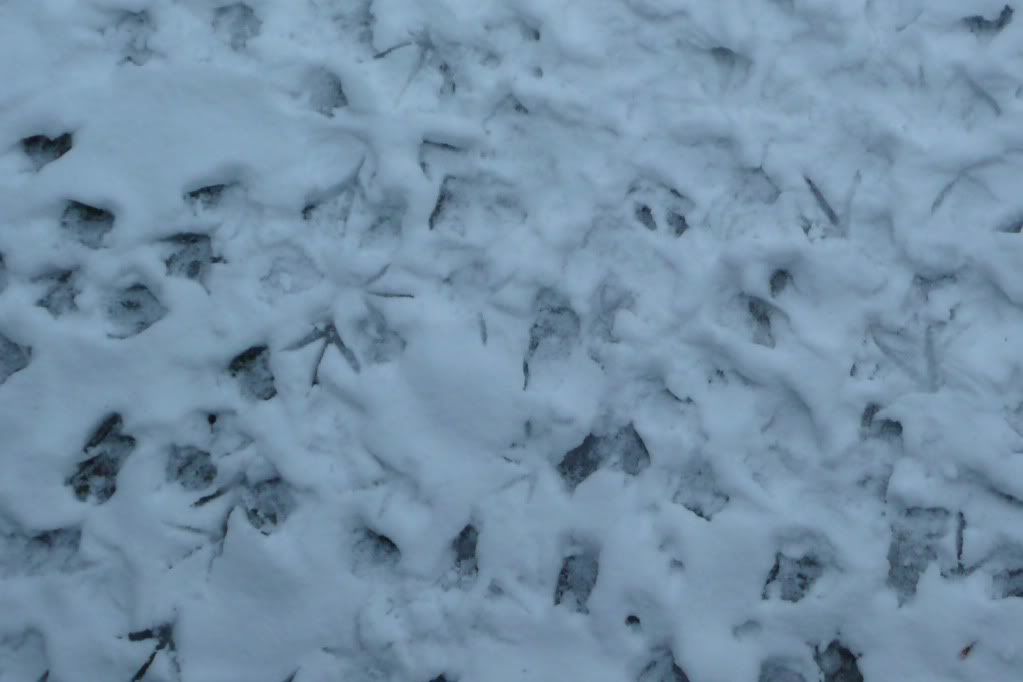
Birds: Some bird footprints are easy to identify, such as these left by mallards and moorhens along the ock valley walk.
.
.
Smaller birds are harder to identify as they just leave small holes in the snow.

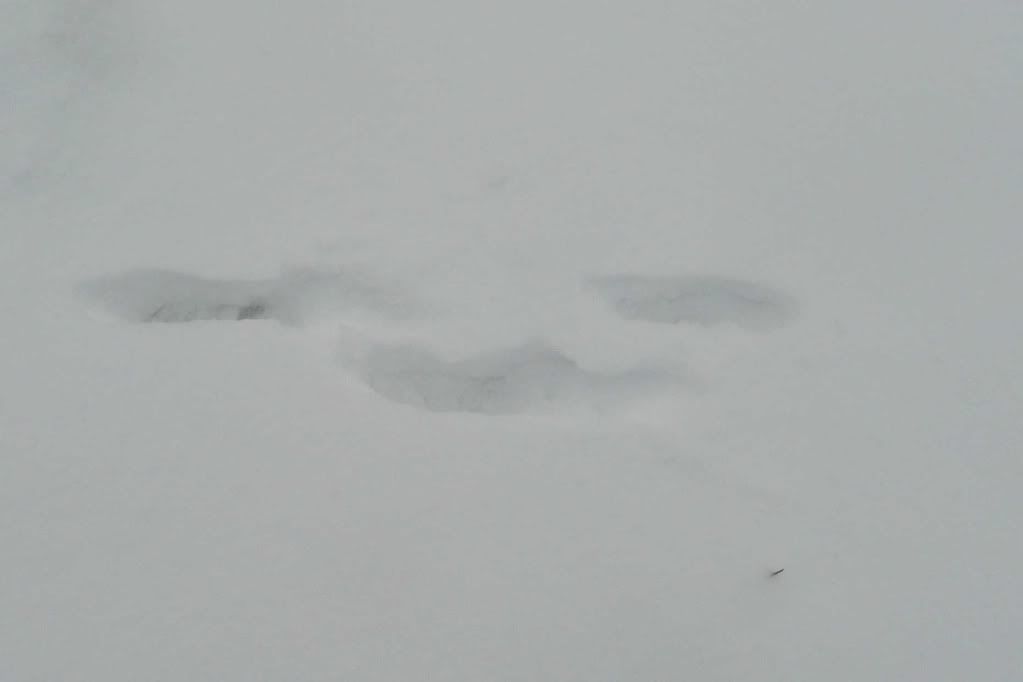
Leporids: The two prints at the front and one behind are almost certainly left by a rabbit
.
.
The other candidate would be a brown hare.  I have never seen a hare in the locality, although I have seen them near Wantage, so it is not impossible that they frequent the area.
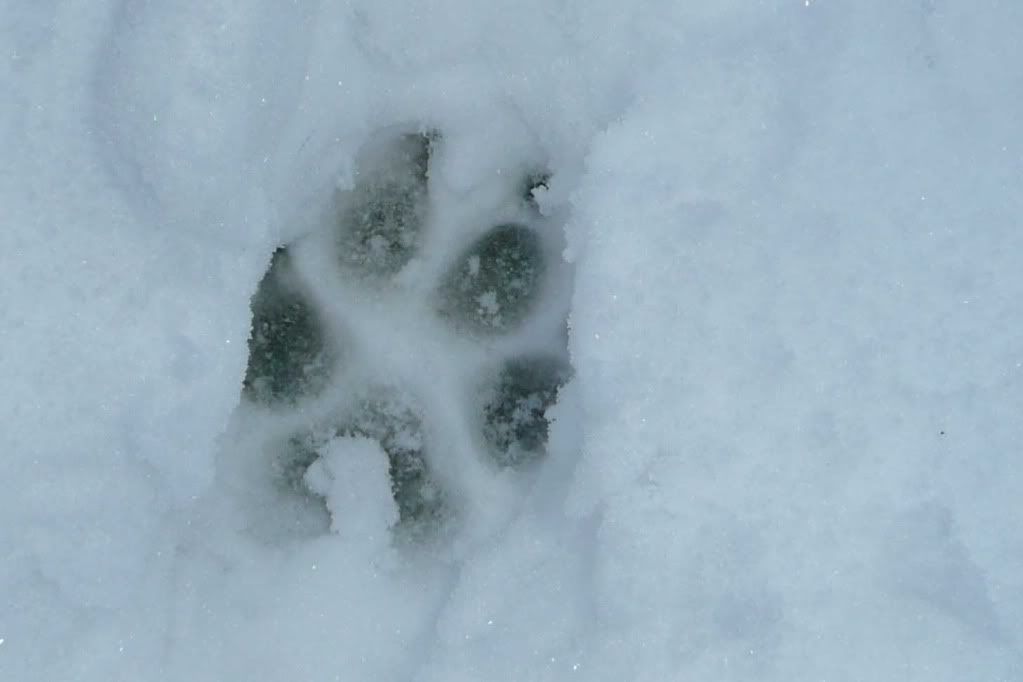
Canine: There are two species of canine that can be seen along ock, the red fox and domestic dog.  This footprint is from a domestic dog, taken in a place that is popular with dog walkers.
.
.
Mustelids: There are several species of mustelid that could be found along the Ock - badger, otter, mink and stoats, weasels and polecats.
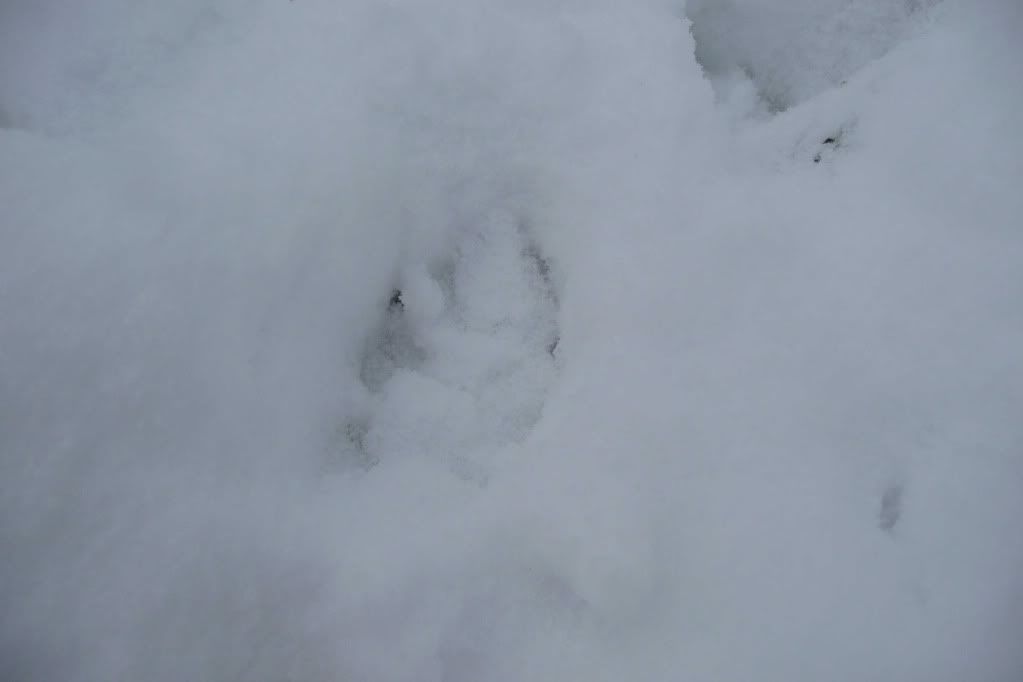
What differentiates a mustelid footprint from a canine is five toes, whilst a canine has four.  This footprint found in south Abingdon could be a badger, but it is hard to count the number of toes but it was found near where I have seen badgers previously:
.
.
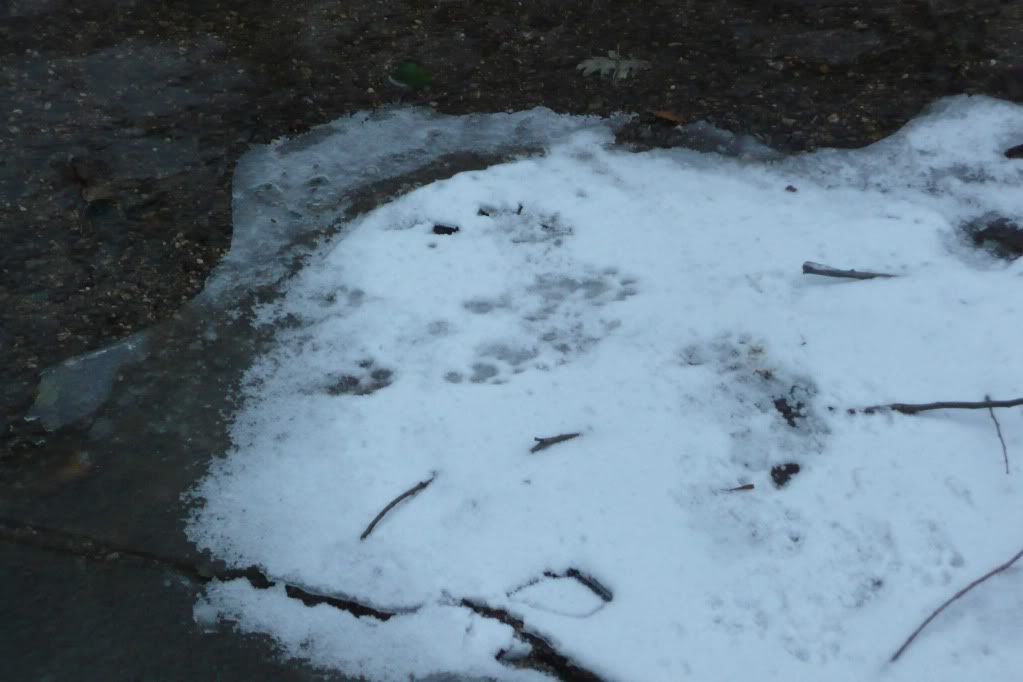
This footprint was found along the ock valley walk, where the previous commenter said they have seen possible otter footprints.
.
.
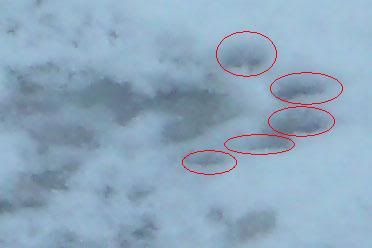
A close up shows (now circled) five toes, so it almost certainly a mustelid and given it's location it could definitely be an otter and it is where I have previously found a dead crayfish (common otter prey), so thank you very much for the tip-off.
.
A good example of an otter footprint is snow is from Charlie Hamilton James' Twitter Feedhttp://twitpic.com/3if160

As always, comments are very welcome, especially if I have misidentified something.

Tuesday, 21 December 2010

More Snow

One of the advantages of living in south Abingdon and working in north Abingdon is the walk to work can be very picturesque after heavy snow and the rivers are at their finest.
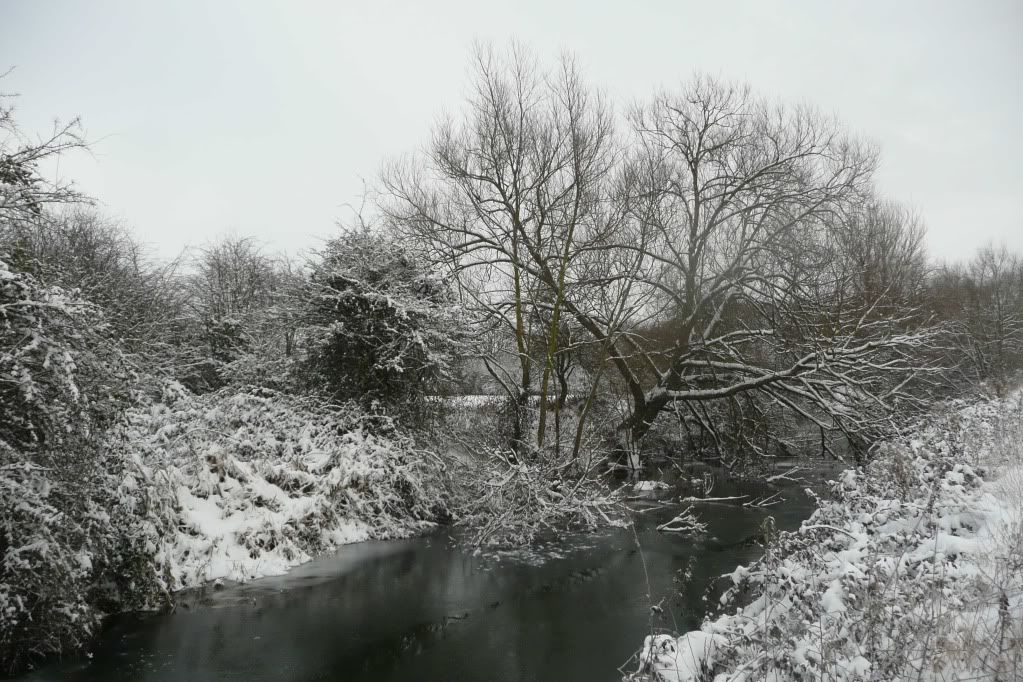
The river Ock in south Abingdon:
.
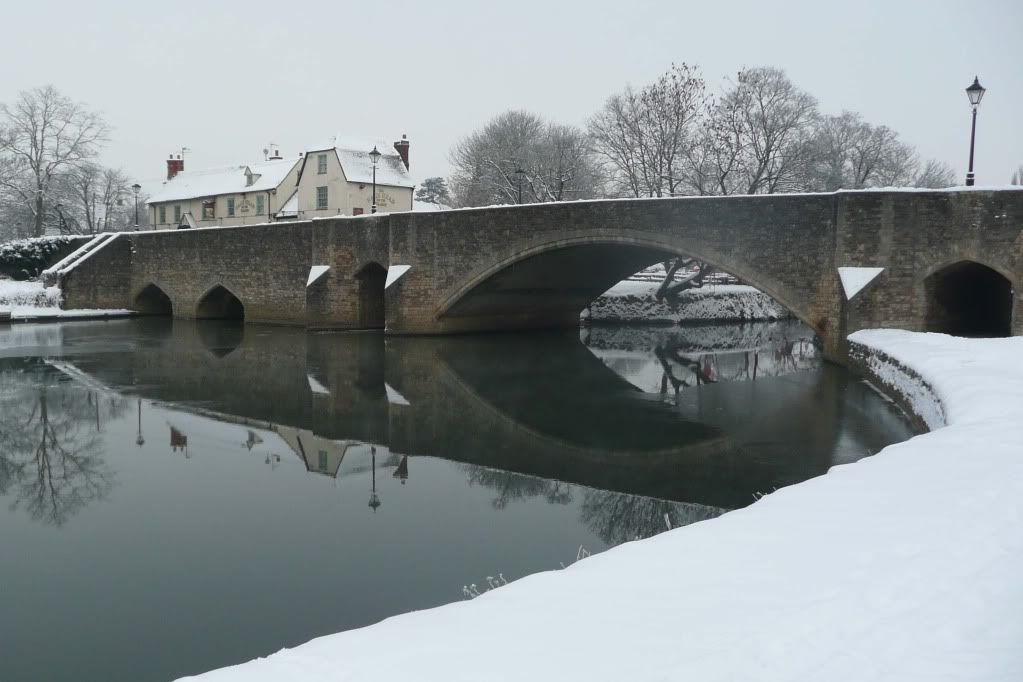
Burford Bridge spanning the Thames.

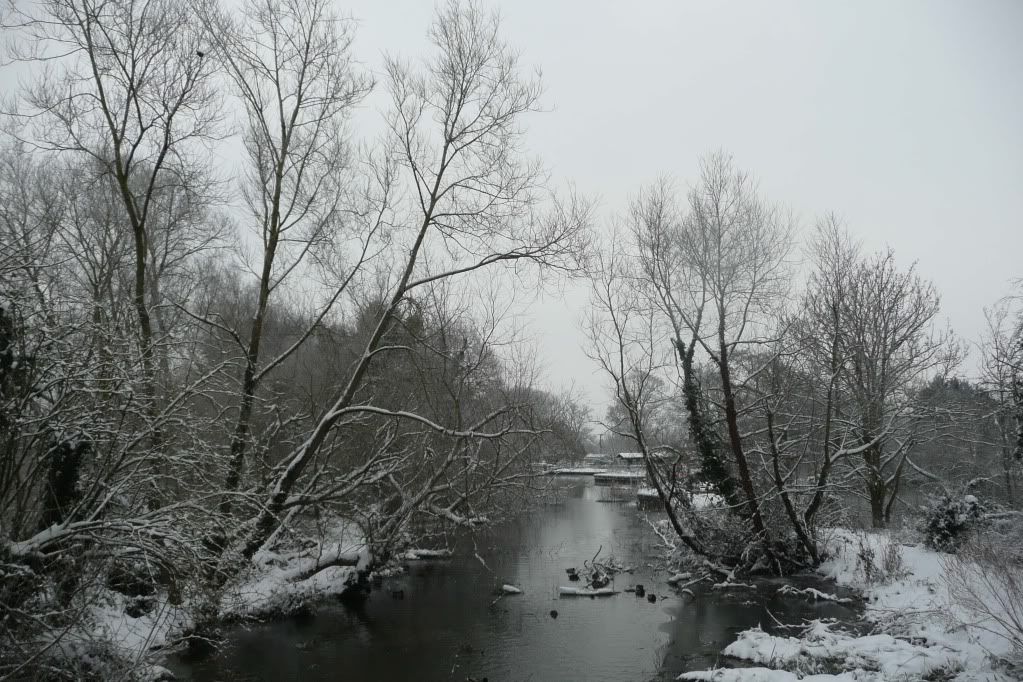
From the footbridge over the Abbey Stream looking towards the Thames weir.
.
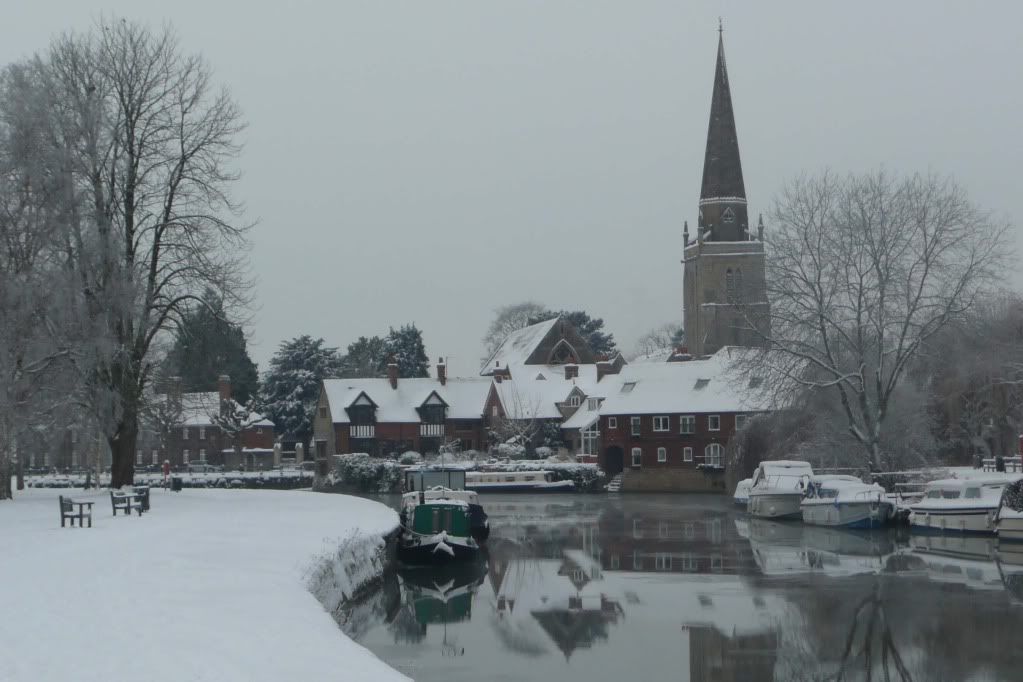
And the view of St. Helens Wharf  from Burford Bridge is the classic Abingdon Christmas card scene.