Showing posts with label snowdrops. Show all posts

Thursday, 4 February 2016

Candlemas

Some  perennial plants such as daffodils, snowdrops and crocuses survive the hardships of winter by accumulating food in their bulbs and then when spring approaches, the warmer and lighter days result in the plant putting it's efforts into producing flowers.
With the traditional day of the first snowdrop flowers being Candlemas Day (2nd February).

But this year it has been different... 


.
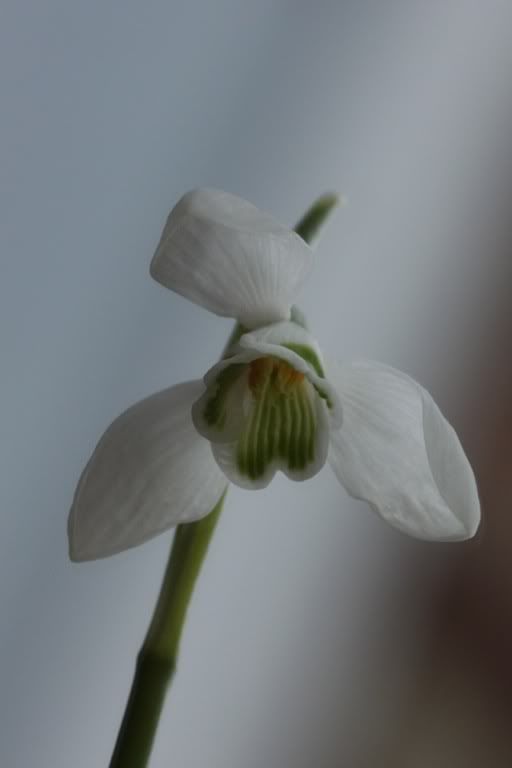
Like a lot of places, the snowdrops in our garden have been in flower before Christmas.
Rather than flowering on Candlemas, quite of a few are loosing their flowers and once again returning to storing food in their bulbs:
.
.
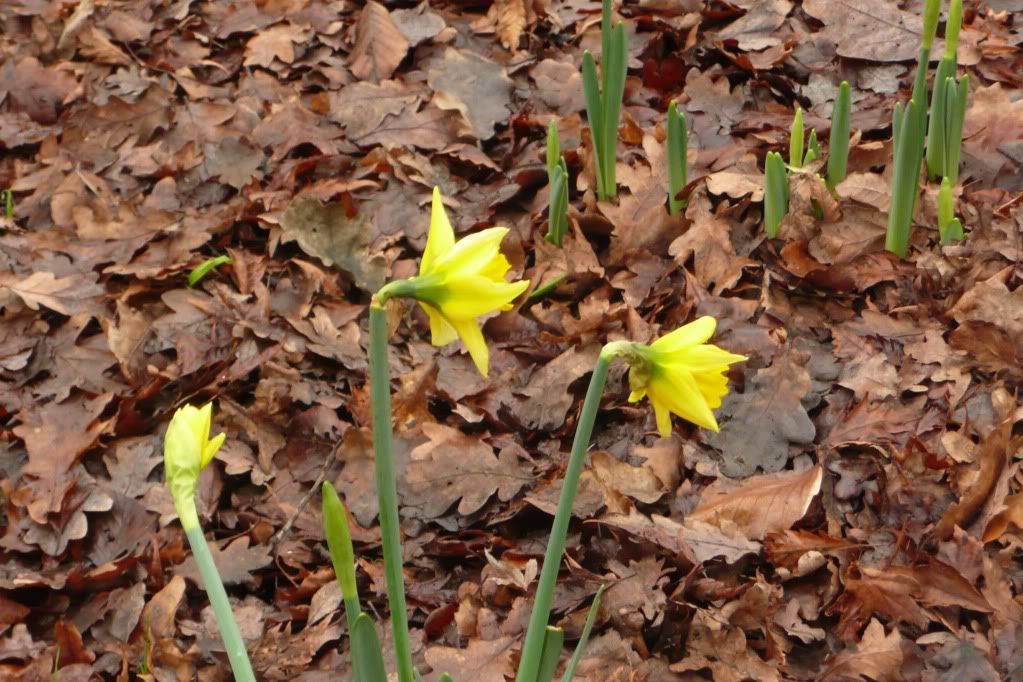
It's not only the snowdrops aren't the only ones, the daffodils, which normally flower in March, have also started to flower prematurely.
.
.
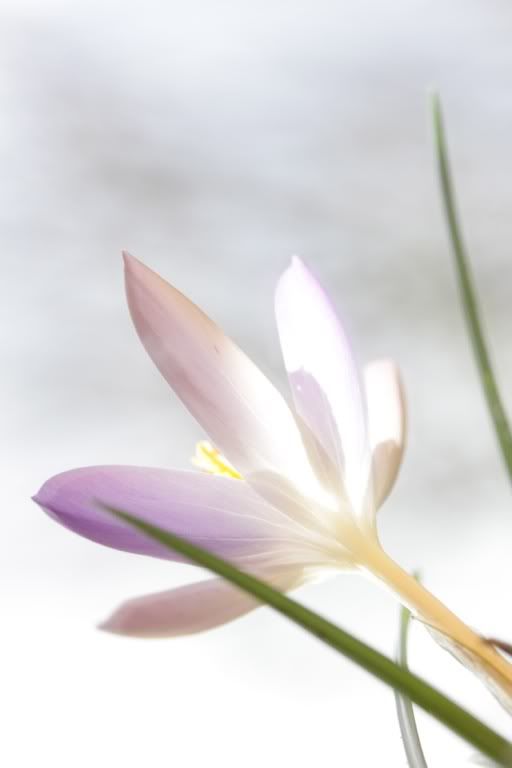
And so have the crocuses, which usually flower towards the end of February.
.
.
The cause of this early flowering is the unseasonable warm weather the South of England has had in the past few months.
In 2013 the average UK temperature was  5.7 Celsius, in 2014 it was 4.4 and in 2015 it was 7.9 (reaching a maximum temperature of 16.6 in Sunderland) [1].

Whilst it is always good to see flowers on a winters day, it may have an adverse affect on on hibernating animals like insects, bats and hedgehogs.
Yet for animals which don't hibernate - like water voles, this may actually be good news as they won't have to seek food in harsh conditions.

Whether this mild winter is temporary or a more permanent change, time will tell.

Sources: 
[1] Met Office: www.metoffice.gov.uk/

Thursday, 27 February 2014

Snowdrops 2014

In early February, the snowdrops in the garden started to come out and made a welcome sight amongst all the rain.
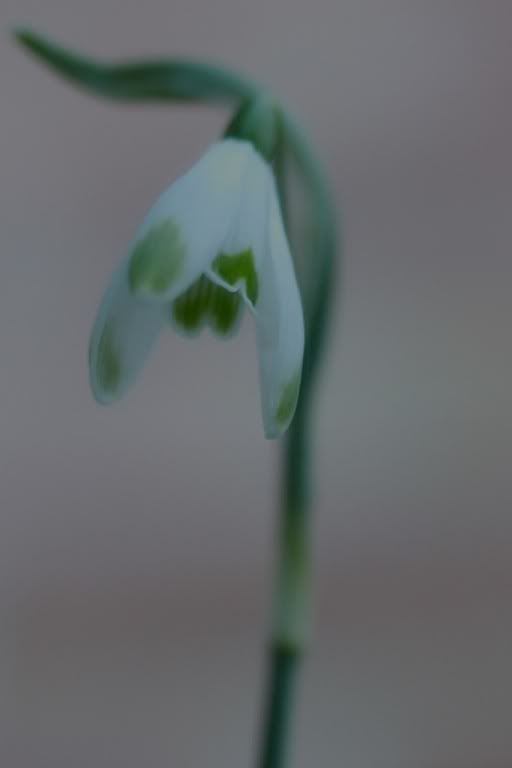
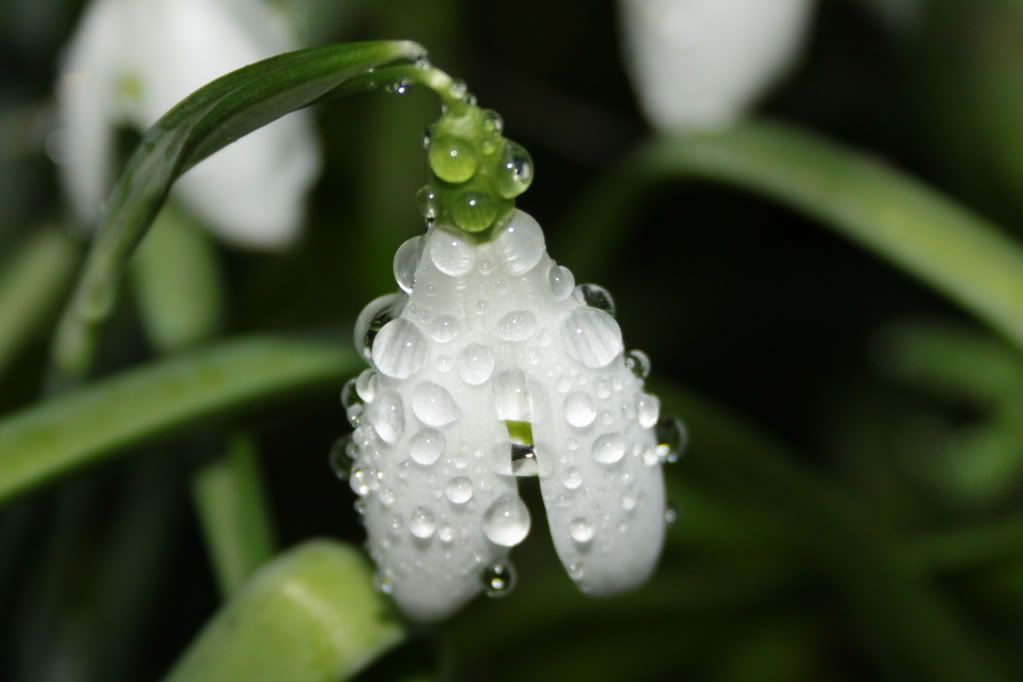
Most are the common the galanthus nivalis, but there are  a few more unusual varieties donated by friends and family, including this 'curly':
.
.
More impressive displays can be found locally and it is one of the highlights of late winter is a walk through large groups of snowdrops,  such as those found near by at Kingston Bagpuize House (http://www.kingstonbagpuizehouse.com/kingston-bagpuize-gardens.asp):
.
.
As well as some impressive snowdrop woods, it also has some unusual varieties, including this Galanthus elwesii named Marlie Raphael, the former owner.
.
.
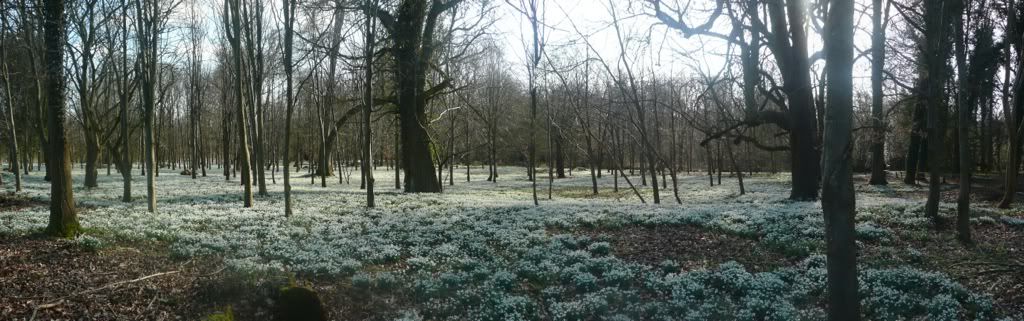
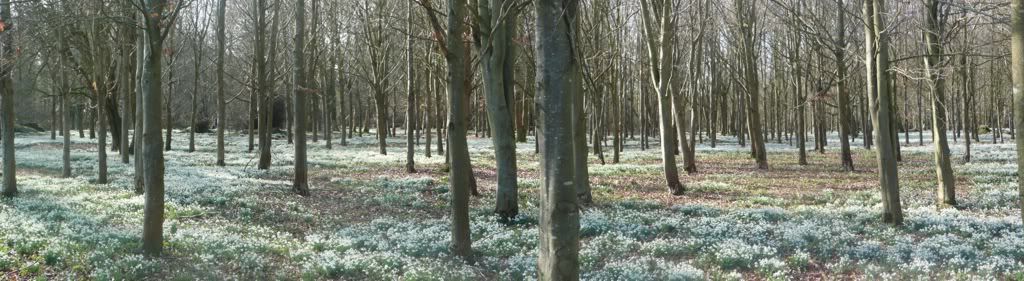
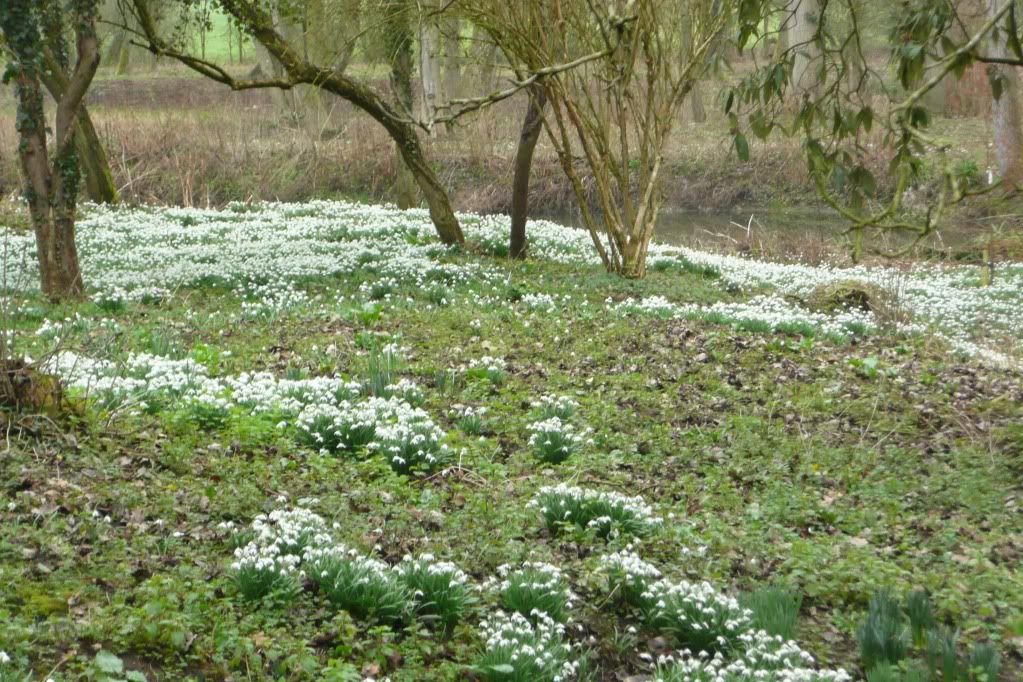
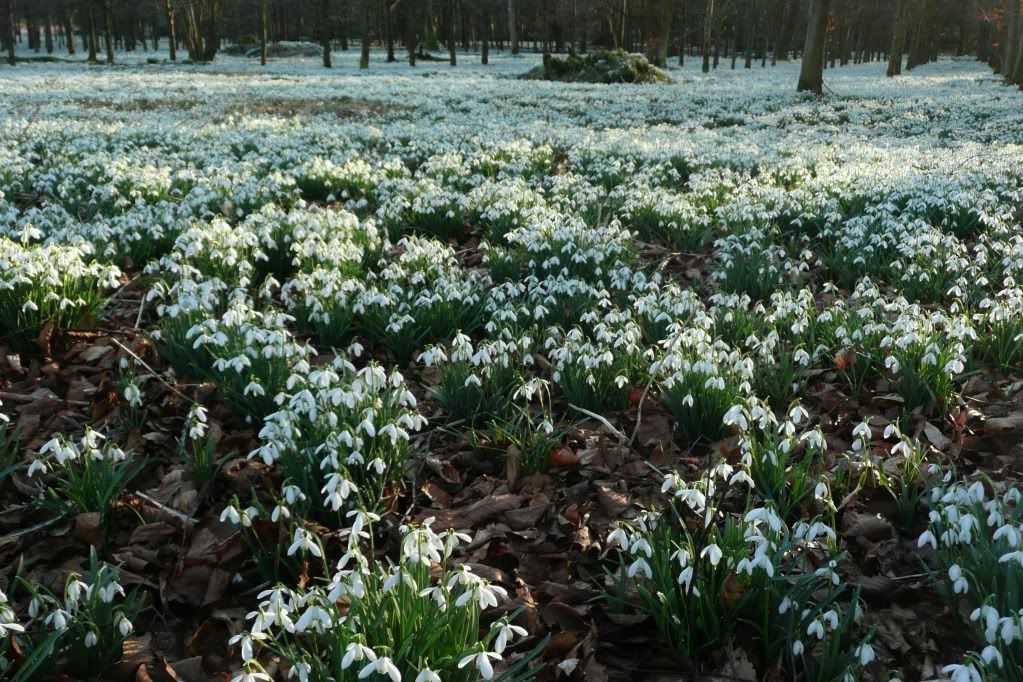
Perhaps lacking the varieties, Welford Park (http://www.welfordpark.co.uk/snowdrops.html) near Newbury is probably the most impressive sight  for snowdrops in the area, where the woods consist of millions of snowdrops:
.


Monday, 27 February 2012

Welford Park

In what now seems like an annual pilgrimage, in early spring we head down the A34 to Newbury to Welford Park.
The house, built on the grounds of an old monastery, maintained by the monks of Abingdon before dissolution, is an impressive building:
.
.
And so is the church, one of only two round spired churches in Berkshire:
.
.
But what people flock here in their thousands to see is the snowdrops, unlike  Waterperry gardens, what it lacks in varieties (most of the snowdrops are galanthus nivalis - the most common in England), in makes up in quantity.  The drive leading up to the house contains several thousand:
.
.
But it is a the beech woods which is by far the most impressive, containing several million snowdrops.  It is probable these were introduced by the monks who returned from Europe who used them to decorate the monastery and use it for medical treatments.
.
.
Although the monastery is long gone, the legacy of the monks lives on in what must be one of Berkshires most impressive natural sights.
.


.
It is not just the several millions of snowdrops, the monks legacy also lives on in modern medical research, as snowdrops are being used into a possible treatment for Alzheimers: http://www.sciencedaily.com/releases/2009/12/091220175319.htm

Sunday, 19 February 2012

Yet more Snowdrops

Today was part of Waterperry Gardens snowdrop weekend, an opportunity to see some of  the many different varieties and to learn more about snowdrops and the gardens on one of several guided walks (there is another snowdrop weekend next week).
This variety is known as 'curly' and is a natural hybrid, only recently discovered in the 1960's.  It is one of the varieties (along with Sam Arnott) and has a strong honey smell.


.
This one, with the green tips on the tepals (outer petals) is a Galanthus nivalis 'Viridapice' and is another natural hybrid, discovered in Holland in the 1920's and subsequently introduced into the UK:
.
.
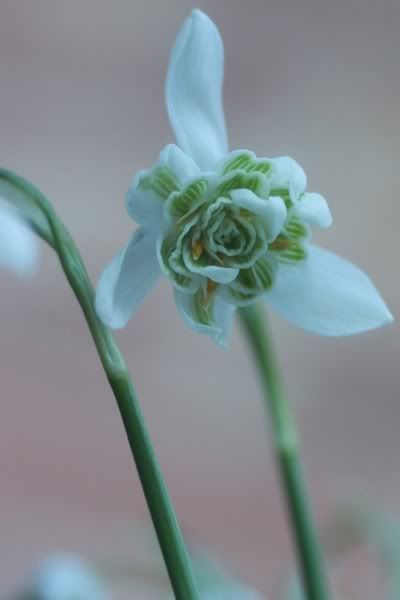
Most snowdrops have single flowers, but some varieties have double flowers, like this Galanthus nivalis 'flore pleno'.  
Double flowered snowdrops are not capable of producing seeds, however, when they are cross pollenated (either naturally by insects or by people) with single flowered snowdrops the resulting seed will produce a double flower.
.
.
Snowdrops are not native to the UK, having been introduced initially in the roman times and now with an ever increasing number of breeders and collectors (known as Galanthophiles) the popularity and number of species is likely to increase.  Especially with a record price of £725 recently being paid for a single bulb: http://www.dailymail.co.uk/news/article-2102136/Green-Tear-snowdrop-looks-glum-rival-Scottish-Elizabeth-Harrison-expensive-bulb-sold.html
But  the ever increasing popularity of snowdrops is having unexpected consequences in their native countries.  
Over harvesting in countries like Georgia could result in many species becoming extinct in the wild.  A research project between Kew Gardens and Microsoft Ecology is looking to demonstrate how a sustainable trade in snowdrops can benefit the local population whilst maintaing sufficient populations in the wild: http://www.kew.org/news/sustainable-snowdrop-trade.htm

Saturday, 18 February 2012

Spring in the Garden?

The snow has now melted and thanks to a warm sun the temperature has risen to 10 degrees, as a result, some of the plants in the garden have started to flower, giving the garden an almost spring like feel.
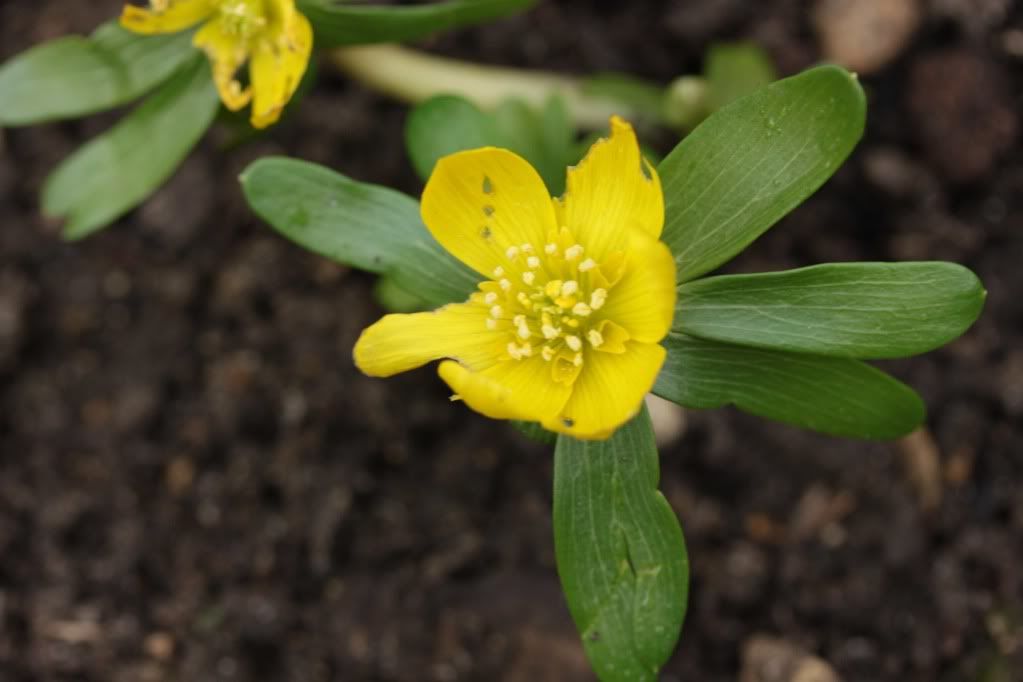
One of the earliest was the winter aconite, an none native member of the buttercup family which can found in many gardens and woodlands throughout the UK.


.
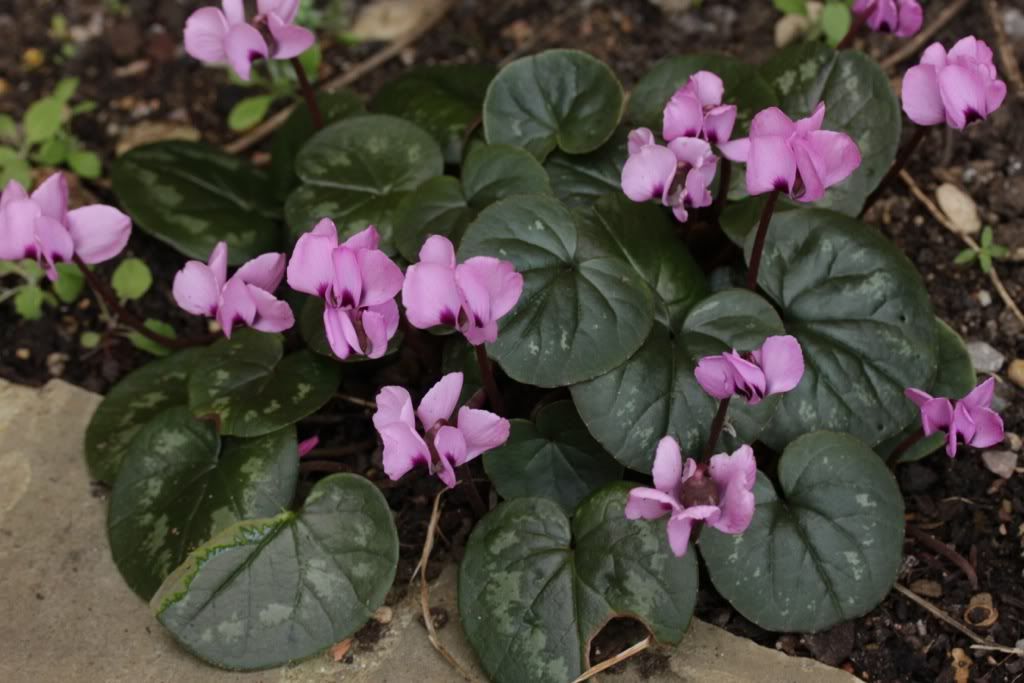
The cyclamen has also been in bloom for a while, it is the first time it has flowered and apparently the flowers can last for several months.
.
.
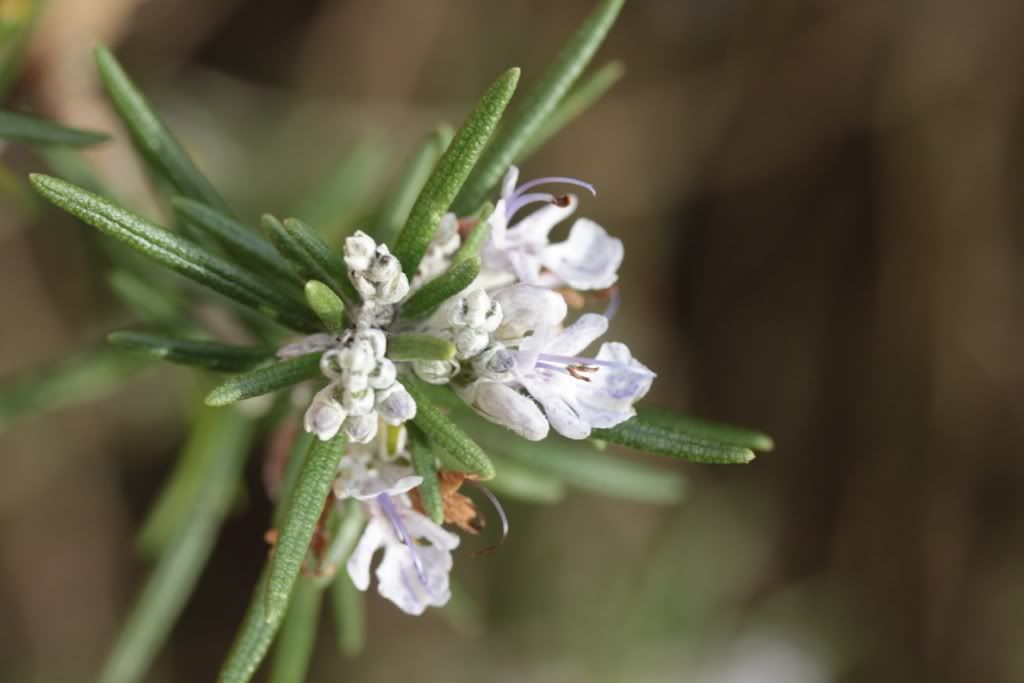
The rosemary bush has been producing small flowers for most the year and is one of the most popular with the bees when they emerge from hibernation.
The flowers are quite small, but up close they have the elegance of an orchid.
.
.
Several varieties of crocus are also in bloom, including this purple crocus:
.
.
Most of the snowdrops are now in bloom, including this non native hybrid - Galanthus Sam Arnot' - purchased from Waterperry Gardens. 
.
.
The behaviour of the birds has also changed, the blackbirds seem to have paired up and are chasing off other garden birds and the solitary dunnock seems to have acquired a partner and can be seen checking possible nesting sites - when they are not being chased off by the blackbirds.

Thursday, 5 January 2012

First signs of Spring?

New Year was spent in the Cotswolds and a walk on New Years Day in Batsford Arboretum revealed some flowers which you would not expect to see till spring...
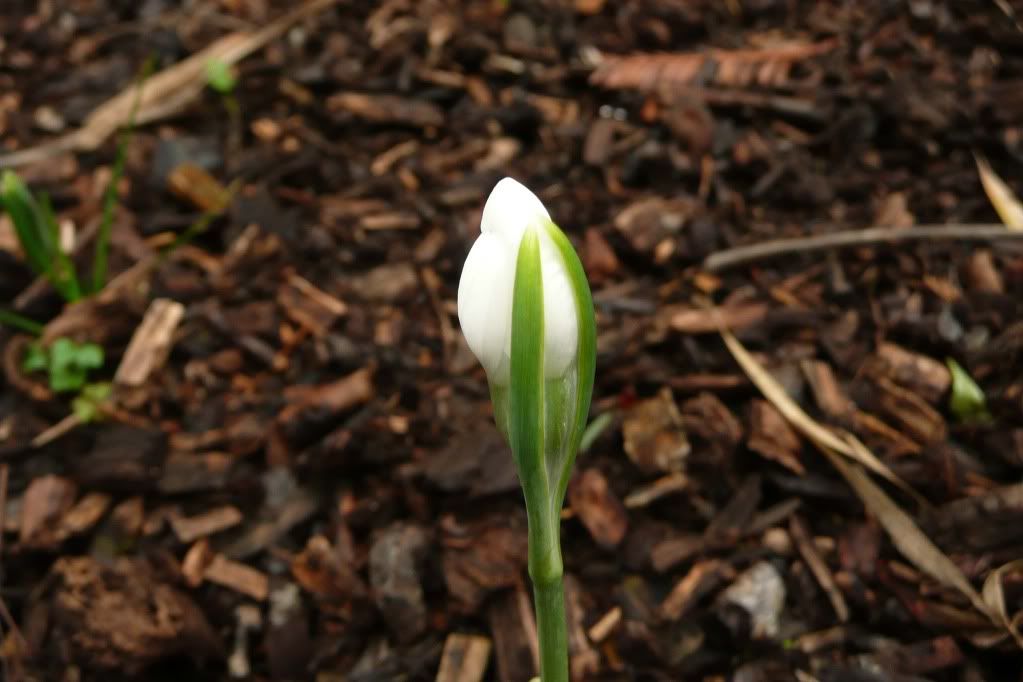
A snowdrop, getting ready to flower
.
.
And daffodils already in bloom.
.
.
Maybe these are early blooming varieties or maybe spring is starting earlier....  

Wednesday, 23 February 2011

More Snowdrops

Although it doesn't have the wow factor of Welford Park, Waterperry Gardens - to the east of Oxford are an ideal place for any budding GalanthophileWhat it lacks in quantity, it makes up in variety including with many different species on display.
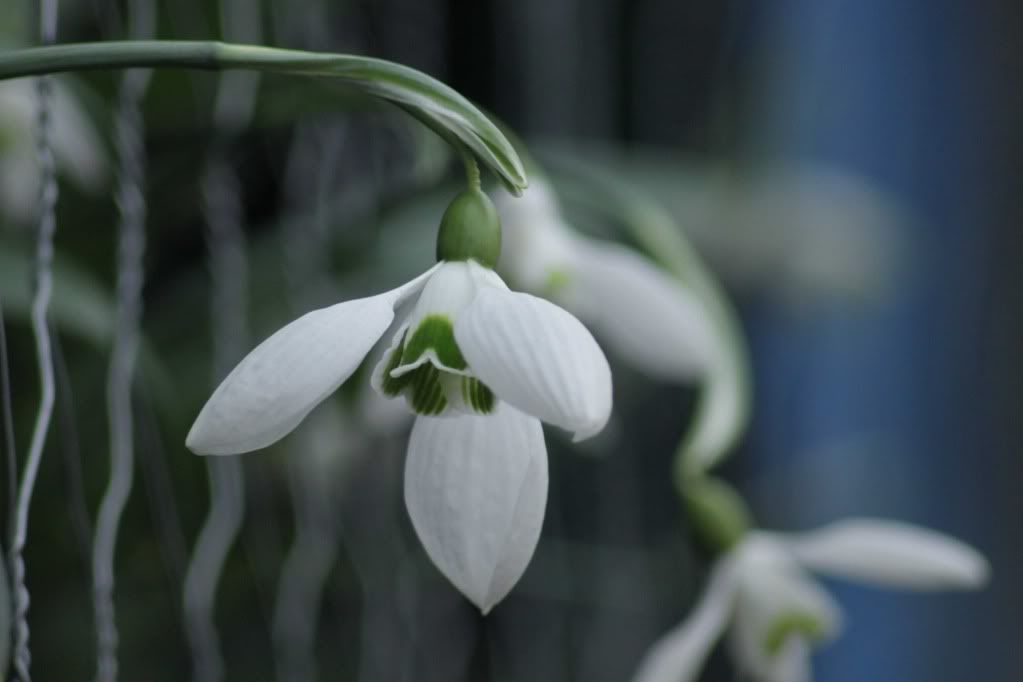
Including, Galanthus 'S. Arnot', similar to the common snowdrop, but with a distinct green tip on it's outer tepals (technically snowdrops don't have petals, as their petals and sepals are the same colour they are botanically classified as tepals).
.
.
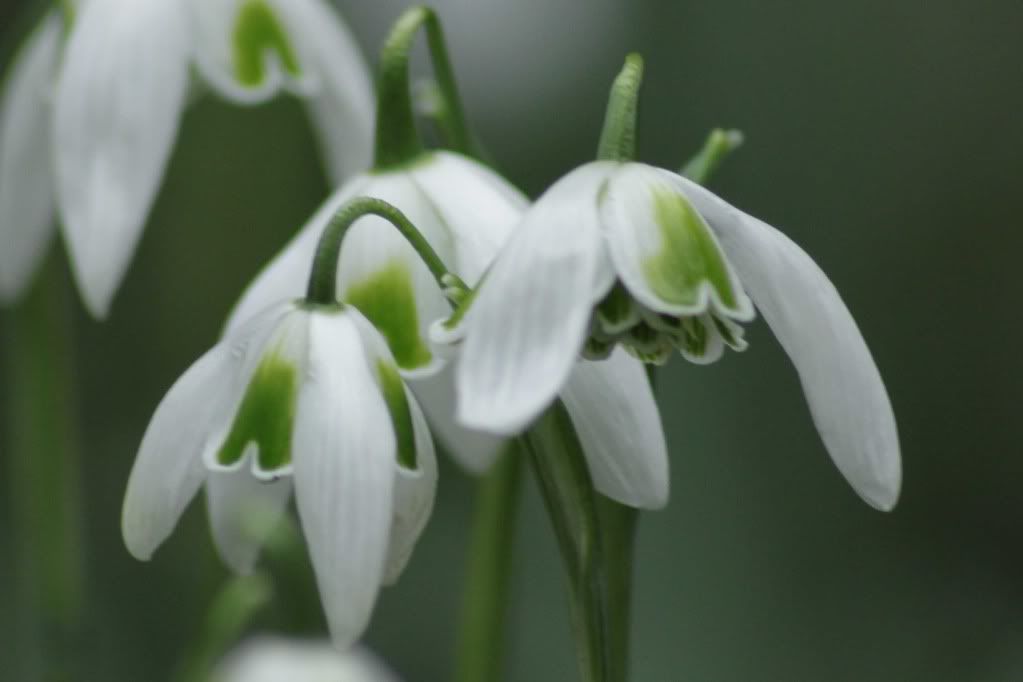
The Galanthus Dionysus is another species, with a more elaborate flower forming a predominate green rosette.
.
.
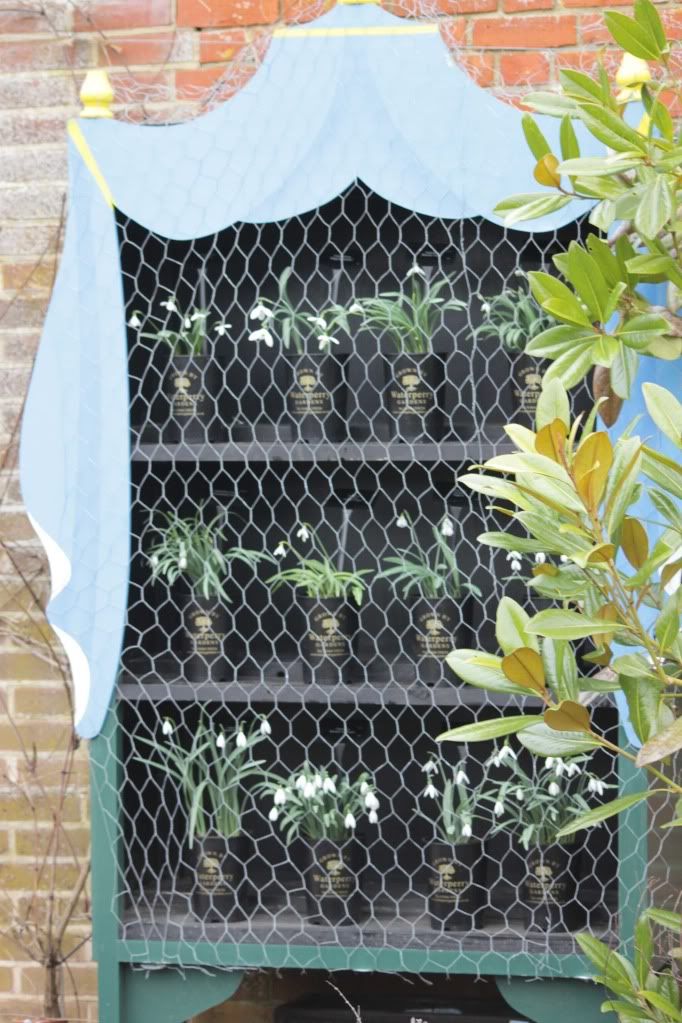
Whilst others, like the 'Mighty Atom' are so rare that an individual bulb might sell for as much as £40, that it and other rarerities are kept encaged:.
.
.
.
.
The area by the river Thame contains thousands of snowdrops, mostly consisting of the common Galanthus Nivalis, having spread by vegetatively -  an impressive feat as over 200 years the bulbs have divided and then spread by birds and animals - no pollination was involved - to form this impressive scene.
.
.
For fans of snowdrops, Shirl has an excellent snowdrop festival blog post on her equally excellent blog, which is well worth reading:


Thursday, 17 February 2011

Snowdrops

Nothing indicates the end of winter and the approach of spring more then the appearance of snowdrops - and there are more in the garden then ever.
.
.
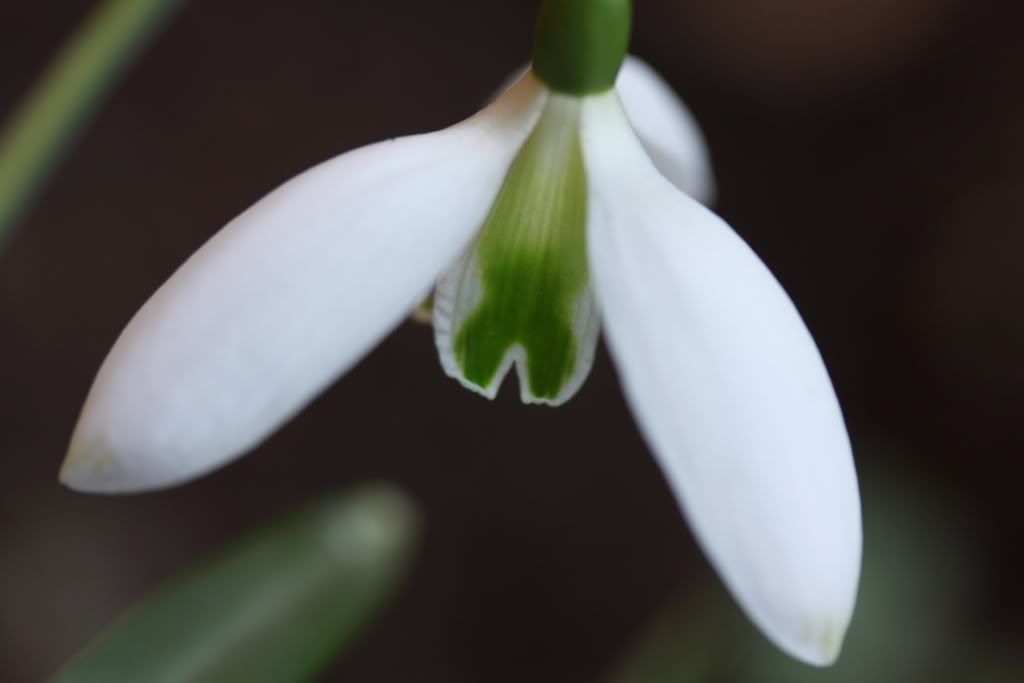
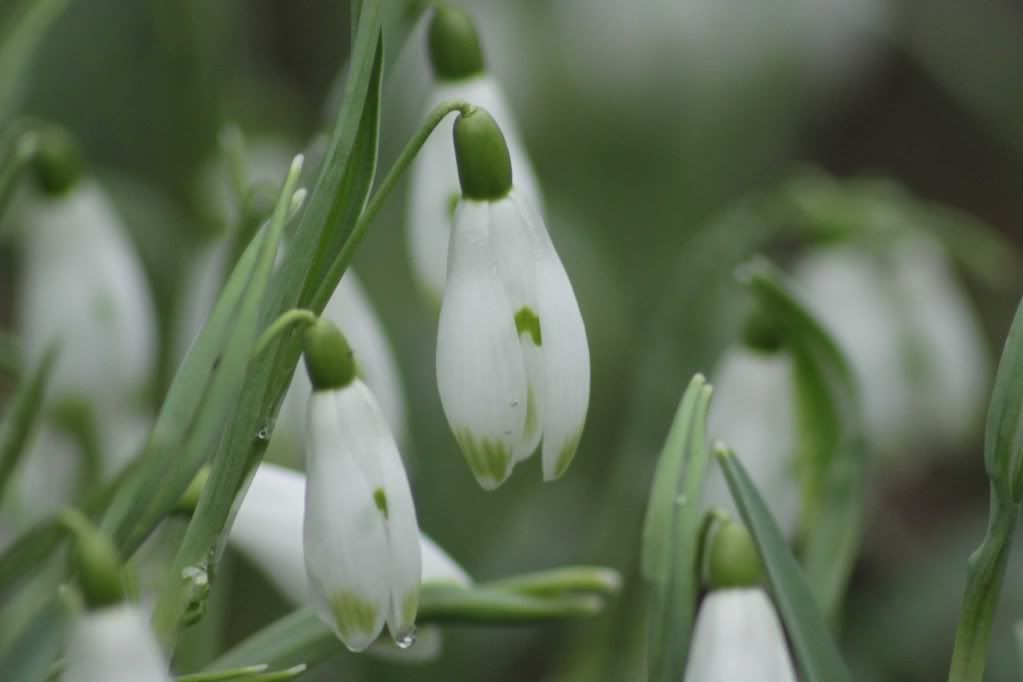
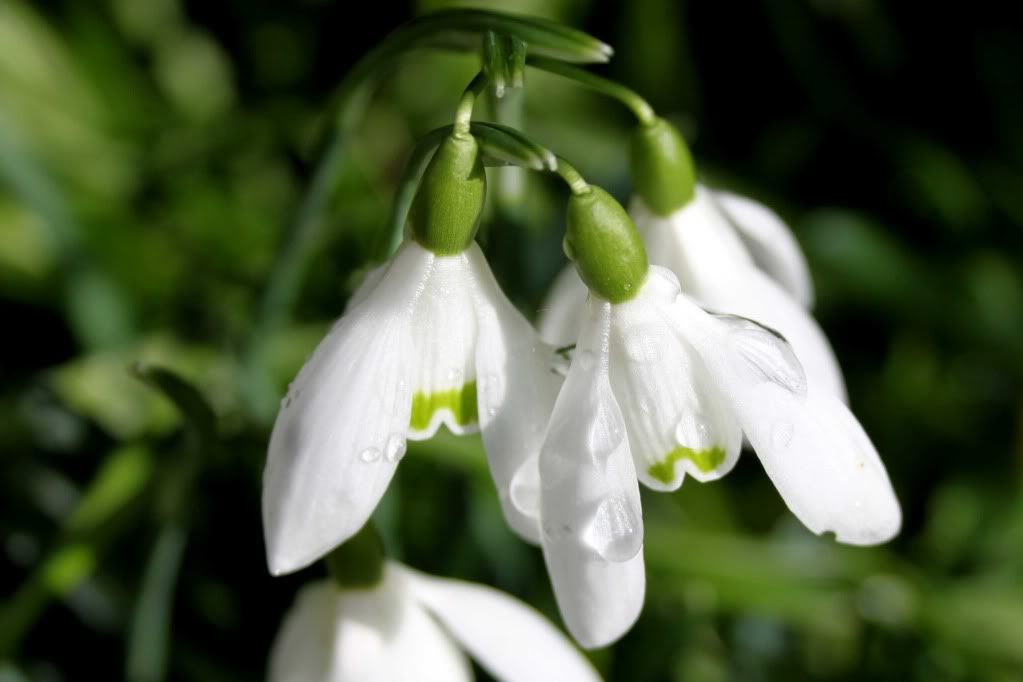
The most prevalent in our garden are  Galanthus nivali identified by the distinct small green bridge between the three petals that form the flower.  Although this is classified as the native UK snowdrop, it was first recorded in the UK as recently as the 1770's. 


.
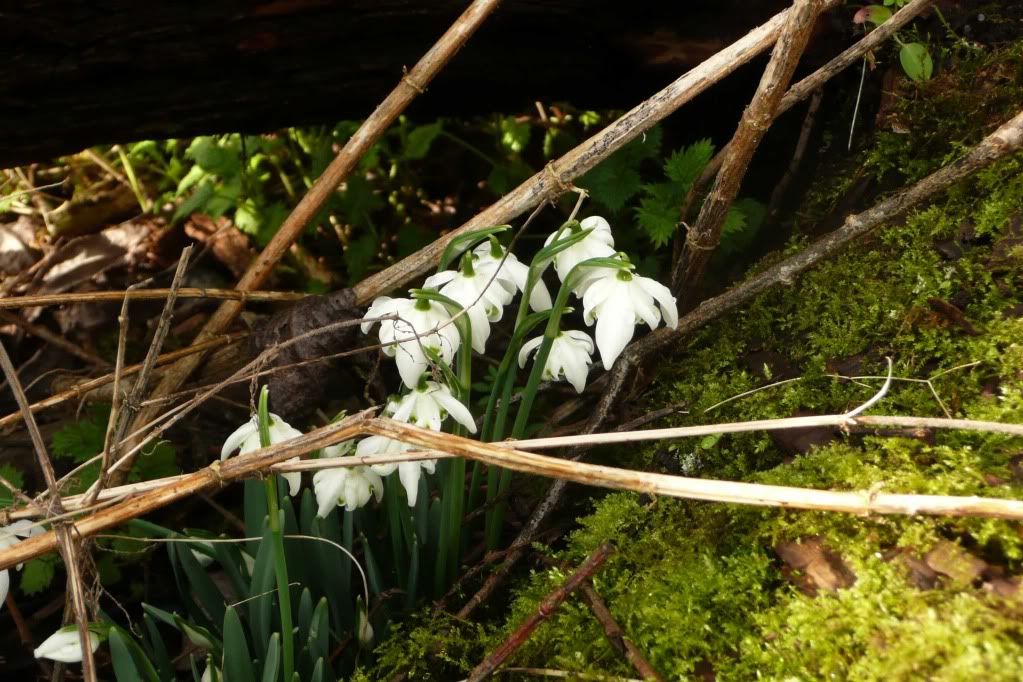
Along the Ock Valley Walk there are a few small clumps, finding the shade provided by the  trees an ideal habitat. Snowdrops don't often spread via pollination (maybe they flower too early in most of the UK to attract pollinating insects),  so these are possibly garden escapees, maybe spread by a person or an animal moving the bulbs.  
With the different shaped flower they are likely to be one of the other 75 variety of snowdrop in the UK.
.
.
For truly impressive snowdrop numbers, a short journey down the A34 to Welford Park near Newbury, where the snowdrop wood contains hundreds of thousands of snowdrops and where a walk in the sunshine gives a feeling that spring at last is on it's way.
.
..