Showing posts with label bluebells. Show all posts

Thursday, 28 April 2011

Bluebell woods

Individual bluebells are attractive flowers, but they are at their most impressive when seen in their millions in an ancient woodland. 
Although these woodlands have decreased by 50% fortunately for those of us in Oxfordshire there are several places where we can appreciate this natural wonder:
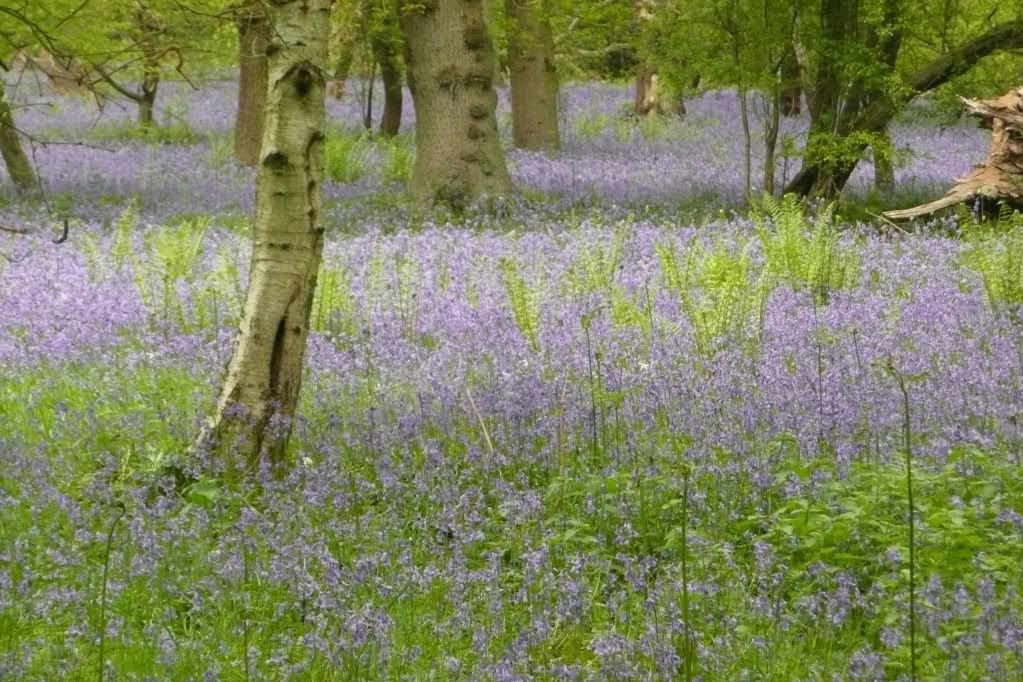
Wytham Woods:  Featured previously in this blog, the woods to the west of Oxford are owned by the University of Oxford for research, but permit holders can explore them and enjoy the bluebells that seem to appear around every corner where there are beech and oak trees):
.
.
Harcourt Arboretum: Also owned by the University (and requires a small fee to enter) features a large collection of native and non native plants and trees.  Recently, a lot of work has gone into recreating a coppiced woodland, where the bluebells now flourish (this picture was taken in 2009):
.
.
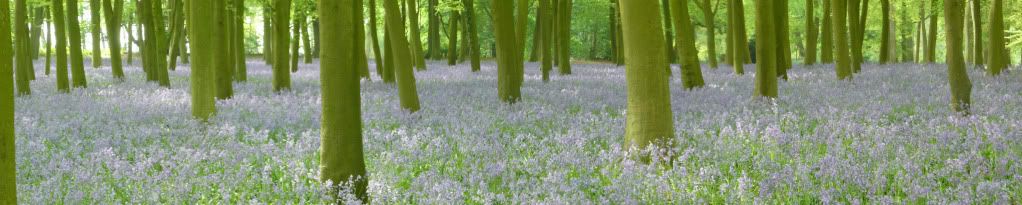
Bradbury Hill: Near Faringdon and owned by the National Trust, is said to be one of the best bluebell woods in the country and is a very impressive sight (if you don't mind  large numbers of male St Mark's flies dancing up and down) and an ideal opportunity for a four shot panorama:
.
.
To find other bluebell woods in the UK, the woodland trust have produced a useful web site (although Wytham and Harcourt don't make it on the list):
http://www.woodlandtrust.org.uk/en/visit-woods/Pages/get-involved.aspx

Wednesday, 27 April 2011

Bluebells

There are two types of bluebell in the UK, the native 'british' bluebell  (Hyacinthoides non-scripta) and the spanish bluebell (Hyacinthoides hispanica).  The latter was introduced into the UK in the 17th century and is now classified as an invasive species.
Although initially they look similar, there are several obvious differences between them:
Stalks: The native bluebell has  a curved stalk, whilst the spanish one is straight.
Flowers: On the native bluebell, the flowers are on one side of the stalk, whilst the spanish ones have flowers on both sides of the stalk
Colour: The native bluebell is a darker shade of blue
Scent: Native bluebells produce a scent, whilst the spanish bluebells don't.
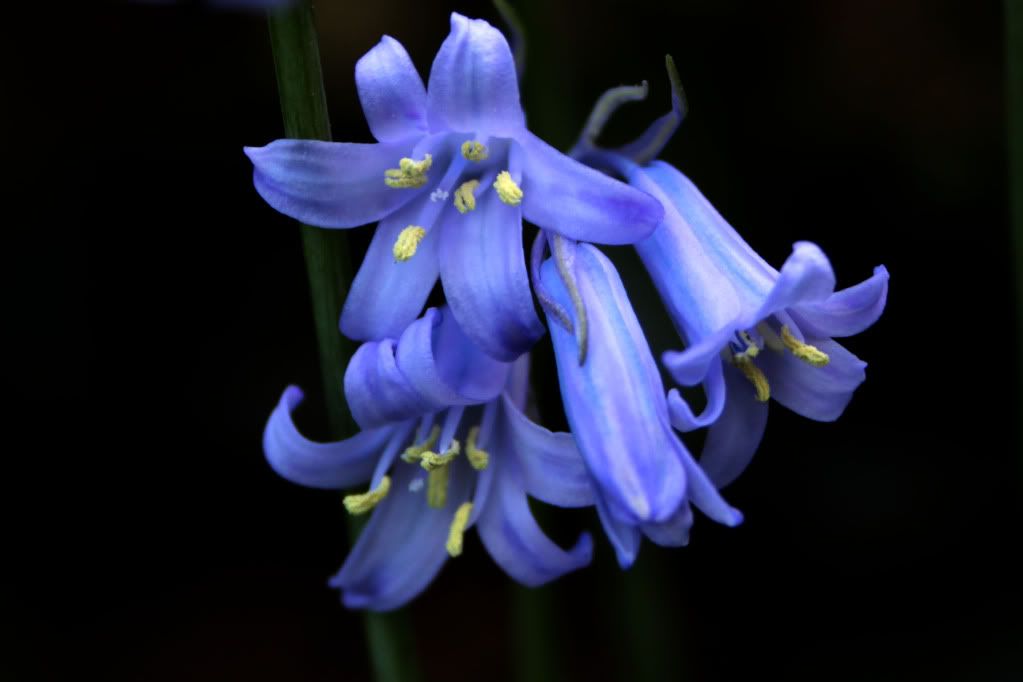
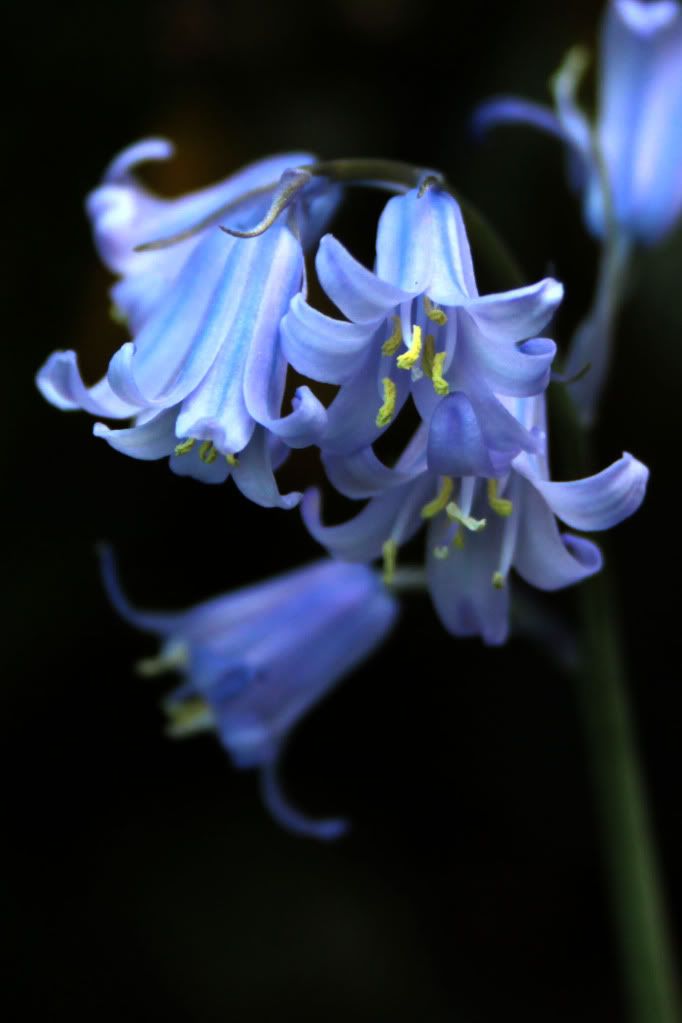
The difference can be seen when comparing a bluebell growing along the ock valley walk to one growing at Wytham Woods:

 
The problem  is not the spanish bluebell replacing or out competing the native ones but the cross pollination resulting hybridizing. 
As the bluebells in our garden have traits of both bluebells, they are probably hybrids.
.
.