Friday, 16 April 2010

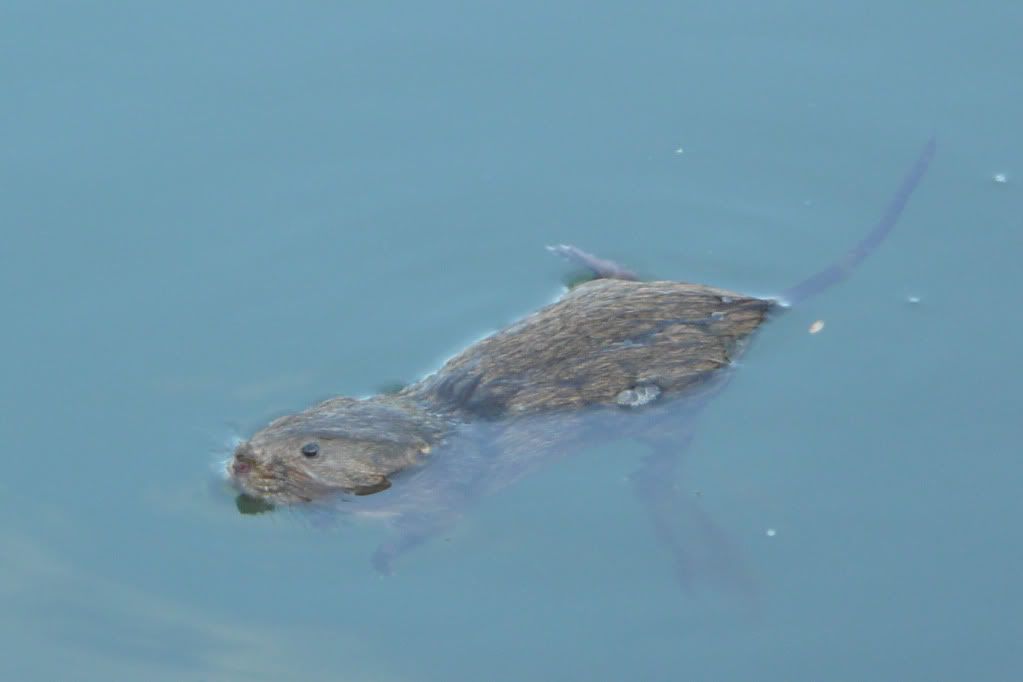
Floating water vole

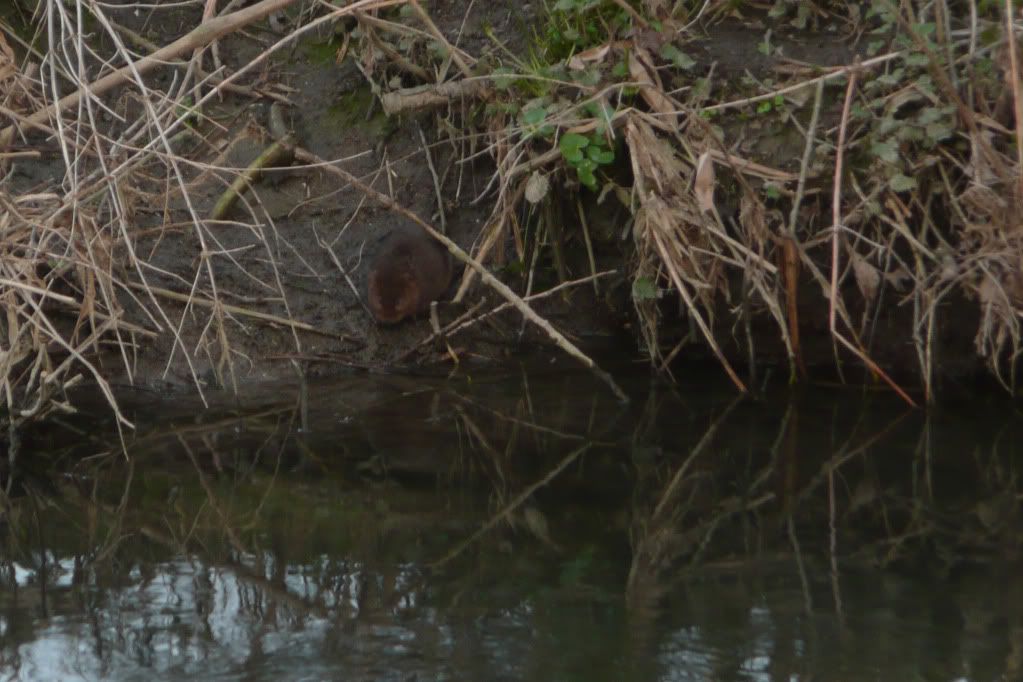
I saw this water vole, it seemed to be just  floating on the river:
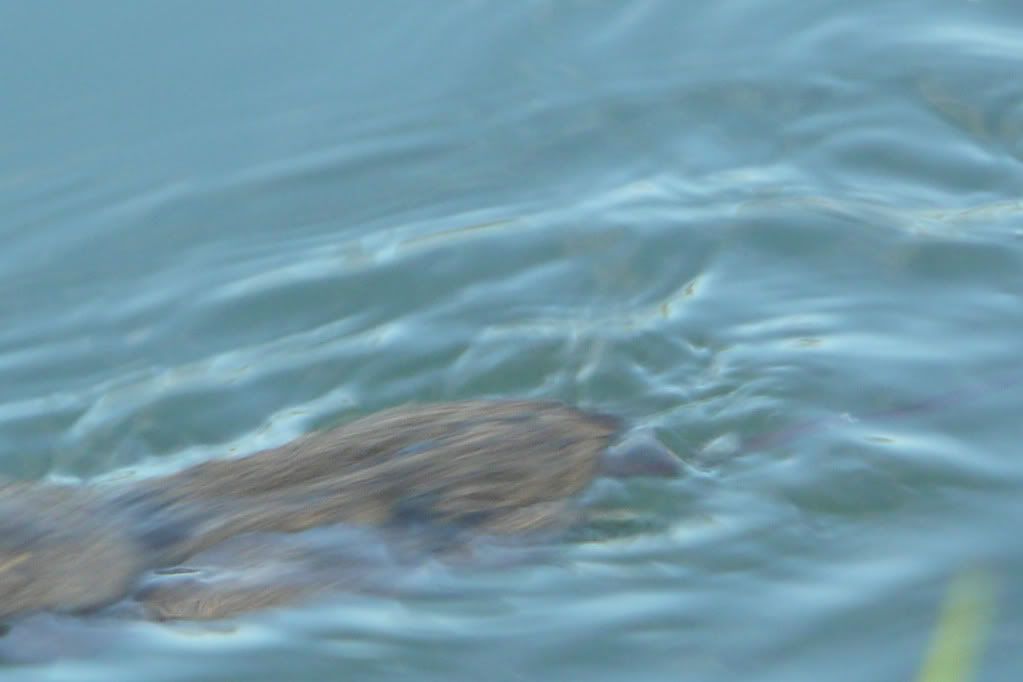
At first I thought it was dead or ill. But as I tried to get a second picture, I was pleased to be proved wrong:

Thursday, 15 April 2010

More water voles

I haven't seen any water voles since my intial sightings in mid march. With the heavy rain a few weeks ago I was concerned that the resultant high water may have resulted in borrows flooding and the water voles drowning. Especially as I had more sightings this time last year.
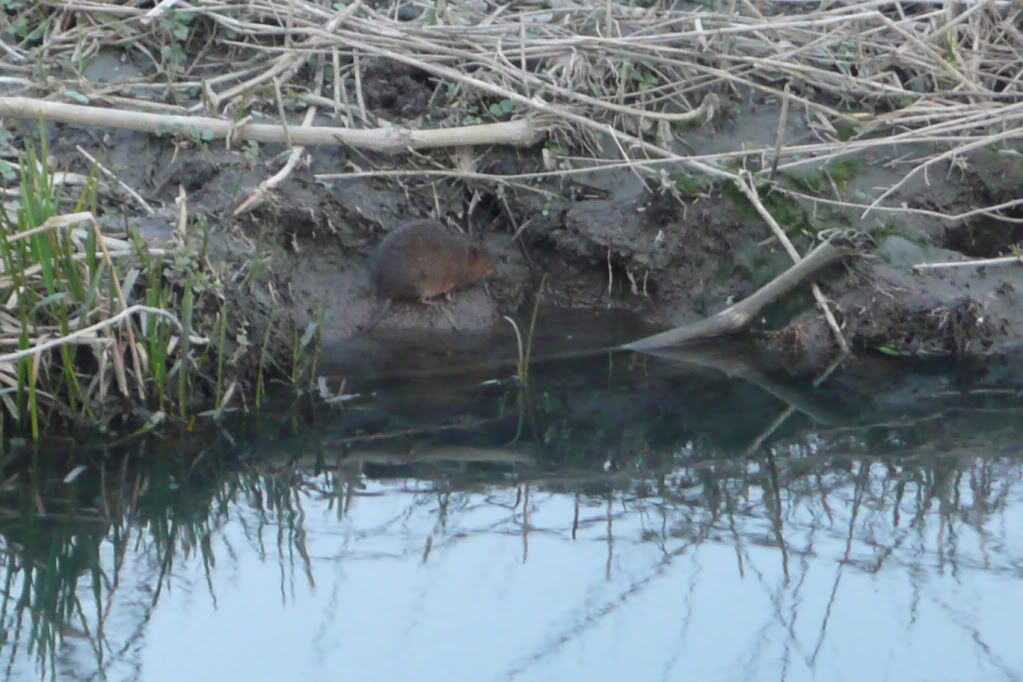
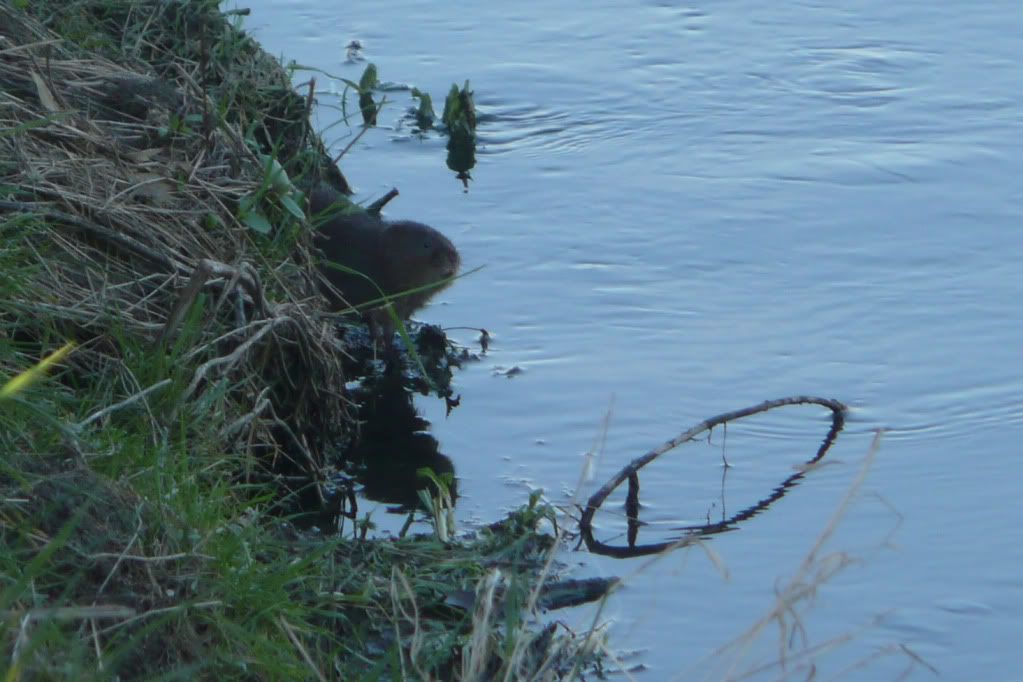
However, a couple of walks along the river produced four new sightings
Again, not great quality pictures:


These sightings show the colony is once again establishing itself, as seen on the 2010 water vole map. These new sightings are in green - with March's sightings in blue


View Water voles 2010 in a larger map
So there should be plenty of opportunities for better quality photos and perhaps now is the chance to explore further afield.

Tuesday, 13 April 2010

Another Brown Job

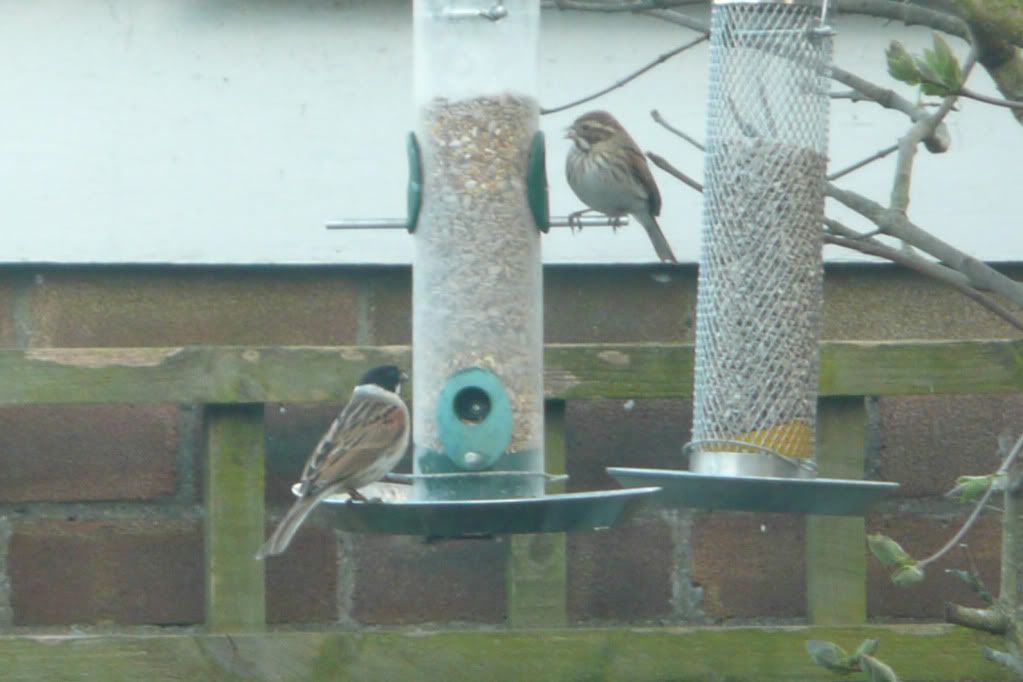
Last month I wondered if the new bird in the garden was a female reed bunting.  It seems I (and my commenter) was correct, she has returned and this time bought a more identifiable male along:
Traditionally reed buntings nest near water, so the logical deduction would be they are feeding in the garden and nesting at the nearby river - either on the ground or in the reed beds.  But these buntings have not only been enjoying the 'premium wild bird seed', but have been checking out the shrubs in the garden. 
The RSPB state that the reed bunting population has collapsed by 50% since 1970 with an estimated 200,000 breeding pairs in the UK. So nesting buntings either in the garden or near the river would be a welcome sight.

Sunday, 11 April 2010

More Toads...

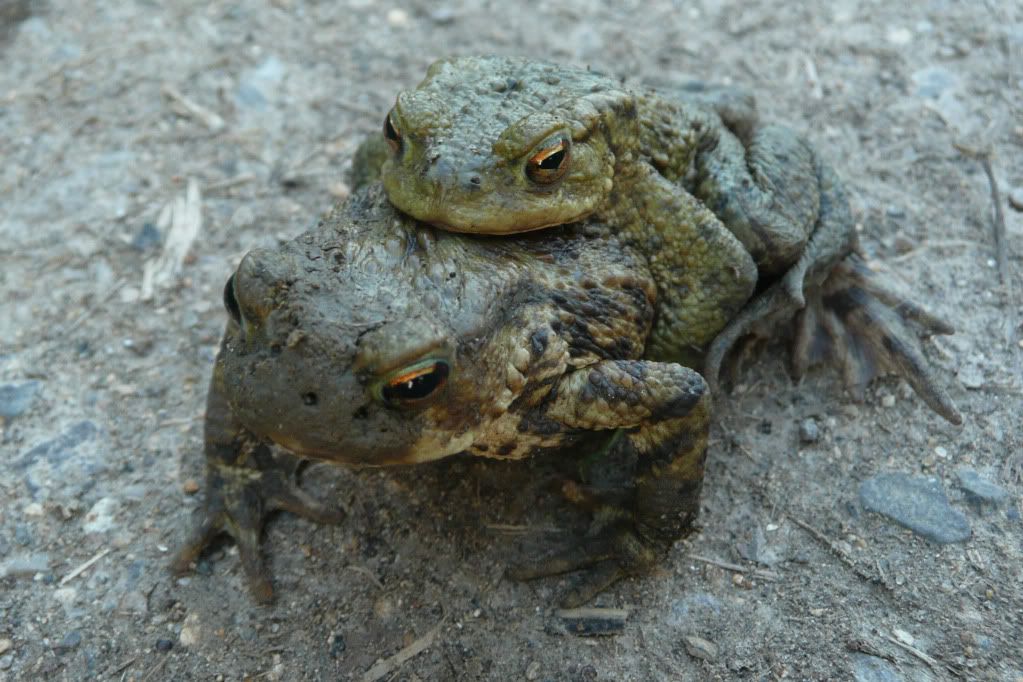
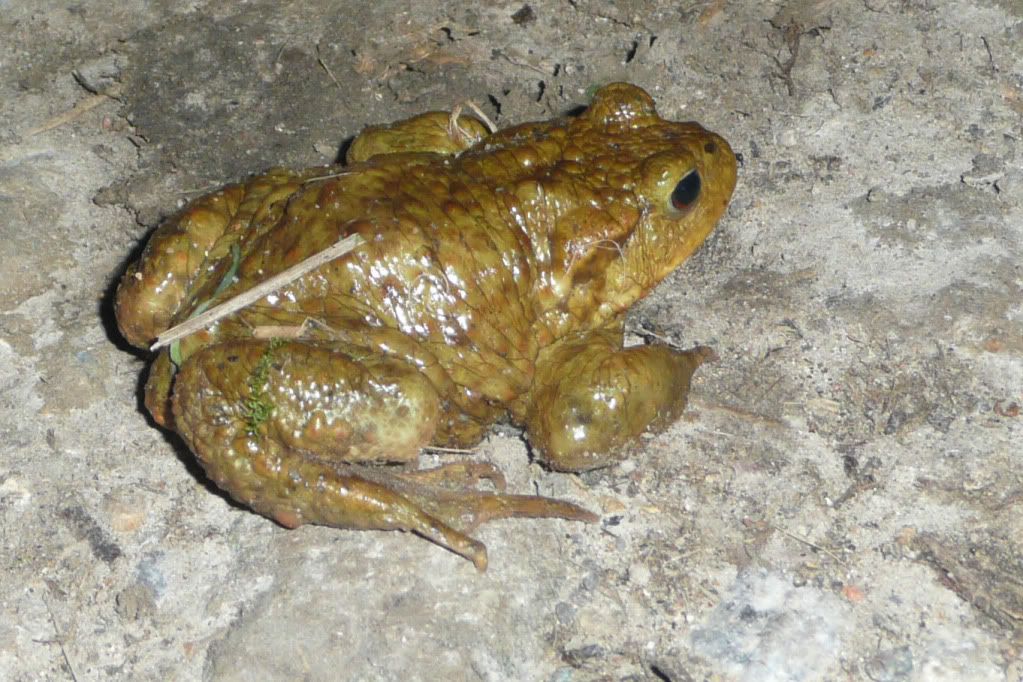
Thankfully, an early evening stroll has shown no sign of the feared toad carnage (no puns about Green Cross Toads here) and even in the last hours of daylight live ones are still about:


Toads spend most of their lives away from ponds and start the migration to their breeding ponds in autumn, taking a break in winter to hibernate, before continuing to their journey to their breeding pond in spring. 
The females are considerably larger than the male, who attach themselves to the female - a technique known as amplexus.  As there are often more males than females, breeding balls can be ensue, where multiple males try and breed with a single female (see picture in previous post) - occasionally resulting in her death as she is smothered or drowned.  By being first and clinging on, this male will have an advantage over the other males.

Thursday, 8 April 2010

Toads..

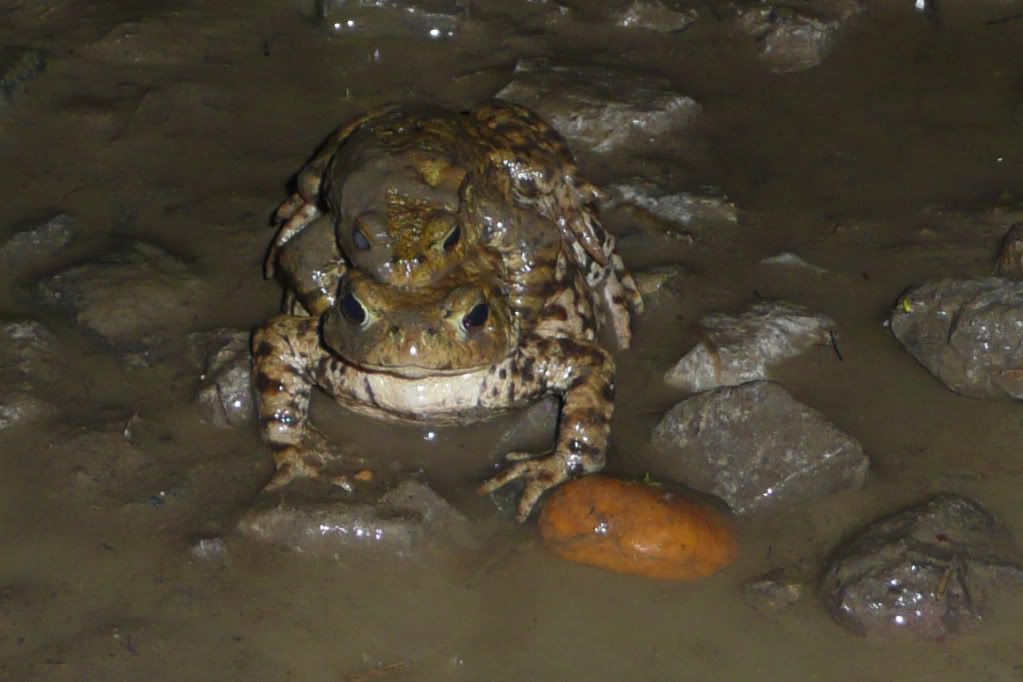
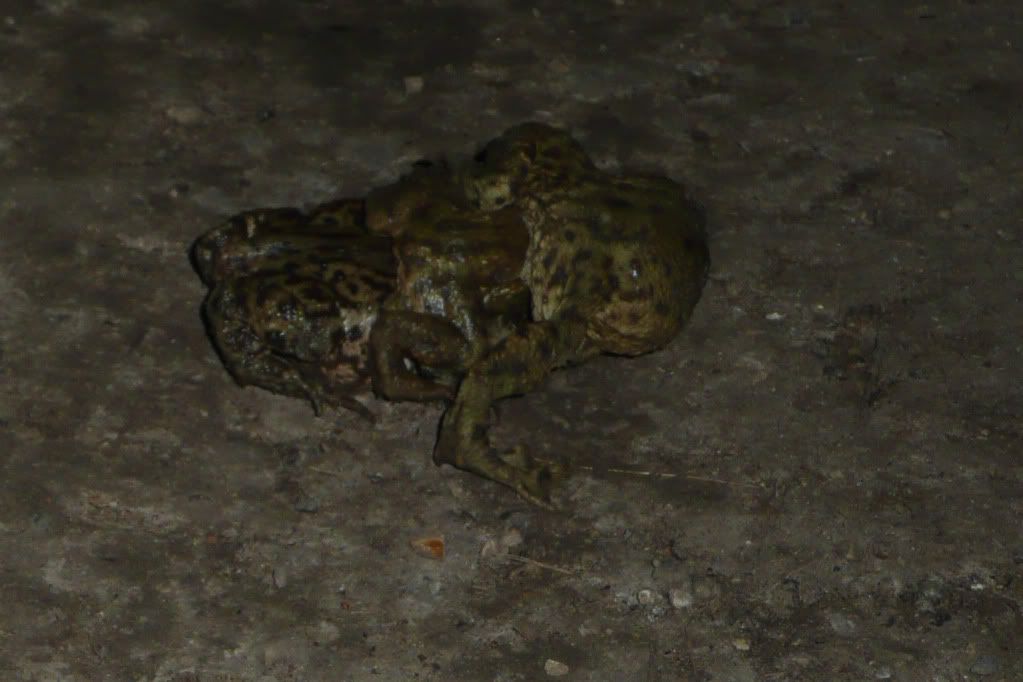
The astronomical bodies aren't the only things out at the moment.  A late night walk down the lane has to be done carefully, as amorous toads are about:
Whilst others are still single:
And those that aren't single are not always successful:
I just hope when I return in daylight, the lane is not covered in squashed toad corpses....

Wednesday, 7 April 2010

Far above the Ock..

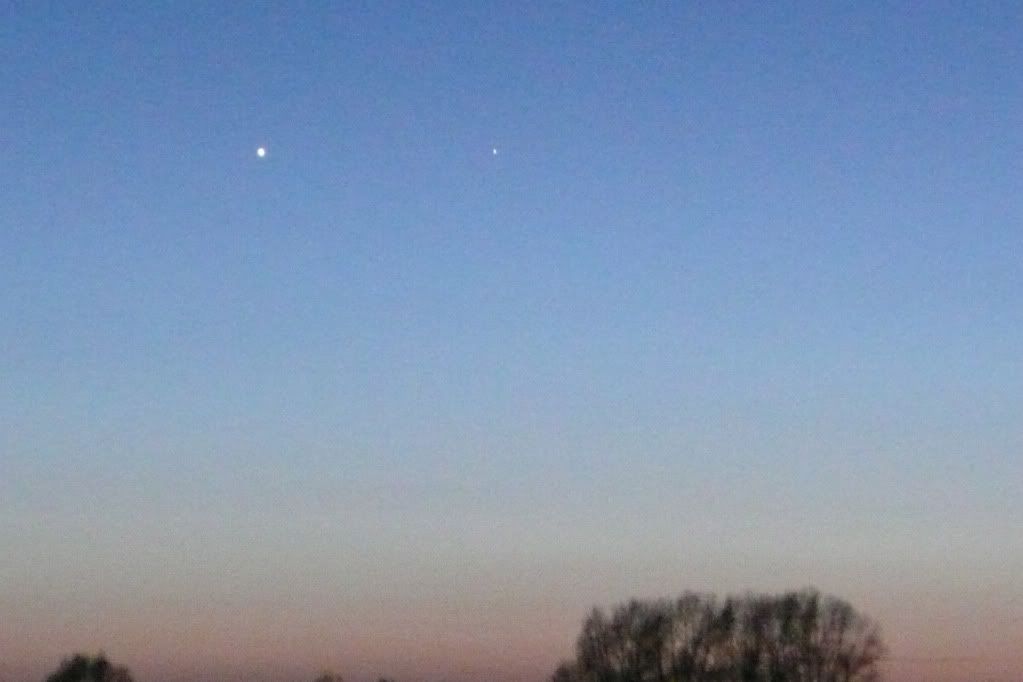
In the western sky two objects can be seen - the planets Venus and Mercury.  Venus is the brightest one towards the top left.  Whilst Mercury is the duller one on its right


Below them is the glow of light pollution from Swindon.

Sunday, 4 April 2010

Blog birthday

The 5th of April 2009 was when this blog came to life, and to be honest I'm suprised it's lasted this long. 
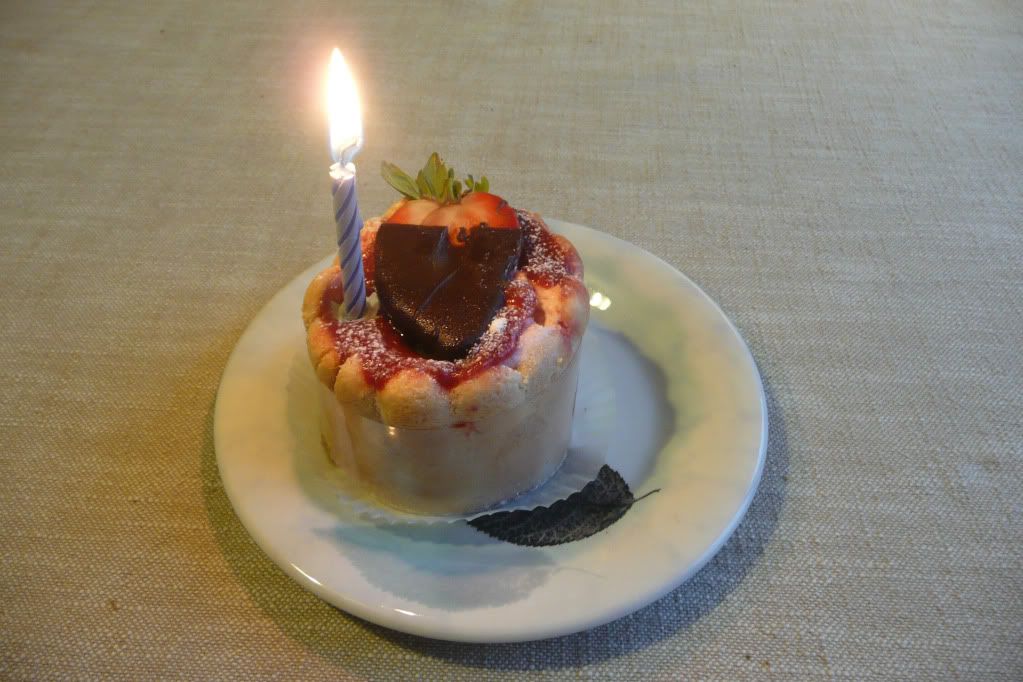
To celebrate, I bought a birthday cake (technically a Strawberry Charlotte) from the patisserie in town:


When I started this blog 12 months ago, the focus was on the nearby water vole coloney.  But it soon became an incentive to get out and explore the locality more, eventually finding evidence of badgers and otters less than a quarter of mile from where I live.  I've also taken an interest in what I've found in my own garden, becoming fascinated by the ever expanding range of microscopic creatures that live in the garden.


Hopefully in the next 12 months I may explore further upstream - I would like to find the source of the ock in the wessex downs and maybe take look at some of it's tributaries including sandford and letcombe brooks as well as some of the other water ways in Abingdon - the river stert for example. 

I also now feel part of the sizeable and diverse Abingdon blogs and have a small role in the multitude of wildlife blogs out there and I'd like to thank everyone who has read and commented on my blog.