Saturday, 23 April 2016

The fritillaries of Magdalen College

There are many reasons to be grateful for living near the university city of Oxford:

The Ashmolean and University of Oxford Natural History Museum (http://viewsoftheock.blogspot.co.uk/2014/02/return-to-oxford-natural-history-museum.html) are world class museums.
The Botanic Gardens are always fascinating with its glass houses and flower borders.
To the east, hours can be spent wondering around Wytham Woods (http://viewsoftheock.blogspot.co.uk/2010/10/way-through-woods.html).

And then there are the 38 colleges which make up the University, whilst Christchurch is possibly the most famous, Madgalen College is probably the best one to visit in spring

.
As famous for its alumini (Oscar Wilde, T.E. Lawrence, Thomas Wolsey and C.S. Lewis was a Fellow) as for its impressive buildings, it is the grounds which make the college worth visiting at this time of year.
Situated on an island in the river Cherwell, the water meadow, with its the snake's head fritillaries in their thousands that catch the eye. 


This stunning plant has previously been mentioned in this blog (http://viewsoftheock.blogspot.co.uk/search/label/fritillary) as the water meadows of Oxfordshire are one of its last strong holds and the display at Magdalen College must be one of the most impressive.


And from Addison's walk (the name of the patch around the water meadow) the fallow deer can be seen in the deer park.
.
.
But it is Fellow's garden, across a bridge over the Cherwell, which is the most impressive sight.  Where the fritillaries mix with a variety of daisies and daffodils to produce a most splendid vista.
.
.

.
And the nearby woods provide opportunities for some of most arresting wildlife, such as this Jay:
.


And as a bonus, those who live near Oxford (with an OX1.. postcode) can get in for free with suitable ID.

Friday, 25 March 2016

Standing in the footsteps of Dinosaurs

Most wildlife enthusiasts visit the Isle of Wight to see Red Squirrels (as this blog did back in 2011: http://viewsoftheock.blogspot.co.uk/2011/03/tale-of-two-squirrels.html) an animal that is almost extinct in most parts of the UK.
But in autumn last year we visited with the intention of finding signs of an animal that became extinct 120 million years ago - dinosaurs.
Back then the Isle of Wight was part of a large river complex  of rivers, swamps and ponds that stretched from the south of England through northern Europe, where over 20 species of dinosaur lived, mated and died and over time the swamps turned to rocks and the rocks became cliffs and the dinosaur bones turned to stone. Like this iguanodon  foot sited in the Dinosaur Isle museum:
.
.
But it's not only bones that become fossilised, buy on occasion the dinosaur's footprints do as well, like these at Hanover Point on the island's south coast.

.
The three toed footprint matching the remains of the iguanodon which was found nearby.
.
.
The footprints fossils were formed by the imprint of the dinosaur foot being filled with mud and sediment, this gradually tuned to white rock sandstone and formed the distinctive cast while the rest of the stone was eroded.
Although some aren't as obvious as others:


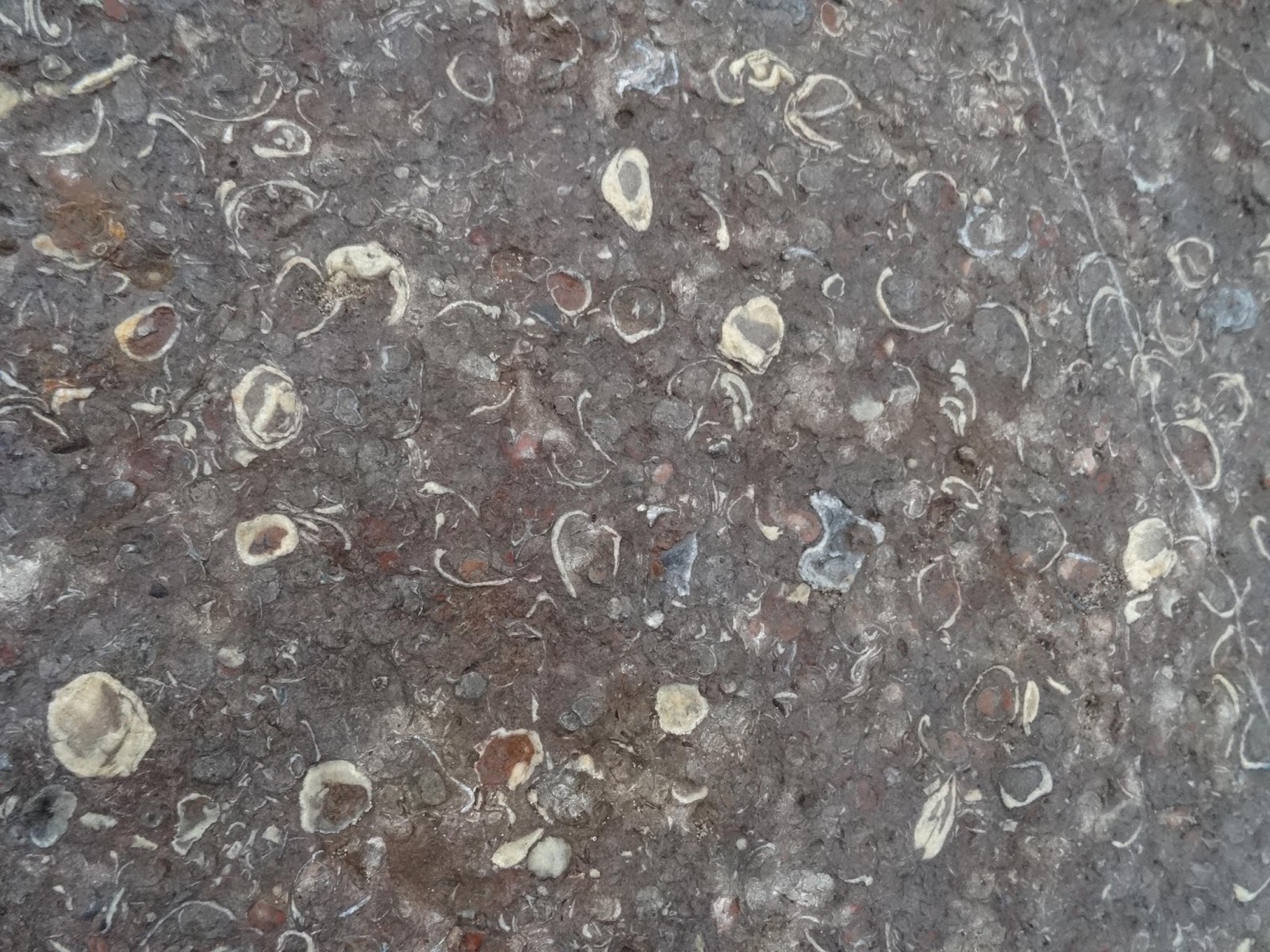
It's not just dinosaurs that have left their mark on the beeches of the Isle of Wight, there are countless fossilised shells:
.
.
And even fossilised wood, from the time when the area was covered in forests - perhaps even browsed upon by the same animals which left these footprints.
.

Thursday, 17 March 2016

After the rain

After the midweek rain, the river levels have once again risen, yet it does not look like it will burst it's banks this time.

.
A weekend walk reveals more partially eaten muscle shells.
.
.
Just further along is evidence of what may be the culprit, a fresh otter spraint (possibly less than 12 hours old) on a part of the river I haven't previously found signs of otter activity. Maybe the higher water level has made this part of the river more attractive to the otter.
.
.
Whilst the high water level may be good for otters, it maybe not such good news for the water voles, causing them to drown as their form territory at what should be the start of their breeding season.
But there are at least signs that some may have survived the winter, what looks like a burrow, filled with their distinctive feeding signs
.

Saturday, 5 March 2016

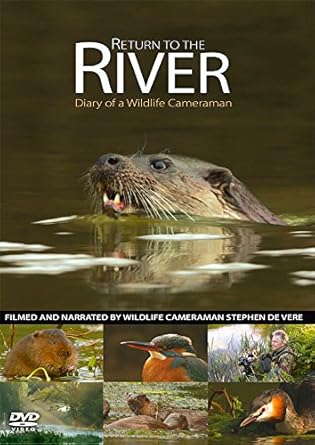
Return to the River

When we think of ground breaking wildlife documentaries we probably think of exotic locations and animals, like snow leopards hunting in the mountains of Pakistan, or killer whales hunting seals in Patagonia or even giant centipedes catching bats in caves in the Amazon - so it is somewhat of surprise to that wildlife behaviour possibly never recorded before has been filmed on the river Ock here in Abingdon.

Filmmaker Stephen De Vere – who has filmed sequences for the BBC’s Life of Birds, Life in the Freezer, Africa and most recently the sparrowhawk sequence in The Hunt - has spent the past few years filming and documenting the wildlife in English rivers for his film ‘Return to the River’.
.
(c) Stephen De Vere
.
It might not have the cinematic scale of the recent BBC wildlife documentaries, but it does provide a more personal insight into our rivers and by returning to the same spot several times he documents the changes in the river and the behaviours of the animals - it seems he is revisiting old friends as he reveals their secret worlds.

Whilst the kingfisher and otter footage is sublime, it was not filmed in the area, it is another charismatic animal – the water vole -  that was filmed on the Ock.
Charting their behaviour, from their first emergence in spring and the establishment of their breeding territories, to seeking out new food sources and avoiding predators – by climbing trees and it is this seldom seen behaviour that has possibly never filmed before.
This was originally recorded in this blog (even if the camera work is somewhat shoddy and there is the everpresent incessant drone of the A34) and even inspired Stephen to seek out the water voles on the Ock (I even get a credit at the end of the film).
.

.
It is Stephen's determination, creativity and professionalism that has exceeded anything recorded in this blog and the way he has captured their behaviour which makes these shy, endearing and now unfortunately very rare creatures the stars of the film.

For anyone with an interest in river wildlife, this film is highly recommended and not just because a leading wildlife cameraman has chosen to film on our local river.

More information on this and Stephen’s other film ‘Through the Garden Gate’ can be found at: http://britishnaturefilms.com/films/

And Stephen is also on Twitter:  https://twitter.com/Stephen_deVere

Monday, 15 February 2016

River Levels

For some time the Environment Agency has been posting the river levels from their measuring stations on-line.  
But it can be some what difficult to navigate through its web site to find the desired river level (for example - the river Ock is found at https://flood-warning-information.service.gov.uk/station/7081).
The Environment Agency has now made this data publicly available and data mining and mapping company Shoothill (http://www.shoothill.com/) has taken it and produced an interactive map of live data of the  river levels in England & Wales:  http://www.gaugemap.co.uk/#!Map

Not only is this data available on their web site, but river level updates are available via twitter and can have widgets which can be embedded into web sites (such as the Ock widget, now in the panel on the right hand side).
The river levels can also be followed on Twitter and Facebook - which not only give the river levels, but any flood alerts too.

The widgets for three rivers in Abingdon are embedded below:

River Ock (Tesco Weir) 
Twitter: https://twitter.com/riverlevel_2453


Thames (Abingdon Lock):
Twitter: https://twitter.com/riverlevel_0962

River Stert:
Twitter: https://twitter.com/riverlevel_2452


Monday, 8 February 2016

Life and Death on a Sunday Afternoon.

For a blog about the River Ock, it has hardly featured as a subject since May last year.  So a gap in rain and gales on Sunday afternoon provided the opportunity for a walk along the river to see if anything had changed in the previous few months.
As it's winter, it's perhaps not surprising to see that the river is high, although it will take a lot more rain before it bursts it's banks.
.
.
As per normal for a dark cold day this there of year, there isn't much to see.  But along the side of the river, there are signs of an animal which is very seldom seen - fresh water muscles.
.
.
Maybe the muscles died a natural death and then were washed up the last time the river burst it's banks. Although muscles are a favourite food of otters, so maybe this is circumstantial evidence that they are still active on the Ock.
Perhaps the most likely explanation is they were washed up and an opportunist corvid took advantage of their unfortunate situation.
.
.
Another animal which met an unfortunate demise is this rabbit, quite what  set of circumstances caused it be squashed on a footpath will probably be never be known.
.
.
Yet it's not just signs of death along the river, a buttercup is starting to flower in the flood meadow, even though Meadow Buttercup doesn't normally flower till April.
Perhaps another symptom of our mixed up winter?
.

Thursday, 4 February 2016

Candlemas

Some  perennial plants such as daffodils, snowdrops and crocuses survive the hardships of winter by accumulating food in their bulbs and then when spring approaches, the warmer and lighter days result in the plant putting it's efforts into producing flowers.
With the traditional day of the first snowdrop flowers being Candlemas Day (2nd February).

But this year it has been different... 


.
Like a lot of places, the snowdrops in our garden have been in flower before Christmas.
Rather than flowering on Candlemas, quite of a few are loosing their flowers and once again returning to storing food in their bulbs:
.
.
It's not only the snowdrops aren't the only ones, the daffodils, which normally flower in March, have also started to flower prematurely.
.
.
And so have the crocuses, which usually flower towards the end of February.
.
.
The cause of this early flowering is the unseasonable warm weather the South of England has had in the past few months.
In 2013 the average UK temperature was  5.7 Celsius, in 2014 it was 4.4 and in 2015 it was 7.9 (reaching a maximum temperature of 16.6 in Sunderland) [1].

Whilst it is always good to see flowers on a winters day, it may have an adverse affect on on hibernating animals like insects, bats and hedgehogs.
Yet for animals which don't hibernate - like water voles, this may actually be good news as they won't have to seek food in harsh conditions.

Whether this mild winter is temporary or a more permanent change, time will tell.

Sources: 
[1] Met Office: www.metoffice.gov.uk/