Monday, 31 October 2011

Long Tailed Tits

Along the cycle path between Abingdon and Oxford the hawthorn bushes are now full of berries. Shortly they will be consumed by the redwings and fieldfares which will soon be arriving from Northern Europe.  
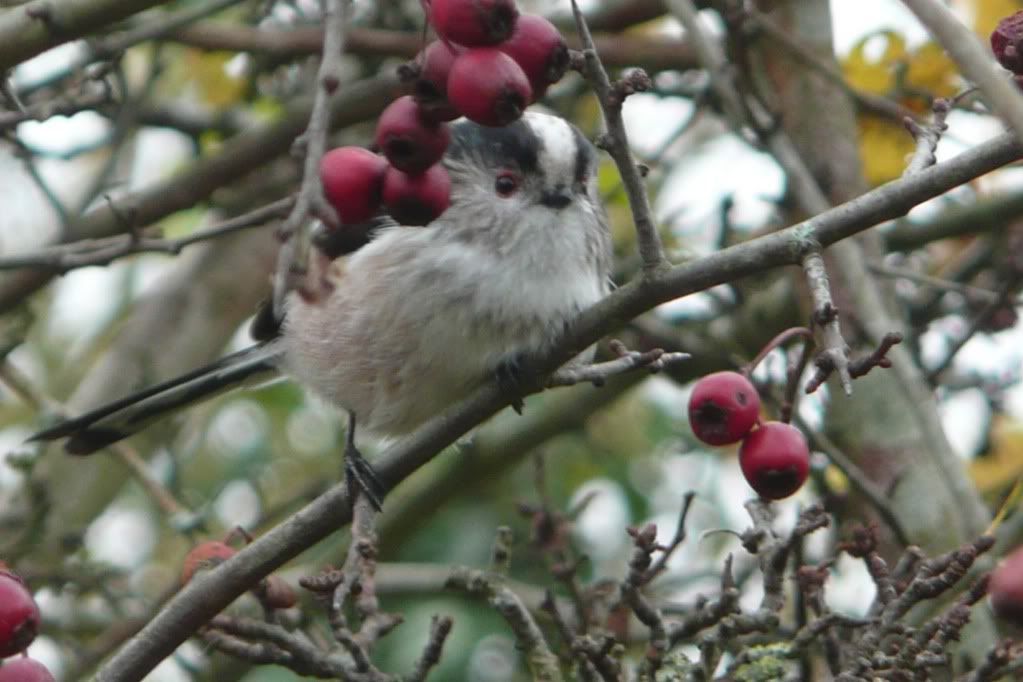
Until then, the native small birds are making the most of them, goldfinches, blue tits, great tits and this  flock of long tailed tits:
.
.

Sunday, 23 October 2011

More signs of autumn

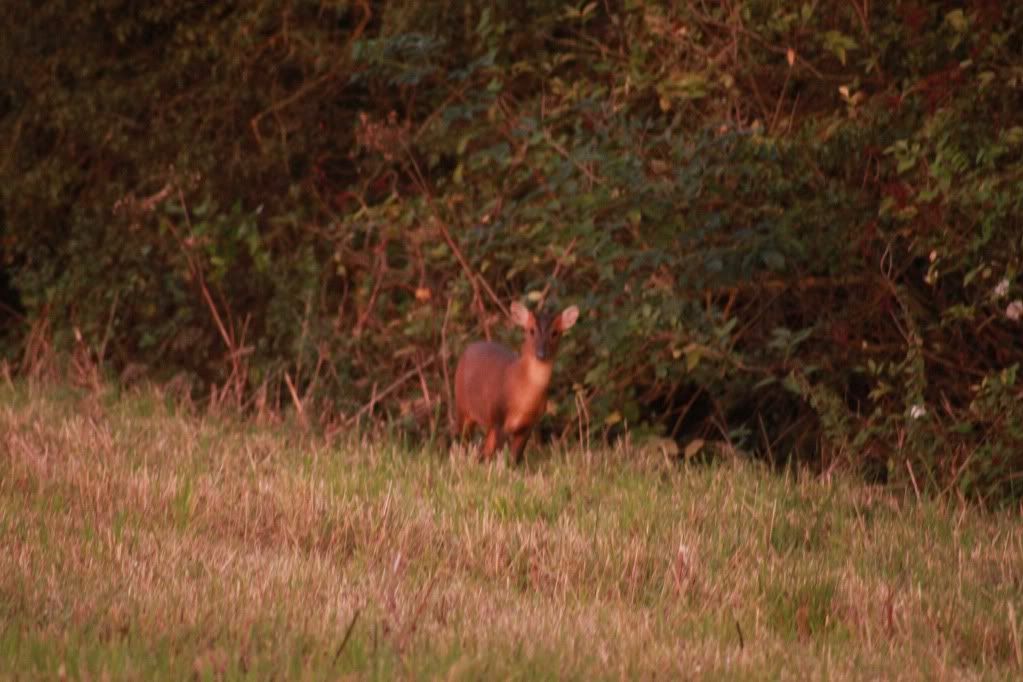
The recent dark and cold evenings mean the opportunities for wildlife watching on the river get reduced by the day and the chances of seeing water vole, an otter or a kingfisher become virtually impossible (although the chances of seeing an otter are very low at the best of times). Even so, the occasional muntjac deer stumble into view - even if it requires a high ISO and slow shutter speed.
.
.
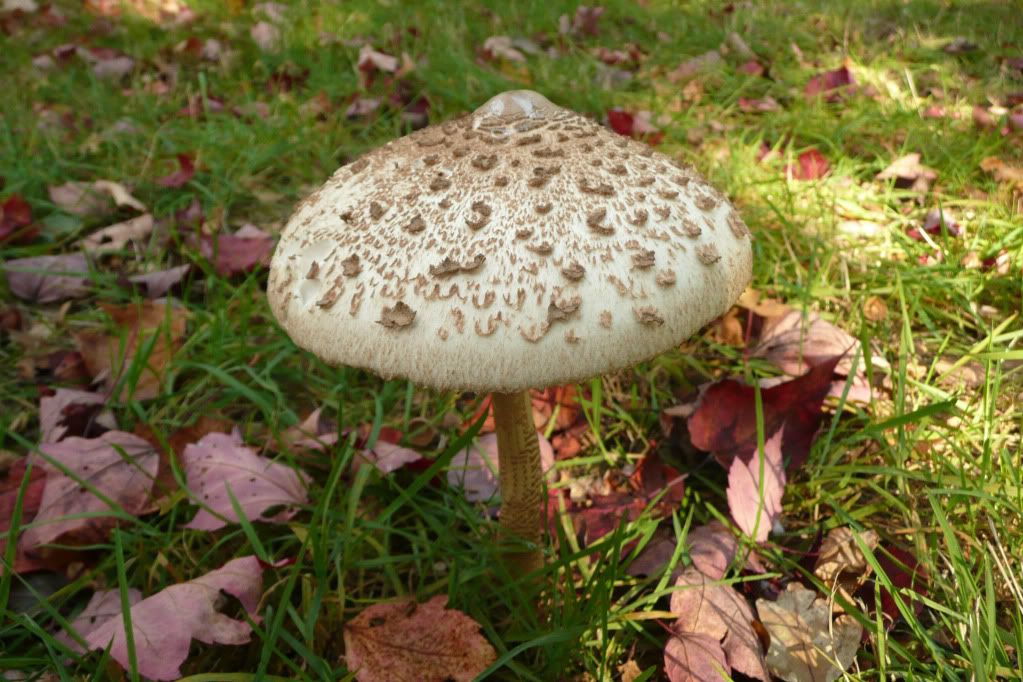
However, autumn does provide other opportunities for the wildlife enthusiast in Oxfordshire. There are many sites which are just abundent in Fungus, including what seems to be a parasol mushroom growing at Harcourt Arboretum. 
.
.
It's not just woods where fungus can be found, this 'Dead Man's Fingers' is growing in our garden.  It can be differentiated from the similar looking 'Dead Moll's Fingers' by bending the stem, which breaks (rather than bouncing back).
Whilst a lot of fungus only produce their fruiting bodies in autumn, this one can be found all year at the base of dead wood, but it has taken the seasonal clearance of the garden to find it.
.
.
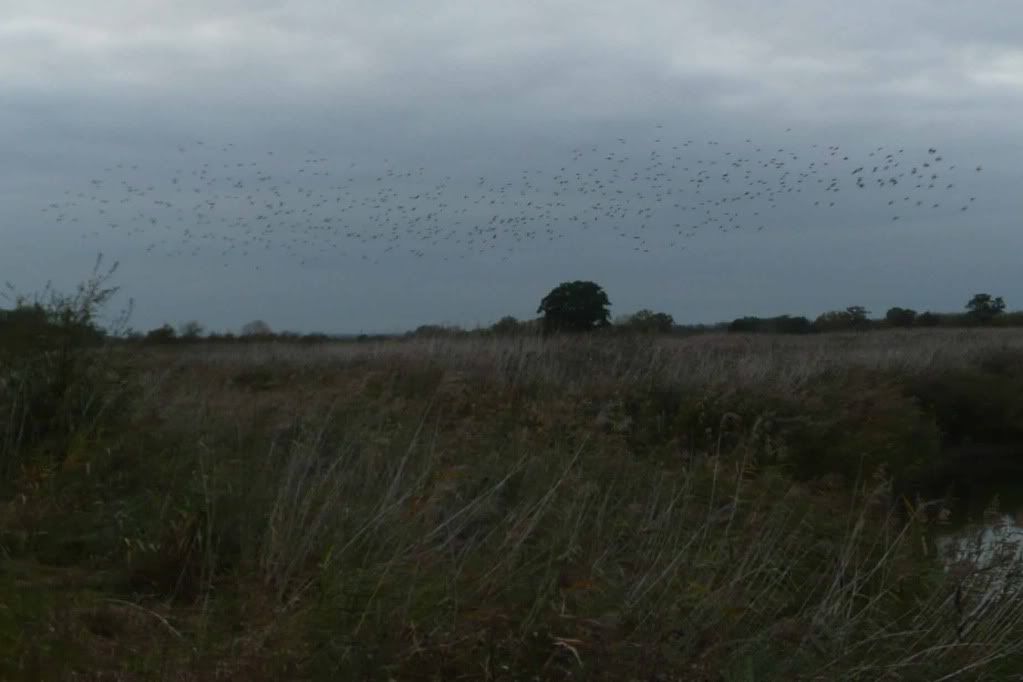
Over at Otmoor, the starling murmurations are just starting and although they are not yet near the vast numbers that can congregate there, it is still an impressive sight on a cold autumn evening:
.

Tuesday, 18 October 2011

Views of Brownsea Island

Situated in Poole Harbour and owned by the National Trust, Brownsea Island, only two miles across it is home to wildlife that just can't be found in such proximity in the rest of the country.
There is a breeding population of sika deer - they have not established themselves like the more common roe & muntjac deer and can be quite hard to find on the island (apparently, they wait for the day trippers to leave and then congregate by the church).
.
.
A completely different creature can be found on only one wall on the island and is only 5mm long. The snail Papillifera bidens (it has no common name) is common in southern europe, yet can only be found in one other location in the UK - clivedon house in Buckinghamshire   
It is believed it was accidently introduced by a previous owner who imported statues from Greece.
.
.
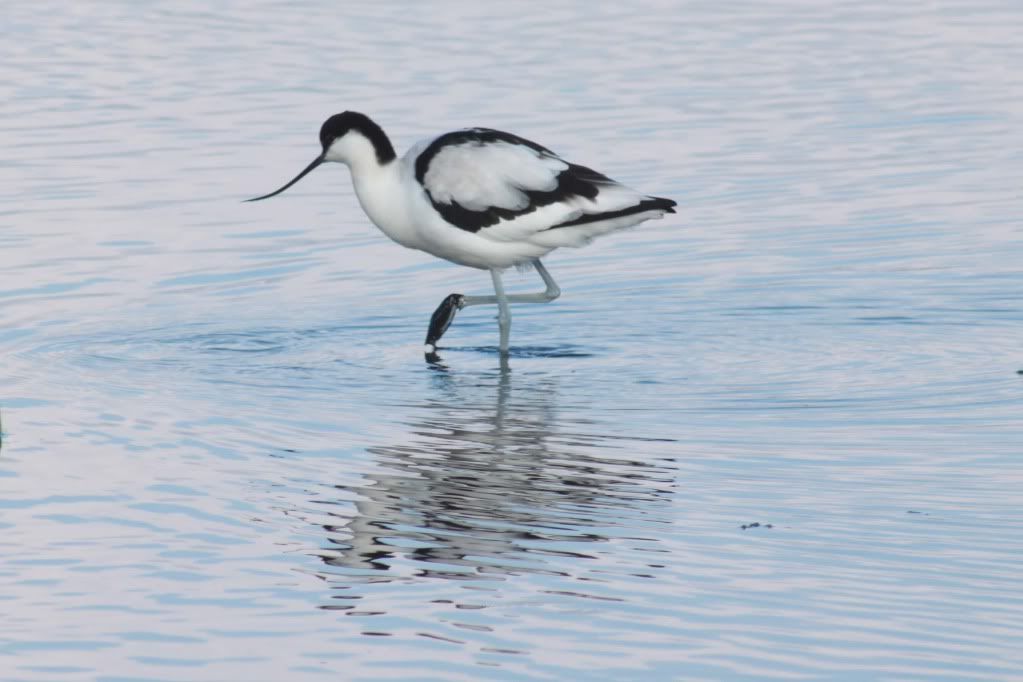
Whilst the island is owned by the National Trust, half of it is leased to the Dorest Wildlife Trust who manage the lagoons, which are a haven for wading birds.  Including avocets (the symbol for the RSPB).  Once extinct in the UK as a breeding bird, it has now reestablished itself (there are now 800 breeding birds) although feeding sites are still scarce
.
.
But the animal which Brownsea is famous for - and which most people come to see - is the red squirrel.  Extinct from the south of England and struggling elsewhere, there is a stable population of about 250 animals - helped by the lack of prediators and the absence of the grey squirrel -  and autumn is the best time to see them as the trees start to loose leaves and as they bury nuts:
. 

Thursday, 6 October 2011

Moorhens

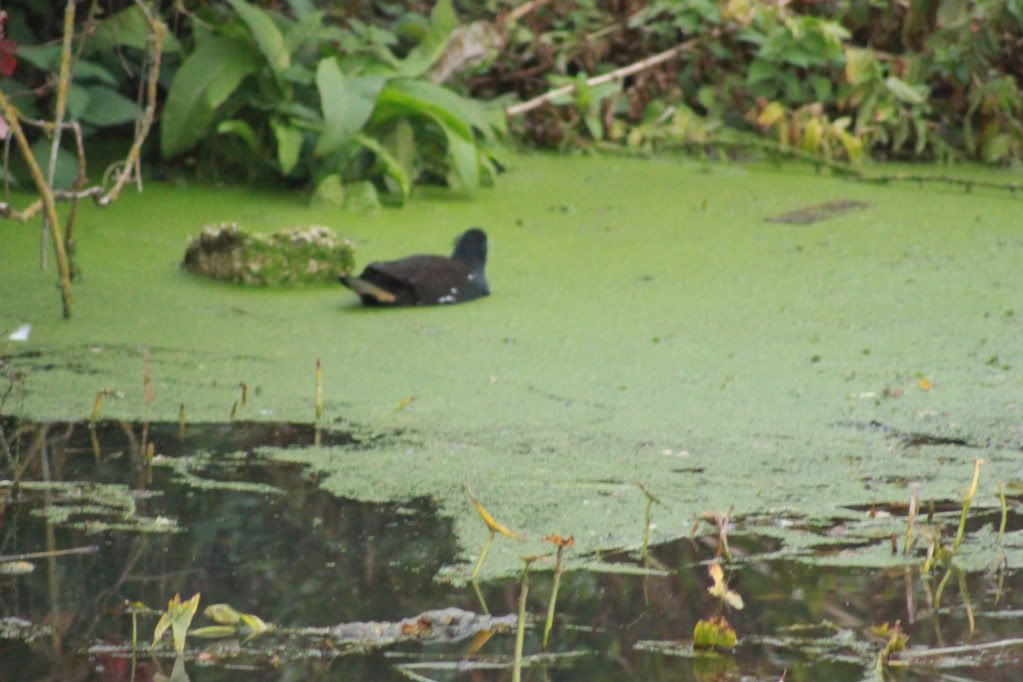
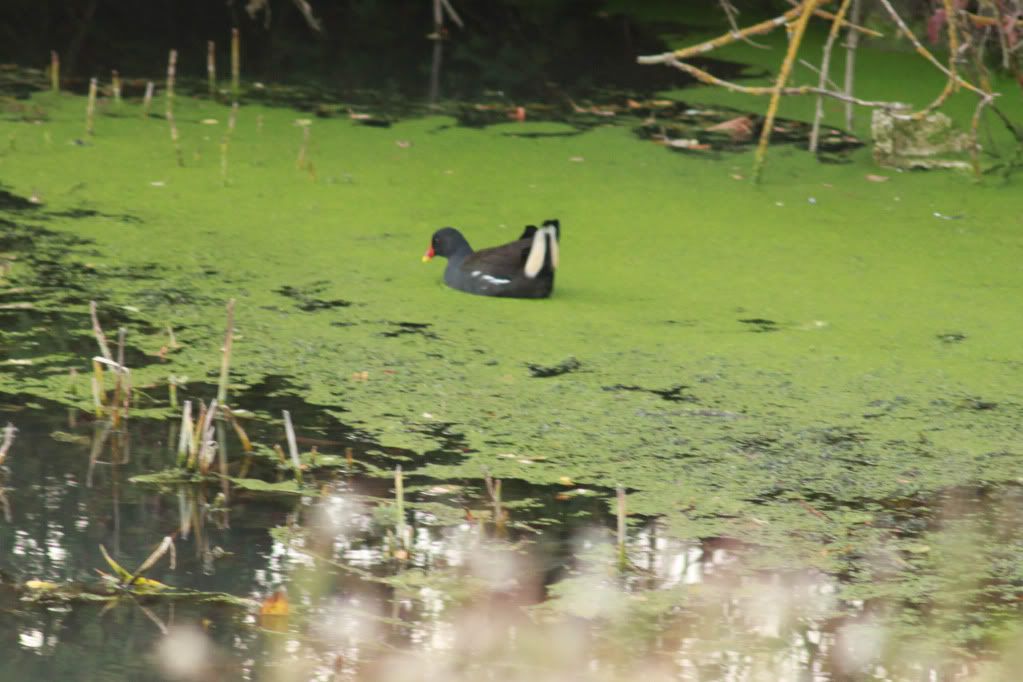
Moorhens are so common on the rivers in Abingdon that they are often taken for granted, yet they can be somewhat difficult to photograph, they quickly sense the slightest movement and scamper into the undergrowth.
.
.
.
Even though they a favourite food of otters, it has been a good breeding year with several young moorhen now finding their independence.
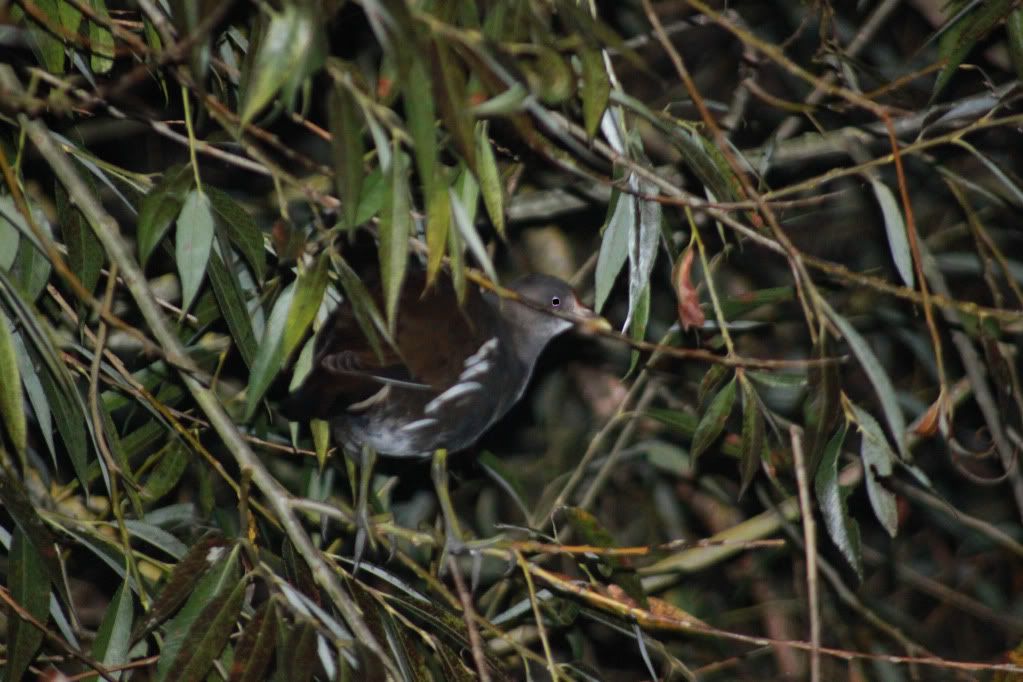
Perhaps one of the reasons they have survived is when it starts to get dark they group together and slowly climb up the over hanging willow trees, safely out of the way of any passing otter.
.
.
Maybe the moorhens shouldn't be too complacent -  apparently otters can climb trees as well: http://news.bbc.co.uk/local/gloucestershire/hi/people_and_places/nature/newsid_8468000/8468065.stm

Wednesday, 28 September 2011

Return of the Sparrowhawk

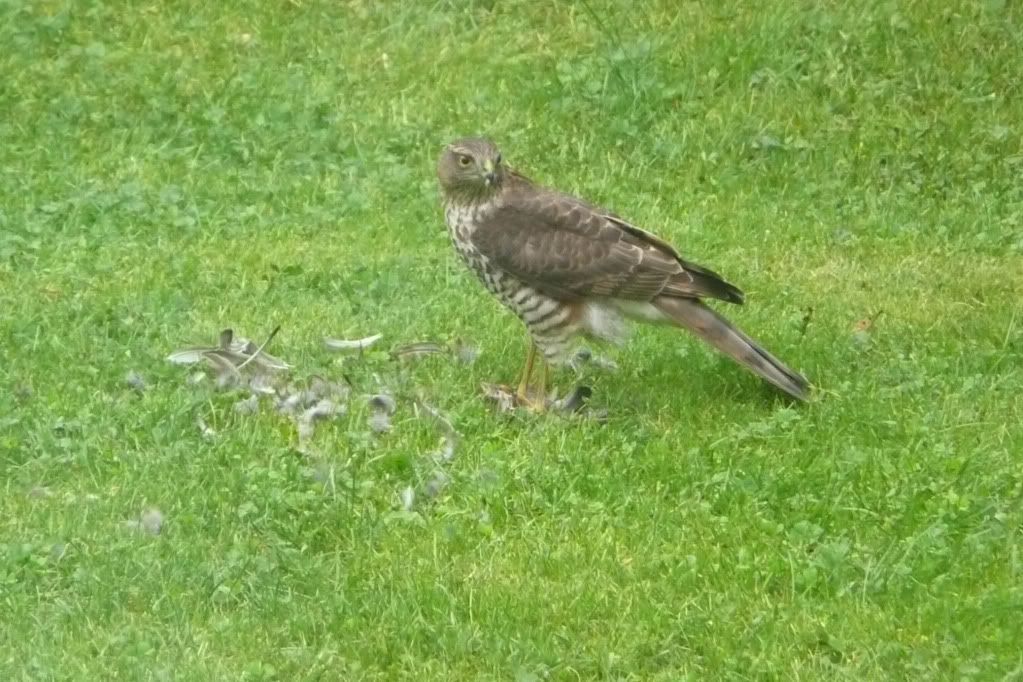
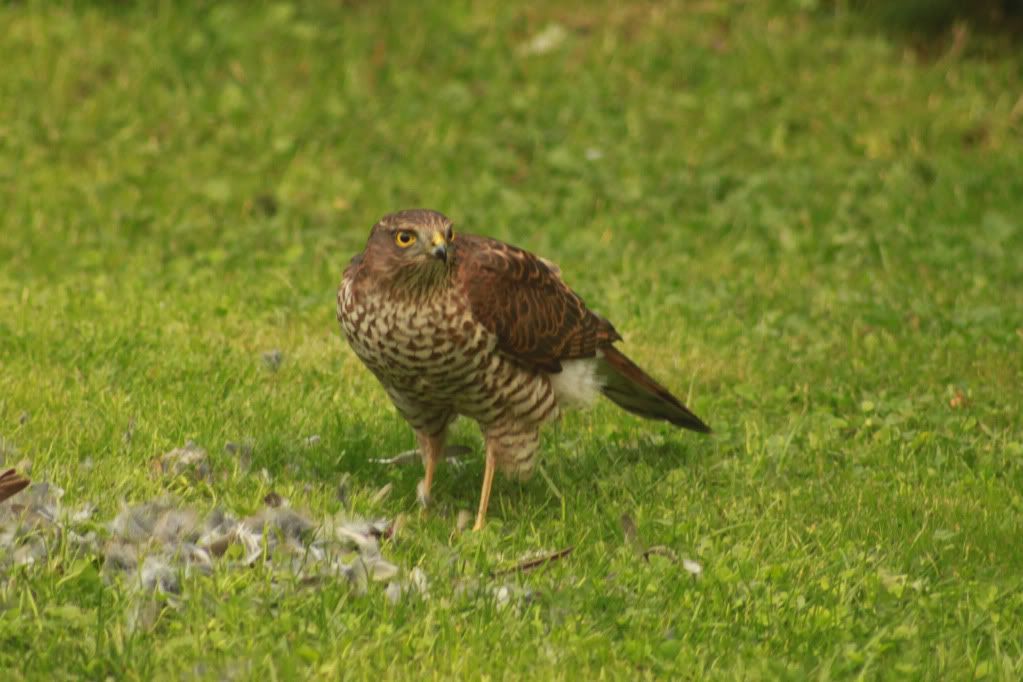
Sparrowhawks are infrequent visitors to our garden, the previous visitor has been an adult male - with a grey back and an orange front.  But this one is different: 
.
.
The brown back and brown front indicate it could be a young male, maybe even raised by the mature male which lasted visited the garden back in October last year (http://viewsoftheock.blogspot.com/2010/10/birds-of-prey.html).
.
.
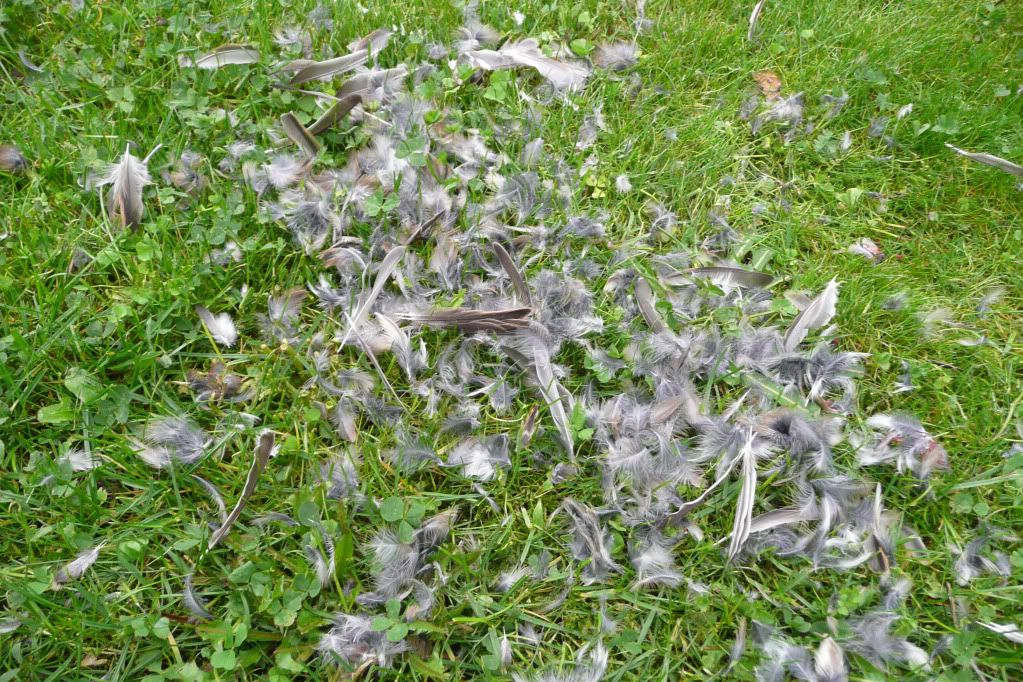
Judging the pile of feathers, it seems to have successfully mastered the skill of  hunting and from the remains, it seems it's victim is a house sparrow or a dunnock.
What is interesting is the complete lack of bones and internal organs, just feathers - the sparrowhawk had consumed it all.
.
.
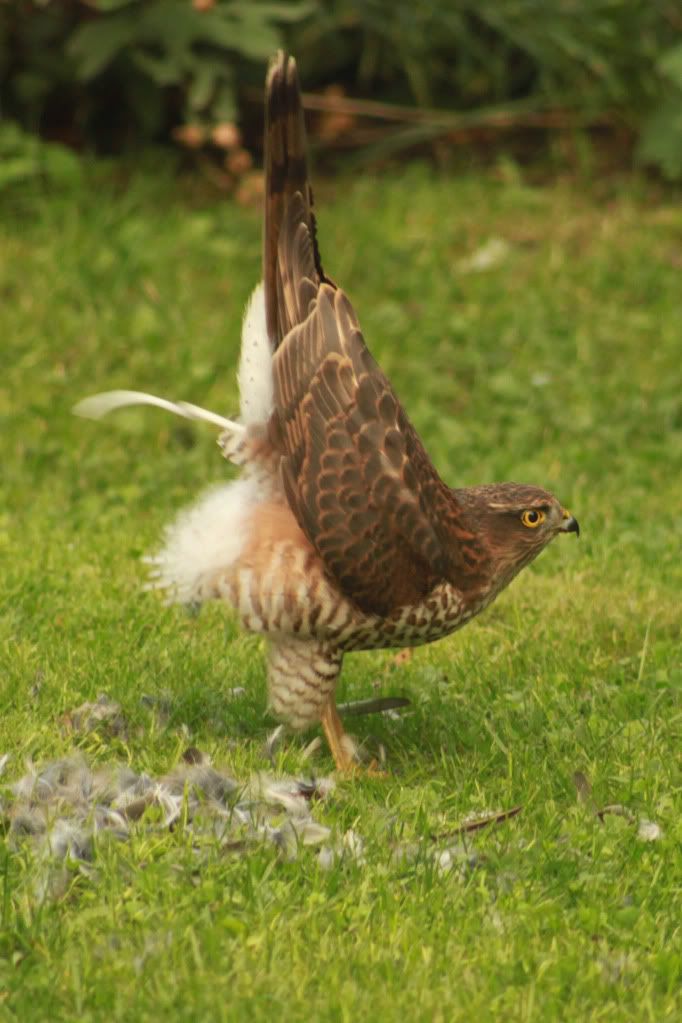
What is also surprising was nonchalant it appeared, occasionally looking up as it devoured it's unfortunate victim for several minutes and then giving a glimpse of some seldom seen behaviour before leaving:
.

Sunday, 25 September 2011

Views of the Fal

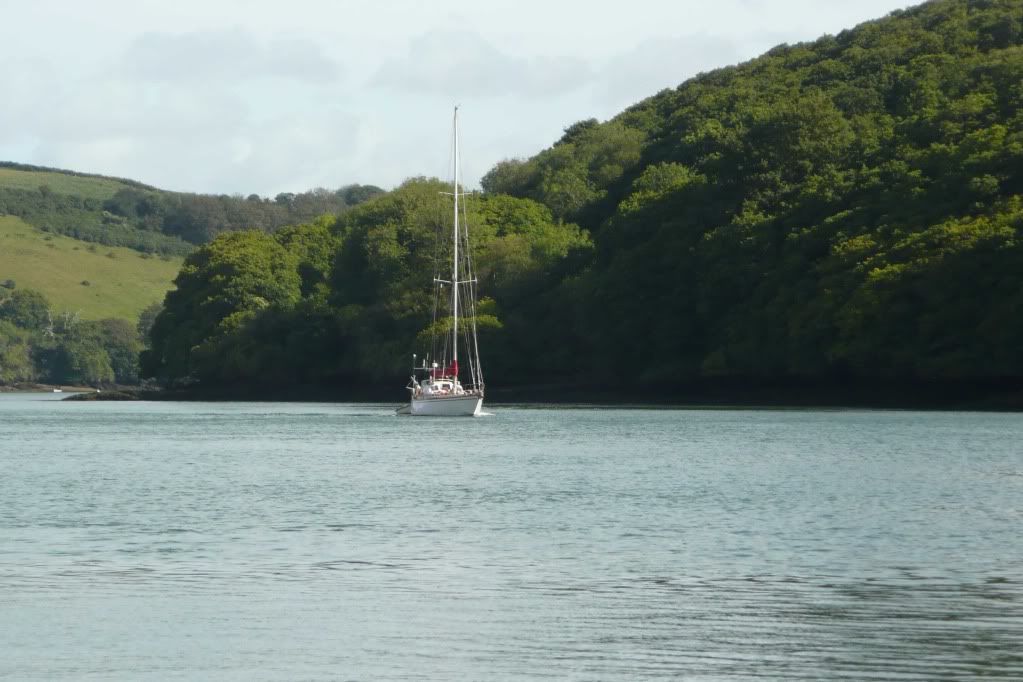
Rising near St Austell, the river Fal is one of numerous rivers which flow into the Fal estuary in Cornwall and is an idylic place to explore on an early autumn holiday.
The ferry from Truro to Falmouth (and St. Mawes) is an excellent way to explore the river system, with it's creeks and sail boats.
.
.
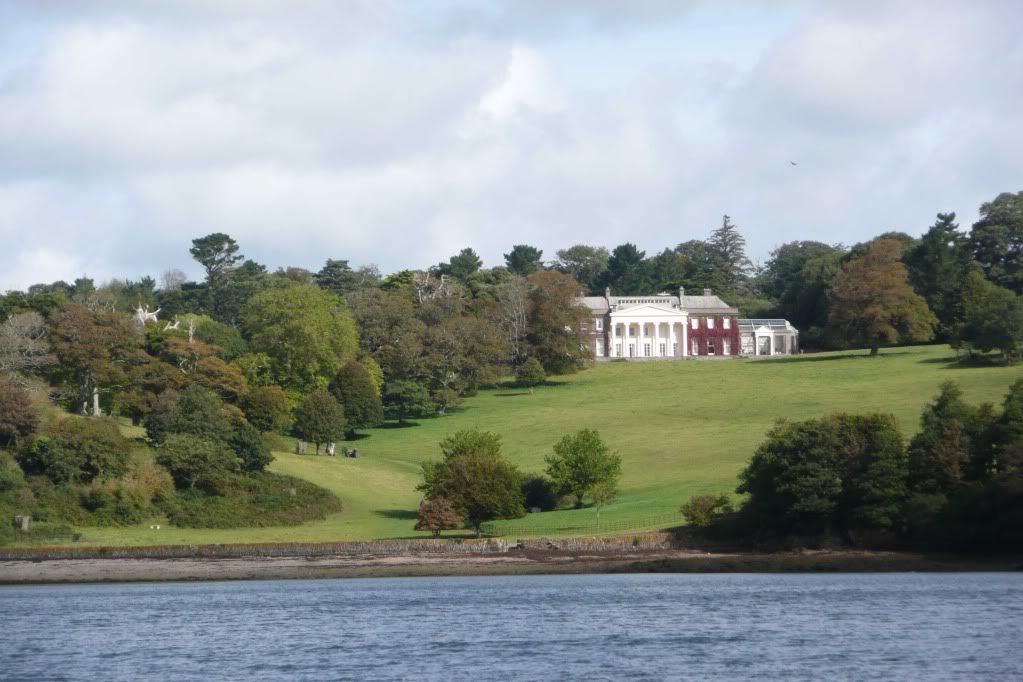
The south of Cornwall is famous for it's gardens, including Trelissick - owned and managed by the national trust since 1955.  Where the banks of the Fal provide the ideal habitat for the rare shrubs which grow there).
.
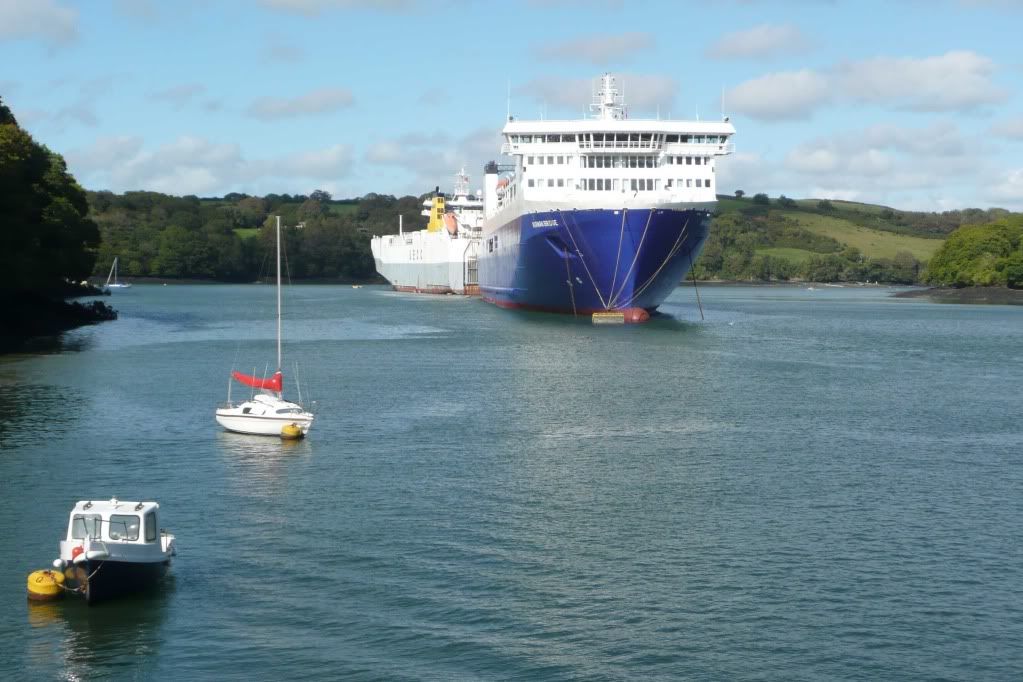
The river fal is the third deepest natural harbour in the world, as a consequence it  is has become a rather strange barometer of the worlds economic climate.  Huge ships (up to a 100,000 ton) are mothballed here, either awaiting to be recommissioned, scrapped or sold.
The current fashion is for ferries, here two are moored by the gardens.
.
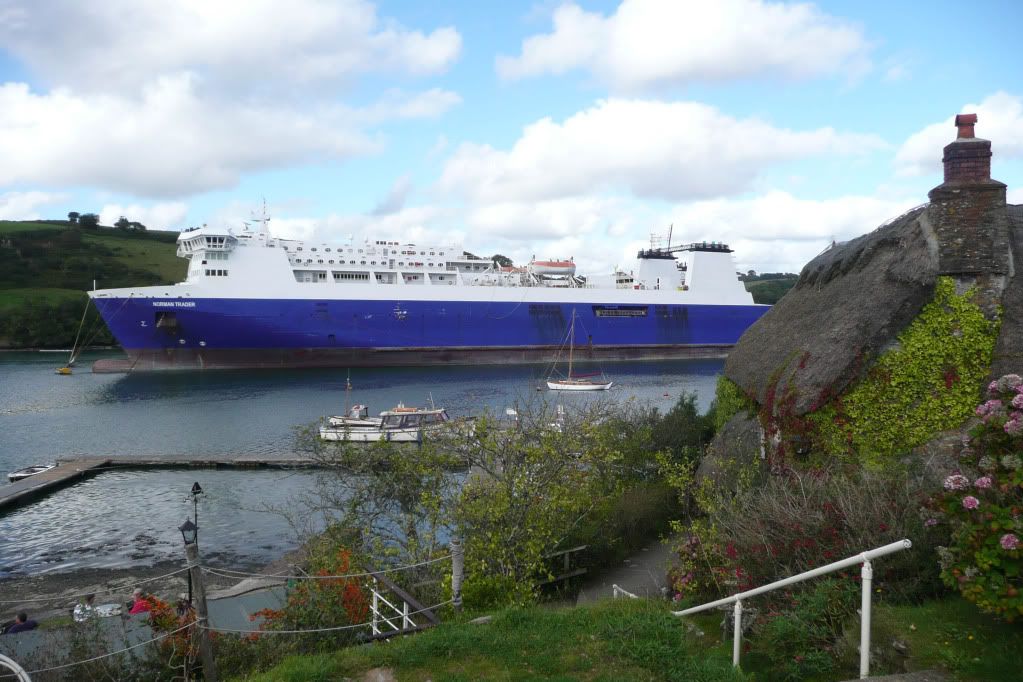
Another passenger ferry provides a  somewhat strange view from the Smugglers Inn - it also obscures the view of the only tea plantation in the UK. Which the inn servers along with that staple of Cornish holidays (apart from pasties), the cream tea.
.

Wednesday, 7 September 2011

Natural History Museum at Tring

Located only a few miles from College Lake is the Natural History Museum at Tring. It was built for and still houses the collection of Lionel Walter Rothschild, 2nd Baron Rothschild.
Walter Rothschild was an eccentric, in the only way a Victorian from a very wealthy banking family could be. Having failed to make the grade in the family's bank he dedicated his life to amassing an extraordinary collection of dead animals, including:
  • 2000 mammals
  • 2000 birds
  • 2,000,000 butterflies and moths
  • 300,000 beetles
  • 300,000 bird skins
  • 200,000 bird eggs.
The collection was stored in a private museum (paid for by the family) - the Walter Rothschild Zoological Museum - and bequeathed the museum to the country just before his death in 1937.  It is now managed by Natural History Museum and has free entry for the public.
Spread over five floors the museum is a jaw dropping monument to one man's obsession with killing and stuffing animals.
.
.
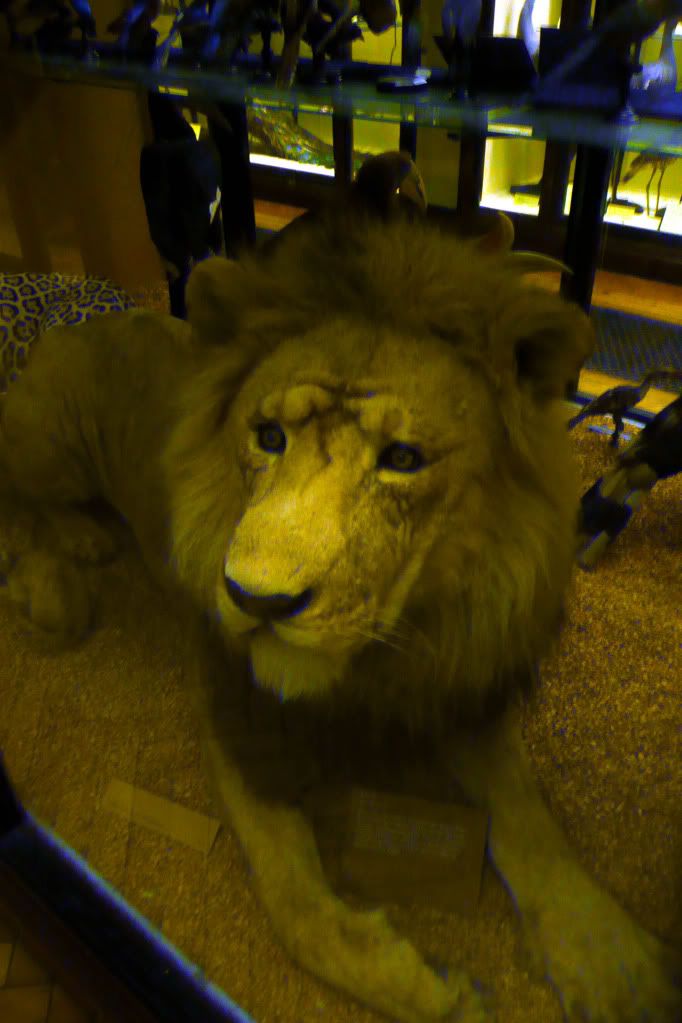
Some of these seem to be rather poorly done, rather than looking like apex predators, the lion and polar bear just look like giant soft toys:
.
.

In his book, A short history of nearly everything, Bill Bryson describes the sad story of the lesser koa finch, a small Hawaiian bird; only one has ever been seen and this was when it was shot for Rothschild's collection.
The finch, along with the majority of Rothschild's bird collection, was sold to the American Museum of Natural History in order to pay off a woman who had been blackmailing him for years.  Even so, most of his British bird collection remains at Tring, including this family of grey partridges:
.
.
It's easy to be critical of Rothschild and is obsession with killing and stuffing animals, certainly the mountain gorilla would be laughable if wasn't so tragic. But employed skilled zoologists, entomologists and ornithologists who helped him catalogue the collection, and in the process discover over 5000 new species, and published 1,700 scientific books.

Even today, the museum plays an important role for illustrators of field guides and for helping to identify recently discovered birds, like the Indian warbler.